
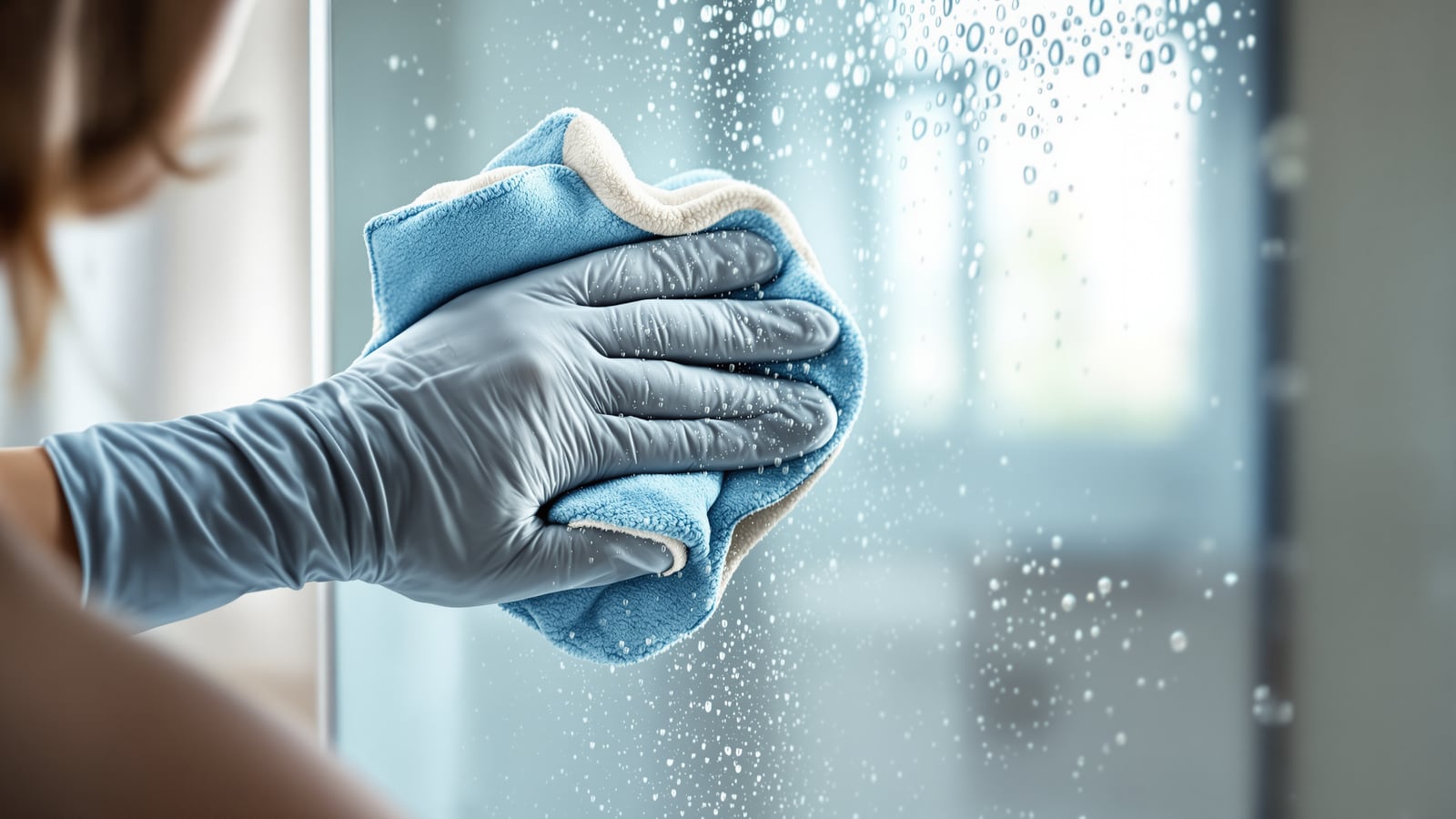
Bathroom Mirror Cleaning India: Streak-Free Mirrors & Spotless Glass
How to clean a bathroom mirror without streaks, lift hard-water spots off mirrors and shower glass, stop the edges going black, care for an LED or smart mirror safely, and keep it all clear with a hydrophobic coating.
A bathroom mirror is the one surface you look at closely every single day, so every streak, every cloudy patch and every chalky white spot shows. In most Indian homes the enemy is not dirt — it is water: hard, mineral-rich water that dries into limescale, and warm shower steam that leaves the glass smeared. Get the method and the cloth right and a mirror takes ninety seconds to bring to a flawless, streak-free shine. Get it wrong and you buff smears around forever.
This guide is the mirror-and-glass chapter of the Studio Matrx bathroom care series. It covers cleaning mirrors without streaks, removing hard-water spots from both mirrors and shower glass, why mirror edges go black and how to prevent it, how to clean an LED or smart mirror without killing the electronics, and how a hydrophobic coating keeps glass clear for weeks. For the whole-room routine, read it alongside the complete bathroom cleaning guide; for choosing and sizing the mirror itself, see the bathroom mirror guide.
The single biggest cause of a streaky mirror is the cloth, not the cleaner. A clean, dry microfibre cloth buffs a mirror to invisibility; a cotton rag, tissue or old towel leaves lint and smears no matter what you spray.
How to clean a mirror without streaks
Streaks are leftover moisture and cleaner that dries unevenly. The fix is a two-cloth method — one damp to lift, one dry to buff — and a solution that evaporates fast.
1. Dust or wipe off loose grime first. Toothpaste flecks, hairspray and dust should come off with a barely damp cloth before you polish, or you will grind them into smears.
2. Spray the cloth, not the glass — especially on a framed or LED mirror (more on that below). A light mist is enough; a dripping mirror runs down onto the frame and the silvered bottom edge.
3. Use the right solution. A 1:1 mix of white vinegar and water in a spray bottle cuts through soap film and evaporates cleanly. A branded glass cleaner (Colin, CIF glass, or similar) works just as well. Avoid soapy multi-surface sprays — the surfactants are exactly what leaves a film.
4. Wipe in one direction, top to bottom, with a damp microfibre cloth, using overlapping strokes so you do not miss a band.
5. Buff dry immediately with a second, bone-dry microfibre cloth in straight strokes. This step is what makes it streak-free — you are removing the moisture before it can dry into a haze.
6. Check against the light. Stand to one side so the window rakes across the glass; any missed streak shows instantly. Buff it out dry.
Never use newspaper (Indian newsprint ink smears and the paper is too soft), tissue, or a cotton kitchen towel — all shed lint. A squeegee followed by a dry microfibre edge-wipe is the fastest method on a large mirror.
Removing hard-water spots from mirrors and shower glass
Those cloudy white spots and rings that resist ordinary wiping are limescale — calcium and magnesium left behind when hard water evaporates. Most Indian municipal and borewell supplies are hard, so this is the number-one glass problem in the country. It builds up worst on shower screens, where spray dries between showers, and on the lower edge of a basin mirror.
Limescale is alkaline, so a mild acid dissolves it — and vinegar or citric acid is all you need:
- White vinegar — soak a microfibre cloth or paper towel in undiluted white vinegar, lay it flat against the spotted glass so it stays wet, and leave it 10 to 15 minutes. Then wipe, and the softened scale comes away. Re-buff dry.
- Citric acid or lemon — a spoon of citric acid ("nimbu ka sat") in warm water, or a cut lemon rubbed on, works the same way on stubborn shower-glass haze.
- A dedicated limescale/bathroom cleaner (CIF, a shower-glass spray, or similar) for heavy, long-standing buildup — follow the label dwell time.
- A plastic or bamboo scraper, never a metal blade, to shear off thick crusty deposits after they have softened.
Two firm cautions. First, never mix an acid cleaner with bleach or any chlorine product — it releases toxic chlorine gas. Use one or the other, never together, and ventilate. Second, keep vinegar and acids off natural stone — a marble or granite basin surround or a stone shower kerb will be etched and dulled by acid, so wipe carefully and rinse any splashes at once. On the glass itself, acid is safe.
The real answer to hard water is prevention: a quick squeegee after every shower removes the water before it can dry into scale, and cuts your deep-cleaning to almost nothing. For the whole-house picture — softeners, the science of limescale, and every surface it attacks — see the dedicated hard-water stain removal guide, and for keeping a full shower enclosure clear, the glass bathroom walls guide.
| Problem | Likely cause | Fix |
|---|---|---|
| Cloudy white spots / rings | Dried hard-water limescale | Vinegar or citric-acid soak 10–15 min, wipe, buff dry |
| Smeary haze after cleaning | Wrong cloth or soapy cleaner | Re-do with microfibre + vinegar-water; buff dry |
| Soap-scum film on shower glass | Soap + hard water reacting | Bathroom/limescale spray, then squeegee routine |
| Rainbow / etched patches on glass | Long-term scale has etched the surface | Often permanent; a polish/coating masks it — prevent with squeegee |
| Black spots creeping in from the edge | Silvering corrosion (desilvering) | Not cleanable — see below; prevent moisture at edges |
Why mirror edges go black — and the fix
When a mirror develops black or grey spots and blotches creeping in from the edges, that is not dirt and no cleaner will touch it. It is desilvering — corrosion of the thin reflective metal layer on the back of the glass. Bathroom mirrors are especially prone because steam and splash water reach the exposed back edge, oxidising the silver and the protective backing paint.
- What causes it. Moisture getting behind the glass — from steam settling on an unsealed edge, water running down into the bottom rail, or a harsh cleaner seeping to the back. Older or cheaper mirrors used a copper layer over the silver that corrodes readily.
- How to prevent it. Keep the edges dry: ventilate the bathroom so steam clears fast, do not let water pool along the mirror's bottom edge, always spray the cloth rather than the glass, and mount the mirror with a small air gap off a damp wall. A bead of clear silicone or an edge sealant along the bottom keeps splash out of the back.
- The copper-free fix. When buying a bathroom mirror, choose copper-free, lead-free silvered glass (sold as "corrosion-resistant" or environment-friendly mirror). Its edge-protective coatings resist desilvering far better in a wet room — the durable long-term answer once black-spotting has started is simply to replace the mirror with a copper-free one and keep its edges dry.
Once the black spots are there they cannot be cleaned or reversed from the front; you either live with them, re-edge/reframe to hide a small margin, or replace the mirror.
Caring for an LED or smart mirror
An LED or smart mirror is part glass, part electrical appliance, so the cleaning rules tighten:
- Never spray liquid directly onto the mirror. Mist a microfibre cloth and wipe — spraying risks driving moisture into the LED edges, the touch sensor, the demister connection or a built-in screen.
- Switch it off (and ideally isolate it) before cleaning, so a wet touch sensor does not misbehave.
- Keep moisture away from seams, buttons and the base, where water can wick into the electronics.
- No vinegar or acid on the frame or sensor zone — use only a lightly damp cloth there; save the vinegar treatment for plain glass areas well away from electronics, or skip it entirely on a smart mirror and use a gentle glass cleaner on the cloth.
- Never use abrasive pads or scourers — they scratch anti-fog and touch coatings permanently.
For how these mirrors are wired and specified, see the bathroom mirror guide.
A hydrophobic coating keeps glass clear for weeks
The most effective upgrade for shower glass is a nano / hydrophobic (water-repellent) coating. It bonds an ultra-thin water-shedding layer to the glass so droplets bead up and run off, carrying minerals with them instead of drying into scale. Rain-repellent car products and dedicated shower-glass sealants work the same way.
- Apply to spotlessly clean, dry glass — remove all existing limescale first (the coating locks in whatever is underneath), then wipe on the coating per the product instructions and buff.
- It dramatically cuts spotting and cleaning effort, keeping glass clearer for weeks to a few months per application on a busy shower.
- Reapply periodically as it wears — think of it as a seasonal top-up, not a permanent fix.
- A coating masks light etching and makes the daily squeegee even more effective.
Frequency: a simple mirror-and-glass schedule
You do not need to deep-clean often if you do the small daily habit. The squeegee is what keeps the monthly job tiny.
| Task | How often |
|---|---|
| Squeegee shower glass after use | Every shower |
| Quick mirror wipe with dry microfibre | Daily / as needed |
| Proper streak-free mirror clean (vinegar-water + buff) | Weekly |
| De-limescale shower glass (vinegar/citric soak) | Weekly to fortnightly (hard-water areas) |
| Check & dry mirror edges, wipe frame/base | Monthly |
| Reapply hydrophobic coating to shower glass | Every 1–3 months |
| Inspect for edge black-spotting; plan replacement | Every 6–12 months |
Keep two microfibre cloths and a squeegee in the bathroom, a spray bottle of vinegar-water on the shelf, and the whole routine stays effortless — a clear mirror and spotless glass, every day, with minutes of effort rather than a weekend scrub.
References
- Bureau of Indian Standards (BIS), IS 3564: Silvered Glass Mirrors — quality and coating requirements for silvered mirror, including edge protection relevant to desilvering.
- Manufacturer care guidance from mirror and glass makers (e.g. Saint-Gobain, Modiguard) — recommended cleaners, "spray the cloth not the glass", and copper-free/lead-free corrosion-resistant mirror ranges.
- Household glass-cleaner label directions (Colin, CIF and similar) and shower-glass limescale removers — dwell times and the standing caution never to mix acid cleaners with chlorine bleach.
- Bureau of Indian Standards (BIS) — water hardness classification for domestic supply, underlying the limescale problem on Indian bathroom glass.
Export this guide
Related Guides — Deep-dive reading
How to Clean Bathroom Tiles (India): Shine, Hard-Water Film & Soap Scum
A practical, India-first routine for cleaning bathroom tiles and keeping them glossy — the daily squeegee habit, weekly wash, monthly deep clean, and the safe cleaner for each tile type, including the golden rule that natural stone must never meet acid.
BathroomsHard Water Stain Removal in the Bathroom (India): Beat Limescale on Taps, Glass & Tiles
India's number-one bathroom nuisance is hard water — the chalky white deposits and cloudy spots that dull chrome taps, fog shower glass, crust up tiles and stain sanitaryware. This guide shows you how to remove limescale surface by surface (and where acid is dangerous), and how to stop it coming back.
BathroomsBathroom Cleaning India: The Complete Cleaning & Upkeep Guide (Daily, Weekly, Monthly)
The pillar guide to keeping an Indian bathroom clean — a daily/weekly/monthly/annual schedule, the right cleaner for every surface (tiles, grout, glass, chrome, sanitaryware, acrylic), safe DIY mixes, what you must never mix, the hard-water routine, and the 5-minute daily wipe that prevents most problems.
BathroomsRelated Tools — Try Free
Cross-Ventilation Analyzer
Estimate airflow and air changes per hour (ACH) from room size, window areas, layout, and local wind — with NBC 2016 Part 8 compliance check.
Ventilation CalculatorWindow Cleaning Cost Calculator
Estimate professional window cleaning cost per visit and per year by access and frequency.
Window CalculatorBefore & After Studio
Generate AI before-and-after renders to preview how your redesign could look.
DesignAI