
Bank Lockers vs Home Safes in India (2026): An Honest Comparison
A side-by-side look at bank lockers and home safes for Indian households — access, cost, real security level and, most misunderstood of all, the liability and insurance reality — so you can decide what belongs where, and why many homes sensibly use both.
Almost every Indian household eventually faces the same quiet question: where do the gold, the property papers and the emergency cash actually live? The two honest answers are a bank locker in a branch strongroom, or a home safe anchored and hidden in your own house. Neither is simply "better" — they trade off against each other, and the choice depends on how often you need the contents, how much value is at risk, and how much you understand about who is liable if something goes wrong. This guide is a straight bank lockers vs home safes comparison for 2026, grounded in the Reserve Bank of India's revised locker framework and in rupee terms.
The single most misunderstood part of the whole decision is liability and insurance — many people assume a bank "guarantees" or "insures" whatever is inside their locker, and it does not. We will unpack that carefully. If you have already decided a safe belongs in your home, the companion reads are the complete guide to home safes in India and how to choose a home safe in India; for gold and heirlooms specifically, see jewellery and valuables safes in India.
This is a planning and decision guide only. It will help you weigh, size and place your protection and coordinate a professional install — it will never tell you how to defeat, force or open a safe or locker you are locked out of. If you lose access, the answer is always the bank branch, the safe manufacturer or a licensed locksmith, with proof of ownership.
Scope & how to read this. This is educational guidance to help you decide, not legal, tax or insurance advice; locker terms and the RBI norms change, so verify the current rules with your bank and read your own locker agreement and insurance policy before you rely on anything here.
The four things that actually differ
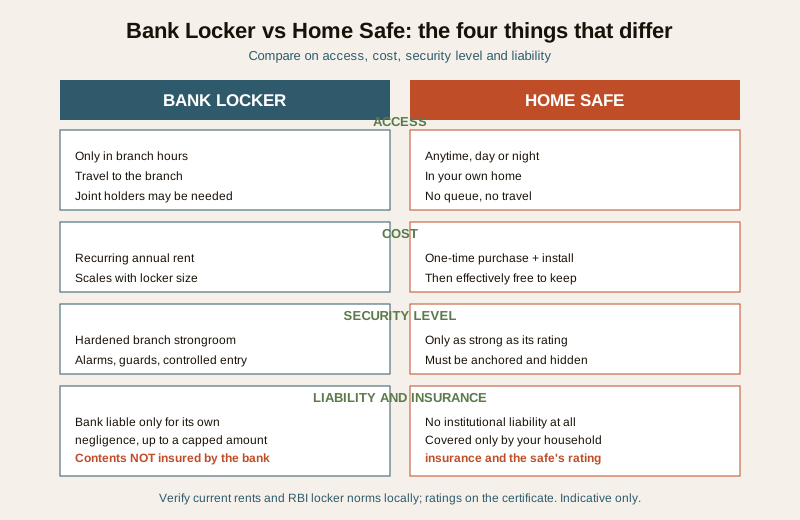
Strip away the marketing and there are exactly four dimensions on which a bank locker and a home safe genuinely differ: access, cost, security level, and liability and insurance. Everything else is detail. Take them one at a time and the decision becomes much clearer.
| Dimension | Bank locker | Home safe |
|---|---|---|
| Access | Only in branch hours, and only after travelling there; jointly-operated lockers may need the other holder | Anytime, day or night, in your own home |
| Cost shape | Recurring annual rent (plus a one-time deposit at some banks); rises with locker size | One-time purchase and install; then effectively free to keep |
| Security level | A hardened branch strongroom, alarms, guards, controlled entry | Only as strong as the safe's rating and how well you anchor and hide it |
| Liability if it goes wrong | Bank liable only for its own negligence, and only up to a capped amount; contents NOT insured by the bank | Entirely on you; covered only if your household insurance and the safe's rating are adequate |
| Best suited to | High-value, rarely-accessed heirlooms and long-term documents | Daily-access jewellery, papers you use, emergency cash |
Access: branch hours versus anytime
A bank locker sits behind the branch's own routine. You can reach it only during banking hours, only after travelling to the branch, and — if the locker is jointly operated on a "both to operate" basis — often only when the other holder can come too. For something you touch once or twice a year, that friction is irrelevant. For jewellery you wear to functions through the season, or documents you need at short notice, it can be a real nuisance.
A home safe has the opposite profile: it is available the moment you want it, at any hour, with no travel and no queue. That convenience is exactly why it suits daily-access items — and exactly why it must be treated as a genuine security device, not a drawer, because it is sitting in a place a burglar can also reach. Convenience and exposure are two sides of the same coin.
Cost: annual rent versus a one-time buy
The cost shapes are fundamentally different. A bank locker is a recurring expense: an annual rent that scales with the locker size and the branch's location, and at many banks a one-time security deposit taken up front. You pay it every year for as long as you hold the locker. A home safe is a one-time capital cost: you buy it, you pay a professional to anchor it, and after that it costs you effectively nothing to keep.
Do not read that as "the safe is always cheaper." A locker's rent buys you the bank's strongroom, guarding and controlled access, which you could never replicate at home. A cheap home safe that is easily carried away is no saving at all. The honest way to compare is total value protected against total cost and residual risk — not sticker price alone. Exact rents and safe prices vary widely by city, bank and rating, so get current quotes locally rather than trusting any figure you read online.
| Cost element | Bank locker | Home safe |
|---|---|---|
| Up-front | Possible one-time security deposit | Purchase price + professional anchoring |
| Recurring | Annual rent, size-dependent | None to speak of |
| Scales with | Locker size and branch | Safe rating, size and weight |
| Hidden costs | Travel time; access limited to hours | Insurance premium if you add cover; humidity control |
| Verify | Ask your branch for the current rent card | Get quotes from safe dealers and an installer |
Security level: a strongroom versus a safe you must anchor
Here the two are not remotely equivalent in raw terms. A bank keeps its lockers inside a purpose-built strongroom — reinforced construction, alarm systems, guarding and tightly controlled entry. As a physical fortress, it is far beyond anything a household can build. A home safe, by contrast, is only as secure as two things you control: its rating (how long it resists fire and forced attack) and how you install it (whether it is properly anchored to structure and kept out of sight).
That is the crucial catch. A high-rated home safe left unanchored, or sitting in plain view in the bedroom, gives away much of its protection — a determined intruder simply carries it off to open at leisure. A modest safe that is bolted into the slab, concealed and fire-appropriate can protect ordinary household valuables well. Rating systems exist for exactly this reason: fire ratings are quoted by protection time and the internal temperature held (paper survives to roughly 177 degrees C, while media and data need to stay near 52 degrees C), and burglary or cash ratings use graded systems such as UL "RSC" or the EN 1143-1 cash grades. Treat those as systems to check on the certificate and against your insurer's requirement — not as numbers to guess. Our how to choose a home safe in India guide walks through matching a rating to your risk.
Liability and insurance: the part most people get wrong
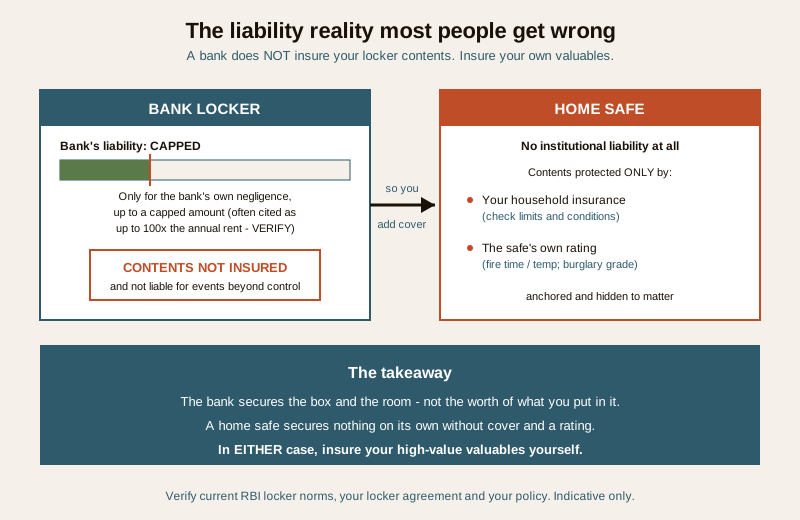
This is the heart of the decision and the part that surprises people. Under the RBI's revised locker framework, a bank is not an insurer of your locker contents, and its liability is limited, not open-ended.
What the bank is and is not responsible for
In broad terms, and subject to the current RBI norms and your own locker agreement:
- The bank is expected to take reasonable care of its strongroom and is liable for losses caused by its own negligence or shortcomings — for example fire, theft, fraud by staff, or building collapse attributable to the bank.
- Even then, that liability is capped. The figure widely cited under the revised rules is up to 100 times the annual locker rent — but treat this as an indicative ceiling to confirm, not a fixed guarantee, and verify the current RBI norms and the wording of your agreement, because caps and conditions change.
- The bank does not know, verify or insure what you keep inside, and it is not liable for events beyond its control — natural calamities such as earthquake or flood, or losses that are your own fault, are typically excluded.
The practical takeaway: the bank secures the box and the room, not the worth of what you chose to put in it. If your locker holds far more value than a hundred times its rent, the excess is uninsured unless you arrange your own cover.
And the home safe?
A home safe comes with no institutional liability at all. Whatever is inside is protected only by two things you arrange yourself: your household insurance (whether your policy covers jewellery, cash and valuables, up to what limit, and on what conditions such as a rated safe) and the safe's own rating against fire and forced entry. Read your policy: many home insurance products cap cash and unspecified valuables low, and some require items above a value to be individually declared and valued.
So the real comparison on liability is not "bank protects me" versus "I am on my own." It is: with a locker, a capped amount of bank liability for the bank's negligence plus any personal insurance you add; with a safe, no institutional liability but whatever personal insurance and rating you put in place. In both cases, insuring high-value items yourself is the responsible move.
What suits what: a simple rule of thumb
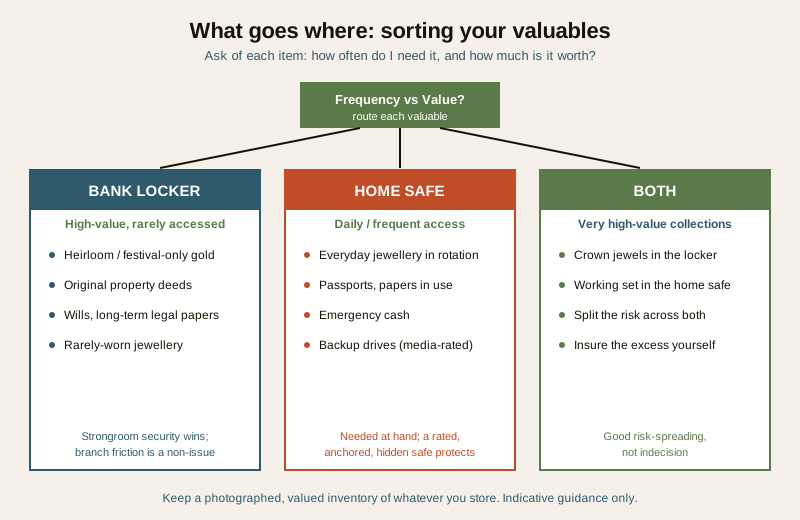
Once you understand the four dimensions, most households sort their valuables cleanly. The deciding question for each item is: how often do I need it, and how much is it worth?
- High-value, rarely-accessed — inherited gold, heirloom jewellery worn once or twice a year, original title deeds and long-term legal papers. These belong in a bank locker: maximum physical security, and the low access frequency makes the branch friction a non-issue.
- Daily or frequent access — the jewellery in regular rotation, passports and papers you actually use, emergency cash, spare keys and backup drives. These belong in a good home safe: you need them at hand, and a rated, anchored, hidden safe protects them adequately.
- Both — many Indian households sensibly split: the crown jewels in the locker, the working set and emergency cash in a home safe. That is not indecision, it is good risk-spreading.
| Item | Suggested home | Why |
|---|---|---|
| Heirloom / festival-only gold | Bank locker | High value, rarely needed; strongroom security wins |
| Original property deeds, wills | Bank locker | Irreplaceable, seldom accessed |
| Everyday jewellery in rotation | Home safe | Needed often; branch friction not worth it |
| Passports, papers in active use | Home safe | Frequent access; keep a rated safe |
| Emergency cash | Home safe | Must be reachable at any hour |
| Backup drives, digital media | Home safe (media-rated) | Access + needs low-temperature fire rating |
| Very high-value collection | Both / locker + insurance | Split risk; insure the excess |
Whichever you choose: nomination, joint holders and an inventory
Two housekeeping habits matter regardless of which route you take, and they are the ones families most often neglect until it is too late.
Nomination and joint holding. For a bank locker, set up a nomination or hold it jointly, so the contents can be accessed lawfully by the right person if the primary holder dies or is incapacitated. Decide deliberately whether joint operation is "either or survivor" or "both to operate" — the second is more secure but less convenient. For a home safe, make sure a trusted family member knows the safe exists, where it is and how access is arranged, ideally with a sealed record of the combination kept somewhere sensible.
Keep an inventory. For either option, maintain a written (and photographed) inventory of what is stored, with valuations and, for jewellery, hallmark and weight details. An inventory is what turns a vague loss into a documented insurance claim, and it is essential for the family to know what should be there. Update it whenever the contents change, and keep a copy separate from the safe or locker itself.
How it connects
If this comparison has pushed you toward a home safe, start with the complete guide to home safes in India for the full picture, then use how to choose a home safe in India to match a rating and size to your risk, and jewellery and valuables safes in India for gold and heirlooms specifically. All of these sit in the Safes & Vaults library, which collects the planning, buying and installation guides in one place.
Key takeaways
- The bank-locker versus home-safe choice comes down to four things: access, cost, security level, and liability and insurance — decide item by item, not once for everything.
- A bank locker gives strongroom-grade physical security but only in branch hours; a home safe gives anytime access but is only as strong as its rating and how well you anchor and hide it.
- A bank does NOT insure your locker contents; its liability is limited to its own negligence and is capped — the figure often cited is up to 100 times the annual rent, which you should verify against the current RBI norms and your locker agreement, not treat as a guarantee.
- A home safe carries no institutional liability at all: its contents are protected only by your household insurance and the safe's rating — so insure high-value items yourself in either case.
- High-value, rarely-accessed heirlooms and deeds suit a bank locker; daily-access jewellery, active papers and emergency cash suit a home safe; many households sensibly use both.
- Set up nomination or joint holding and keep a photographed, valued inventory whichever route you choose.
References
- Reserve Bank of India — the revised guidelines on safe deposit locker and safe custody facilities set out the bank's duties, the limitation of its liability and the customer's responsibilities; verify the current norms and read your own locker agreement.
- Your bank's locker agreement and current rent card — the authoritative source for the rent, deposit, operation mode and the specific liability terms that apply to you.
- Your household or home-contents insurance policy — the source of truth for whether jewellery, cash and valuables are covered, up to what limit, and on what conditions (such as a rated safe or individual declaration).
- Safe manufacturers' and independent certification guidance — for how fire ratings (protection time and internal temperature) and burglary or cash ratings (systems such as UL "RSC" and EN 1143-1) are defined; check the certificate.
- Bureau of Indian Standards catalogue — to verify the current edition of any Indian standard referenced for safes or strongroom construction.
This is indicative educational guidance to help you decide, not legal, tax or insurance advice; verify the value at risk, the current RBI locker norms, your locker agreement, the safe's certificate and your insurer's requirements, have any home safe professionally installed, and treat this as strictly defensive planning.
Export this guide
Related Guides — Deep-dive reading
Document and Data Safes in India (2026): Protecting Papers and Digital Media from Fire, Water and Theft
Why a paper fire rating cooks a hard drive that its own certificate never promised to save, how to tell a document safe from a media/data safe, what to keep inside, how to index it, and why the safe is your originals store — not your backup.
SecurityJewellery and Valuables Safes in India (2026): Rating, Fitting and Placing a Safe for Gold, Watches and Heirlooms
How to choose, rate, fit and place a home safe for jewellery, gold, watches and high-value valuables in India — matching the burglary grade to the value your insurer will cover, adding fire protection for heirlooms and papers, keeping metal dry, and knowing when a bank locker is the better answer.
SecuritySecurity for People Living Alone in India (2026): Calm, Practical Habits When There Is No Second Person to Notice
Living alone is an ordinary and growing part of Indian life - the student in a new city, the working single, the elder whose children are abroad, the person after a separation. It does not call for fear. It calls for a few deliberate habits, because there is no second person in the home to notice trouble, raise the alarm, or catch an accident. This is calm self-reliance, layer by layer.
SecurityRelated Tools — Try Free
Before vs After — Cost Reality Check
Compare what you expected to pay vs what you actually paid, category by category.
Reality CheckSecurity System Cost Estimator
Estimate the all-in capex with GST, annual running cost and 5-year total cost of ownership of a home or building security system.
Cost EstimatorApartment Furniture Size Chart
Standard furniture dimensions for Indian apartments — sofas, beds, tables, dining, storage.
Reference Chart