
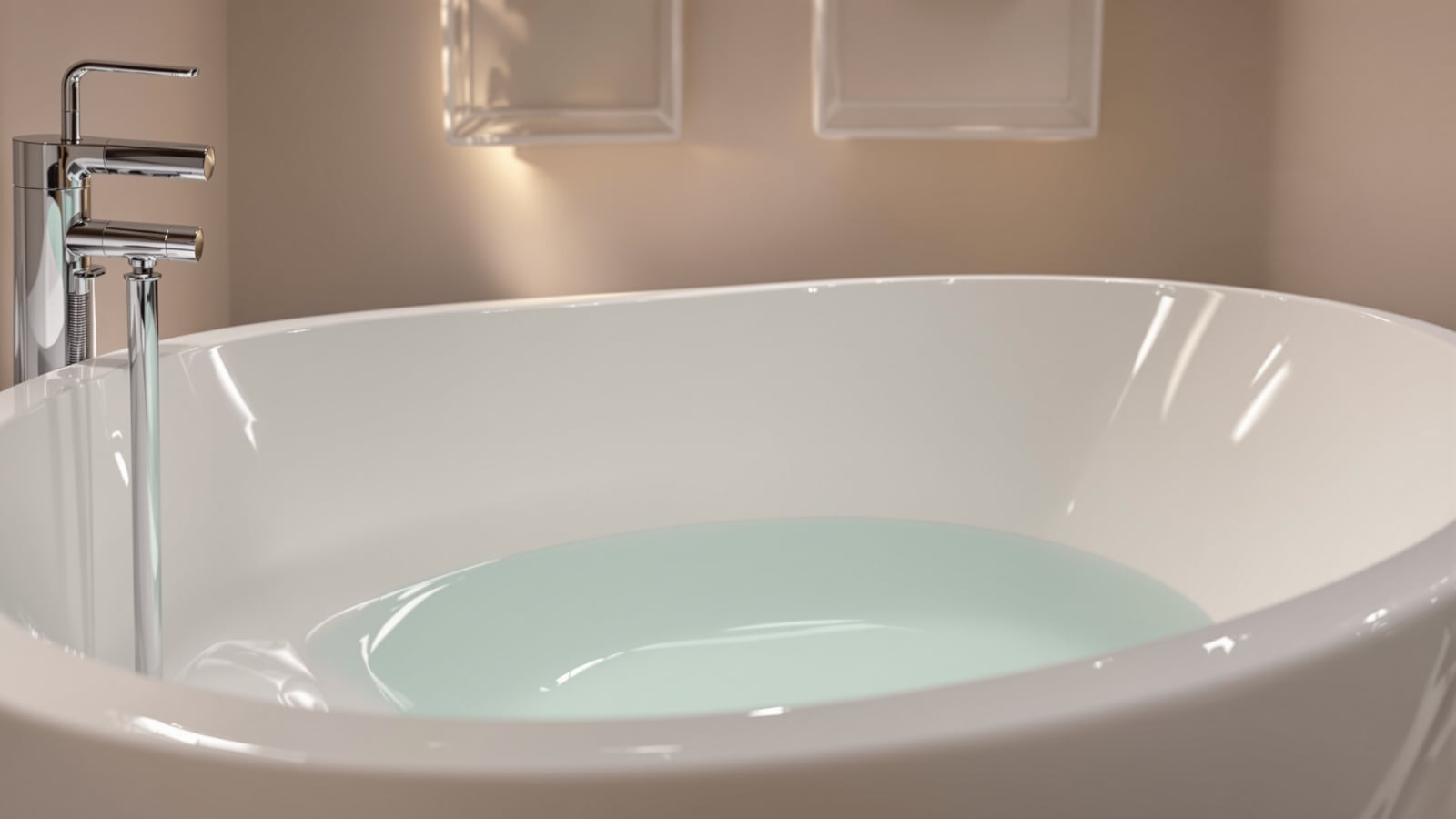
Acrylic Bathtub India: Grades, Thickness, Care, Lifespan & Cost (2026)
The India-first guide to acrylic bathtubs — why they are the most popular tub material in Indian homes, how sanitary-grade acrylic and fibreglass reinforcement work, what thickness and grade to insist on, how to clean and repair scratches yourself, honest lifespan and rupee costs, and how acrylic stacks up against cast iron and FRP.
Walk into almost any Indian bathroom showroom and the tub on the floor is acrylic. It is the default for a reason: it is light enough for two people to carry up a stairwell, warm to sit in on a cold Bengaluru morning, forgiving on the wallet, and — unlike stone, steel or cast iron — a scuff on its surface can be polished out with a kit and an afternoon rather than a replacement. For most homeowners fitting a tub into an apartment or a new home, acrylic is the sensible answer before the exotic options are even on the table.
But "acrylic" hides a wide quality range. A good sanitary-grade sheet backed by proper fibreglass reinforcement will outlast the bathroom around it; a thin, under-reinforced shell will flex underfoot, craze, and yellow within a few years. The difference is invisible on the showroom floor and enormous in your home. This guide is India-first and practical: it explains what acrylic actually is, the grade and thickness to insist on, how to clean and repair it in our hard-water reality, what it honestly costs and lasts, and how it compares with cast iron and FRP. It sits under the bathtub guide for India; for the two main rivals see the cast iron bathtub guide and, once you have chosen acrylic, the built-in bathtub guide for how to install it.
Acrylic is not one material but a shell and a backing. The pretty acrylic layer you see is 3–8 mm thin; the fibreglass and resin behind it is what stops the tub flexing. Judge both, not just the gloss.
What an acrylic bathtub actually is
An acrylic tub is not a solid slab of plastic. It is a thin sheet of coloured, glossy acrylic (PMMA) — the same family as cast acrylic used for signage and aquariums — that is heated and vacuum-formed over a mould into the tub shape. On its own that shell is floppy, so the underside is reinforced with layers of fibreglass matting and polyester resin, often with plywood or a steel/metal cradle bonded in at the base and around the rim to carry weight. The result is a sandwich: a hard, non-porous, repairable acrylic face you bathe in, and a stiff composite backing you never see.
This construction is why acrylic behaves the way it does. The acrylic surface is non-porous, so it does not soak up water or harbour mildew, and it is warm to the touch because plastic conducts heat poorly — you are not shocked by a cold rim the way you are with metal or stone. That same low conductivity means the tub holds bath-water heat noticeably longer than steel or cast iron. And because the coloured layer runs a few millimetres deep rather than being a paint film, a surface scratch can be wet-sanded and polished out without exposing a different material underneath.
The catch is that all of this depends on the quality of both layers. A reputable tub uses sanitary-grade cast acrylic (thicker, more UV-stable, less prone to yellowing) rather than cheaper extruded acrylic, and a generous, even fibreglass build-up rather than a thin skim. Cut either and you get the tub that gives acrylic a bad name.
Grades and thickness — what to insist on
Two numbers separate a tub you will love from one you will regret, and neither is printed on the price tag. Ask for both.
- Acrylic grade. Insist on cast (sanitary) acrylic, not extruded. Cast acrylic is denser, more scratch-resistant and far more UV- and heat-stable, which is what keeps a white tub white instead of drifting yellow. Premium brands quote branded sheet (for example Lucite or Senoplast) — a reasonable proxy for grade even if you never see the raw sheet.
- Surface thickness. The formed acrylic layer should be at least 5 mm, ideally 6–8 mm at the base where you stand. Thin 3 mm shells telegraph every knock and wear through faster. A thicker sheet also gives you more depth to polish out scratches over the tub's life.
- Total wall / reinforcement. Even a good surface flexes if the fibreglass behind it is skimped. Press hard on the tub floor in the showroom — a well-built tub is rock solid; a hollow "oil-can" flex means thin reinforcement, and that flex will eventually craze the surface into hairline cracks.
| Spec | Budget tub | Good tub | Insist on |
|---|---|---|---|
| Acrylic type | Extruded | Cast / sanitary | Cast sanitary-grade |
| Surface thickness | ~3 mm | 5–8 mm | ≥ 5 mm, 6–8 mm at base |
| Reinforcement | Thin fibreglass | Thick fibreglass + cradle | No flex when you press the floor |
| UV / yellowing | Yellows in years | UV-stable | Stays white |
| Warranty | 1 year | 5–15 years | ≥ 5 years on surface |
Sanitaryware in India broadly falls under IS 2556, and while that standard centres on vitreous china, a BIS-marked or ISI-conformant acrylic tub signals a maker who tests to a recognised benchmark for water absorption, load and finish. A written warranty of five years or more on the surface is the most honest quality signal a homeowner can actually hold the seller to.
Cleaning and care — the hard-water reality
Acrylic's non-porous surface is genuinely easy to keep clean — but only if you respect one rule: it is a soft plastic, so abrasives are its enemy. A scouring pad, a gritty cleaning powder or an acidic descaler will dull and micro-scratch the gloss permanently. Indian hard water makes this a live risk, because the instinct is to reach for something strong to fight limescale.
- Everyday: rinse and wipe with a soft cloth or sponge and a mild liquid soap or pH-neutral bathroom cleaner. Dry the tub after use to stop hard-water spotting.
- Limescale (hard water): use a diluted white-vinegar solution (roughly one part vinegar to three parts water) left a few minutes, then rinse and wipe — never a strong acid descaler or CLR-type product neat.
- Never use: scouring pads, steel wool, abrasive powders (Vim/Gattu-style scrubs), acetone, nail-polish remover, thinner, or bleach left to sit — these etch, cloud or crack acrylic.
- Stains: a paste of baking soda and water, rubbed gently with a soft cloth, lifts most marks without scratching.
- Protect the gloss: an occasional car-style acrylic/gel-coat polish restores shine and adds a water-shedding layer that makes hard water bead off.
The single habit that keeps an acrylic tub looking new: never let anything abrasive touch it. One session with a scouring pad does damage no amount of gentle cleaning will undo.
Because the coloured layer is millimetres deep, light scratches are DIY-repairable — this is acrylic's quiet superpower. Wet-sand the scratch with progressively finer wet-and-dry paper (say 600 → 1000 → 2000 grit), then finish with a plastic/acrylic polishing compound and a soft cloth until the gloss returns. Deeper gouges and small cracks are fixed with an acrylic repair kit (colour-matched filler plus polish), the kind sold for baths and caravans. Contrast that with cast iron or steel enamel, where a chip exposes bare metal that rusts and needs professional re-enamelling.
Lifespan, cost and where acrylic fits
Treated well, a good acrylic tub lasts 10–15 years or more, and its repairability means the surface can be refreshed rather than replaced along the way. A cheap tub abused with abrasives can look tired in 3–5 years. So the lifespan is as much about grade and care as about the material itself.
On price, acrylic is the value pick — a large part of why it dominates Indian bathrooms.
| Tub type | Indicative ₹ (tub only) | Weight (empty) | Heat retention | Repairability |
|---|---|---|---|---|
| Acrylic (drop-in / built-in) | ₹15,000 – ₹60,000 | Light (25–40 kg) | Good | DIY-repairable |
| Freestanding acrylic | ₹40,000 – ₹1,50,000+ | Light | Good | DIY-repairable |
| FRP / fibreglass gel-coat | ₹8,000 – ₹30,000 | Lightest | Fair | Harder, gel-coat cracks |
| Cast iron (enamelled) | ₹60,000 – ₹3,00,000+ | Very heavy (100–150 kg) | Excellent | Pro re-enamel only |
Where does acrylic genuinely fit? For apartments and upper floors, its light weight avoids the structural and handling headaches of cast iron — you rarely need to check the slab loading or hire extra labour to carry it up. For families who want a warm, comfortable, low-maintenance tub that shrugs off the odd scratch, it is the pragmatic default. It suits freestanding, drop-in and built-in installs alike (see the built-in bathtub guide for the deck-and-apron method).
Its honest limits: acrylic can flex if the reinforcement is thin, scratches more easily than enamel or stone, and lower grades can yellow under years of sun and heat. If you want a tub that will feel identical in fifty years and hold heat like nothing else — and you have the slab and the budget for the weight — cast iron is the heirloom choice; read the cast iron bathtub guide for that trade-off.
Acrylic vs FRP vs cast iron — the short version
- Acrylic vs FRP (fibreglass): both are lightweight composites, and confusingly an acrylic tub is fibreglass-backed. The difference is the surface. A pure FRP tub has a gel-coat (polyester) surface that is thinner, less durable and more prone to fading and crazing; acrylic has a thicker, tougher, repairable PMMA surface over the fibreglass. Acrylic costs more and is worth it for anything but the tightest budget.
- Acrylic vs cast iron: cast iron wins on heat retention, rigidity and lifespan, and its enamel resists scratches acrylic cannot. But it is three to four times the weight, far pricier, cold to first touch, and a chip means professional re-enamelling. Acrylic wins on price, warmth, weight and DIY repair.
For the full field of materials, sizes and installation types, start from the bathtub guide for India, which frames every option before you commit.
References
- IS 2556 (Bureau of Indian Standards) — Vitreous sanitary appliances: the reference benchmark for sanitaryware quality, water absorption and finish that a conformant tub should test against.
- NBC 2016 (National Building Code of India), Part 9 Plumbing Services — bathing fixtures, water supply, waste, traps and drainage provisions relevant to tub installation.
- IS 1172 — Basic requirements for water supply, drainage and sanitation, referenced for fixture drainage and trap seals.
- CPHEEO Manual on Water Supply and Sanitation (Ministry of Housing and Urban Affairs) — fixture and drainage design guidance for Indian buildings.
- BIS product certification (ISI mark) — the scheme under which sanitaryware and fittings are certified to Indian standards; a marked product signals third-party testing.
Export this guide
Related Guides — Deep-dive reading
Cast Iron Bathtub India: The Heirloom Tub, Weight & Slab Load, Enamel Care & Cost (2026)
Why an enamelled cast-iron bathtub is the heirloom tub — unbeatable heat retention, a quiet soak and a vitreous-enamel surface that shrugs off scratches and stains for decades — set against the one thing India buyers must plan for: the sheer weight on the slab, the crew it takes to carry it up, chip repair, the cost premium, and an honest verdict versus acrylic.
BathroomsAcrylic vs Cast Iron Bathtub: Which Is Better? (India, 2026)
A fair, India-first head-to-head between an acrylic bathtub and an enamelled cast-iron one — weighed on the factors that actually decide it here: slab load and handling, heat retention, durability, warmth to touch, repairability, price and installation — with a clear verdict by home type and budget.
BathroomsSoaking Tub India: Deep Japanese-Style Ofuro Baths, Geyser Sizing, Load & Real Costs (2026)
Why a deep soaking tub gives a full-immersion soak from a small footprint — ofuro ergonomics, the extra-deep water line, how much hot water and geyser capacity you actually need, heat-retention materials, the structural load of a filled tub, and honest rupee ranges for an Indian home.
BathroomsRelated Tools — Try Free
Before vs After — Cost Reality Check
Compare what you expected to pay vs what you actually paid, category by category.
Reality CheckWindow Cleaning Cost Calculator
Estimate professional window cleaning cost per visit and per year by access and frequency.
Window CalculatorDesign Style Finder Quiz
Answer 10 visual questions to discover your Indian interior style profile with materials and colours.
Interactive Quiz