
B.Arch CurriculumFree, forever
A tribute to Amogh N P
Workshop — Glass, Stone & Metal
A hands-on materials workshop for the hard, fire-worked materials of interior design — glass, natural stone, engineered stone, and metal & steel — and a companion to the Semester III workshop in wood, cane and bamboo, not a repeat. The syllabus note governs everything: learning is by FEEL, by working the material to understand what it wants to do, and by knowing how one material joins to another. And because no corner of the trade carries more confident showroom folklore than 'stone' and 'steel', the course grades every claim against the evidence. Architectural flat glass is made by the FLOAT process — molten glass floated on a bath of molten tin, the method Pilkington announced in 1959 — not by glassblowing, which makes vessels and art, never sheet; and the safety glasses are two different ideas, toughened glass being reheated and quenched so it is four to five times stronger and shatters into blunt granules (strong, but never 'unbreakable', and vulnerable to edge damage and rare nickel-sulphide breakage), while laminated glass bonds sheets to a plastic interlayer so it holds together when it breaks, like a windscreen. In stone, granite is an igneous rock that is hard and largely acid-resistant, while marble is metamorphosed limestone that is softer and etched dull by lemon juice, vinegar and many cleaners — so 'granite and marble are the same premium stone' is folklore, and so is 'sealing makes stone stain-proof', because a sealer only slows absorption and buys time to wipe a spill. Engineered 'quartz' stone is the most over-sold of all: it is an artificial slab of roughly ninety per cent crushed quartz bound in seven to ten per cent polymer resin, so it is not natural stone and, because of that resin, it is LESS heat-tolerant than granite and can yellow in the sun — and, most seriously, cutting it dry releases respirable crystalline silica, a documented cause of accelerated silicosis in fabricators that led Australia to become the first country to ban engineered stone, from 1 July 2024, so the workshop rule is wet-cutting, extraction and respiratory protection, never a dry cut. Sintered stone and porcelain slabs are a separate, resin-free, fired category that tolerates the hot pan quartz cannot. In metal, stainless steel resists corrosion only through a self-healing chromium-oxide passive film and still pits and 'tea-stains' in chlorides, so the grade matters — 304 for general use, marine 316 with molybdenum near the sea; most decorative 'wrought iron' is really mild steel, because true wrought iron has not been mass-produced since the early twentieth century; brass is copper with zinc while bronze is copper with tin; and galvanising is a sacrificial zinc coating that protects electrochemically even at a scratch, not a coat of grey paint. The workshop closes on the live-exposure unit the syllabus asks for — making by feel, and joining dissimilar materials honestly — where the real engineering appears: galvanic corrosion, in which two different metals bridged by a little moisture form a cell and the less-noble one corrodes, so you isolate them; differential thermal movement, because glass, stone and metal expand at different rates, so you set glass on gaskets and blocks and never clamp it rigidly; and workshop safety as verified fact rather than caution-culture — the silica dust, the hot work, the sharp edges and the protective equipment that keep the making safe. Throughout, the material is met by hand, and the folklore is named as folklore.
Course byAmogh N P· Architect & interior designer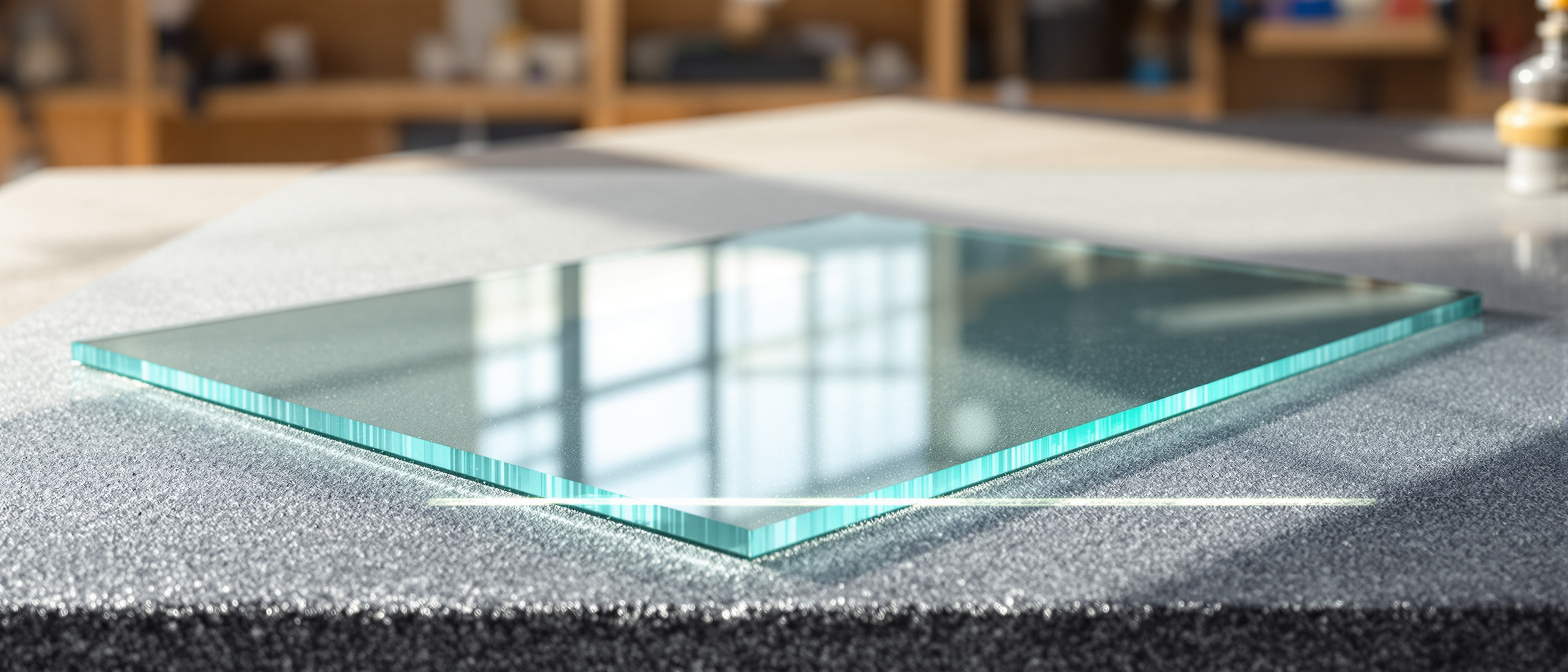
The syllabus
5 units · 5 liveThe hard, fire-worked materials of interior design — glass, natural stone, engineered stone and metal & steel — met by feel and a companion to the wood, cane and bamboo workshop, not a repeat. All 5 units are live as full interactive lessons, each with original zoomable diagrams, a self-assessment quiz and a study task — and each honest about the folklore: that architectural glass is float, not blown; that toughened glass is strong but not unbreakable; that granite is not marble and sealing is not stain-proofing; that 'quartz' is mostly resin (with a silica hazard serious enough to get it banned in Australia); that stainless can rust and 'wrought iron' is usually mild steel; and that where dissimilar materials meet, galvanic corrosion and thermal movement are the real engineering. Safety is taught as verified fact, not caution-culture.
Unit 1 — Glass
LiveHow architectural glass is really made (float, not blown); annealed vs toughened vs laminated vs wired; working glass by feel — cutting, edging, sand-blasting, etching, fixing.
Unit 2 — Natural Stone
LiveRock families (igneous/granite, metamorphic/marble, sedimentary); the main Indian stones; stone masonry and finishes; granite-vs-marble and sealing folklore.
Unit 3 — Engineered Stone
LiveWhat engineered 'quartz' really is (crushed quartz in polymer resin); its heat/UV limits; sintered stone and terrazzo; the silica hazard and Australia's 2024 ban.
Unit 4 — Metal & Steel
LiveFerrous vs non-ferrous; the stainless passive film and 304 vs 316; wrought-iron and galvanising myths; brass vs bronze; joinery, finishes and metal in built form.
Unit 5 — Joining Materials & the Workshop
LiveLive exposure — joining dissimilar materials: galvanic corrosion and isolation, differential thermal movement, fixing glass and stone, and workshop safety by feel.
Course outcomes
What you will be able to doExplain how architectural glass is really made (float, not blown) and distinguish annealed, toughened and laminated glass and their safe uses.
Classify natural stones by rock family, identify the main Indian stones, and separate stone facts from showroom folklore (granite vs marble; sealing).
Describe what engineered stone actually is, its resin-driven limits, and the silica hazard and regulation — and choose it responsibly.
Identify metals and their finishes and joinery, know that stainless can corrode and grade matters, and specify metal in built form (jali, railing, stair).
Join dissimilar materials soundly — managing galvanic corrosion and thermal movement — and work safely by feel in the workshop.
The author
Amogh N P
Architect, interior designer, and creative polymath. Studio Matrx began in his notebooks — his vision of design made honest, useful, and open to everyone. Its Academy is written and taught in his memory, and free, forever.
More about Amogh →Is that 'quartz' countertop natural stone?
No — it is about ninety per cent crushed quartz bound in polymer resin, which is why a hot pan can scorch it and why cutting it dry releases the silica dust that led Australia to ban engineered stone outright. That precision is the spirit of this workshop: architectural glass is floated on molten tin, not blown; toughened glass is strong but not unbreakable; granite shrugs off the acid that etches marble; stainless steel still rusts in salt air; most 'wrought iron' is mild steel; and where two different metals meet in the damp, the less-noble one corrodes. Read the five units, try the material decoder and the galvanic-pairing tool, and learn the materials by feel — and safely.
The curriculum is free, forever