
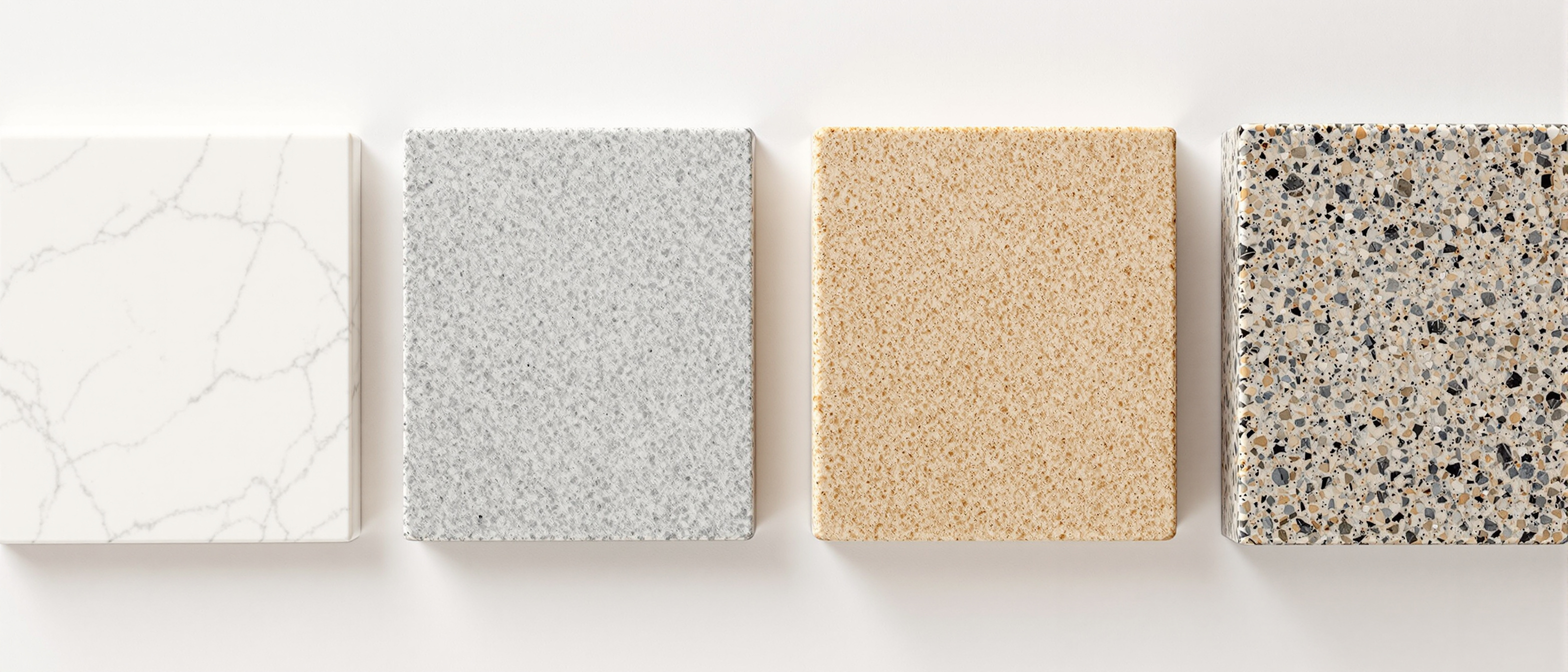
Natural Stone
Granite is not marble — and sealing is not stain-proofing
Stone carries more showroom folklore than any material in interiors, and two myths do the most damage: that granite and marble are the same premium stone, and that sealing makes stone stain-proof. Both are false, and knowing why — one rock is hard and acid-resistant, the other soft and etched by a squeeze of lemon; a sealer buys minutes, not immunity — changes how you specify and care for every stone. This unit classifies stone by how it formed, names the great Indian stones, and separates the fact from the sales patter.
Learning objectives
By the end of this lesson, you will be able to — mapped to the course outcomes for the Glass, Stone & Metal workshop:
Classify natural stones into igneous, metamorphic and sedimentary families and link each to interior uses.
Contrast granite and marble by hardness and acid-sensitivity, and bust the 'same premium stone' myth.
Identify the main Indian stones — Makrana marble, Kota limestone, Rajasthan sandstones, South-Indian granite.
Describe stone masonry and finishes, and explain why sealing slows but does not stop staining.
The three rock families
Stone falls into three families: igneous (granite — hard, acid-resistant), metamorphic (marble — softer, acid-sensitive) and sedimentary (limestone and sandstone — workable, often porous). The family predicts hardness, acid-sensitivity and care.[1]
Hard, and largely acid-proof
IGNEOUS rock crystallised from molten magma — GRANITE is the interior example, an interlock of quartz and feldspar. It is very HARD, heat- and scratch-resistant, and largely ACID-RESISTANT, which is why it survives kitchens and heavy floors. Commercial 'granites' include some related hard stones, but the family trait holds: durable and forgiving.[1]
The great Indian stones
India’s stones are among the world’s finest: Makrana marble built the Taj Mahal, Kota is a hard blue-grey limestone floor stone, Rajasthan’s sandstones clad its forts, and hard South-Indian granites are exported worldwide.[2]
The Taj Mahal marble
MAKRANA marble, from Rajasthan, is a famously white, dense calcitic marble — the stone of the Taj Mahal and countless temples. It is the benchmark Indian marble, and it behaves like all marble: stunning, but soft and acid-sensitive, needing care around citrus, vinegar and acidic cleaners.[2]
Masonry, finishes & the sealing myth
Masonry runs from rough rubble to finely-dressed ashlar; a finish (polished, honed, flamed, leathered) changes slip, stain-showing and mood as much as the stone does. And sealing only slows staining — it buys time to wipe a spill, and does nothing against acid etching.[3]
Rubble to ashlar
Stone masonry runs a spectrum of dressing. RUBBLE masonry uses irregular, roughly-broken stones (random rubble, or coursed rubble brought to level courses) — economical and rustic. ASHLAR masonry uses finely-dressed stones cut to precise rectangular blocks with thin joints — refined and expensive. Between them sit squared-rubble and various dressings. The choice is one of labour, cost and character.[3]
At a glance
| Aspect | The fact | The folklore |
|---|---|---|
| Granite | Igneous, very hard, largely acid-resistant | Just expensive marble |
| Marble | Metamorphic limestone, softer, etched by acids/citrus | A bullet-proof luxury surface |
| Kota / sandstone | Sedimentary Indian stones with their own strengths | A cheap substitute for granite |
| Sealing stone | Slows absorption — buys time to wipe a spill | Makes stone stain-proof |
| Acid etching on marble | A chemical dull mark sealing can't prevent | A stain a sealer stops |
| Stone finish | Changes slip, stain-showing and mood (polished/honed/flamed) | Only a cosmetic gloss choice |
Key terms
Rock crystallised from magma; granite (quartz + feldspar) is hard, heat- and scratch-resistant and largely acid-resistant — the durable interior stone.
Rock transformed by heat and pressure; marble is metamorphosed limestone — beautiful and veined, but softer than granite and etched by acids.
Rock from settled grains — limestone (Kota) and sandstone (Jaisalmer, Jodhpur, Dholpur); workable and characterful, often porous and acid-sensitive.
Rubble uses irregular broken stones (economical, rustic); ashlar uses finely-dressed rectangular blocks with thin joints (refined, costly).
Polished (glossy, shows colour and etching), honed (smooth matt), flamed (rough, grippy), leathered (low-sheen texture) — changing slip, stain-showing and mood.
A dull chemical mark where acid (citrus, vinegar, cleaners) reacts with a calcareous stone like marble — different from a stain, and not prevented by sealing.
Study task
Gather a small library of stone samples — ideally a marble, a granite, a Kota or limestone, and a sandstone — and run the honest test. Put a drop of lemon juice or vinegar on an inconspicuous corner of each and watch: the calcareous stones (marble, limestone) will dull and etch, the granite will not. Note the finish of each sample and how much it shows the mark. Then write a one-page specification for a busy family kitchen and an entrance lobby, choosing a stone and finish for each and justifying it on hardness, acid-sensitivity, slip and maintenance — and state plainly what sealing will and will not do for the stone you chose.
Self-assessment
1. What is the real difference between granite and marble?
2. Which is India's famous white marble, used for the Taj Mahal?
3. Does sealing make stone stain-proof?
4. What is Kota stone?
5. What does a stone's finish change?
Recap
References & further reading
- [1]Rock classification and stone properties — igneous (granite), metamorphic (marble/slate), sedimentary (limestone/sandstone); hardness and acid-sensitivity. https://www.usgs.gov/programs/mineral-resources-program
- [2]Indian dimension stones — Makrana marble, Kota limestone, Rajasthan sandstones (Jaisalmer, Jodhpur, Dholpur) and South-Indian granites (Geological Survey of India / trade references). https://www.gsi.gov.in/
- [3]Stone masonry (rubble vs ashlar), finishes (polished, honed, flamed, leathered) and stone care/sealing — 'Indoor & outdoor: the beauty of natural stone' and stone-care guidance. https://www.marble-institute.com/
Further reading
- Indoor & Outdoor — the Beauty of Natural Stone (ETA-PLUS Publishing).
- John F. Pile, Interior Design (Harry N. Abrams) — stone as an interior material.
- Natural Stone Institute, Dimension Stone Design Manual — classification, finishes, care.
Sources gathered and fact-checked June 2026. Published values vary by source, sample and method — treat as indicative and confirm against the cited standard before structural use.
The author
Amogh N P
Architect, interior designer, and creative polymath. Studio Matrx began in his notebooks — his vision of design made honest, useful, and open to everyone. Its Academy is written and taught in his memory, and free, forever.
More about Amogh →