
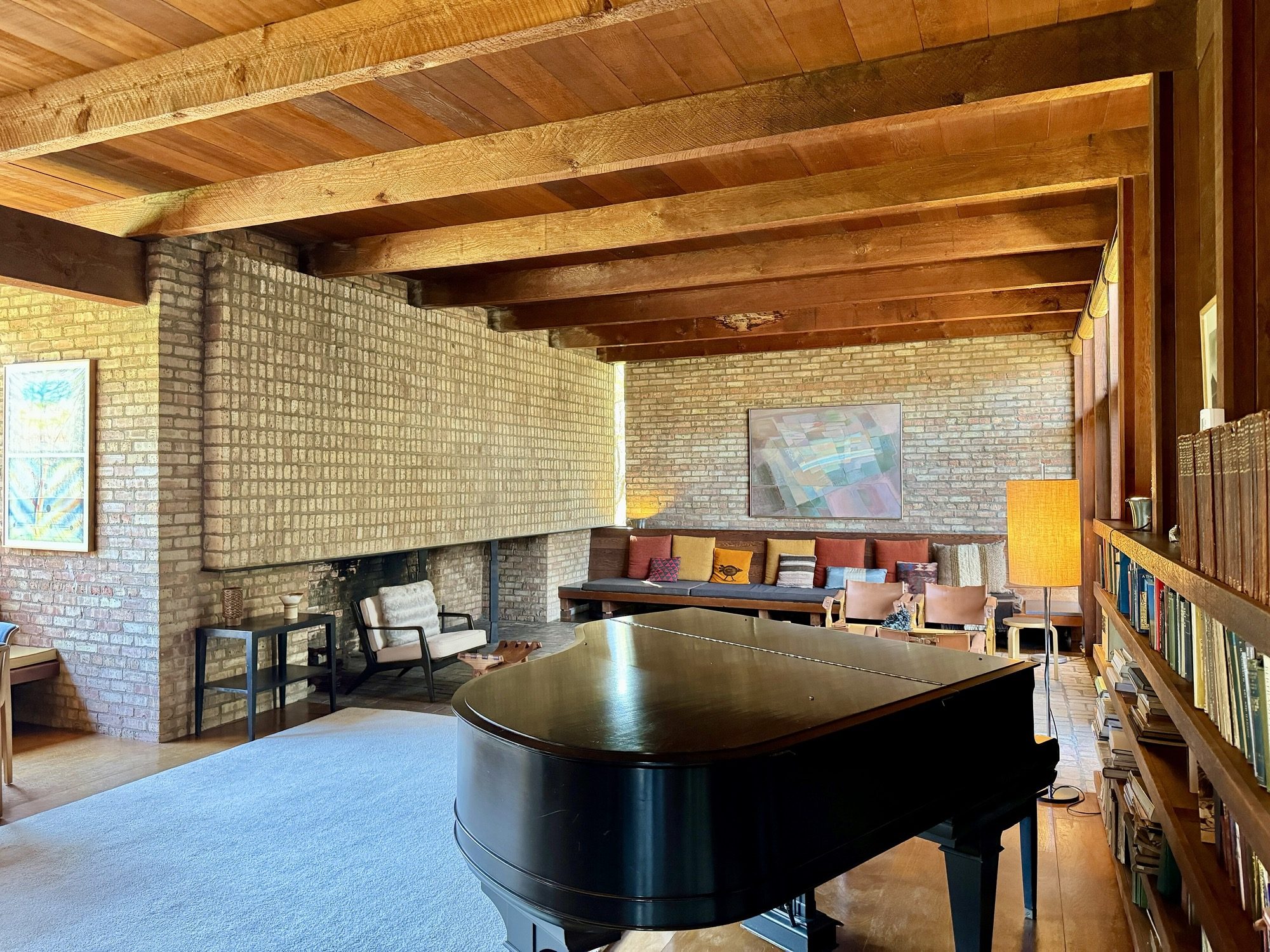
Introduction to Interior Design
Decoration, design and furniture design — the process, and the elements and principles that are the language of the room.
What is interior design, and how does it differ from decoration? This unit draws the line between the decorator, the interior designer (the regulated profession) and the furniture designer, walks the design process, and sets out the vocabulary every designer uses — the elements and principles of design.
Learning objectives
By the end of this lesson, you will be able to — mapped to the course outcomes for Interior Design:
Distinguish interior decoration, interior design and furniture design by scope, technical content and regulation.
Describe the interior design process — programming, schematic design, design development, documentation and execution.
Define the elements of design — point, line, shape, form, space, colour, light, pattern, texture — with interior examples.
Apply the principles of design — balance, proportion, scale, rhythm, emphasis, unity, contrast and movement.
Decoration, design & the process
Decoration is surface and furnishing; interior design adds space planning, codes, services, lighting and accessibility (NCIDQ abroad; the IIID, founded 1972, in India); furniture design makes a manufacturable object.[1, 6] Then the work runs programming → schematic → development → documentation → execution.
Surface, furnishing, style
Interior decoration is the older practice — the surface treatment and furnishing of an existing space: colour schemes, fabrics, window treatments, furniture selection, accessories and styling. It treats the room's shell as fixed. Its pioneers (Elsie de Wolfe, often called the first professional decorator) were gifted, self-taught tastemakers; it does not engage structure, codes or life-safety.[1, 6]
The elements & principles
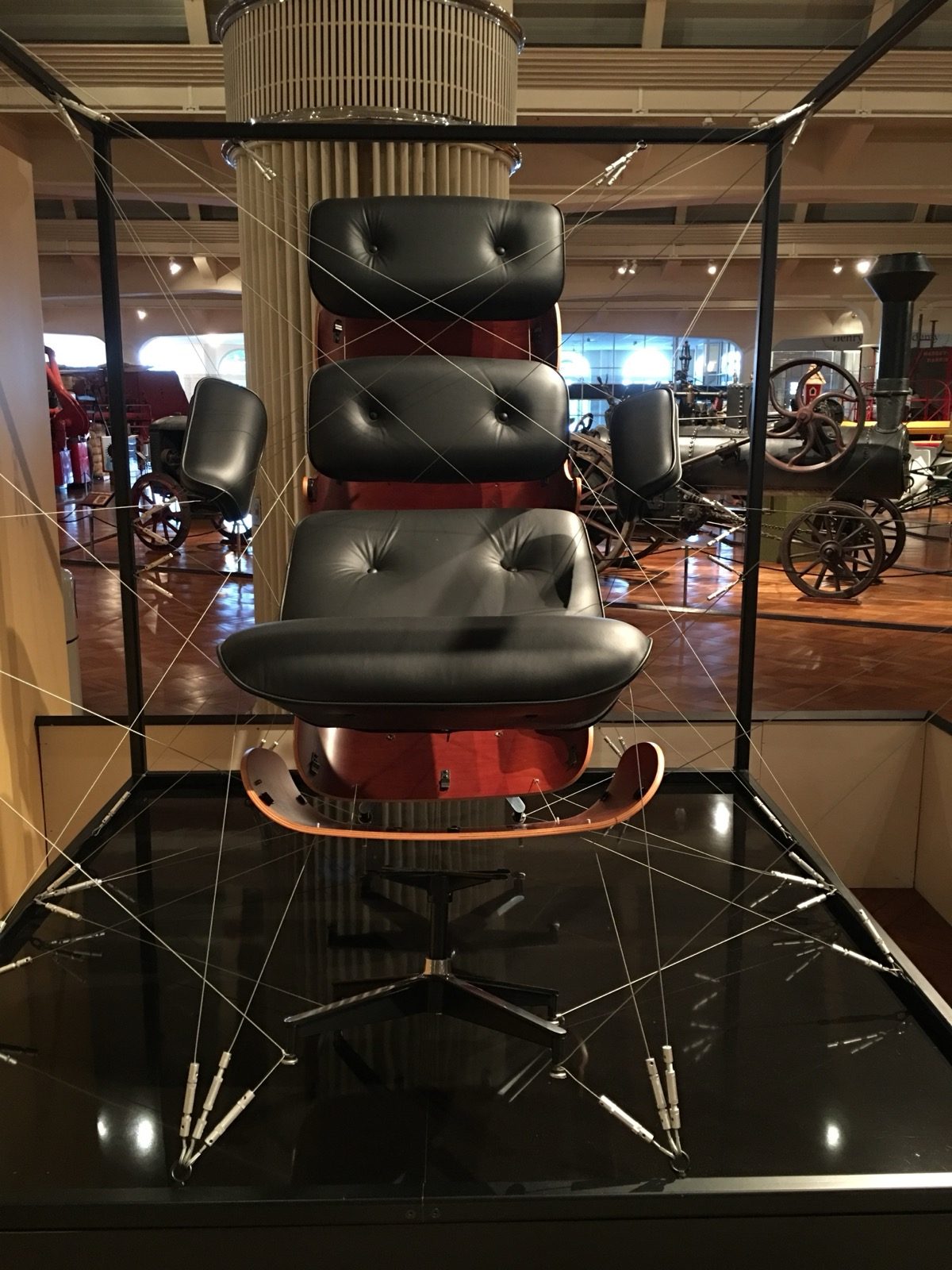
The elements are the raw material — point, line, shape, form, space, colour, light, pattern, texture; the principles organise them — balance, proportion, scale, rhythm, emphasis, unity.[1, 4] Watch the confusions (scale ≠ proportion; pattern ≠ texture) and the golden-ratio myth.
Point, line, shape, form, space
A POINT marks position (a pendant, a sculptural object). A LINE has direction and is the most expressive element — horizontal lines rest and calm, vertical lines lift and dignify, diagonals move, curves soften. A SHAPE is a 2-D area; a FORM its 3-D counterpart (a sofa, an island). SPACE is the medium itself — positive space is the occupied mass, negative space the void between; good design composes both.[1, 4]
Decoration vs design — and the confusions
| Aspect | One | The other |
|---|---|---|
| Touches structure & services? | Decoration: no — surface & furnishing only | Interior design: yes — non-structural construction, lighting, services |
| Codes, life-safety, accessibility | Decoration: not engaged | Interior design: core responsibility |
| Credential | Decoration: none formal | Design: NCIDQ (abroad); IIID, est. 1972 (India) |
| Scale vs proportion | Proportion: relationship of parts to the whole (ratio) | Scale: size against a known reference (the body) |
| Pattern vs texture | Pattern: a repeated 2-D motif | Texture: the tactile / visual surface quality |
Key terms
The first design phase — research of needs, activities, area, adjacencies, budget and codes into a written brief.
Concept generation — bubble/adjacency diagrams and alternative spatial organisations.
Visual equilibrium — symmetrical (formal), asymmetrical (informal) or radial.
The relationship of parts to one another and to the whole — an internal ratio.
Size relative to a known reference, usually the human body (human scale).
Organised recurrence — repetition, alternation or progression of elements.
One dominant element to which the eye is drawn first, with the rest subordinate.
The occupied mass (positive) versus the void around and between objects (negative).
Study task
Take a room you know and analyse it: name three elements and three principles at work in it, then mark its focal point and say whether its balance is symmetrical, asymmetrical or radial.
Self-assessment
1. What chiefly distinguishes interior DESIGN from interior DECORATION?
2. Scale differs from proportion in that scale is —
3. The claim that the golden ratio is universally the most beautiful proportion is —
Recap
References & further reading
- [1]Francis D.K. Ching & Corky Binggeli, Interior Design Illustrated (4th ed.). Hoboken: John Wiley & Sons, 2018.
- [2]John F. Pile, Interior Design (4th ed.). Upper Saddle River: Pearson/Prentice Hall, 2007.
- [3]Francis D.K. Ching, Architecture: Form, Space, and Order (4th ed.). Hoboken: Wiley, 2015.
- [4]David A. Lauer & Stephen Pentak, Design Basics. Boston: Cengage.
- [5]George Markowsky, 'Misconceptions about the Golden Ratio,' The College Mathematics Journal 23(1), 1992, 2–19.
- [6]Council for Interior Design Qualification (CIDQ) — 'What Is Interior Design?'; and the Institute of Indian Interior Designers (IIID). https://www.cidq.org/about-cidq
Further reading
- Ching & Binggeli, Interior Design Illustrated. Wiley.
- John F. Pile, Interior Design. Pearson.
- Lauer & Pentak, Design Basics. Cengage.
Sources gathered and fact-checked June 2026. Published values vary by source, sample and method — treat as indicative and confirm against the cited standard before structural use.
The author
Amogh N P
Architect, interior designer, and creative polymath. Studio Matrx began in his notebooks — his vision of design made honest, useful, and open to everyone. Its Academy is written and taught in his memory, and free, forever.
More about Amogh →