
Interior Spaces & Furniture Across History
From the Egyptian throne and the Roman atrium to the Eames lounge — and India's floor-based, living craft tradition.
Before you design a room, learn how rooms have been made. The Western story runs from symbolic Egypt and the frescoed Roman domus, through the Renaissance and the gilt of the Baroque, to the machine-age clarity of the Bauhaus and the Eames. India's story is different — largely floor-based, textile-rich, and decorated as a living craft. (This sits beside the buildings of Contemporary Architecture.)
Learning objectives
By the end of this lesson, you will be able to — mapped to the course outcomes for Interior Design:
Outline the Western history of interior spaces and furniture from antiquity to the twentieth century, with iconic examples.
Describe the major styles — classical, Renaissance, Baroque/Rococo, Victorian, Art Nouveau, Art Deco, Bauhaus and mid-century modern.
Explain the floor-based, textile-and-craft character of Indian interiors across the ages.
Compare the Western 'furniture' tradition with the Indian 'living craft' tradition of wall and floor decoration.
The Western interior, era by era
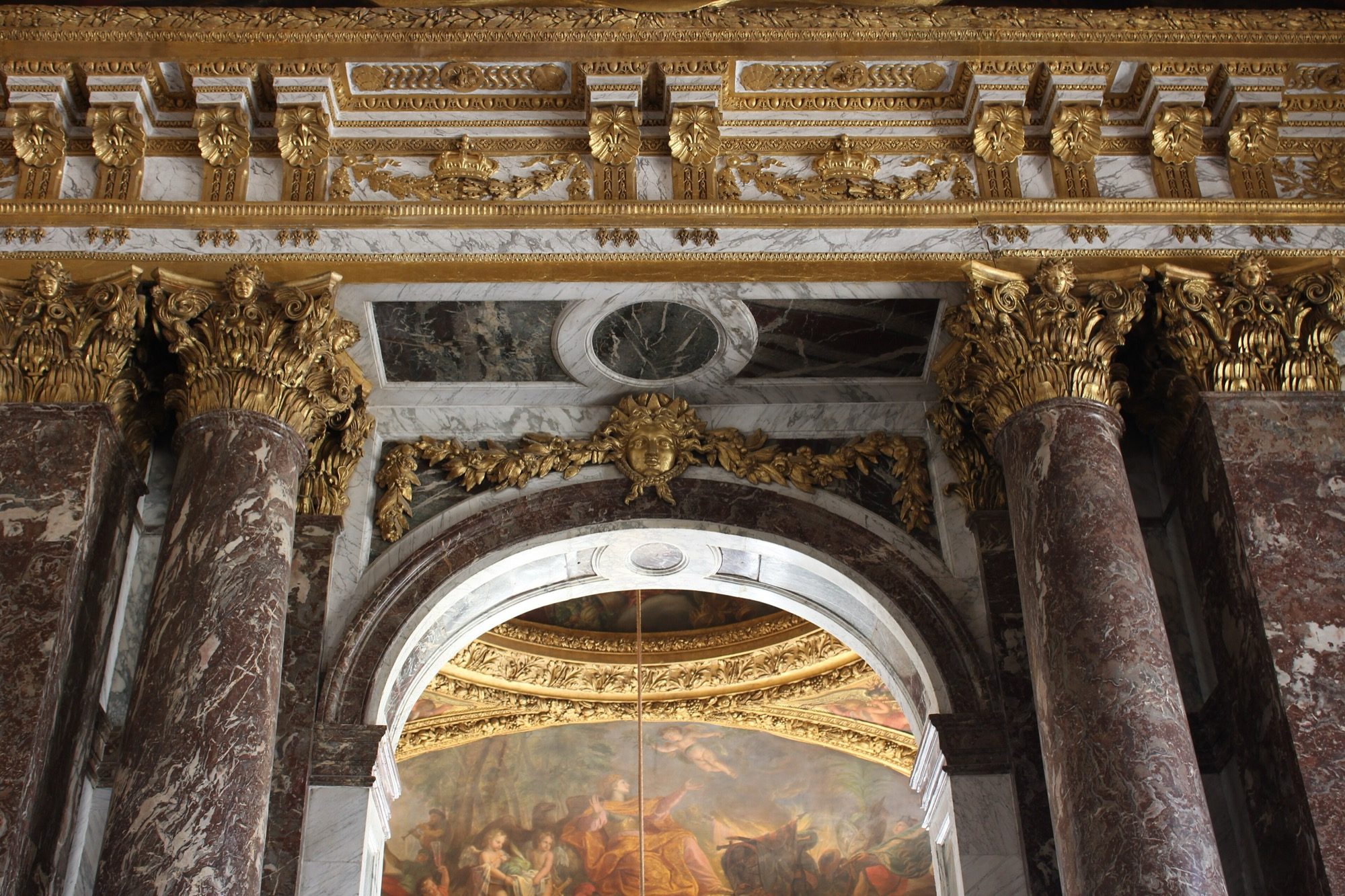
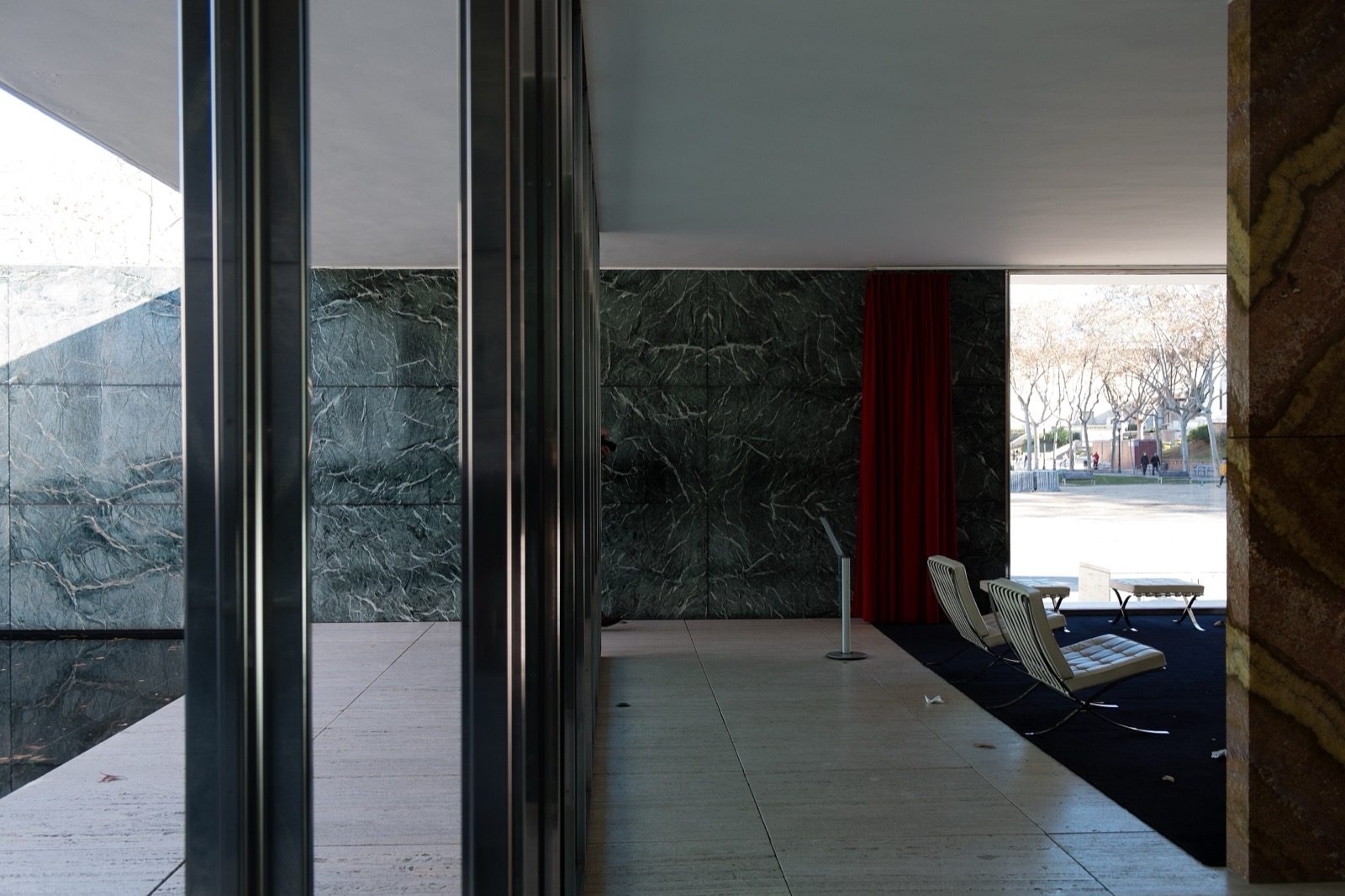
Each age left an iconic interior and an iconic chair — the klismos, the cassone, the bombé commode, Mies's Barcelona chair, the Eames lounge.[1, 3] Read the sweep, and watch the dates (the klismos is Classical, not the Bronze-Age megaron).
Egypt, Greece, Rome
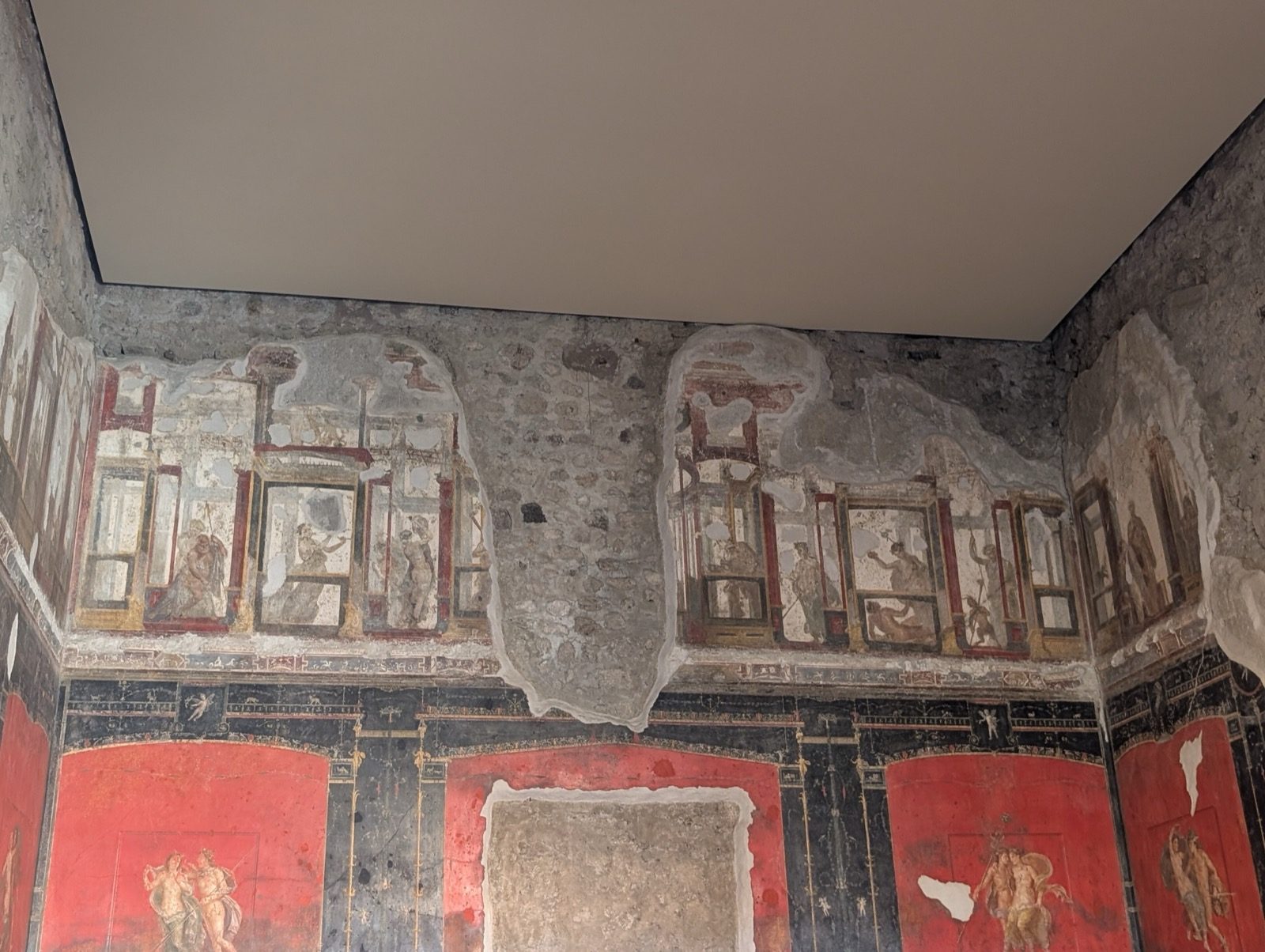
Egyptian interiors were symbolic and hierarchical — furniture (animal-leg stools, chairs, beds in ebony with ivory and gold inlay, like Tutankhamun's throne) marked rank. Greece refined the elegant klismos chair, with a curved back and splayed sabre legs (NOTE: the klismos is Classical, ~5th c. BCE — not the Bronze-Age megaron). Rome built the domus inward around the atrium and peristyle, with frescoed walls (the Four Pompeian Styles) and the U-of-couches triclinium for reclining dining — see the House of the Vettii, Pompeii.[1, 5]
The Indian interior — a living craft
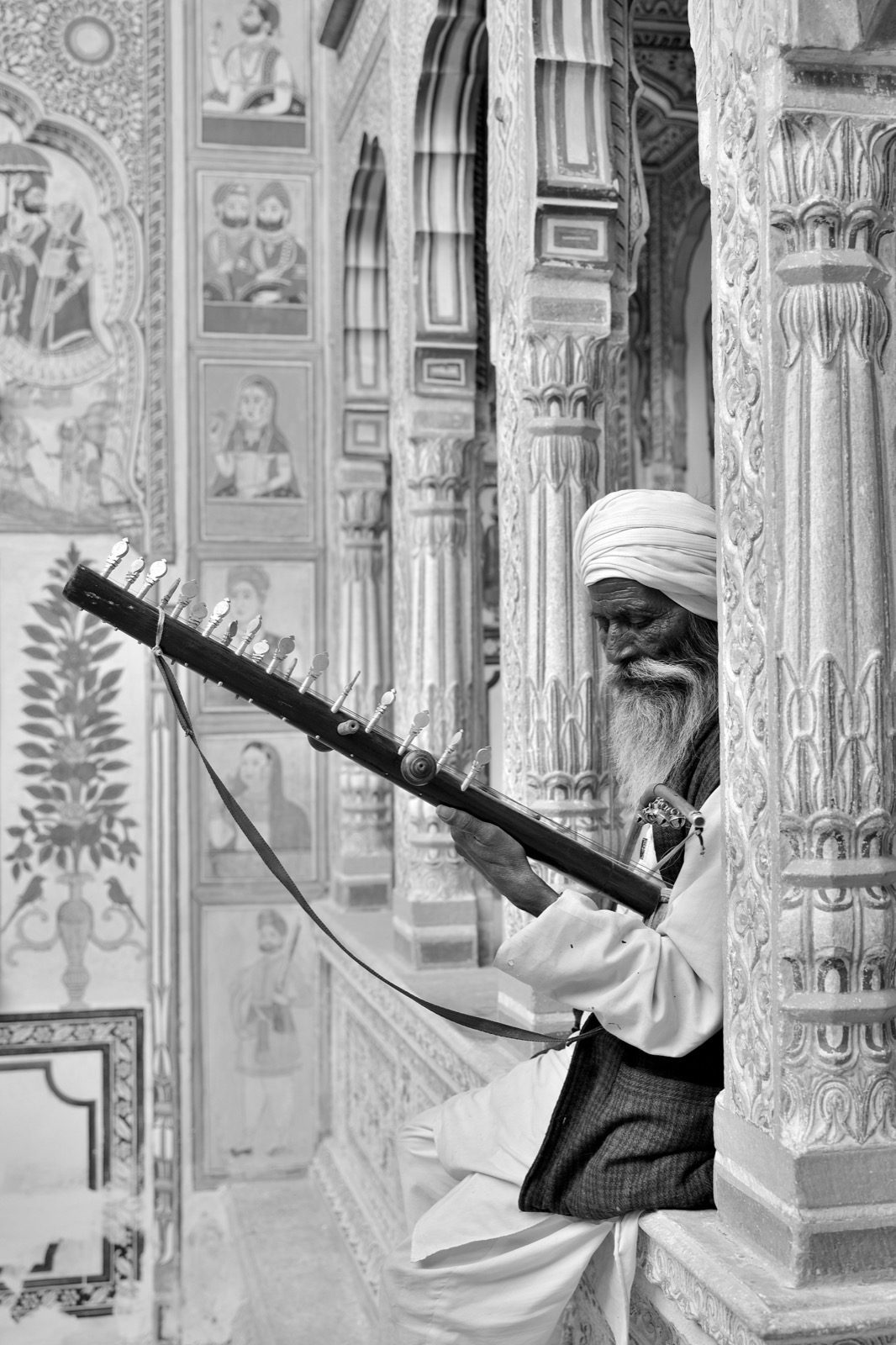
India furnished low and decorated the surface: the takht and diwan, Mughal carpets and parchin kari, the frescoed Shekhawati haveli and the Chettinad mansion, and the daily kolam at the door.[6, 7] The decorated surface, not the collectible object, is the Indian heritage.
Low furniture, rich textiles
Across most of historic India, people sat, ate and slept at floor level — on mats, durries and cushions. The home prized low furniture: the takht (a raised wooden platform) and the diwan (a low cushioned platform with bolsters; the form has Persian roots, Indianised over time). Decoration lived in textiles, carpets and the wall and floor — not in heavy carved case-furniture as in the West.[6, 7]

Western object vs Indian surface
| Aspect | West | India |
|---|---|---|
| Posture of living | West: chair-and-table, raised furniture | India: largely floor-based — mats, takht, diwan |
| Where decoration lives | West: in the furniture object (cassone, commode, chair) | India: in textiles, the wall and the floor (fresco, rangoli, lippan) |
| Permanence | West: collectible, static high furniture | India: renewable, ritual, often re-made (kolam daily) |
| Signature technique | Joinery, veneer, gilding, tubular steel | Parchin kari inlay, jali, arayish fresco, Athangudi tile |
| Modern icon | Mies's Barcelona chair; the Eames lounge | The Chettinad mansion; the frescoed Shekhawati haveli |
Key terms
An elegant Classical Greek chair with a curved back-rest and splayed, out-curving 'sabre' legs.
The Roman town house, planned inward around the atrium (a central skylit court) and rear peristyle garden.
A richly painted, carved or gilded Italian Renaissance marriage/dowry chest — the showpiece movable.
A Rococo chest of drawers with a swelling, curved (bombé) front.
Indian low seating — a raised wooden platform (takht) and a cushioned, bolstered low platform (diwan).
Mughal inlay of coloured stone in marble in floral/geometric patterns; the Western loan-term is 'pietra dura'.
A pierced stone (or wood) screen giving filtered light, ventilation and privacy — a Mughal signature.
The burnished lime-plaster fresco technique of the Shekhawati havelis.
Study task
Pick one Western era and one Indian tradition. In two sketches and four lines, show where the decoration lives in each — in the furniture object, or on the wall and floor — and what that says about how people lived.
Self-assessment
1. The klismos is —
2. Mughal court interiors were furnished mainly with —
3. The dense frescoes of Rajasthan's painted courtyard mansions are found in —
Recap
References & further reading
- [1]John F. Pile & Judith Gura, A History of Interior Design (5th ed.). London: Laurence King, 2024.
- [2]Sherrill Whiton & Stanley Abercrombie, Interior Design and Decoration (6th ed.). Pearson/Prentice Hall, 2008.
- [3]Charlotte & Peter Fiell, 1000 Chairs (rev. ed.). Cologne: TASCHEN, 2017.
- [4]George Savage, A Concise History of Interior Decoration. London: Thames & Hudson, 1966.
- [5]The Met — Heilbrunn Timeline of Art History (Egyptian, Greek and Renaissance furniture). https://www.metmuseum.org/toah/
- [6]Sarah Tillotson, Indian Mansions: A Social History of the Haveli. Cambridge: Oleander, 1994.
- [7]Ilay Cooper, The Painted Towns of Shekhawati. Ahmedabad: Mapin.
Further reading
- John Pile & Judith Gura, A History of Interior Design. Laurence King.
- Charlotte & Peter Fiell, 1000 Chairs. TASCHEN.
- Sarah Tillotson, Indian Mansions: A Social History of the Haveli. Oleander.
Sources gathered and fact-checked June 2026. Published values vary by source, sample and method — treat as indicative and confirm against the cited standard before structural use.
The author
Amogh N P
Architect, interior designer, and creative polymath. Studio Matrx began in his notebooks — his vision of design made honest, useful, and open to everyone. Its Academy is written and taught in his memory, and free, forever.
More about Amogh →