
Critical interfaces: slab, parapet, base
The facade is fine in the middle. It's where the skin meets the slab, the roof and the ground that buildings leak, sweat and lose heat - so those are the details that earn their keep.
Lesson byAmogh N P· Architect & interior designer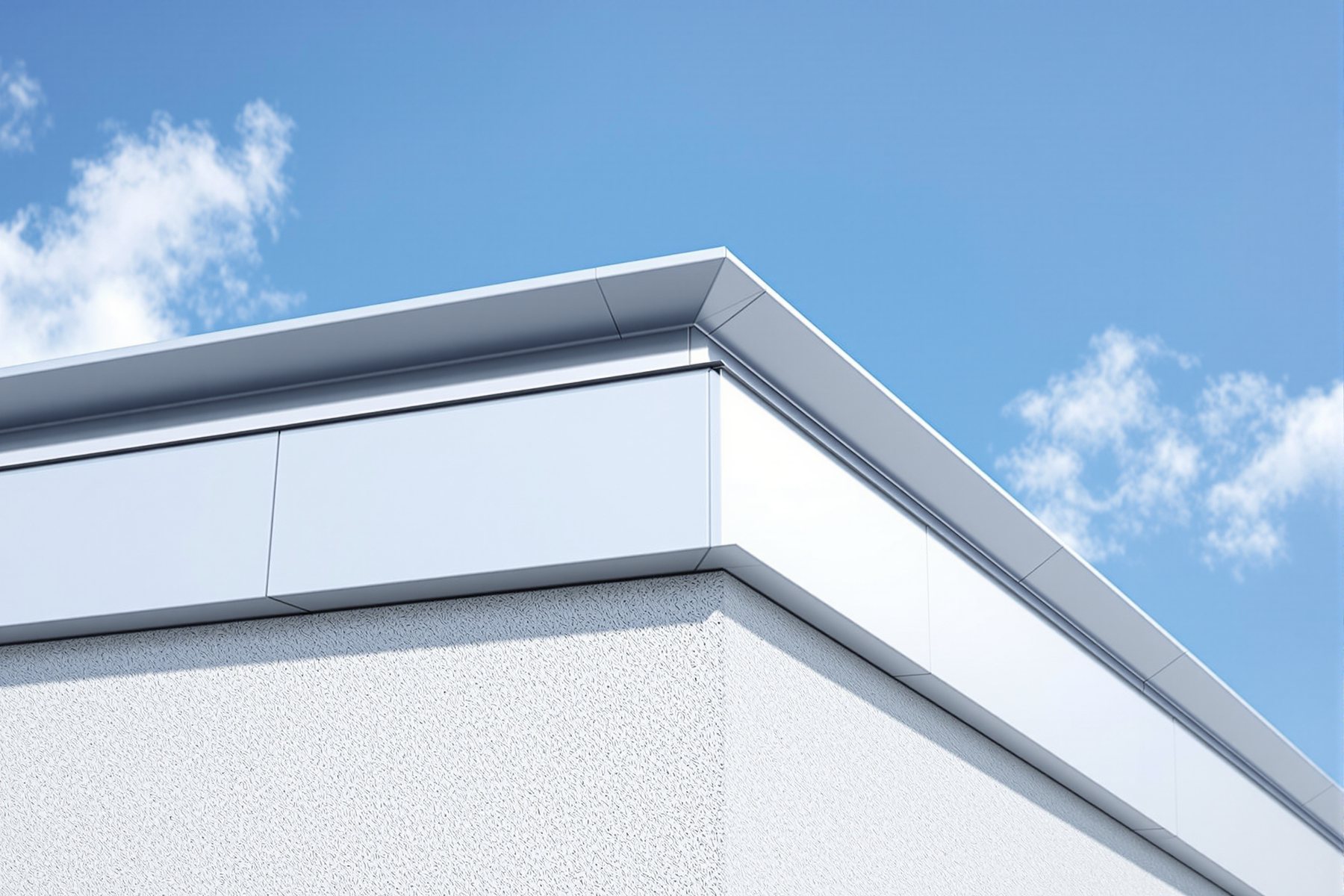
Run a hose along the top of a parapet and you'll find more leaks in an afternoon than the whole flat facade produces in a decade.
A facade is a tube of skin wrapped around a building, and a tube is strongest in the middle and weakest at its ends. The ends are the interfaces: where the curtain wall hangs off the slab edge, where it stops at the parapet and meets the roof, and where it lands at the base on the podium or the ground. At each of these the geometry changes, the tolerances collide, a new trade takes over, and - critically - all four control layers and the firestop must be carried across without a gap. Get the middle of the facade right and the building can still leak, sweat with condensation and bleed heat at the slab edge. This lesson is about the junctions that decide whether the rest of your good work survives.
Three interfaces that decide the facade: slab edge, parapet, base
Where the skin hangs off the structure - and where the thermal bridge and the firestop both live
On a curtain wall the panels hang off the floor slabs, so the slab edge is the busiest junction in the building - it repeats at every floor and carries three jobs at once.
First, structure: the brackets that transfer the facade's wind and dead load into the slab live here, and they must reconcile a rough slab (built to roughly +/-25 mm) with a precise skin (+/-2 mm) through adjustable connections (Lesson 7.4). Second, the firestop: the gap between the back of the spandrel panel and the slab edge - the perimeter fire barrier or void seal - must be packed with mineral wool and a fire-rated seal so fire and smoke can't leap floor-to-floor up the cavity. This is one of the most safety-critical seals in the whole facade. Third, the thermal bridge: the slab is a great big concrete fin reaching out to the cold (or hot) outer line, and every bracket is a metal short-circuit through the insulation. Left unmanaged, the slab edge can leak enough heat - and chill the inner slab soffit enough to cause condensation and mould on the ceiling line - to undo the rest of the envelope.
The slab edge repeats at every floor. A 2-watt-per-metre thermal bridge there, times every floor, times the perimeter, is a real number on the energy bill - and a real damp patch on the ceiling.
Top and bottom: the parapet sheds and drains the whole wall above, the base keeps the ground out
The parapet and coping are where the facade stops and the roof begins, and they take the concentrated punishment of every drop of water that ran down the wall above. The rules are unforgiving: the coping must slope inward (toward the roof, not the facade) or at least be designed with drips, it must overhang with a drip groove on both faces so water can't track back under it, and the roof waterproofing membrane must be lapped up and over behind the coping and tied continuously into the facade's air and water lines. A flat or back-sloping coping is a classic, expensive leak; so is a coping joint left to a single bead of sealant.
The base is the mirror image at the bottom. Here the enemy is rising and splashing water and the ground/podium transition. The facade must start above a defined finished-ground level with a clear upstand, the damp-proofing of the substructure must be tied into the facade's water line, and where the skin lands on a podium slab the detail must drain the podium and handle its movement. Get the base wrong and you wick groundwater up into the wall - a slow, hidden rot that the monsoon makes worse.
At every interface, the question is the same: does each layer cross unbroken?
Corners are the fourth troublemaker. At an external corner the panel geometry changes, gaskets have to turn, and the pressure-equalised cavity must stay sealed around the bend - a corner is where a continuous gasket most often gets cut short and a leak path opens. Re-entrant (internal) corners trap wind-driven rain and concentrate water, so they need extra drainage attention.
Across all of these - slab, parapet, base, corner - the discipline is one question, asked four times: does the water layer cross unbroken? the air layer? the thermal layer? the vapour layer? Plus the firestop at the slab edge. The honest test is whether you can draw each line through the interface detail without lifting your pen and without it relying on a single sealant bead.
This is also where most disputes are born, because an interface is the seam between two trades and two packages. The roofer's membrane and the facade contractor's air barrier must become one continuous line at the parapet - but they're two different subcontractors, two warranties and two site sequences. Someone has to own that lap, in the drawing and on site, or it becomes the leak nobody admits to.
Protect the interfaces in your design moves. A parapet detailed as a thin blade looks sharp but may leave no room for the coping overhang, the drip and the membrane upstand that keep it dry. A facade that lands flush on a paved plaza may have no upstand to keep splashing water out. Draw - even crudely - the slab edge, the parapet and the base behind your elevation, and make sure each has room for its barrier, its drainage and its firestop. The interface you don't leave space for is the one your facade engineer will tell you 'can't be made to work later'.
Own the junctions nobody else wants. Detail the slab-edge firestop to its fire rating with the right mineral wool depth and a tested system, and quantify the slab-edge thermal bridge (psi-value) so you can prove it doesn't fail the energy model or cause ceiling-line condensation. At the parapet, draw the membrane-to-air-barrier lap as a single owned line and name who installs it. At the base, fix the upstand height above finished ground and tie in the DPC. And write the interface continuity check into your QA so every layer is signed off across every junction before it's covered.
The interfaces are where the hidden, skip-able work concentrates - and where skipping it is a demolition to fix. The slab-edge firestop is a life-safety seal: install it to the full depth shown, with no gaps, before the spandrel goes on. At the parapet, make the roofer's membrane and the facade's barrier physically lap and bond - don't leave a 50 mm air gap between two trades and call it done. At the base, keep the upstand and never let the facade water line stop short above the DPC. These are the seals that, once clad over, you cannot reach again.
NBC 2016, Part 4 (India)
Fire & life safety - perimeter barriers
Governs fire spread and compartmentation, which the slab-edge perimeter fire barrier serves. It sets the intent (stop floor-to-floor spread) but the actual void-seal system must be a tested, rated assembly, not a generic packing.
ASTM E2307
Perimeter fire-barrier (slab-edge) testing
The intermediate-scale multi-storey apparatus test for the slab-edge/curtain-wall void firestop - the standard your perimeter fire barrier should be tested to. It proves the seal, not your installation, so site QA still matters.
Eco-Niwas Samhita 2018 / ECBC
Envelope thermal performance (thermal bridges)
Sets U-value and RETV targets the slab-edge thermal bridge eats into. The codes set the whole-envelope target but are light on linear thermal-bridge (psi-value) accounting, so good practice goes beyond the minimum here.
CWCT Standard (UK)
Interface performance & testing
Defines drainage, air/water performance and the testing regime that interfaces must pass on premium projects, including parapet and slab-edge details - the international benchmark Indian high-end specs lean on.
“If the typical facade panel is watertight and well-insulated, the building envelope is sound - the junctions are just where the panels meet, so they're a minor detail.”
It's the reverse: the panel is the easy, repeatable, tested part, and the junctions are where the risk concentrates. Defect surveys consistently find leaks, draughts, thermal bridges and condensation clustered at slab edges, parapets, bases and corners, because that's where control layers get interrupted, trades change and tolerances collide. A facade is only as good as its weakest interface - which is why these junctions get the most engineering attention, not the least.
Worked example - slab-edge interface check: thermal bridge + firestop
Two numbers decide whether a slab-edge detail is sound: how much heat the bridge leaks, and whether the firestop is full-depth and rated. Let's run both on a realistic Indian office floor.
The given data, a calculator, and the psi-value / U-value vocabulary from Module 3.
GIVEN - a curtain-wall slab edge, repeated every floor:

  Building perimeter      P   = 120 m per floor
  Number of floors        N   = 15
  Slab-edge linear psi    PSI = 0.45 W/m.K  (un-mitigated bracket + slab)
  Improved psi (mitigated) PSI'= 0.15 W/m.K  (insulated nosing + thermal-broken bracket)
  Design temp difference  dT  = 20 K  (outside 42 C, inside 22 C, peak)
  Firestop void width     = 150 mm,  required fire rating = 120 min

  Linear bridge heat:  Q = PSI x L x dT      (L = total slab-edge length)
- 1Total slab-edge length: L = P x N = 120 x 15 = 1,800 m of slab edge wrapping the building - that's the length of thermal bridge you're paying for.
- 2Un-mitigated bridge heat at peak: Q = 0.45 x 1,800 x 20 = 16,200 W ~ 16.2 kW. That is 16 kW of cooling load walking in through the slab edges alone, before you've counted a single square metre of glass.
- 3Mitigated bridge heat: Q' = 0.15 x 1,800 x 20 = 5,400 W ~ 5.4 kW. Insulating the slab nosing and using thermal-broken brackets cuts the slab-edge bridge by ~67% (10.8 kW saved) - a real chunk of chiller you no longer have to buy or run.
- 4Condensation check (qualitative): the un-mitigated bridge also chills the inner slab soffit near the edge. In a humid Indian summer with a cold AC interior the inverse risk applies - but in shoulder seasons and in conditioned mixed-mode buildings the cold inner surface can drop below the dew point, so the mitigated detail also protects the ceiling line from damp staining, not just the energy bill.
- 5Firestop check: the 150 mm void must be packed full-depth with the rated mineral wool and fire sealant of a system tested to ASTM E2307 for >= 120 min - the rating required. A firestop that is present but only 75 mm deep, or has gaps at the brackets, fails the test it was specified to pass. Verify depth and continuity at every bracket before the spandrel covers it.
- 6Decide: the mitigated detail saves ~10.8 kW of cooling, removes a condensation risk and - separately - the firestop must be full-depth and rated. Recommend the insulated nosing + thermal-broken bracket and a tested 120-min perimeter barrier; both are slab-edge decisions, made once, that repeat 15 times.
You’ll walk away with
A slab-edge interface verdict with a real number - ~10.8 kW of cooling saved by mitigating the thermal bridge, plus a full-depth, ASTM E2307-rated firestop - the exact two-part check a facade engineer signs off at every floor-line junction.
One field check and one drawing check.
- 01Look up at the underside of a curtain-walled building's ceiling near the glass line. Damp marks or discolouration along the slab edge are the visible signature of an unmitigated thermal bridge - the bridge made visible.
- 02On any curtain-wall section, find the spandrel zone at the slab and ask: is the perimeter fire barrier drawn full-depth, and does the air/water line continue across it? If either is missing, you've found the riskiest gap in the detail set.
A facade fails at its interfaces, not in its middle. The slab edge carries structure, the firestop and a repeating thermal bridge; the parapet must shed, drain and lap the roof membrane into the facade; the base must keep ground and splash water out above a clear upstand; and corners must keep the cavity sealed around the bend. At every one, ask the same question - does each of the four control layers, plus the firestop, cross unbroken?
Three interfaces decide the facade. Slab edge: brackets reconcile rough slab to precise skin, the perimeter fire barrier stops floor-to-floor spread, and the slab is a repeating thermal bridge worth real cooling load and a condensation risk. Parapet: coping slopes inward, overhangs with drips, and the roof membrane laps into the facade. Base: upstand above finished ground, DPC tied in, podium drained. Corners keep the cavity sealed around the bend. Continuity, every layer, every junction.
What is a slab-edge firestop or perimeter fire barrier on a facade?
It is the fire-rated seal packed into the gap between the back of a spandrel panel and the floor slab edge on a curtain wall. Its job is to stop fire and smoke from leaping floor-to-floor up the facade cavity - one of the most safety-critical seals in the building. It must be a tested, rated assembly (commonly tested to ASTM E2307), packed full-depth with mineral wool and fire sealant, and continuous around every bracket. A gappy or shallow firestop fails the very test it was specified to pass.
Why does the coping on a parapet need to slope and overhang?
Because the parapet takes the concentrated runoff of the whole wall above. The coping should slope inward toward the roof (so it doesn't drive water down the facade), overhang both faces with a drip groove (so water can't track back under it), and the roof waterproofing membrane must lap up and over behind it, tied continuously into the facade's air and water lines. A flat or back-sloping coping, or one relying on a single bead of sealant, is one of the most common and expensive facade leaks.
Why do facade interfaces cause more thermal bridges than the main wall?
Because at an interface the insulation is interrupted by structure and connections. At a slab edge the concrete slab reaches out toward the outer line and every bracket is a metal short-circuit through the insulation, so heat by-passes the thermal layer. Repeated at every floor around the whole perimeter, that linear thermal bridge adds up to real cooling load and can chill the inner slab soffit enough to cause condensation and mould at the ceiling line - which is why mitigating it with insulated nosings and thermal-broken brackets pays back.
Peer-reviewed journals & authoritative standards
- 01Squadroni, F., De Michele, G., Mazzucchelli, E.S. et al. Analysis of condensation and ventilation phenomena for double skin facade units. — Journal of Building Physics (SAGE), 2022.
- 02Su, Z. et al. Multi-Disciplinary Characteristics of Double-Skin Facades for Computational Modeling Perspective and Practical Design Considerations. Buildings, 12(10):1576. — Buildings (MDPI), 2022.
- 03Eco-Niwas Samhita 2018 (Energy Conservation Building Code for Residential Buildings), Part I: Building Envelope. — Bureau of Energy Efficiency, Govt. of India, 2018.
The author
Amogh N P
Architect, interior designer, and creative polymath. Studio Matrx began in his notebooks — his vision of design made honest, useful, and open to everyone. Its Academy is written and taught in his memory, and free, forever.
More about Amogh →_The slab, parapet and base are the interfaces the building gives you. Openings - windows, doors and louvres - are the interfaces you cut into the facade yourself, and they break the wall on purpose. Managing water at a hole you made is next._