
Recent Trends in Indian Architecture
Sustainability, craft, computation and the commercial high-rise — Indian practice now.
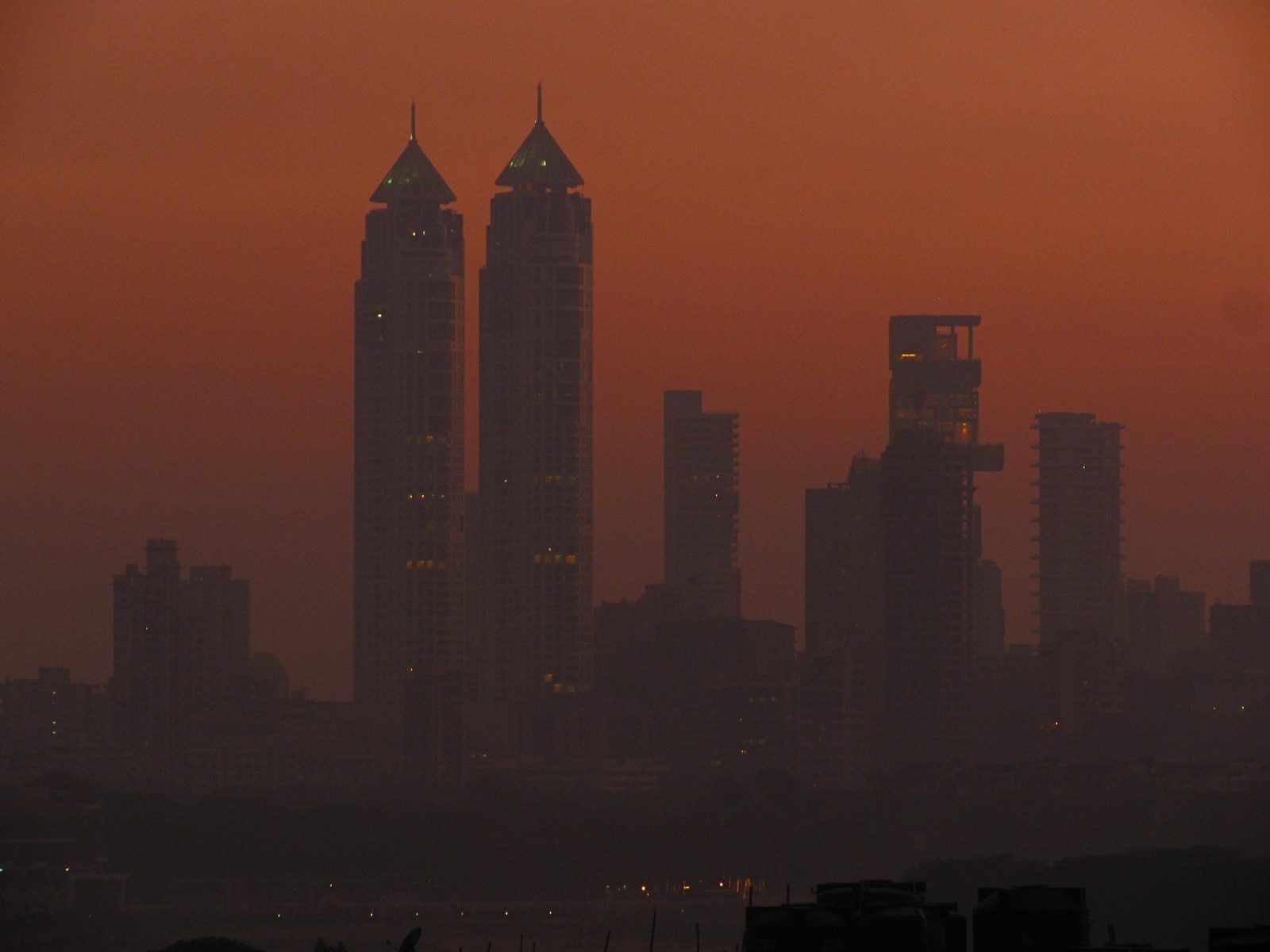
After the masters, Indian architecture split along several axes. Sanjay Mohe and Christopher Benninger carry forward a craft-led, contextual modernism; Chitra Vishwanath builds in mud and water-conscious ecology; Sanjay Puri makes climate-responsive parametric form that wins international awards; and Hafeez Contractor runs one of India's largest commercial practices. Read across them and the trends emerge — green rating, continued critical regionalism, computation and the two poles of practice.
Learning objectives
By the end of this lesson, you will be able to — mapped to the course outcomes for Contemporary Architecture:
Describe the work and approach of Sanjay Mohe, Christopher Benninger, Hafeez Contractor, Chitra Vishwanath and Sanjay Puri.
Read recent Indian practice across the axes of sustainability, critical regionalism, computation and conservation.
Contrast the ecological/craft studio with the commercial high-rise practice as the two poles of current practice.
Relate green-rating systems (LEED, GRIHA) to recent Indian campus and office design.
Five contemporary practices
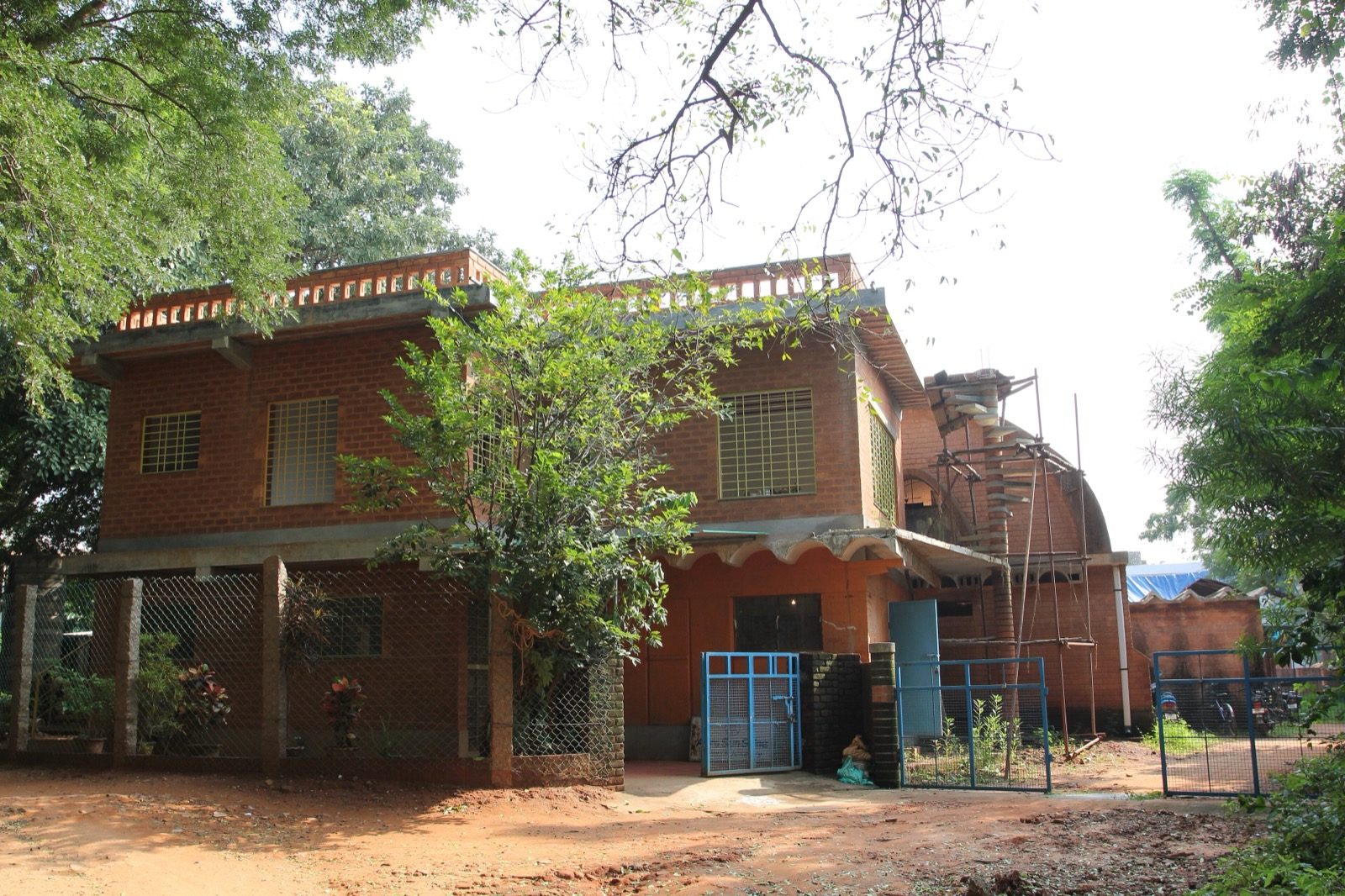
Mohe treats light as a building material; Benninger codified an “intelligent urbanism” and built the green Suzlon One Earth; Contractor defines the commercial vertical city; Chitra Vishwanath builds in stabilised earth with integrated rainwater harvesting; Sanjay Puri makes award-winning parametric, climate-driven form.[1, 2, 3, 4]
Light as a material
Sanjay Mohe (Bengaluru; founder of Mindspace Architects after two decades at Chandavarkar & Thacker) practises a contextual, craft-led, climate-responsive modernism that treats light as a building material and draws nature — air, water, trees — into the form to minimise mechanical cooling. Works include the tree- and lake-wrapped Titan Integrity Campus (Bengaluru, 2017) and additions to Doshi's IIM Bangalore. (His firm is Mindspace, not 'SJK'; ITC Green Centre Gurgaon is NOT his.)[1, 5]
Reading the trends
Green rating (LEED, GRIHA) now shapes campus and office briefs; the Doshi–Correa line of critical regionalism continues; parametric computation enables performance-driven form; and a clean dichotomy frames the field — the commercial high-rise versus the ecological craft studio.[5, 7]
LEED and GRIHA
Sustainability has been institutionalised through rating systems — the US-derived LEED (administered in India by IGBC) and India's own GRIHA (Green Rating for Integrated Habitat Assessment, by TERI). Exemplars include Suzlon One Earth (LEED Platinum + GRIHA 5-star) and Titan Integrity. Rating frameworks now shape campus and office briefs — though their fit to Indian realities is debated.[5, 2]
The two poles
| Aspect | Ecological / craft studio | Commercial practice |
|---|---|---|
| Driving value | Ecological/craft studio: low energy, material, climate | Commercial practice: scale, speed, market and height |
| Signature | Biome — mud & water; Mindspace — light & landscape | Hafeez Contractor — high-rises, IT campuses, townships |
| Tool | Vernacular technique + green rating (GRIHA/LEED) | Parametric computation (Sanjay Puri) |
| Lineage | Continues Doshi–Correa critical regionalism | Globalised commercial modernism |
| Scale | Smaller, contextual, institutional | Towers, stadiums, mass housing |
Key terms
Green Rating for Integrated Habitat Assessment — India's national green-building rating system (TERI).
Leadership in Energy and Environmental Design — the US green-building rating, run in India by IGBC.
A mud block stabilised with a little cement/lime — Chitra Vishwanath's low-embodied-energy material.
Damp earth compacted in formwork into monolithic load-bearing walls — natural thermal mass.
Frampton's idea — modern architecture mediated by climate, place and culture; the line from Doshi/Correa.
Computational design driving geometry by rules/parameters — Sanjay Puri's climate-responsive form.
Capturing and reusing rain on site — central to Biome's water-conscious architecture.
The energy used to make and transport a material; earth construction's is very low.
Study task
Place the five architects on a line from “commercial high-rise” to “ecological craft”, then pick the two you find most opposed and, in a short paragraph, argue which approach better serves an Indian city facing heat, water stress and rapid growth.
Self-assessment
1. Which architect is associated with mud / compressed-earth ecological architecture?
2. GRIHA is —
3. Which pairing best frames the 'two poles' of recent Indian practice?
Recap
References & further reading
- [1]Mindspace Architects — practice profile and projects (Titan Integrity Campus). https://mindspacearchitects.com/about/
- [2]Christopher C. Benninger, Letters to a Young Architect. CCBA Designs / Mapin, 2011.
- [3]Architect Hafeez Contractor — practice profile and projects. https://www.hafeezcontractor.com/
- [4]Chitra Vishwanath / Biome Environmental Solutions — practice profile. https://www.biome-solutions.com/about-us/
- [5]Rahul Mehrotra, Architecture in India Since 1990. Mumbai: Pictor / Hatje Cantz, 2011.
- [6]Sanjay Puri Architects — The Rajasthan School (ArchDaily) and firm awards. https://www.archdaily.com/935934/the-rajasthan-school-sanjay-puri-architects
- [7]Kenneth Frampton, 'Towards a Critical Regionalism' (in The Anti-Aesthetic, ed. Hal Foster, 1983).
Further reading
- Rahul Mehrotra, Architecture in India Since 1990. Pictor/Hatje Cantz.
- Christopher Benninger, Letters to a Young Architect. CCBA/Mapin.
- Vikram Bhatt & Peter Scriver, After the Masters: Contemporary Indian Architecture. Mapin.
Sources gathered and fact-checked June 2026. Published values vary by source, sample and method — treat as indicative and confirm against the cited standard before structural use.
The author
Amogh N P
Architect, interior designer, and creative polymath. Studio Matrx began in his notebooks — his vision of design made honest, useful, and open to everyone. Its Academy is written and taught in his memory, and free, forever.
More about Amogh →