
B.Arch CurriculumFree, forever
A tribute to Amogh N P
Building Maintenance & Repair
Buildings begin to decay the day they are finished — and over a long life, keeping them standing costs far more than building them. This elective is the medicine of architecture: why and how buildings deteriorate (dampness, cracks, the corrosion that spalls concrete); how to diagnose the problem, including the non-destructive tests that read a structure without breaking it; how to repair it with the right material and method; and how to conserve, retrofit and strengthen what already exists — the greenest building, after all, is the one that already stands.
Course byAmogh N P· Architect & interior designer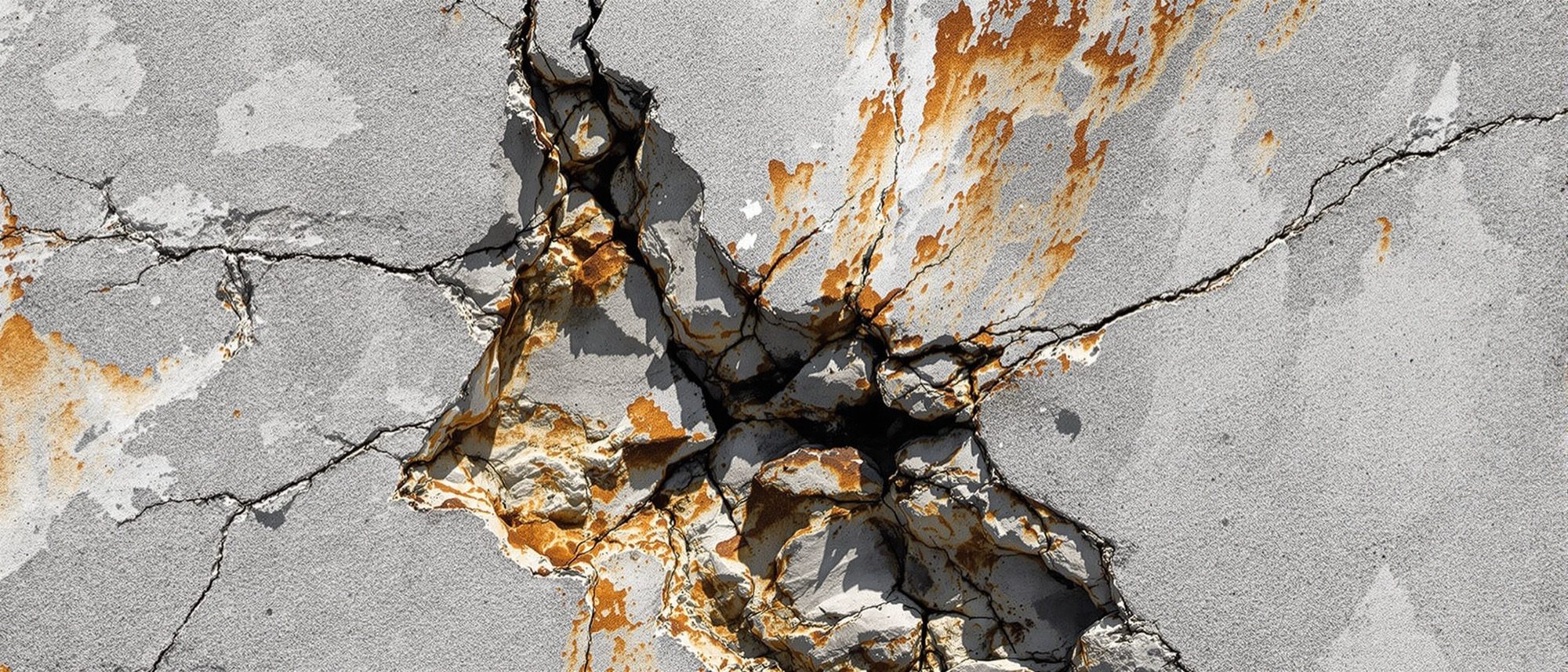
The syllabus
5 units · 5 liveTranscribed from the official B.Arch syllabus. All 5 units are live as full interactive lessons, each with original diagrams, a self-assessment quiz and a studio task.
Unit 1 — Maintenance Fundamentals
LiveThe need for maintenance and its types — preventive, corrective, predictive and cyclic; maintenance management and the building life cycle; and the economics — why maintenance is the bulk of life-cycle cost and the 'stitch in time' principle.
Unit 2 — Defects & Deterioration
LiveThe agents of decay — moisture and dampness, cracks, weathering, biological and chemical attack; the deterioration of concrete (carbonation, chloride, sulphate, ASR, reinforcement corrosion and spalling), steel, timber and masonry; and the classification of cracks.
Unit 3 — Diagnosis & Testing
LiveInspection and condition survey; crack monitoring with tell-tales and the demec gauge; and the non-destructive tests — rebound hammer, ultrasonic pulse velocity, half-cell potential, cover meter, the carbonation test and core extraction — with their IS codes and thresholds.
Unit 4 — Repair Materials & Methods
LiveCrack repair (epoxy injection, routing and sealing, stitching, grouting); concrete spall repair and the treatment of corroded steel; dampness remedies (DPC, tanking, waterproofing, drainage); corrosion protection; and the repair materials — epoxies, polymer-modified mortars and micro-concrete.
Unit 5 — Conservation & Strengthening
LiveStructural strengthening and retrofitting — RC jacketing, steel plate bonding, FRP wrapping and seismic retrofit; the conservation of heritage buildings (the Venice and INTACH charters, minimal intervention, reversibility); and the sustainability of reuse.
Course outcomes
What you will be able to doUnderstand the need for and types of building maintenance.
Diagnose the causes of defects and deterioration in building materials.
Apply inspection and non-destructive testing to assess a structure.
Select repair materials and methods for cracks, concrete and dampness.
Apply conservation, retrofitting and strengthening to existing buildings.
Evaluate maintenance as life-cycle cost and embodied-carbon stewardship.
The author
Amogh N P
Architect, interior designer, and creative polymath. Studio Matrx began in his notebooks — his vision of design made honest, useful, and open to everyone. Its Academy is written and taught in his memory, and free, forever.
More about Amogh →The greenest building is the one that already stands.
Maintenance, defects, diagnosis, repair and conservation. Read the five units, study the diagrams, then test yourself.
The curriculum is free, forever