
Solar, ventilation & energy efficiency
The cheapest unit of energy is the one your house never has to use.
Lesson byAmogh N P· Architect & interior designer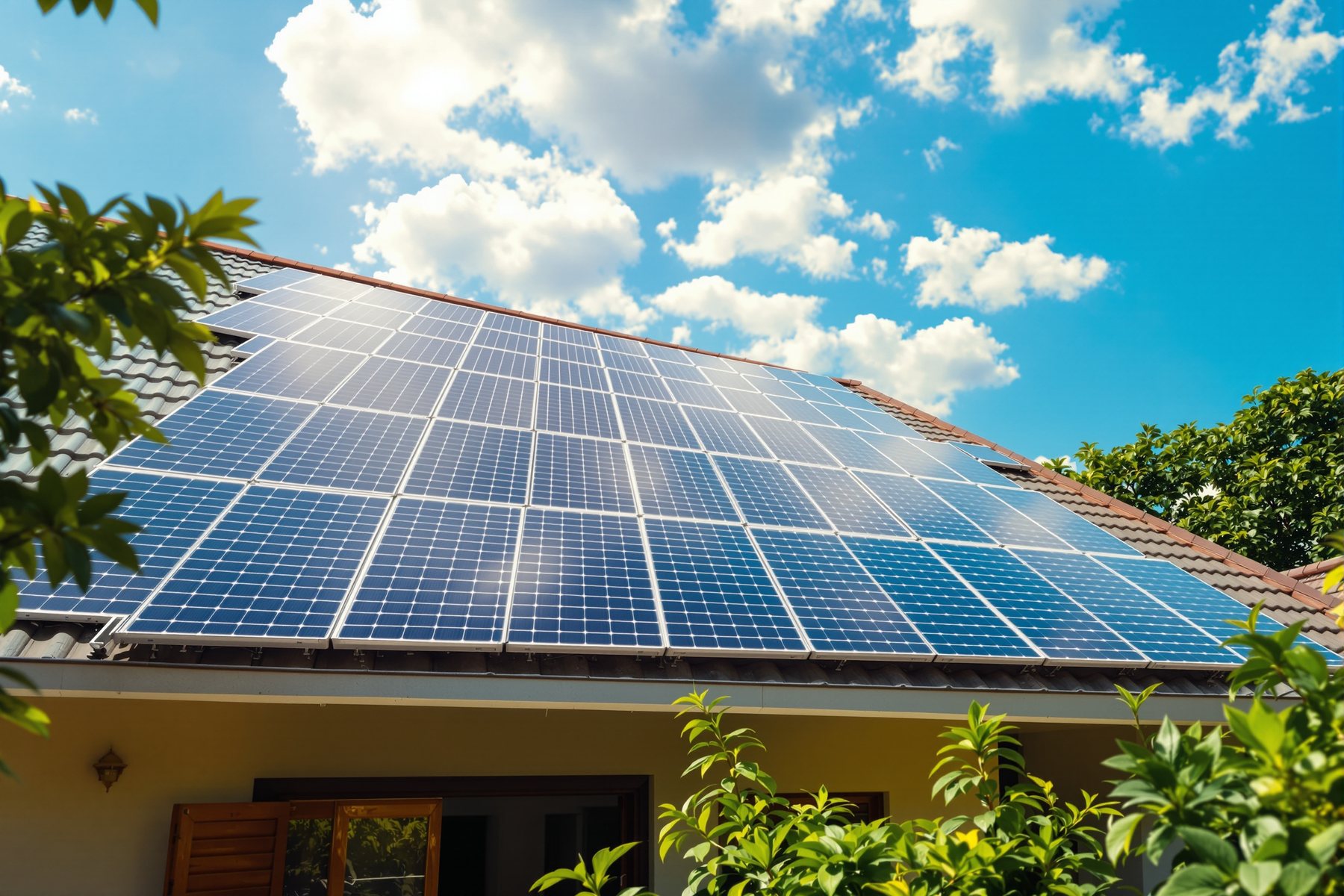
Two identical houses, same street. One pays ₹6,000 a month to stay cool. The other pays almost nothing.
They look the same from the road. Inside, one fights the climate with ACs running all afternoon, the other works with it — cross-breezes that empty the heat, a roof that doesn't bake the bedrooms, and panels that quietly turn the harsh Indian sun from a problem into a meter running backwards. None of it was expensive magic. It was three choices made at the design stage, when they were nearly free.
Make energy, move air, keep heat out — in that order of payback
Rooftop solar with net metering: the rare upgrade that pays you back
Rooftop solar is now a mainstream home decision, not a statement. A typical home system is 3–5 kWp (kilowatts-peak): in 2026 that's roughly ₹2.5–4 lakh installed before subsidy, often ₹50,000–80,000 per kWp, and a central subsidy under schemes like PM Surya Ghar plus some state top-ups can cut a chunk of that.
The magic word is net metering: a bidirectional meter exports the power you don't use back to the grid and credits you for it, so the grid becomes your free battery. A well-sized rooftop system in sunny India commonly pays back in 4–7 years and then runs for 20–25, which is a decade-plus of nearly free power.
- Size it to your annual consumption, not your peak — over-sizing past what you use erodes the payback. - Reserve clear, shade-free, south-facing roof at the design stage; coordinate it with the solar water heater and the overhead tank so they don't fight for space.
Orientation, shading and roof space cost nothing to plan and everything to retrofit. Decide them on the drawing.
Passive ventilation and insulation: the free half of the energy bill
Solar makes power; passive design means you need less of it. Two moves do most of the work, and both are free if designed in:
- Cross ventilation — openings on opposite or adjacent walls so a breeze enters one side and leaves the other, flushing heat out. Add stack effect (a high vent or stairwell that lets hot air rise and escape) and rooms ventilate themselves with the switch off. This is geometry, not equipment. - Insulation and shading — the roof is the biggest heat gain in an Indian house. A reflective/cool roof, terrace insulation or a shaded slab can drop top-floor temperatures by several degrees, and shaded west windows, deeper overhangs (chajjas) and lighter external colours cut the load before an AC ever switches on.
The order of payback is clear: reduce the load first with ventilation and insulation, then size the ACs and the solar to a smaller, cheaper demand. A leaky, baking house with a big solar array is solving the wrong problem expensively.
Spend your design energy on the free wins first — cross ventilation, a cool/insulated roof, shaded west windows — because they cut your cooling bill forever with no running cost. Then add rooftop solar with net metering: in sunny India a right-sized 3–5 kWp system usually pays back in 4–7 years and runs for 20–25, so it's an investment, not a cost. Reserve shade-free south roof for the panels and the solar heater before you finalise the terrace plan.
Treat passive design as the first energy intervention and size active systems (AC, solar) to the reduced load — orient and fenestrate for cross ventilation and stack effect, specify roof insulation/cool-roof finishes, and shade the western and southern glazing. For solar, design the structure and roof to carry the array, keep it shade-free, and confirm the local DISCOM's net-metering policy and sanctioned-load interaction. Where relevant, benchmark against ECBC-R/Eco-Niwas Samhita for residential energy performance.
Energy efficiency is a hierarchy: passive first (orientation, ventilation, insulation, shading), then efficient active systems, then on-site generation. Learn the stack effect and cross-ventilation geometry, and the basic economics of solar — kWp, net metering, payback — because climate-responsive design is where architecture stops being decoration and starts doing physical work. The most sustainable kilowatt-hour is the one the building never demands.
“Rooftop solar is too expensive and takes forever to pay back.”
In sunny India a right-sized 3–5 kWp home system commonly pays back in 4–7 years and then runs for 20–25 — a decade or more of nearly free power. Net metering credits the surplus you export, central and state subsidies (like PM Surya Ghar) cut the upfront cost, and pairing it with passive design means you need a smaller, cheaper system in the first place.
Lower your future bills while it's still cheap to do so:
- 01Mark cross-ventilation paths on your plan — openings on opposite/adjacent walls plus a high vent or stairwell for stack effect — so key rooms can cool with the switch off.
- 02Reserve shade-free south-facing roof for solar panels and the solar water heater, and sketch a 3–5 kWp array to check it fits before the terrace plan is fixed.
- 03Specify roof insulation or a cool/reflective roof finish and deeper overhangs on west windows — then size your ACs and solar to the smaller load that leaves.
The cheapest, longest-lasting energy choices are made on the drawing, not bought later: ventilate and insulate so the house barely needs cooling, then add net-metered solar that pays itself back in a handful of years and runs for decades. Two near-identical houses; one fights the climate every afternoon, the other was simply designed to work with it.
Reduce the load first with cross ventilation, stack effect and roof insulation (free at design stage, several degrees cooler), then add a 3–5 kWp rooftop solar system (₹2.5–4 lakh before subsidy) with net metering that typically pays back in 4–7 years and runs 20–25. Reserve shade-free south roof early.
What is the payback period for rooftop solar in India?
A right-sized home system of 3–5 kWp in sunny India typically pays back in 4–7 years and then runs for 20–25, giving a decade or more of nearly free power. Net metering credits the surplus you export to the grid, and central and state subsidies (such as PM Surya Ghar) reduce the upfront cost of roughly ₹2.5–4 lakh before subsidy. Size it to your annual use, not your peak, to keep the payback short.
How does net metering work for home solar in India?
Net metering uses a bidirectional meter that exports the solar power you don't use back to the grid and credits it against the power you draw, so the grid acts as a free battery. You're billed on the net — consumption minus export — which is what makes rooftop solar pay back so quickly. Policies and caps vary by state DISCOM, so confirm your local net-metering rule before sizing the system.
How can I make my house cooler without air conditioning?
Design for passive cooling first: cross ventilation (openings on opposite or adjacent walls) plus stack effect (a high vent or stairwell that lets hot air rise out) flushes heat with no power. Add roof insulation or a cool/reflective roof — the roof is the biggest heat gain — and shade west-facing windows with deeper overhangs. Together these can drop indoor temperatures by several degrees before any AC switches on.
The author
Amogh N P
Architect, interior designer, and creative polymath. Studio Matrx began in his notebooks — his vision of design made honest, useful, and open to everyone. Its Academy is written and taught in his memory, and free, forever.
More about Amogh →Power, water and energy are planned — your house is now a working system as well as a structure. Module 8 takes you across the finish line: snagging, the final approvals, and turning the building into a home.