
The claim
“East-facing kitchens stay cooler.”
Indian design journalism repeats this as settled fact and almost never shows a number. So we computed it — assumptions, working and all.
Mostly true — but not for the reason you think
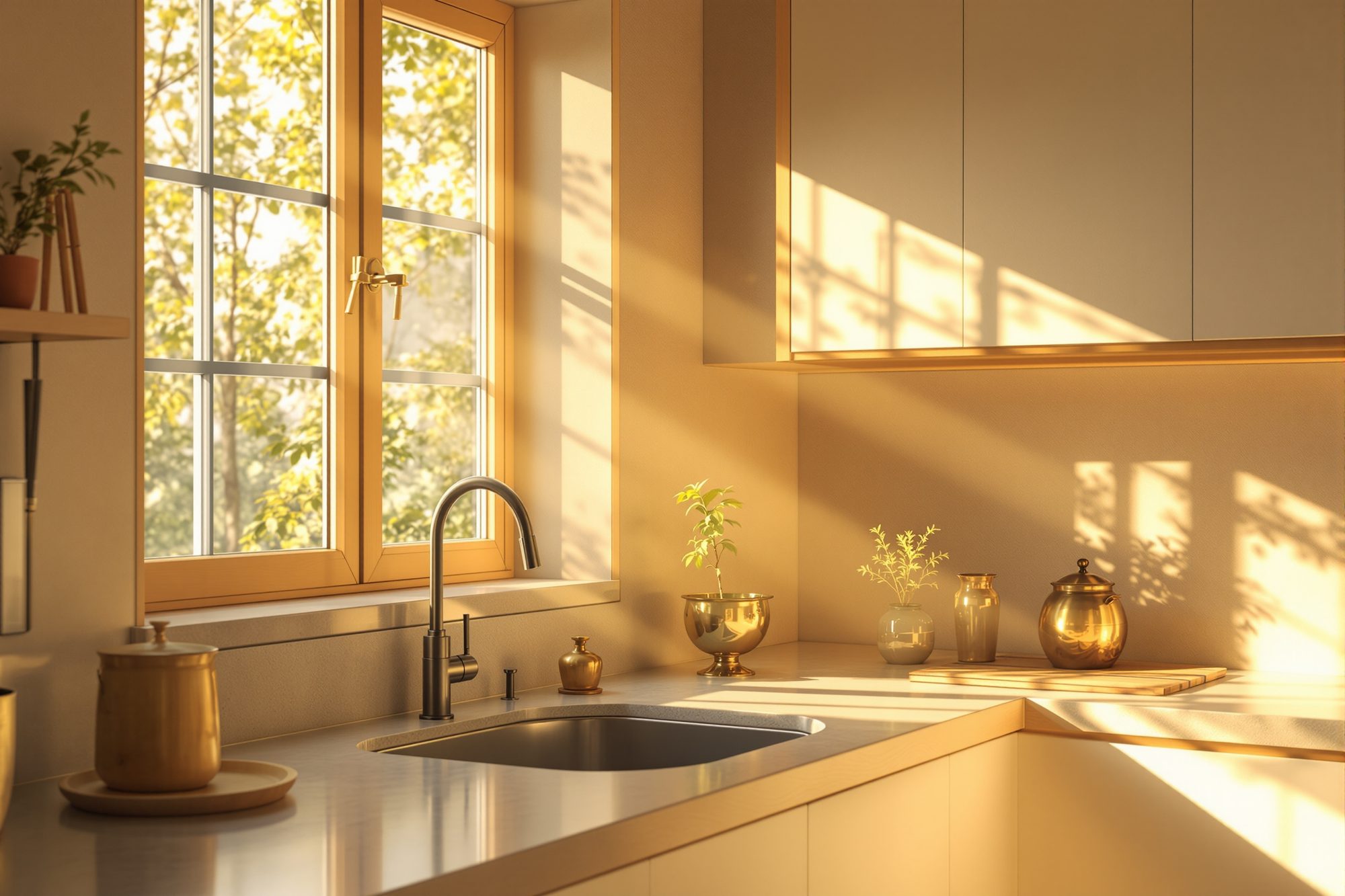
An east kitchen really does run cooler at dinner, when it counts — because its sun arrives in the cool morning, out of phase with both the day's heat and the heat of the stove. But the daily totals are nearly equal, and a chajja plus an exhaust fan beats orientation every time.
The claim
Ask a property agent, a Vastu consultant or the internet, and you will hear it stated as plain fact: an east-facing kitchen stays cooler. It is on a thousand blog posts and in a hundred brochures, and it almost never arrives with a single number attached.
The intuition is reasonable. East light is the soft, golden morning kind; west light is the harsh evening blaze everyone draws their curtains against. So an east kitchen must be the cooler one. It sounds right.
But 'sounds right' is exactly the claim this column exists to test — because Indian design journalism runs almost entirely on assertions nobody bothered to compute. So before we repeat it, we did the math.
What we assumed
Honest math shows its inputs. Change these and the number moves — so here they are, in the open:
- 01A small kitchen with one external wall (~10 m²) and one unshaded window (~1.5 m², solar heat-gain coefficient 0.70).
- 02A clear day near the equinox at roughly 18–20°N — think Pune, Hyderabad or Nagpur.
- 03Peak solar on a vertical east or west window ≈ 550 W/m² — the east face peaking around 8–9 am, the west around 3–4 pm.
- 04Outdoor air ≈ 26°C at the east window's morning peak, and ≈ 35°C at the west window's afternoon peak — a typical clear-day swing.
- 05Evening cooking adds ≈ 3 kW of heat to the room for about an hour around 7 pm (a gas hob plus prep).
- 06The kitchen is ventilated at a modest ~15 air-changes per hour — an open window plus a working exhaust.
The math
- 1
Solar gain through the window, at each face's own peak
1.5 m² × 550 W/m² × 0.70≈ 580 WIdentical for east and west — the glass does not care which way it faces. Everything hinges on WHEN that 580 W shows up.
- 2
Daily solar energy on the wall — east vs west
∫ (sun on a vertical wall, dawn → dusk): east ≈ west≈ 3.5 kWh/m² eachNear-identical totals. Over a full day, an east wall and a west wall collect about the same heat — so 'cooler' cannot be about the total. It has to be about timing.
- 3
The backdrop the heat lands on
east peak 08:30 @ 26°C vs west peak 15:30 @ 35°C≈ 9°C hotter air for the west gainThe east window pours its 580 W into the cool morning, when nobody is cooking. The west window pours the same 580 W onto the hottest air of the day.
- 4
The dinner-hour stack (~7 pm)
East: 35°C + ~0 W sun + 3 kW stove vs West: 35°C + ~300–580 W sun & hot wall + 3 kW stovewest carries ~0.3–0.58 kW extraAt dinner the east window is in shade; the west window — and the wall it spent all afternoon baking — is still pushing heat in, exactly as the stove lights.
- 5
Turn the extra heat into a temperature
ΔT ≈ Q ÷ (ṁ·cp); ṁ ≈ 15 ACH × 30 m³ × 1.2 ÷ 3600 ≈ 0.15 kg/s≈ 1.5–3°C cooler (east, at the dinner peak)In a sealed, unventilated kitchen the same gap balloons past 8°C — which is really a clue that ventilation matters more than orientation.
how much cooler an east kitchen runs at the dinner-time peak, in a typical ventilated kitchen — driven by timing, not by 'gentle' morning sun.
What we found
The claim is broadly true — but the popular reason for it is wrong. An east kitchen is not cooler because morning sun is somehow gentler. A square metre of east glass and a square metre of west glass let in almost exactly the same energy over a day.
It is cooler because of timing. The east window's sun arrives in the cool morning, hours before anyone lights the stove. The west window's sun arrives at the single hottest moment of the day and lingers into the evening — landing directly on top of peak outdoor heat and the heat of cooking. Three heat sources, one hour. The east kitchen simply never lets them line up.
That is a real, defensible advantage — on the order of a couple of degrees, at the moment it actually matters. Worth having. Just not for the reason the brochure gives.
The honest caveats
- ▸Daily totals are about equal. If the kitchen is air-conditioned, orientation becomes a small difference in running cost, not in comfort.
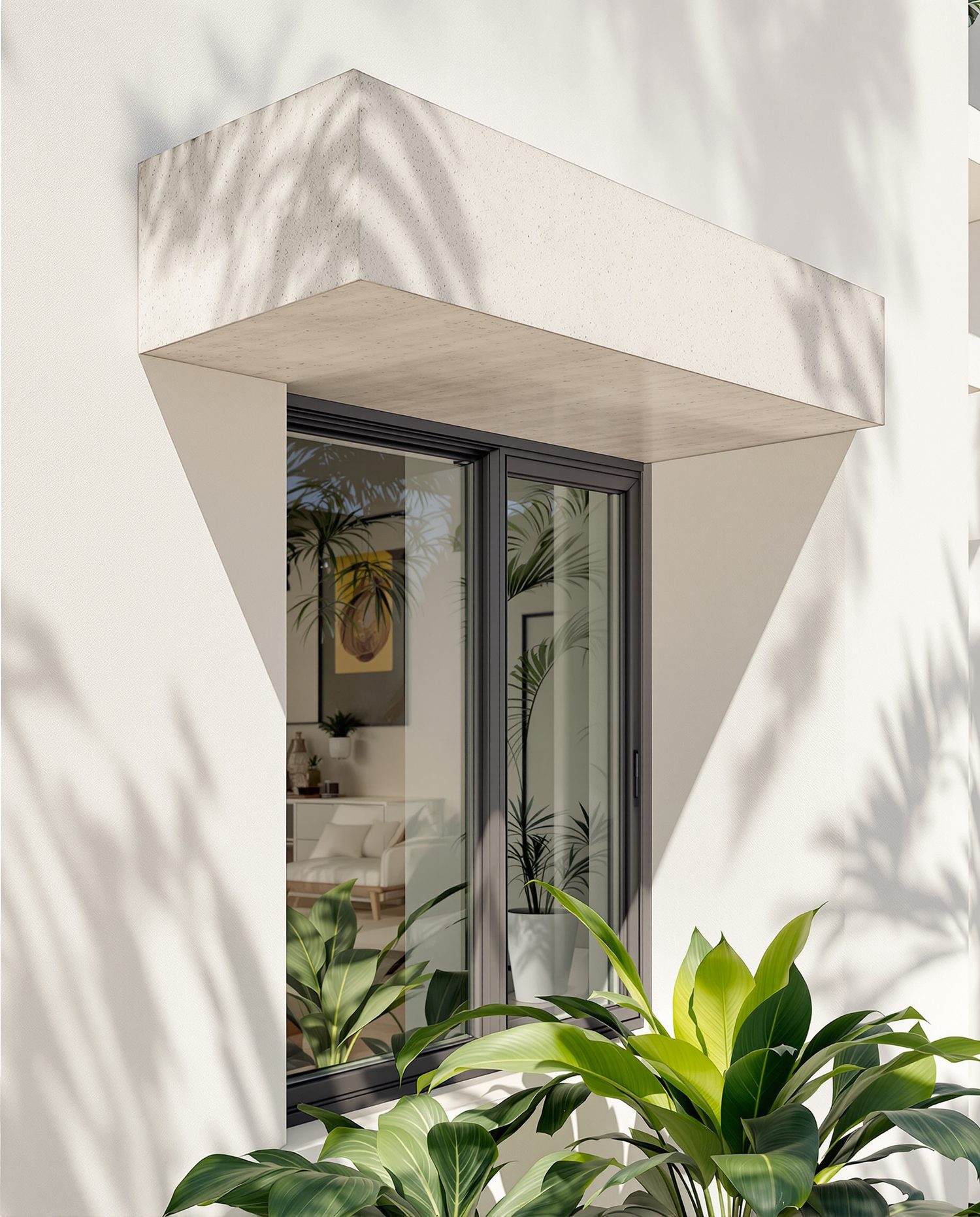
- ▸Shading beats orientation. A 0.6 m chajja or a simple external shade on a west window cuts most of that afternoon gain — a shaded west kitchen can comfortably beat an unshaded east one.
- ▸The exhaust fan is the real hero. The temperature jump comes from heat with nowhere to go; a working chimney and an openable window move the needle further than which wall faces the sunrise.
- ▸Summer shifts the sun. In peak summer the sun rises north-of-east and sets north-of-west, so even a north window catches some morning and evening sun — the morning/evening temperature asymmetry holds, but the geometry isn't fixed.
- ▸We modelled one wall and one window. Real kitchens have roofs, neighbours and appliances we left out. Treat the figure as an honest estimate, not a thermostat reading.
So what should you do
Choosing between otherwise-equal options? Yes — put the kitchen on the east or north-east and you will shave a degree or two off the dinner-time heat, free.
But don't pay a premium or bend a good plan for it. Spend that effort instead on a real exhaust, a window you can actually open, and shade on any west- or south-facing glass. Those beat orientation every time.
And the next time someone tells you an east kitchen 'stays cooler', you can ask the two questions this column was built on: by how much — and how do you know?