
Designing for your climate & site
The sun, the wind and the shade are free design tools — and ignoring them costs you every summer.
Lesson byAmogh N P· Architect & interior designer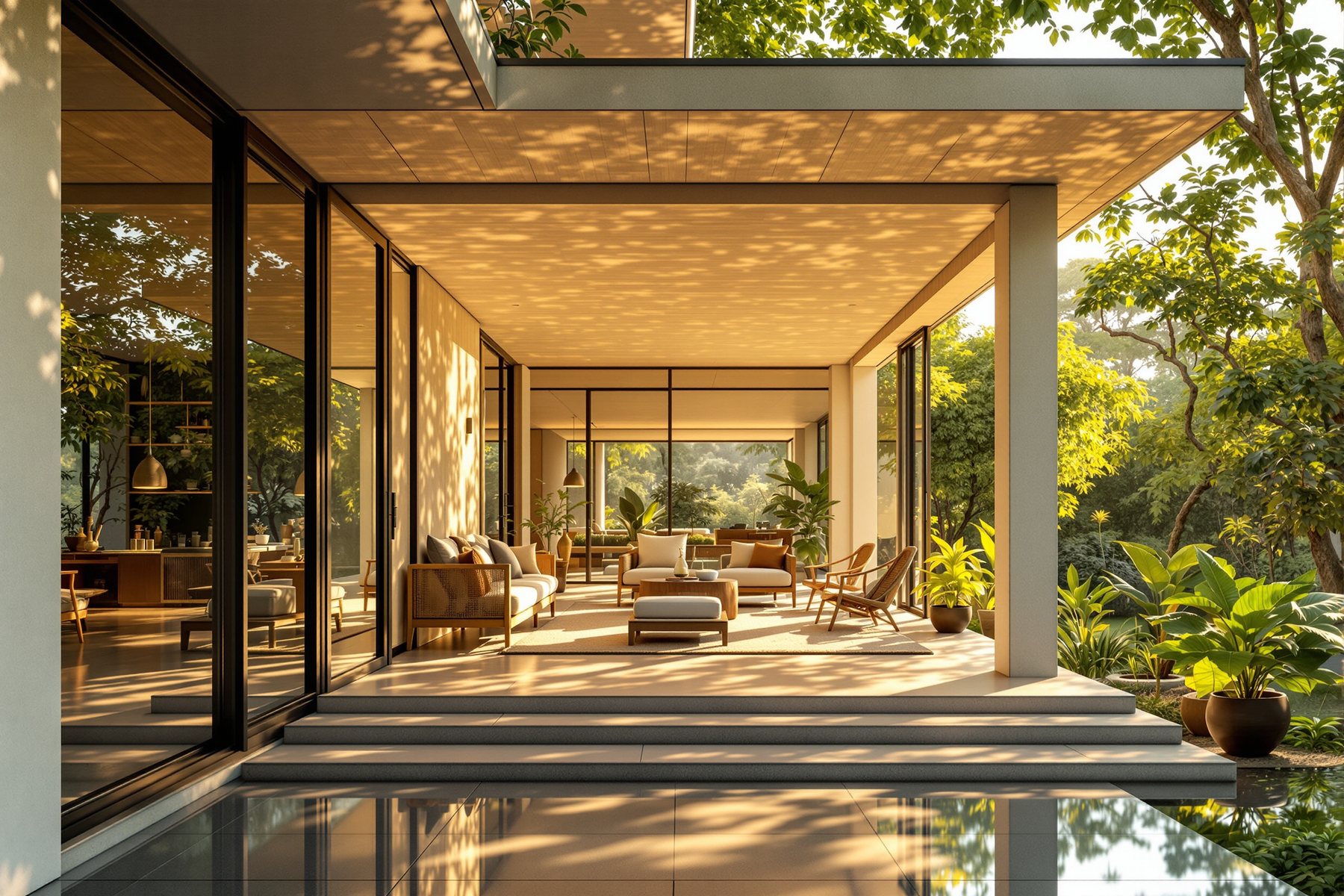
Two identical houses, one street apart. One needs the AC all summer. One barely does.
Same plan, same budget, same builder — but one was turned to face the wrong way, with bare west windows baking all afternoon and no breeze through. The other caught the prevailing wind and shaded its glass with a simple chajja. The difference isn't money; it's design that listened to the sun and the site. And it's the cheapest comfort you'll ever buy: free at the drawing stage, priceless every summer after.
Three free tools: orientation to the sun, cross-ventilation, and shade
Which way the house faces decides how hard it works against the heat
In most of India the sun is the enemy you design around. It rises in the east, swings high across the south, and sets in the hot west — so the west and south-west walls and windows take the brutal afternoon load, while the north stays soft and even all day. The east gets gentle morning sun.
The move: put the rooms that need cool, steady light — bedrooms, study, living — toward the north and east, and push the buffers — staircase, store, toilets, garage, utility — to the harsh west and south-west to soak the heat before it reaches you. Big glass loves the north; it hates the west.
India spans climate zones, and the rule bends with them. In hot-dry zones (Rajasthan, parts of Gujarat) you minimise west glass and use thick walls and small shaded openings. In warm-humid zones (Kerala, coastal, Kolkata) you prioritise through-breeze and shade over thermal mass. In composite zones (Delhi, much of the north) you juggle both — hot summers and cool winters. Vastu's north-east-light preference often lines up neatly with this solar logic; where they agree, you get both.
Cool rooms north and east; put the toilets and the store to take the western beating.
Cross-ventilation and a chajja do the cooling the AC otherwise pays for
Two passive tools cut heat for free, and both belong in the plan, not the afterthought.
Cross-ventilation — a room with a window on only one wall barely breathes; a room with openings on opposite or adjacent walls lets a breeze flow in one side and out the other. Place windows to catch your area's prevailing wind (often from the south-west in much of India during summer, the monsoon direction varies), keep internal doors and ventilators aligned so air has a path through the house, and a single-storey home can feel several degrees cooler with no power at all.
Shading — sunlight kept off the glass is heat that never enters. The Indian classic is the chajja — a projecting concrete or RCC overhang above a window, typically 1.5–2 ft (450–600 mm) deep. A horizontal chajja works best on south windows (high sun, easy to block); east and west sun is low and raking, so it needs vertical fins, deep verandahs, louvres or pergolas instead. A 2-ft overhang over a south window can block the worst summer sun while still letting in low, welcome winter light — the same chajja, two seasons, opposite jobs.
You don't need to be an engineer — just ask your architect three questions and watch them answer with conviction: 'Where does the hot afternoon sun hit, and what's behind those walls?' 'Which rooms get cross-ventilation, and from which wind?' 'How are the west and south windows shaded?' If the answers are vague, your comfort bill will be the loud one. A house designed with the climate is cheaper to run for its entire 50-year life.
Run a sun-path study and a wind analysis for the specific site before fixing the plan, and let the section carry the climate response — overhang depths sized to the latitude and solar angles, not a default 2 ft everywhere. Document the passive strategy so it survives value-engineering: the chajja and the cross-vent are the first things a cost-cutting client deletes and the first they'll miss. Tie it to ECBC/Eco-Niwas Samhita where the project triggers it.
Climate-responsive design is the discipline's oldest intelligence, encoded in every vernacular house — the courtyard, the jaali, the deep verandah, the thick mud wall. Learn the sun-path geometry (altitude and azimuth by latitude and season) and the basics of psychrometrics and air movement, then read India's climate-zone map. Passive design is not a constraint on form; in the best work it generates the form.
“Orientation and ventilation don't matter much — I'll just run the AC.”
The AC bill runs for the life of the house, and a badly-oriented, bare-west-glass home can demand it for months a well-designed one wouldn't. Orientation, cross-ventilation and shading are free at the drawing stage and impossible to retrofit cheaply once built. Designing with the climate isn't a luxury or only Vastu — it's the single highest-return decision you make on the plan.
Climate-test your design before it's frozen:
- 01Find true north on your plot with a compass (or the Vastu compass tool), then mark where the hot west and south-west afternoon sun will land — and check what rooms sit there.
- 02For your two main living spaces, confirm each has windows on two different walls for cross-ventilation, aligned to catch your area's prevailing breeze.
- 03Check every south and west window has shading — a 1.5–2 ft chajja on south windows, deeper overhangs, fins or verandahs on the west — and ask your architect to show it in the section.
The cheapest air-conditioning you'll ever install is a window in the right wall and a chajja over the glass. Orientation, cross-ventilation and shade cost nothing extra at the drawing stage and pay you back every summer for fifty years. A house that listens to its climate is cooler, brighter and cheaper to run — and that comfort is decided now, on paper, not later with a remote control.
Three free tools shape a comfortable house: orientation (cool rooms north/east, buffers to the hot west), cross-ventilation (windows on two walls to catch the prevailing breeze), and shading (a 1.5–2 ft chajja on south windows; fins or verandahs on east/west). The right answer bends by climate zone — hot-dry, warm-humid or composite — but the basics are free and decided at design stage.
What is the best house orientation for the Indian climate?
In most of India, place the rooms you use most — bedrooms, living, study — toward the north and east for soft, steady light, and push buffers like toilets, stores and garages to the hot west and south-west to absorb the harsh afternoon sun. Minimise large west-facing glass. The exact balance bends with your climate zone, but keeping living spaces off the western heat holds almost everywhere.
How does cross-ventilation work in a house?
Cross-ventilation needs openings on two different walls — opposite or adjacent — so air enters one side and leaves the other, carrying heat out. A room with a window on just one wall barely breathes. Align windows, doors and ventilators to your area's prevailing wind so a breeze can flow through the whole house, and a single-storey home can feel several degrees cooler with no electricity at all.
What is a chajja and how deep should it be?
A chajja is a projecting RCC overhang above a window or door, the Indian classic for keeping sun and rain off the opening. A typical depth is 1.5–2 ft (450–600 mm). A horizontal chajja works best on south-facing windows, where the high summer sun is easy to block while low winter sun still enters; east and west windows have low, raking sun that needs vertical fins, deep verandahs or louvres instead.
The author
Amogh N P
Architect, interior designer, and creative polymath. Studio Matrx began in his notebooks — his vision of design made honest, useful, and open to everyone. Its Academy is written and taught in his memory, and free, forever.
More about Amogh →That completes the design and drawings. With a clear brief, a buildable GFC set you can read, and a climate-smart plan, you're ready for the next gatekeeper of every Indian build: the approvals and bye-laws that decide what you're actually allowed to construct.