
Concept to working drawings
Four stages turn a sketch into a buildable set — and each one is a checkpoint you must not skip.
Lesson byAmogh N P· Architect & interior designer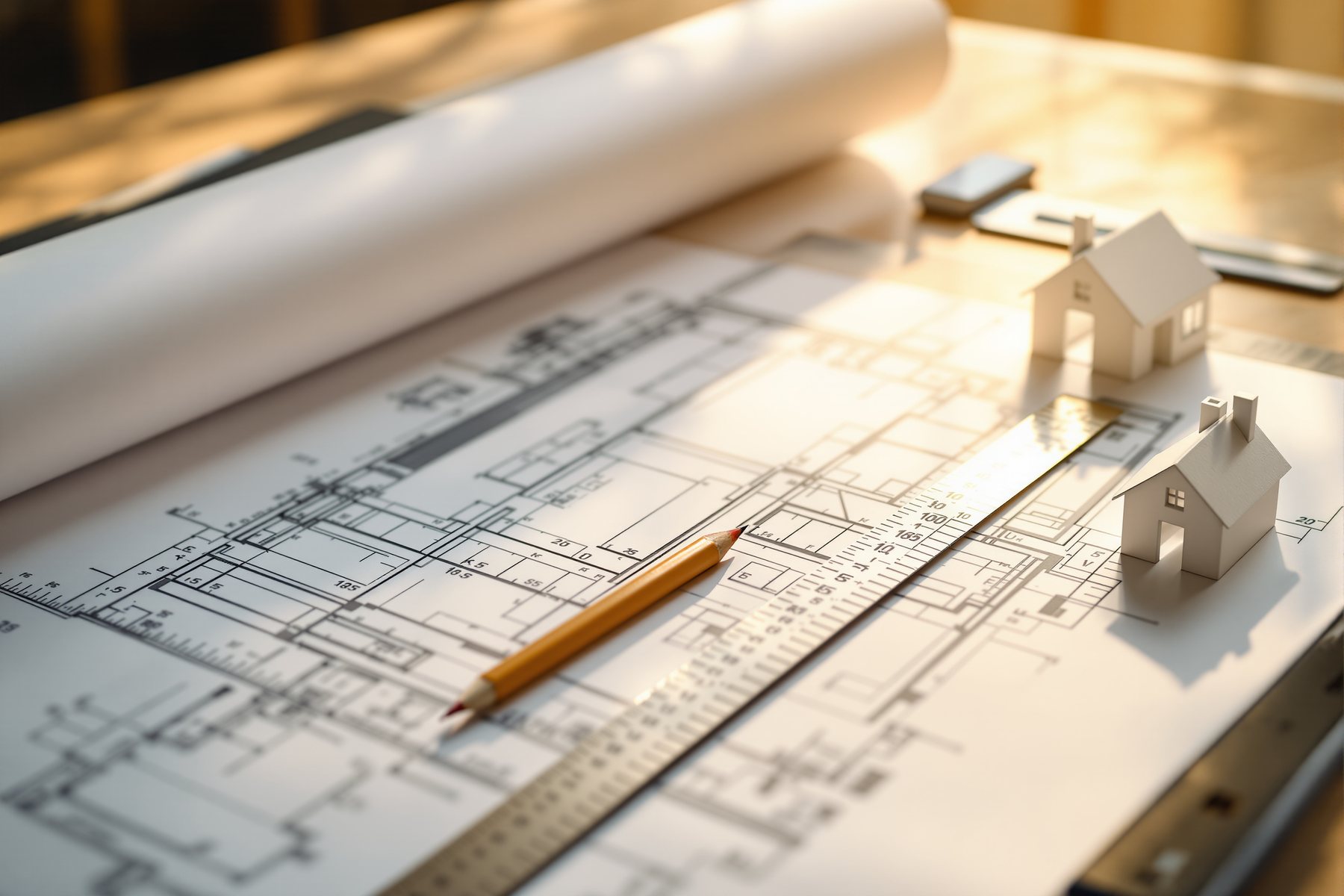
The pretty 3D render is not a drawing you can build from. The boring one is.
The render that made you say yes — the warm evening light, the planted terrace — is the concept. Nobody builds from it. The set that actually goes to site is a stack of dimensioned, labelled, un-glamorous sheets called the working or GFC drawings. Knowing which stage you're at, and what you're signing off, keeps you from approving a dream and receiving a different reality.
Four stages: concept, development, working/GFC, structural
Design moves through four sets, each more detailed and less changeable
Drawings get more detailed and more expensive to change at every stage. Treat each as a gate you sign off before money flows to the next.
- Concept design — the big idea: rough plans, the look, mood, maybe a 3D render. This is where you change everything, freely. Move walls now, not later. - Design development (DD) — the concept made real: fixed room sizes, layouts, the staircase that actually works, materials chosen. Changes here cost time but no demolition. - Working / GFC drawings — Good for Construction. The dimensioned, fully detailed set your contractor builds from: every wall thickness, door size, switch position, floor level, kitchen counter height. Once these are issued, a change can mean breaking something. - Structural drawings — produced in parallel by the structural engineer: foundation, column and beam sizes, slab and steel detailing. This is the 'will it stand' set, and it must be coordinated with the architectural set so a column doesn't land in the middle of your bedroom door.
The number to remember: a change at concept costs a pencil; the same change after the slab is cast costs a wall.
A change is cheapest at concept and most brutal after casting. Decide early, then hold.
GFC is the set that goes to site — make sure your contractor has it
Good for Construction is the most important phrase in this lesson. The GFC set is the single source of truth on site: marked, dimensioned, signed and dated. If your contractor is building from a concept plan or a WhatsApp screenshot, stop — that's how a 10-foot room becomes 9'4".
Good GFC drawings include the architectural set (plans, elevations, sections), the structural set, and the service drawings (electrical, plumbing). On a small house these may be combined; on a larger one they're separate sheets that must agree with each other. The architect's job at this stage is coordination — making the plumbing, the wiring, the beams and the architecture all fit in the same walls.
Before work starts, confirm three things in writing: which set is the latest 'issued for construction' version, who controls revisions, and that any site change goes back through the architect — not improvised by the mason. The mason is brilliant at building; they are not the one who should be redesigning your house at 11 a.m. on a Tuesday.
Sign off each stage deliberately, and understand that 'free changes' shrink as you go. Pour your energy into the concept and design-development stages — that's where moving a wall or resizing a room costs nothing. Once the GFC set is issued and the contractor is building, treat changes as expensive and rare. Insist your contractor builds from the latest GFC set, not an old print or a phone photo.
Stage your fee and your sign-offs to match: concept, DD, GFC, then construction-stage support. Issue every GFC sheet with a revision number, date and 'Good for Construction' stamp, and maintain a revision register. The most expensive site errors trace to an uncoordinated set — a beam clashing with a duct, a level mismatch — so protect time for the architectural-structural-MEP coordination before issue, not after.
Studio mostly teaches concept and presentation; practice lives in design development and working drawings, where ideas meet gravity, tolerances and the National Building Code. Learn what goes on a GFC sheet — dimension lines, levels, schedules, details at 1:5 — and that coordination across disciplines is itself a design skill. The drawing that builds the building is the real deliverable.
“The 3D render the architect showed me is the design — that's what gets built.”
A render is a sales and concept tool; nothing is built from it. The buildable design is the Good-for-Construction (GFC) set — dimensioned, detailed and coordinated with the structural and service drawings. Approve the render to confirm the look, but it's the GFC set you should review carefully and the contractor must build from, sheet by sheet.
Get clear on the drawing stages for your own project:
- 01Ask your architect, in writing, what each stage delivers and what you sign off at each — concept, design development, GFC, structural — so you know when 'free changes' end.
- 02Before construction starts, confirm which set is the latest 'Good for Construction' version and that the contractor is building from it, not an old print.
- 03Agree a rule that any change on site goes back through the architect for a revised, re-issued drawing — never improvised by the mason on the spot.
A house is designed four times over, each set more detailed and more costly to change. Your leverage is at the start: spend your decisions at concept and design development, where a wall moves for free. By the time the Good-for-Construction set is on site, the design is the law — and the discipline of holding it is what keeps your build on budget and on plan.
Design moves through four sets — concept, design development, working/GFC (Good for Construction), and structural — each more detailed and costlier to change. Changes are nearly free at concept and brutal after casting. The GFC set is the only one your contractor builds from, and it must be coordinated with the structural and service drawings.
What are GFC drawings in construction?
GFC stands for 'Good for Construction' — the final, dimensioned, fully detailed and coordinated set of drawings your contractor actually builds from. They include the architectural, structural and service sheets, each carrying a revision number, date and a GFC stamp. Anything built from an earlier concept or development drawing risks errors that the GFC set was created to eliminate.
What are the stages of architectural design drawings in India?
Typically four: concept design (the big idea and look), design development (room sizes, layouts and materials fixed), working/GFC drawings (the buildable, dimensioned set), and structural drawings (foundation, columns, beams and slab detailing by the engineer). Each stage adds detail and reduces how cheaply you can still make changes.
What's the difference between a concept drawing and a working drawing?
A concept drawing shows the idea — rough plans and renders to agree the look and feel. A working (GFC) drawing is the construction document: every dimension, level, material and detail a builder needs, coordinated with the structural and service drawings. You build from the working drawing, never from the concept.
The author
Amogh N P
Architect, interior designer, and creative polymath. Studio Matrx began in his notebooks — his vision of design made honest, useful, and open to everyone. Its Academy is written and taught in his memory, and free, forever.
More about Amogh →You know what the drawings are. Now learn to actually read them — to look at a plan, an elevation and a section and understand the house before a single brick is laid.