
B.Arch CurriculumFree, forever
A tribute to Amogh N P
BIM-Based Construction Management
A drawing tells you what to build. A BIM model tells you that — and how much it costs, when each part goes up, where the duct clashes with the beam, and how to run the building for the next fifty years. This elective is construction management seen through Building Information Modelling: not a 3D drawing, but a single, data-rich digital model that the whole team shares and that drives coordination, the programme, the cost and the building's whole life. Learn the fundamentals of BIM and why it is a process, not just software; the technology and the power of automated CLASH DETECTION; the impact of BIM on construction management — sequencing the build in 4D and costing it in 5D; facility management with BIM as a living digital twin; and how it all comes together on a real project. Project Management and estimation are companion subjects; here those functions run on the model.
Course byAmogh N P· Architect & interior designer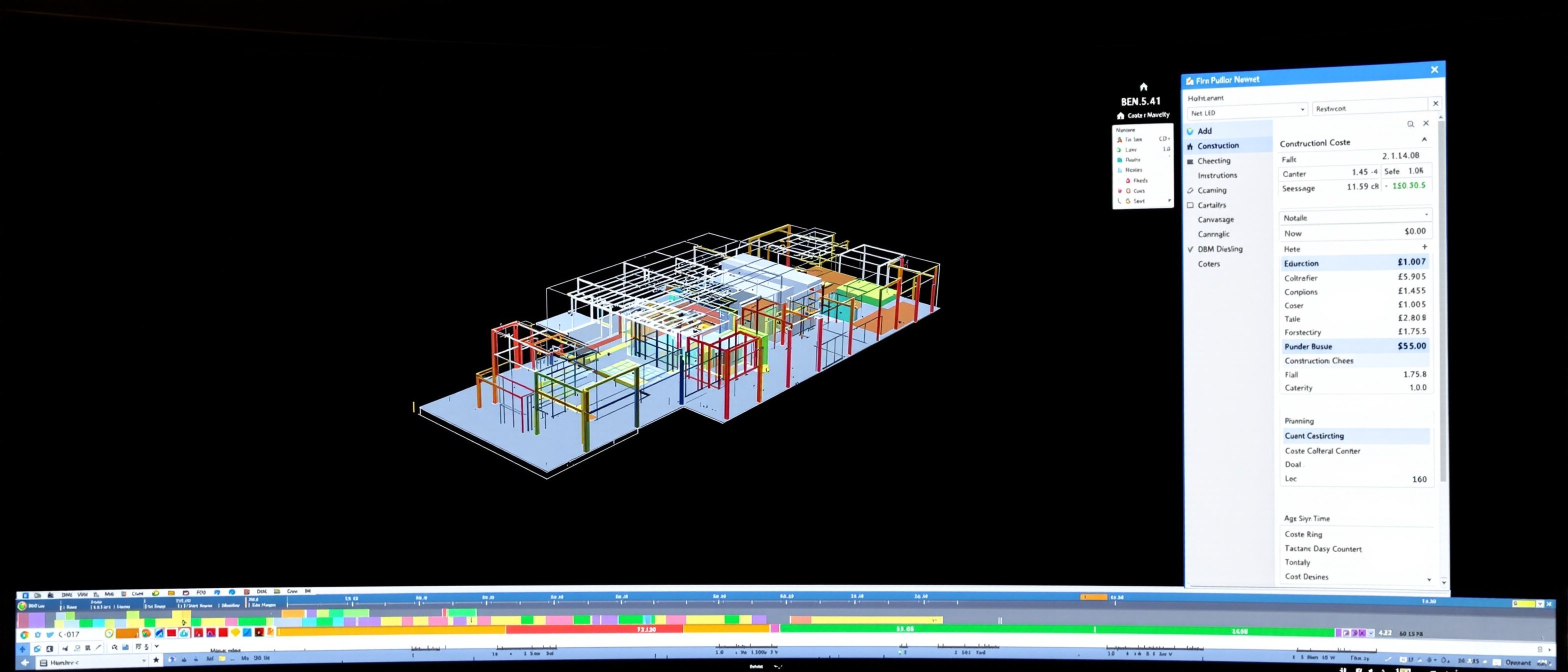
The syllabus
5 units · 5 liveTranscribed from the official B.Arch syllabus. All 5 units are live as full interactive lessons, each with original diagrams, a self-assessment quiz and a studio task.
Unit 1 — Fundamentals of BIM
LiveThe fundamentals and practical use of information technology in the construction industry; the basic concepts of Building Information Modelling — a shared, data-rich, object-based model rather than a set of drawings; the difference between BIM and CAD; the Level of Development (LOD) of model elements; and why BIM is a process and a methodology, not merely a piece of software.
Unit 2 — BIM Technology & Clash Detection
LiveA review of the software and technology available for BIM — authoring, coordination and analysis tools, and the open interoperability standard IFC; the practical use of BIM in design; and the power of automated CLASH DETECTION — finding hard, soft and workflow clashes between disciplines in the model, before they are built.
Unit 3 — Impacts & Functions of BIM
LiveThe impact of BIM on construction management functions; construction scheduling and sequencing using BIM (4D) — linking the model to the programme and simulating the build; cost estimating using BIM (5D) — quantities and cost flowing from the model; and the wider BIM dimensions (3D to 7D).
Unit 4 — Facility Management with BIM
LiveFacility management with BIM — carrying the model and its data into operation as a digital twin for maintenance, assets and space; and the integrated approach that navigates BIM as a single multi-disciplinary platform across design, analysis, construction and facility management, over the building's whole life.
Unit 5 — A BIM Project
LiveBringing it together on a real project — creating a BIM model and using it for scheduling, sequencing, cost estimating, management and the simulation of a construction project; the workflow, the Common Data Environment and the BIM Execution Plan; and what BIM actually delivers when it works.
Course outcomes
What you will be able to doExplain the fundamentals of BIM and why it is a process, not just software.
Review the software and technology for BIM, including clash detection.
Explain the impact of BIM on construction management — 4D scheduling and 5D cost.
Explain facility management with BIM and the integrated, multi-disciplinary approach.
Use a BIM model for scheduling, sequencing, cost estimating and simulation.
Judge the impacts and functions of BIM across the project life.
The author
Amogh N P
Architect, interior designer, and creative polymath. Studio Matrx began in his notebooks — his vision of design made honest, useful, and open to everyone. Its Academy is written and taught in his memory, and free, forever.
More about Amogh →The model runs the project.
The data-rich model, clash detection, 4D, 5D, facility management and a project. Read the five units, study the diagrams, then test yourself.
The curriculum is free, forever