
The Vanishing Stepwells of India: the water architecture we forgot
Victoria Lautman's photographic reckoning with India's subterranean stepwells — engineering, art and climate wisdom, and an urgent appeal to save them.
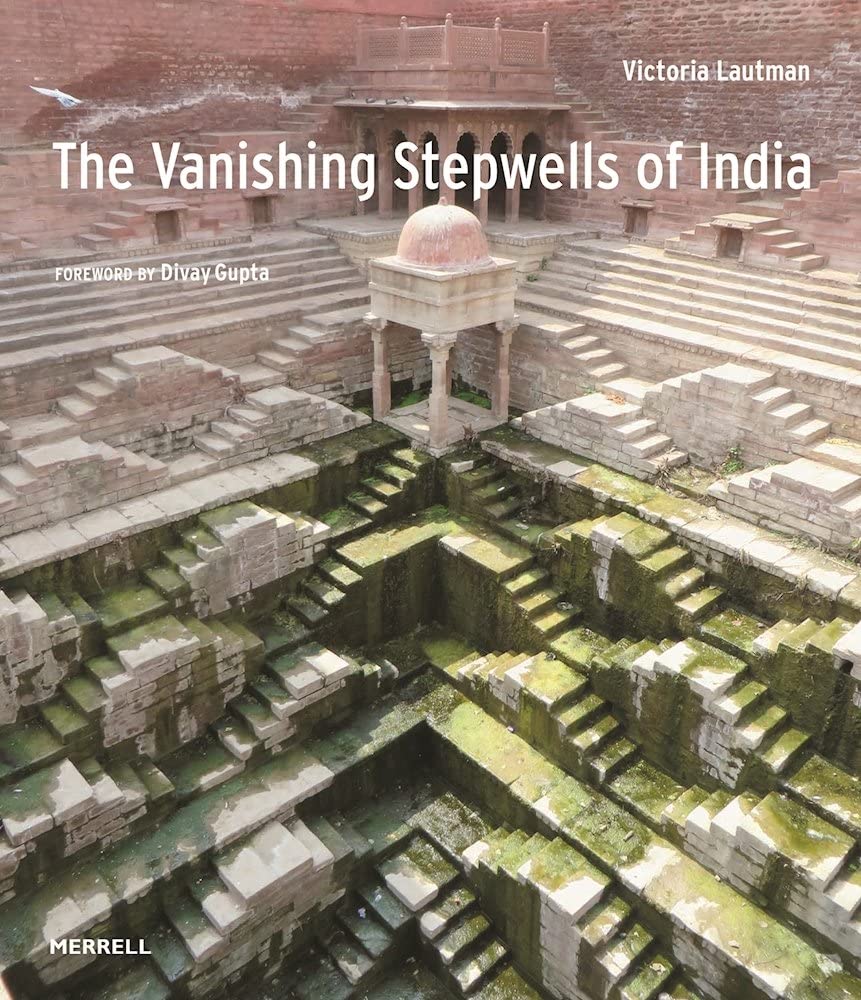
To call Victoria Lautman's The Vanishing Stepwells of India a beautiful book about a journey through India would be an understatement. It is at once a photographic record, a work of historical investigation and an appeal for the preservation of one of the country's most extraordinary architectural traditions. Published by Merrell Publishers in association with the World Monuments Fund, it opens a rare window onto the engineering genius, artistry and culture held in India's stepwells.
The book's great strength is Lautman's ability to read architecture as civilisation. Stepwells were never mere underground reservoirs; they were complex works that fused engineering, religious symbolism, climate response and social life into a single descent into the earth. They are, in Lautman's reckoning, among India's most extraordinary yet least appreciated architectural achievements — and the book sets out to explain why.
Geographically the survey is wide. Lautman travels through Gujarat, Rajasthan, Delhi, Karnataka, Madhya Pradesh and beyond, photographing not only the famous stepwells but the forgotten ones — hidden under vegetation, choked with refuse, or swallowed by the expanding city. The range makes the argument for itself: the loss is real, and it is urgent.
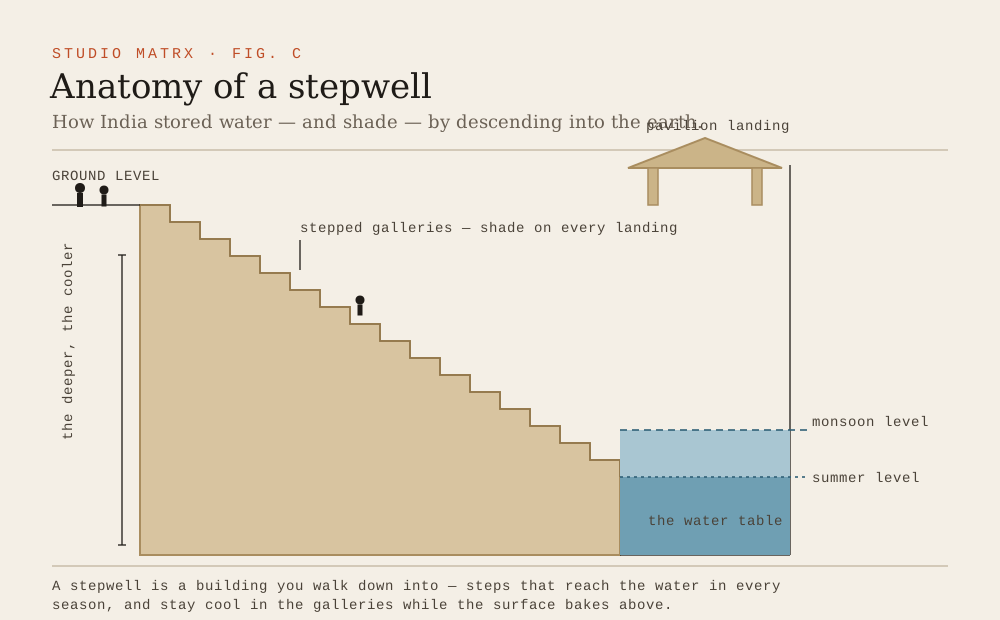
Architecturally, the stepwell is climate-responsive design centuries ahead of the term. Each is a lesson in the reading of groundwater and season, in passive cooling, in structural stability and in human comfort. Descending several storeys below grade, a stepwell holds a pool of cool, still air where people could escape the ferocity of the Indian summer — while guaranteeing access to water the year round.
Culturally, the stepwell is a monument to Indian ingenuity with water. Long before reservoirs and pipelines, communities in the drought-prone west poured their finest architecture into gathering and keeping it. And the patrons were not only kings: queens, merchants and wealthy citizens commissioned stepwells as public works, an early architecture of social responsibility. India's most celebrated example, Gujarat's Rani-ki-Vav — the Queen's Stepwell at Patan — was inscribed on the UNESCO World Heritage List in 2014.
Internationally, the book introduces a building type all but missing from the standard history of architecture. The Colosseum and the Parthenon are universal references; the stepwell, for all its technical daring and beauty, remains largely unknown. Lautman widens the canon — a reminder that architectural innovation was never the property of the West alone.
She is equally clear-eyed about how the wells were lost. Urbanisation, falling water tables, piped supply, pollution and plain public indifference emptied them first of use and then of care. The title is the argument: these are vanishing. The book becomes a call to document, restore, reuse and save what remains.
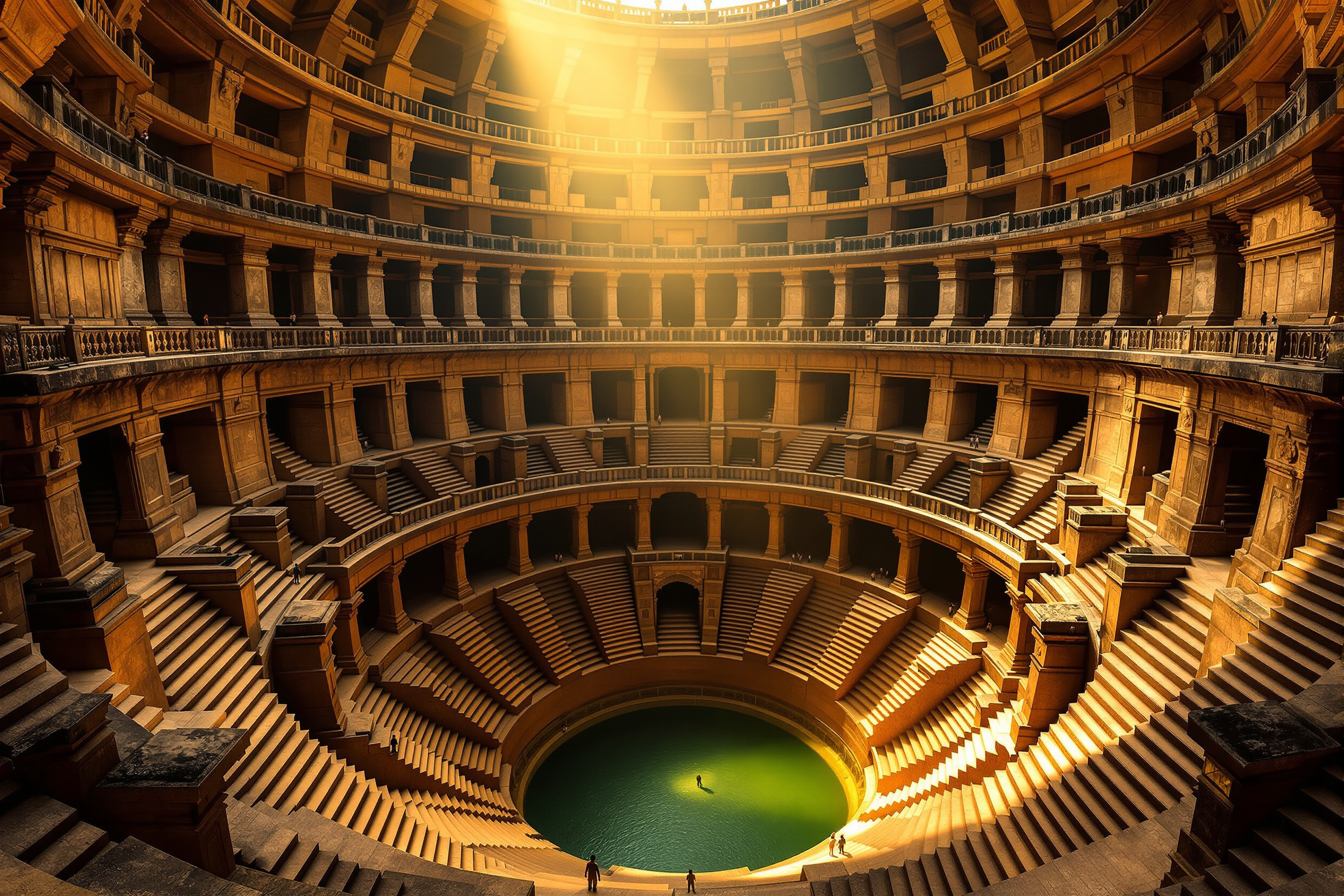
The photographs deserve their own attention. They present the stepwells not as ruins but as living compositions — dramatic geometry, intricate carving, rhythmic flights of steps, shafts of natural light and an extraordinary sense of spatial depth. They ask the architect to see the stepwell not only as engineering but as a masterpiece of space.
In the end, Lautman achieves a rare union of architectural inquiry and cultural preservation. The stepwells emerge not as relics of a vanished world but as lessons in resilience, sustainability, community planning and environmental intelligence. At a moment when architects are again searching for climate-responsive answers, India's forgotten wells turn out to be a deep source of them — quite literally.
References — Lautman, V. The Vanishing Stepwells of India (London: Merrell Publishers in association with the World Monuments Fund, 2017). Livingston, M. Steps to Water: The Ancient Stepwells of India (Princeton Architectural Press, 2002). Jain-Neubauer, J. The Stepwells of Gujarat: In Art-Historical Perspective (Abhinav Publications, 1981). UNESCO World Heritage Centre, Rani-ki-Vav (the Queen's Stepwell) at Patan — inscribed on the World Heritage List, 2014. World Monuments Fund, The Vanishing Stepwells of India project. Michell, G. and Zebrowski, M. Architecture and Art of the Deccan Sultanates (Cambridge University Press, 1999).