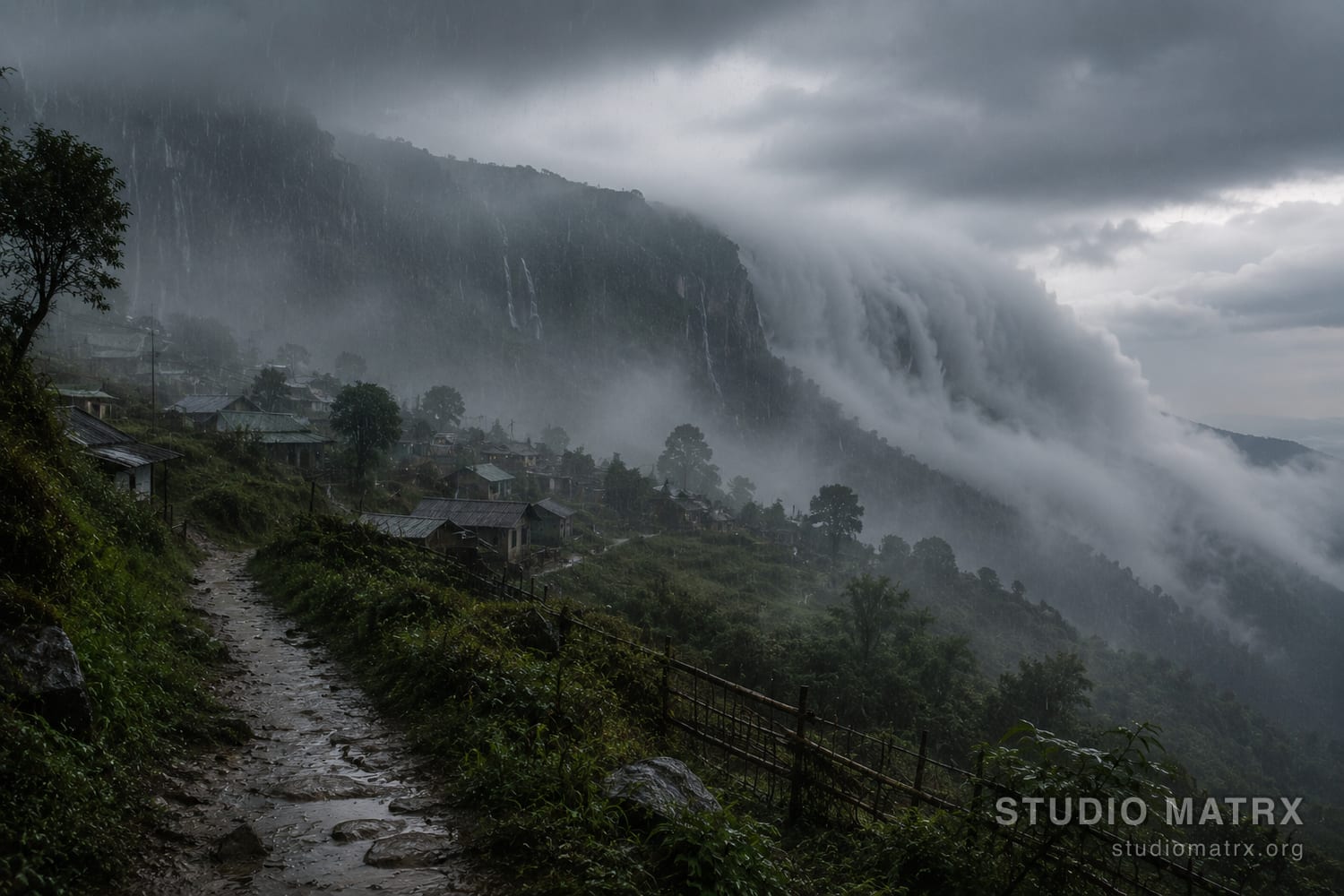
Where it rains the most
In the hills of Meghalaya, rain isn't a season — it's the climate. What the Khasi people build there rewrites everything we think we know about designing for water.
In Kerala, the monsoon arrives and departs. In Mawsynram and Cherrapunji, on the southern lip of the Meghalaya plateau, it scarcely leaves at all. These two villages pass the title of wettest inhabited place on earth between them, drinking in upward of 11,000 millimetres of rain a year — more than ten times what falls on Mumbai. The clouds rise off the Bangladesh plains, hit the hills, and let go. For much of the year the world here is water: in the air, on the path, running down every slope toward the rivers below.
Most architecture treats rain as an event to prepare for. Here, it is simply the condition everything must answer to, every day. And the answers the Khasi and Jaintia people have arrived at, over centuries, amount to some of the most intelligent water-architecture on earth — most of it never drawn by an architect at all.
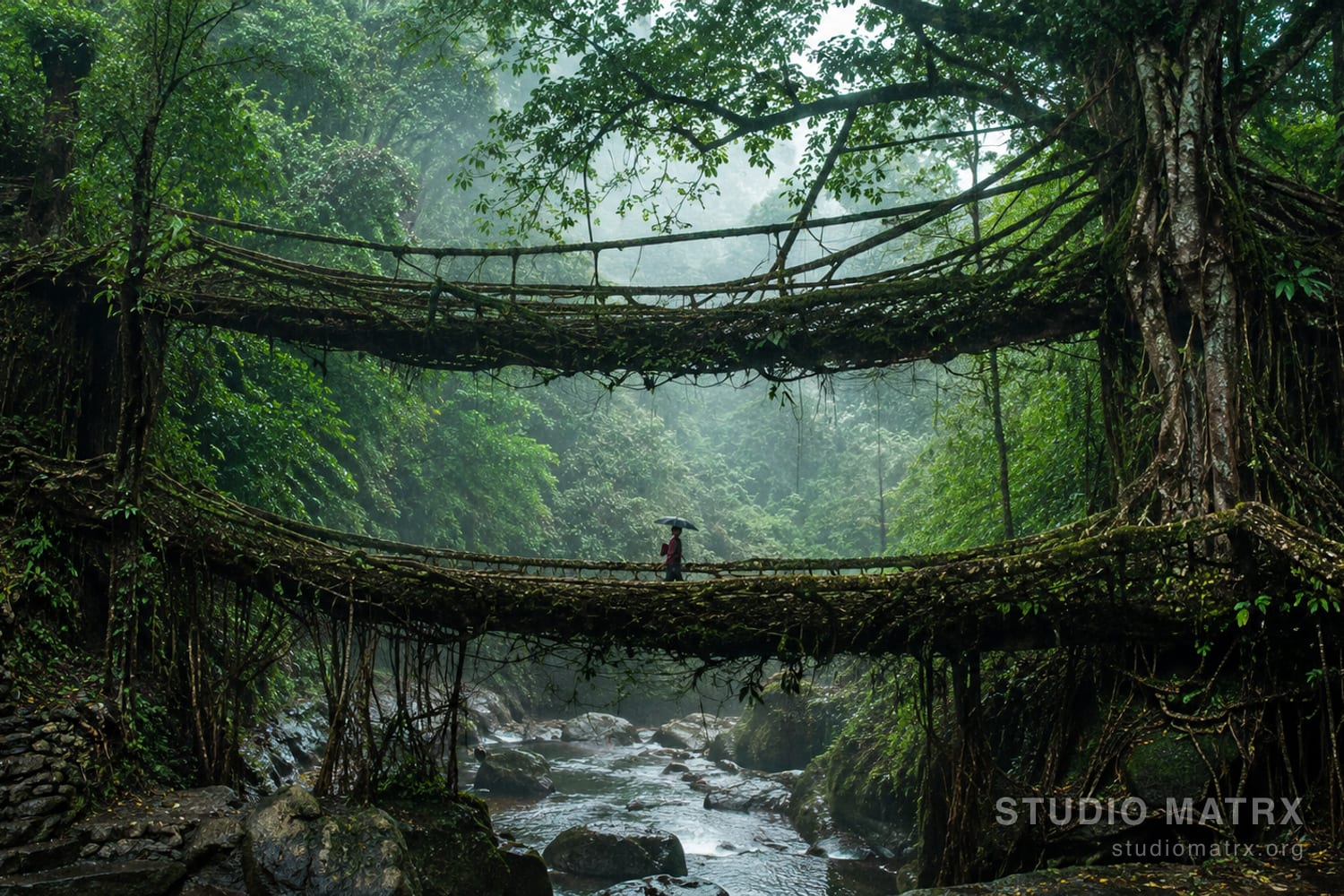
Begin with the thing no engineer would think to attempt. Where a monsoon-swollen river cuts a village off from its fields, the Khasi do not pour a concrete span that the flood will eventually claim. They grow a bridge. The aerial roots of the Ficus elastica, the rubber fig, are patiently trained across the water — guided along a frame of bamboo or hollowed betel trunk, year after year, until they take hold on the far bank and thicken into a living deck. The jingkieng jri, the living root bridge, takes fifteen to thirty years to become walkable.
Then it does the thing concrete cannot. It gets stronger. A built bridge begins decaying the day it is finished; a root bridge, being alive, grows more robust with every passing monsoon. Some in the Khasi hills are over a century and a half old and still thickening, tended now by the great-grandchildren of those who began them. They are, in the most literal sense, infrastructure that improves with age — and a quiet rebuke to everything modern construction assumes about permanence being a thing you achieve once and defend forever.
Look next at the ordinary homes. The traditional Khasi house and the Assam-type houses of the wider Northeast are masterclasses in living with perpetual wet. Roofs pitch steeply and overhang deeply, throwing water far clear of the walls. Plinths rise, or the whole house lifts onto stilts, so the ground may flood without the home doing so. Walls of bamboo, reed and ikra breathe and flex rather than trapping the damp that rots a sealed masonry box. Nothing here fights the rain with brute waterproofing. Everything guides it, sheds it, lets the building dry between downpours.
It is the same instinct we found in the Kerala nalukettu earlier in this issue — climate read first, building shaped second — but pushed to an extreme that coastal India never has to face.
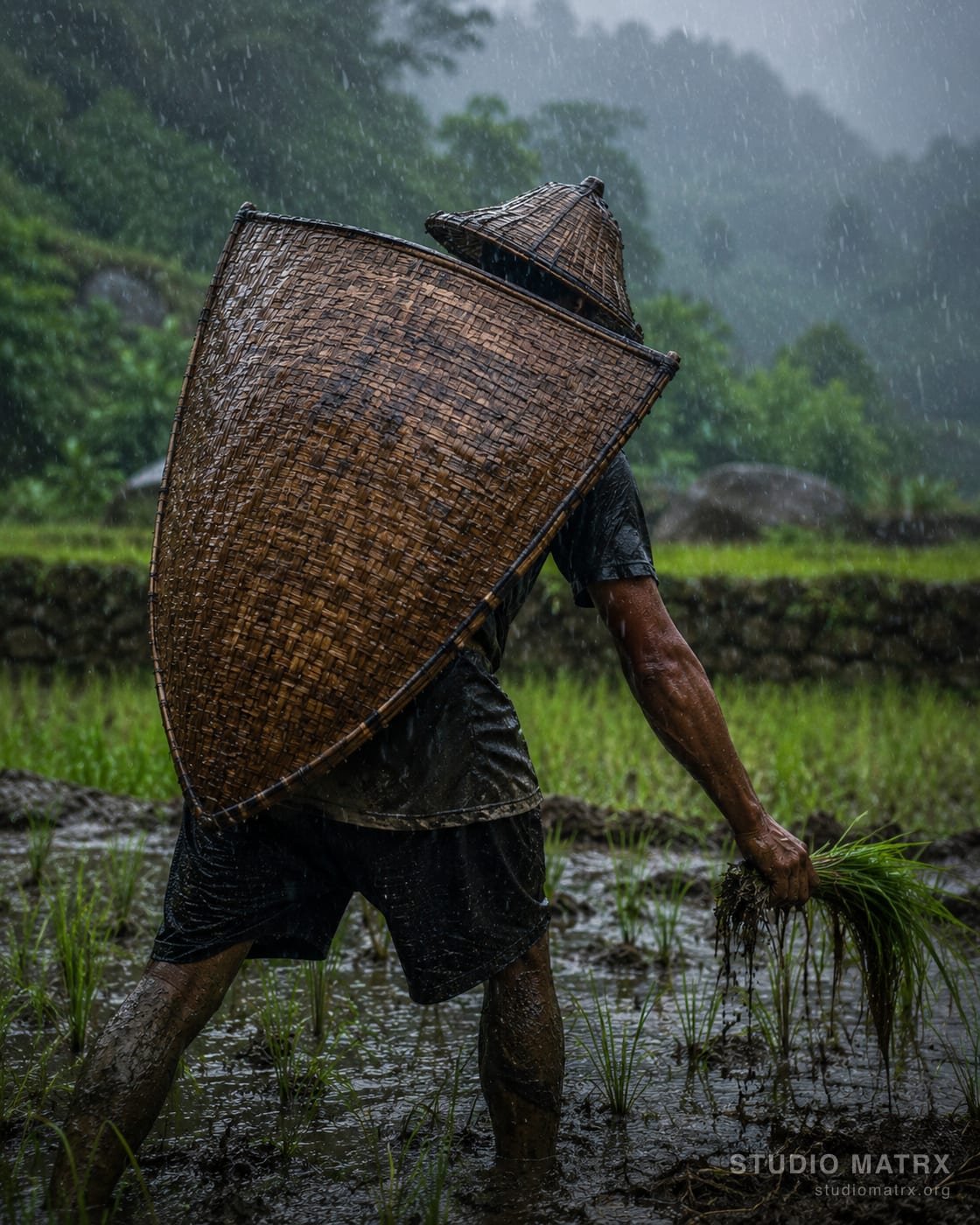
And then there is the knup. When the fields must be worked through a downpour that will not pause for weeks, the Khasi farmer wears one: a boat-shaped, full-body shield of cane and bamboo, curved like an upturned hull, that sheds rain off the back and leaves both hands free to plant and harvest. It is, if you think about it, a building for one person — a roof you wear. The same logic that pitches a roof and casts off a courtyard's water, miniaturised to the human frame.
It would be easy to file all this under the picturesque and move on. That would be a mistake. The lesson of Meghalaya is the lesson of this whole issue, stated in its purest form: resilience is not resistance. The root bridge does not hold the river back; it grows stronger by living beside it. The breathing wall does not seal the damp out; it lets the house dry. The knup does not stop the rain; it simply arranges the body's relationship to it.
A homeowner in Mumbai cannot grow a bridge, and a student in Bengaluru will not build in ikra. But the underlying move travels everywhere — stop treating water as an enemy at the gate, and start asking where it wants to go, and how you might design with that rather than against it. The wettest place on earth worked this out a very long time ago. The rest of us are only now remembering.
This feature draws on living Khasi knowledge. The jingkieng jri root bridges sit on UNESCO's tentative World Heritage list; they remain tended by the communities who grew them.