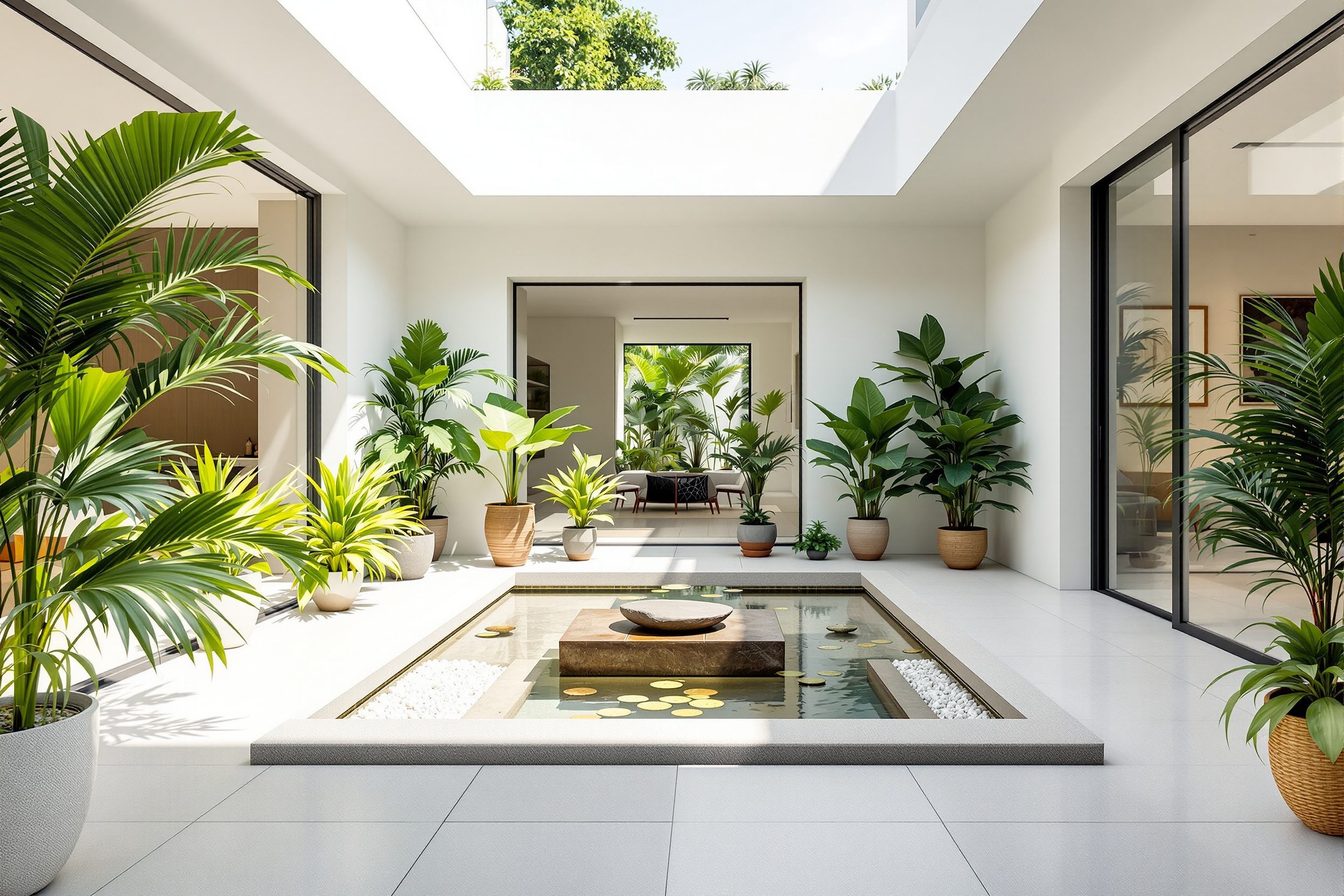
The courtyard comes home
Why the open-to-sky court is returning to the Indian house.
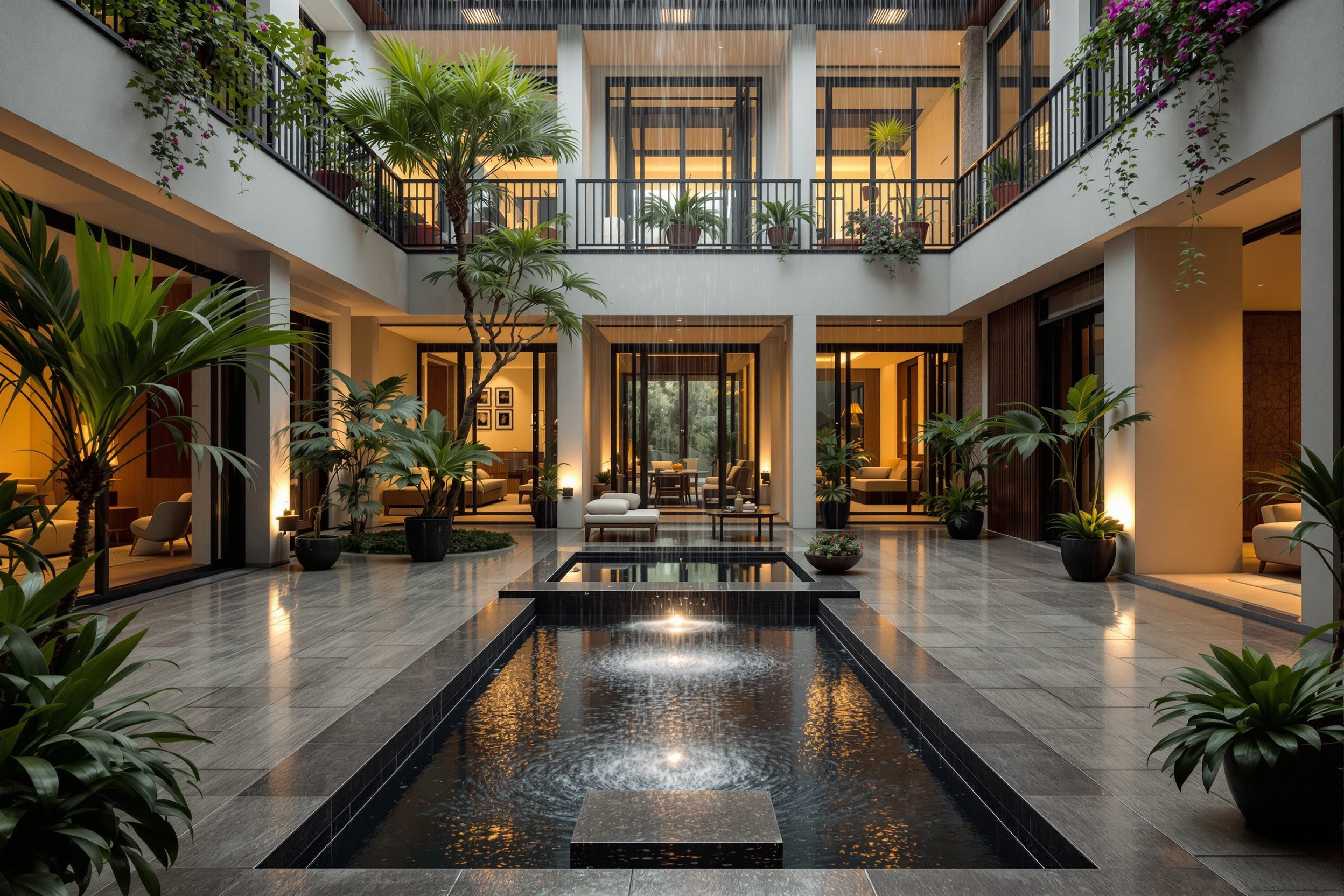
For half a century the middle-class dream was a sealed box with the largest carpet area money could buy. The courtyard — the open heart that the Kerala nalukettu, the Chettinad veedu and the Rajasthani haveli were all built around — got quietly priced out, written off as wasted floor. In 2026 it is coming back, and not as nostalgia.
What homeowners are rediscovering is that the court does three jobs at once that a sealed plan never quite manages: it brings daylight deep into the house, it pulls air through, and it gives the family a private outdoor room. A box buys all three with electricity — lights on at noon, fans and air-conditioners running — and still feels stuffy by April.
The physics is the appeal. A courtyard is a thermal engine: hot air rises out of the open top while cooler, shaded air is drawn in around it, a slow convective pull that keeps the rooms wrapped around it several degrees cooler. In the monsoon the same court turns into a small weather event of its own — it receives the rain, greens up, and cools the house as the water evaporates.
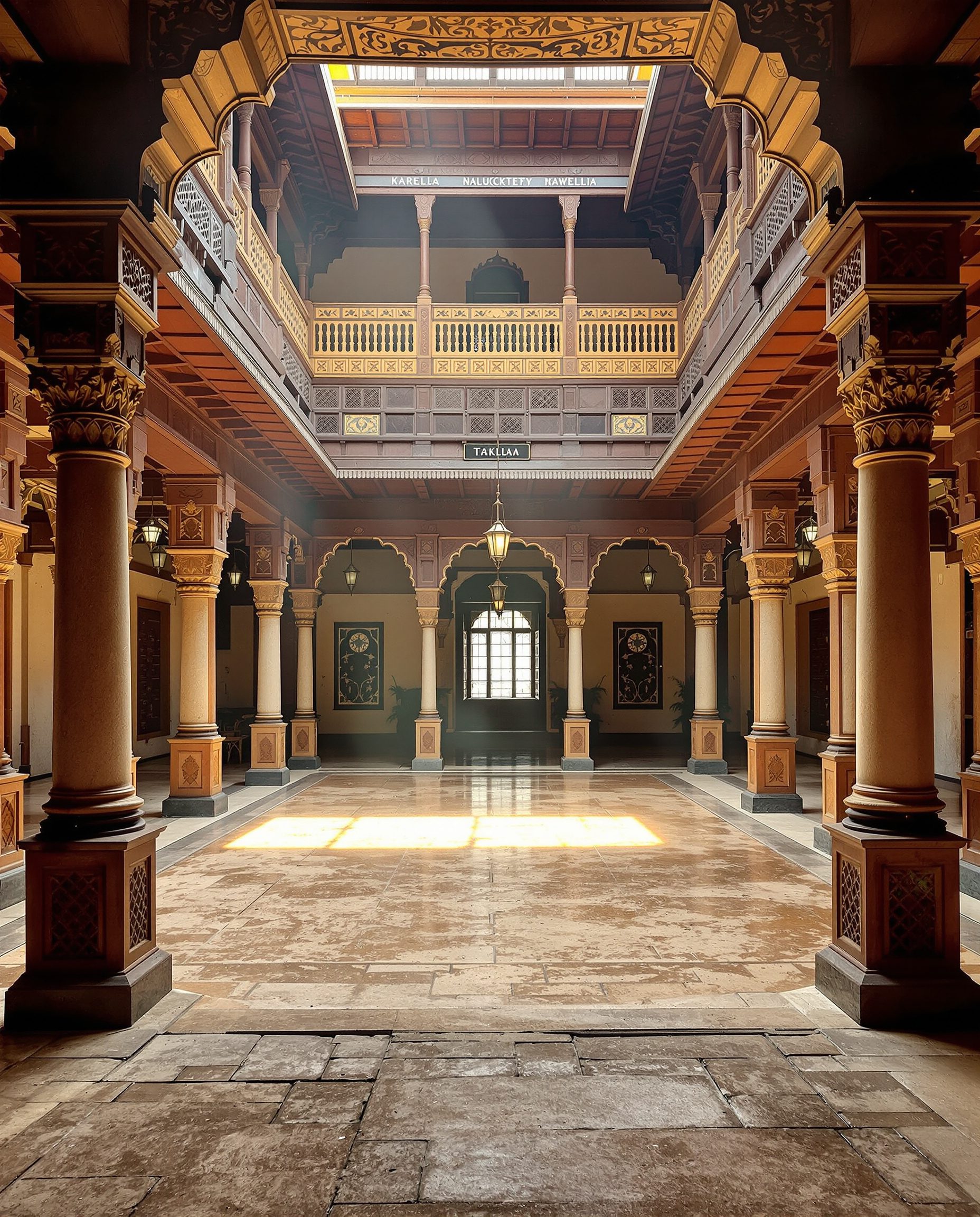
None of this is new. The nadumuttam of a Kerala home, the central court of a haveli, the deep wells of a Gujarati pol house were climate devices dressed as culture. Our ancestors were not being picturesque; they were solving daylight, heat and rain with geometry, because they had no other way to. The court fell out of fashion only when cheap electricity let us paper over the problem it solved.
The contemporary version is smaller and smarter. On a 30 by 40 plot it shrinks to a double-height light court, a verandah-wrapped pocket garden, or a covered court under an operable skylight that closes when the cloudburst is too much. Practices like Studio Mumbai and a generation of younger Indian architects have made the small court the quiet signature of the well-built modern home.
It is not free of catches. The court edge must be waterproofed and drained properly, or the feature becomes the leak. Open courts need a mosquito and maintenance plan; in a dense plot, privacy and overlooking have to be designed for; and in the end the floor area it costs has to be worth more as light and air than as another bedroom. The court rewards design, not just a hole in the roof.
But get it right and it changes how a house feels — and what it costs to run. The most modern thing you can do to an Indian home in 2026, it turns out, is to open a hole in the middle of it and let the sky back in.