

Wall Finish Maintenance: Cleaning, Care & Resealing
Keep every wall finish looking new for longer — how to clean and reseal each finish, cleaning do's and don'ts, the reseal calendar, quick fixes for common problems, and habits that make any finish last.
A wall finish lasts as long as the care behind it. The same emulsion, microcement or wallpaper can look tired in three years or fresh in twelve, and the difference is rarely the product — it is whether it was cleaned gently, resealed on time, and repaired before small problems spread. The good news is that wall maintenance is mostly light and occasional: dust regularly, clean gently and correctly for each finish, keep to a simple reseal calendar, and fix the small stuff fast. This guide gathers all of that in one place, finish by finish.
It sits under the master wall-finishes guide and complements the individual finish guides.
Maintenance at a glance, by finish
Every finish has its own routine — here is the whole picture in one table.
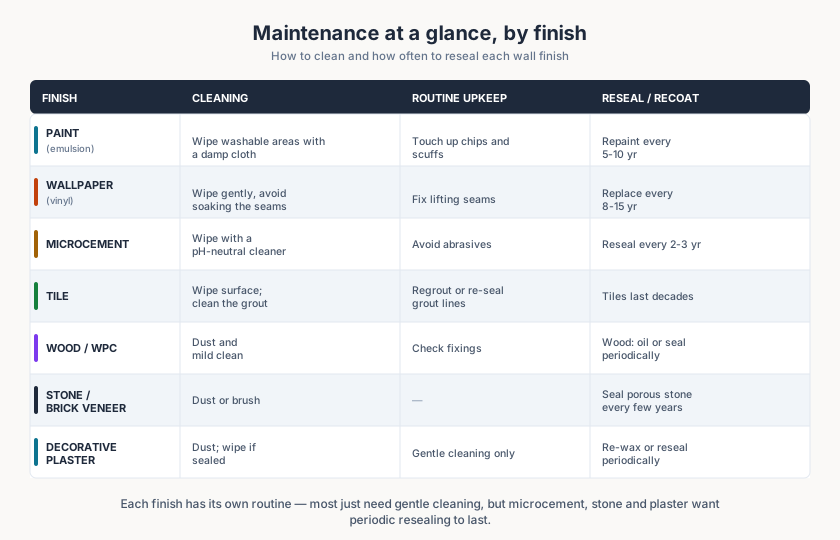
In brief: paint — wipe washable emulsion with a damp cloth, touch up chips, repaint every 5–10 years; wallpaper (vinyl) — wipe gently avoiding soaking the seams, fix lifting seams, replace at 8–15 years; microcement — wipe with a pH-neutral cleaner, avoid abrasives, reseal every 2–3 years; tile — wipe, keep the grout clean, regrout or reseal grout as needed; wood/WPC — dust and mild-clean, check fixings, oil or seal real wood periodically; stone/brick veneer — dust or brush, seal porous stone every few years; decorative plaster — dust and wipe when sealed, re-wax or reseal periodically. Most finishes just need gentle cleaning — but microcement, stone and plaster want periodic resealing to last.
Cleaning: do and don't
The wrong cleaner damages a finish faster than years of everyday use, so this is worth getting right.
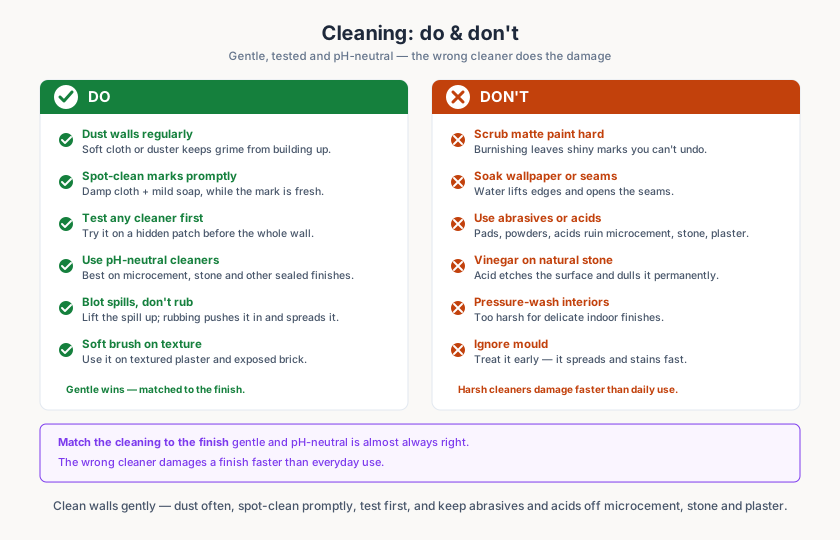
Do: dust walls regularly with a soft cloth or duster; spot-clean marks promptly with a damp cloth and mild soap; test any cleaner on a hidden patch first; use pH-neutral cleaners on microcement and stone; blot spills rather than rubbing; and use a soft brush on textured and brick surfaces. Don't: scrub matte paint hard (it burnishes and marks), soak wallpaper or its seams, use abrasive pads or acids on microcement, stone or plaster (vinegar etches natural stone), pressure-wash delicate interior finishes, or ignore mould. Gentle, tested and pH-neutral is almost always right.
The reseal and recoat calendar
Some upkeep is not about cleaning at all — it is the periodic resealing that keeps a finish performing.
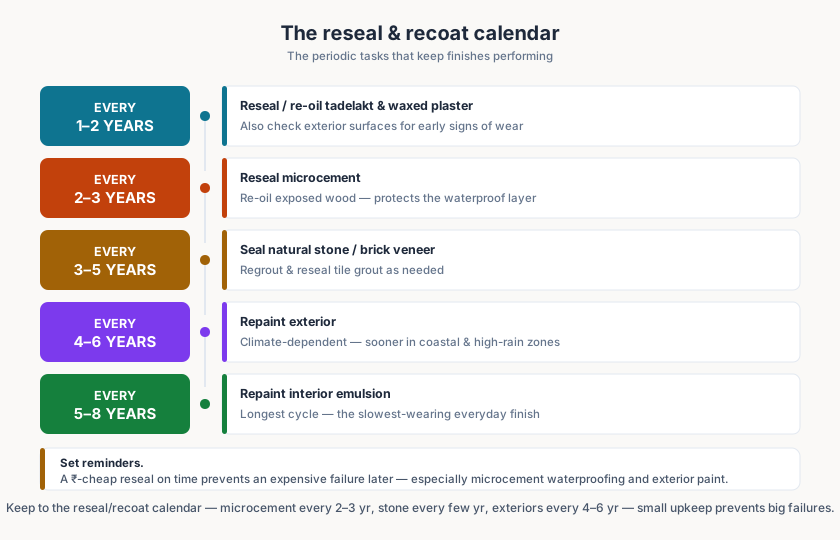
Set reminders for: every 1–2 years — reseal or re-oil tadelakt and waxed plaster, and check exteriors for early wear; every 2–3 years — reseal microcement and re-oil wood; every 3–5 years — seal natural stone and brick veneer, and regrout or reseal tile grout as needed; every 5–8 years — repaint interior emulsion; and every 4–6 years — repaint exteriors (climate-dependent). A cheap reseal on time prevents an expensive failure later — especially microcement's waterproofing and exterior paint.
Common problems and quick fixes
Most wall problems have a fast fix if you catch them early — here is the field guide.
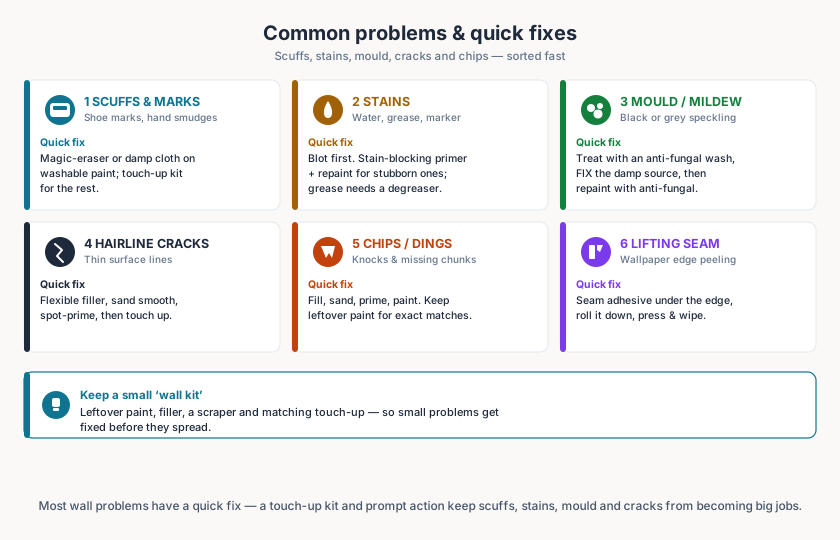
Scuffs and marks — a magic-eraser or damp cloth on washable paint, a touch-up kit for the rest; stains — blot, then a stain-blocking primer and repaint for stubborn ones (grease needs a degreaser first); mould/mildew — treat with an anti-fungal wash, fix the damp source, and repaint with anti-fungal paint; hairline cracks — flexible filler, sand, spot-prime and touch up; chips and dings — fill, sand, prime and paint (keep leftover paint for matches); a lifting wallpaper seam — seam adhesive and a roller, then press and wipe. Keep a small "wall kit" — leftover paint, filler, a scraper and matching touch-up — so small problems get fixed before they spread.
Habits that make any finish last
Beyond the finish-specific care, a handful of habits extend the life of every wall.
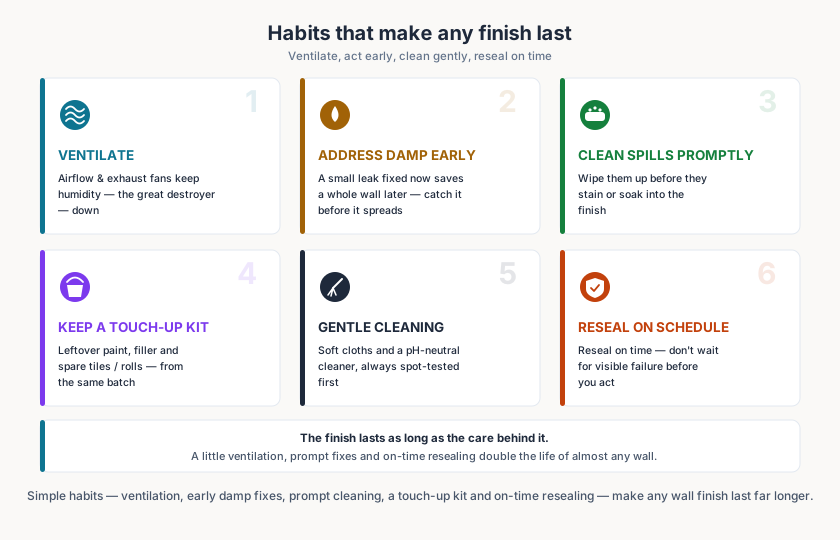
They are: ventilate (airflow and exhaust fans keep humidity — the great destroyer — down); address damp early (a small leak fixed now saves a wall later); clean spills promptly (before they stain or soak in); keep a touch-up kit (leftover paint, filler, spare tiles or rolls from the same batch); clean gently (soft, pH-neutral, tested); and reseal on schedule (don't wait for failure). A little ventilation, prompt fixes and on-time resealing double the life of almost any wall.
Wall maintenance is not a big job — it is a small, regular one, and it pays back many times over in finishes that stay looking new. Clean each finish the right way, keep to the reseal calendar, fix the small stuff fast, and build the habits above. For the specifics of any one finish, follow its guide from the master wall-finishes guide.
Export this guide
Related Guides — Deep-dive reading
Plaster, Render and Texture-Paint Facades in India: The Honest Guide to the Country's Default Wall Finish
A building-physics guide to cement and lime render, exterior emulsion and weatherproof paints, and textured coatings — how these everyday facades are built, why they crack, streak and grow algae, and what actually keeps them looking good in the Indian monsoon.
Building FacadesUltimate Guide to Wall Finishes for Indian Homes
Paint, wallpaper, panels, stone, plaster, microcement and more — the whole family of wall finishes, a five-question way to choose, and the real cost, climate and maintenance trade-offs.
Wall FinishesWaterproof Bathroom Paint in India: Anti-Fungal, Washable Emulsions for Walls & Ceilings
Which paint survives above the tile line — the moisture-resistant, anti-fungal, washable emulsions that stop peeling and black mould on Indian bathroom walls and ceilings. Sheen, prep, low-VOC and ₹/litre, brand-neutral.
BathroomsRelated Tools — Try Free
Cross-Ventilation Analyzer
Estimate airflow and air changes per hour (ACH) from room size, window areas, layout, and local wind — with NBC 2016 Part 8 compliance check.
Ventilation CalculatorDoor Paint Calculator
Estimate paint and primer litres and cost to paint your doors by size, number of doors, coats and paint type.
Door CalculatorGrout Quantity Calculator
Estimate grout in kg and cost by tile size, joint width and thickness — cement or epoxy grout.
Flooring Calculator