
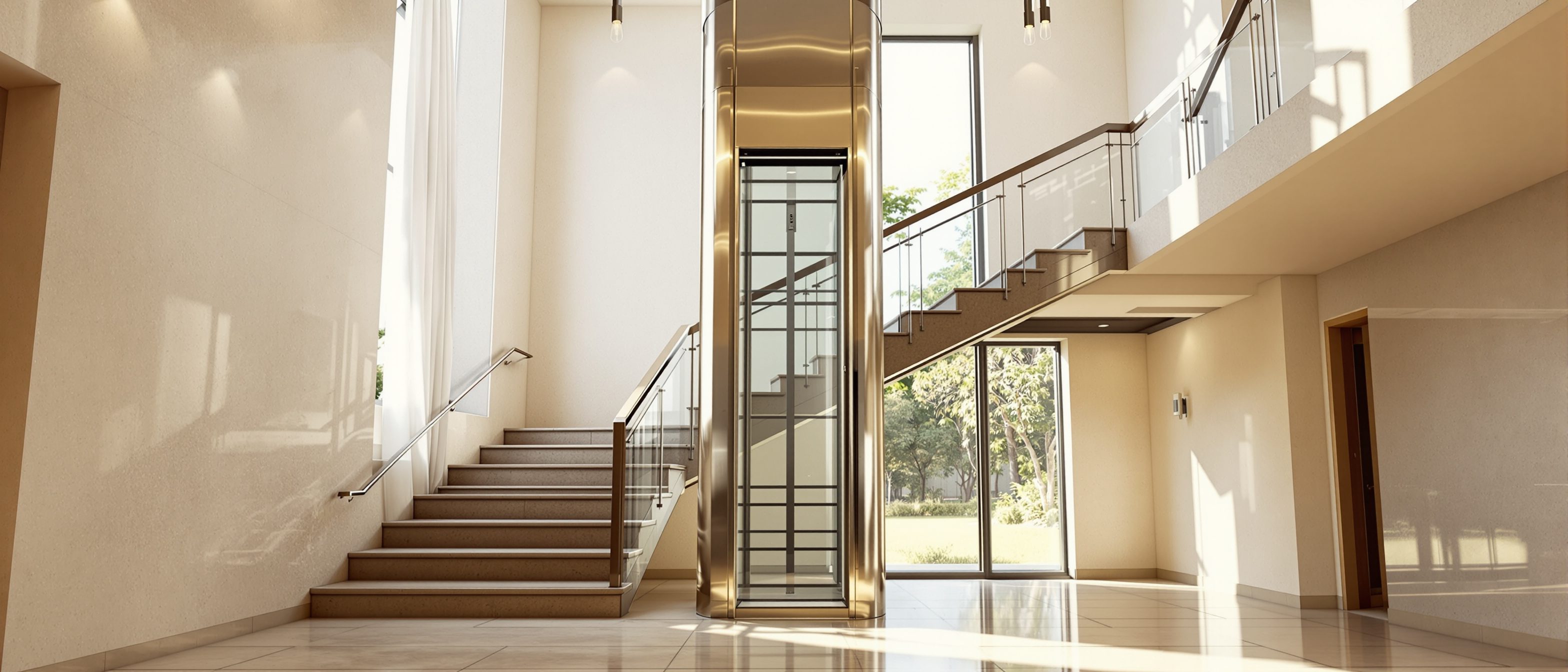
Villa Lift Cost in India (2026): What a Home Lift Costs in a Bungalow
A cost deep-dive for G+1, G+2 and G+3 villas — by floors, by drive type, the premium-finish uplift, and a worked all-in budget for a typical G+2 bungalow lift.
A villa lift is no longer an indulgence reserved for the very wealthy. As G+1, G+2 and G+3 bungalows become the default for upgrading Indian families, a residential elevator has shifted from "nice to have" to a sensible piece of home infrastructure, future-proofing the house for ageing parents, heavy grocery runs and resale value. But the first question every villa owner asks is blunt: what will it actually cost?
This guide answers exactly that, for an independent house. It is the cost deep-dive for villas and bungalows in the Studio Matrx Home Lifts cluster. For the broad market benchmark across every home type, read Home Lift Cost in India 2026. For the design-and-feasibility view (where the shaft goes, pit, headroom, licensing), read Planning a Lift for Your Villa. And to put your own numbers in, use the Home Lift Cost Calculator. Here, we stay strictly on the money question for a multi-storey house.
All prices below are indicative for June 2026, in rupees, and exclude unless noted. Lift pricing is genuinely site-specific. Treat every figure as a planning range and confirm with itemised quotes from licensed vendors.
What drives the cost in a villa specifically
A villa is a different cost problem from a flat. In an apartment you usually inherit a common lift; in a bungalow you are buying the whole machine, paying for the shaft, and choosing the finish yourself. Four things move the number more than anything else:
- Number of floors / stops. Each landing adds guide rail, a door, wiring, a call station and a little more travel. This is the single biggest swing in a villa.
- Drive type. Hydraulic, gearless traction (MRL), pneumatic vacuum (PVE) and screw drives sit at different price points and suit different villa heights.
- Finish level. Villas tend to "spec up" — glass cabins, stone floors, automatic doors — and the finish uplift is real money.
- Civil work. Cutting a shaft, casting a pit and running power in an independent house is your cost, not a builder's.
Cost by number of floors (G+1, G+2, G+3)
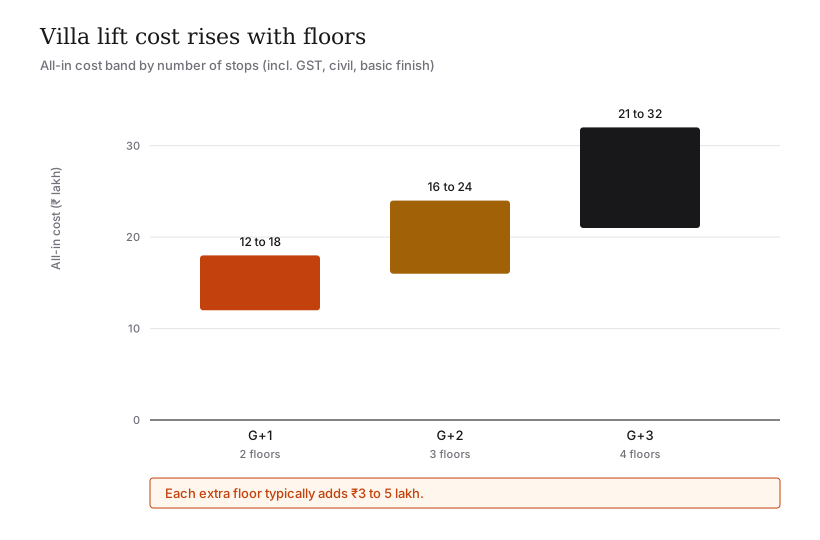
In a villa, floors are the headline variable. A two-storey (G+1) home needs only two stops; a G+3 needs four, plus more rail, more shaft and a heavier-duty drive. As a planning rule, budget a meaningful step-up for each additional landing.
| Villa height | Stops | Typical equipment range | Indicative all-in (incl. GST, civil, basic finish) |
|---|---|---|---|
| G+1 (2 floors) | 2 | ₹10–15 lakh | ₹12–18 lakh |
| G+2 (3 floors) | 3 | ₹13–19 lakh | ₹16–24 lakh |
| G+3 (4 floors) | 4 | ₹17–25 lakh | ₹21–32 lakh |
The G+1 baseline of roughly ₹12–18 lakh all-in is consistent with the broad benchmark. Each extra floor typically adds ₹3–5 lakh all-in once you count the additional door, rail, wiring and the slightly larger drive a taller villa needs. A panoramic PVE or a premium glass cabin pushes these toward the top of each band; a basic hydraulic or compact MRL with manual doors sits near the bottom.
Cost by drive type for a villa
Not every drive suits every villa. The choice is a trade-off between height served, retrofit ease and price.
| Drive type | Equipment range | Best villa fit | Cost note |
|---|---|---|---|
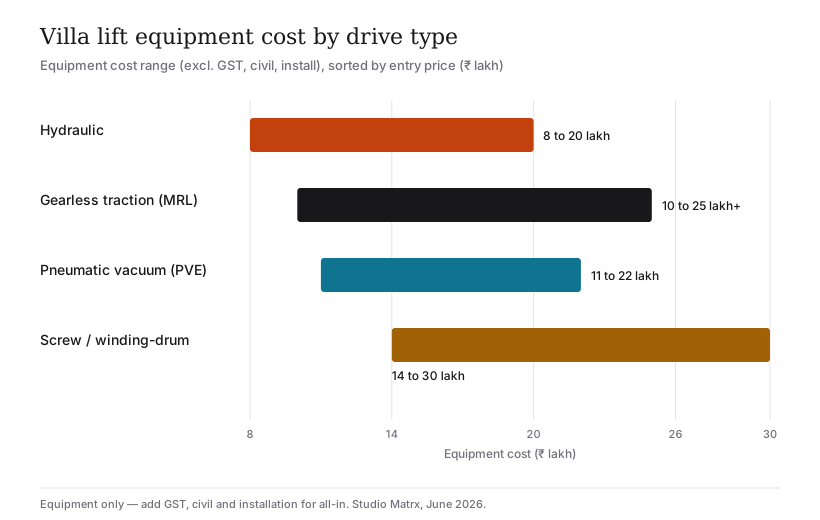
| Hydraulic | ₹8–20 lakh | G+1 / low-rise bungalows | Cost-effective, shallow pit (≈150–300 mm), quiet; slower and oil/temperature sensitive |
| Gearless traction (MRL) | ₹10–25 lakh+ | G+1 to G+3 | The 2026 norm; machine in the hoistway, no machine room; energy-efficient, smooth, scales to tall villas |
| Pneumatic vacuum (PVE) | ₹11–22 lakh | Retrofit into a finished villa | No pit, no shaft, no machine room, self-supporting; panoramic glass; limited to ~2–3 persons and shorter travel; draws more power on ascent |
| Screw / winding-drum | ₹14–30 lakh | Compact, low-pit villa needs | Self-supporting, low pit, low maintenance; priced highest |
For most new-build G+2 villas, a gearless MRL traction lift is the sweet spot: it serves three or four floors comfortably, runs efficiently, and avoids a separate machine room. For an existing villa where you cannot easily cut a shaft or dig a pit, a PVE is often the lowest-disruption answer even though its capacity is smaller. Hydraulic stays attractive for shorter G+1 homes that want to save money up front.
Pick the drive for the villa's height and retrofit reality first, then optimise the budget — not the other way round.
The premium-finish uplift villas tend to choose
This is where villa budgets quietly grow. Apartment owners take whatever cabin the builder fitted; villa owners are choosing every surface, and the temptation to upgrade is strong. The drive and structure may be identical, but the finish package can swing the price by lakhs.
| Finish upgrade | Indicative uplift | Why villas choose it |
|---|---|---|
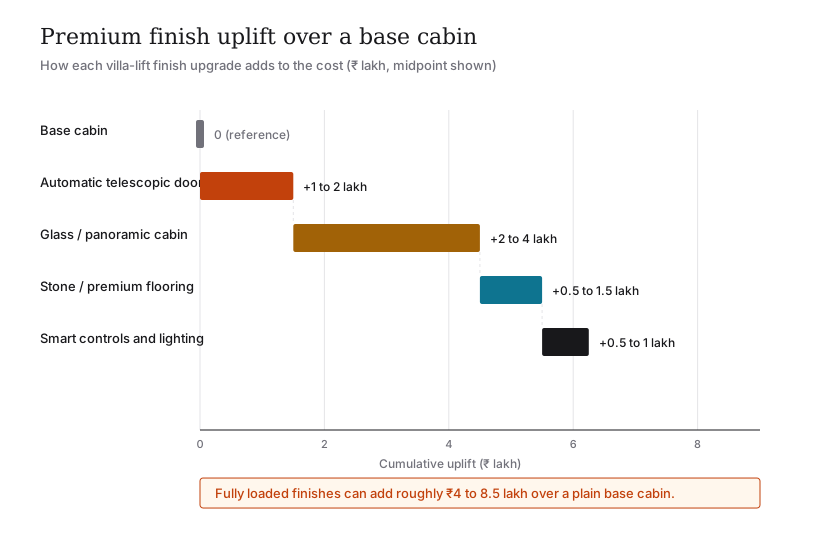
| Automatic telescopic / sliding doors (vs manual swing) | +₹1–2 lakh | Smoother, wheelchair-friendly, feels premium; also the accessible choice |
| Glass / panoramic cabin | +₹2–4 lakh | Showpiece look in an open stairwell; PVE delivers this natively |
| Stone / premium cabin flooring and wall finishes | +₹0.5–1.5 lakh | Matches villa interiors |
| Smart controls, mood lighting, touchless calls | +₹0.5–1 lakh | Convenience and resale appeal |
Two upgrades earn their money beyond looks: automatic doors, because manual swing doors block a wheelchair and undercut the accessibility case for the lift; and the ARD (Automatic Rescue Device) battery backup, which is non-negotiable in India given power cuts — it brings the car to the nearest floor and opens the doors on an outage. Treat ARD as a must-have line item, not an upsell.
A worked all-in budget: a typical G+2 villa
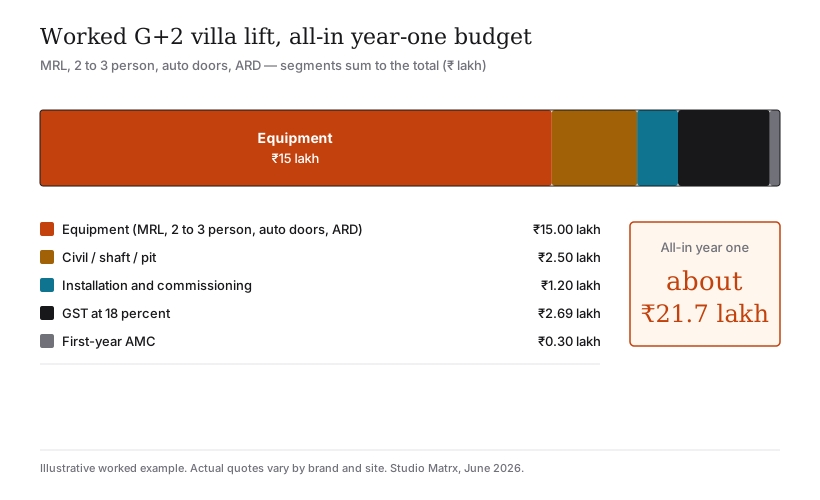
To make this concrete, here is a representative all-in budget for a G+2 (three-stop) villa with a gearless MRL lift, a small 2–3 person car, automatic doors and a mid-level finish. This is the configuration most upgrading Indian families land on.
| Line item | Indicative amount | Notes |
|---|---|---|
| Lift equipment (gearless MRL, 2–3 person, auto doors) | ₹15,00,000 | Includes ARD battery backup |
| Civil work — shaft, pit, structural | ₹2,50,000 | Your cost in a villa; varies with site |
| Installation and commissioning | ₹1,20,000 | Labour, rigging, testing |
| Sub-total (pre-tax) | ₹18,70,000 | |
| GST at 18% | ₹2,69,000 | Applies on equipment + service |
| First-year AMC (non-comprehensive) | ₹30,000 | See AMC note below |
| All-in, year one | ≈ ₹21,69,000 | Indicative — confirm with itemised quotes |
A leaner G+2 build — hydraulic drive, manual doors, basic cabin — can land closer to ₹16–17 lakh all-in. A premium G+2 with a glass panoramic cabin and full smart package can run ₹24 lakh or more. The ₹21–22 lakh figure is a sensible middle for planning.
Don't forget the running cost: AMC
The price tag is not the end of villa lift spending. Plan an Annual Maintenance Contract from year one:
- Non-comprehensive (semi): routine inspection, lubrication and labour; major parts billed separately. Indicative ₹20,000–38,500 per year, with around 5% annual escalation.
- Comprehensive ("bumper-to-bumper"): includes most spare parts and major repairs, costing roughly 60–70% more than non-comprehensive, but it caps surprise bills.
For a single villa lift used daily, many owners start non-comprehensive and move to comprehensive as the unit ages. Either way, read the fine print — acts of God (pit flooding), vandalism and aesthetic modernisation are commonly excluded, and some contracts also exclude the motor, controller or ropes.
Bringing it together
For a quick planning anchor across the three common villa heights:
- G+1 bungalow: ₹12–18 lakh all-in.
- G+2 villa: ₹16–24 lakh all-in; ≈₹21–22 lakh for a mid-spec MRL build.
- G+3 villa: ₹21–32 lakh all-in.
Each extra floor adds roughly ₹3–5 lakh, drive type sets your base band, and the finish package is where villa budgets quietly climb. To pressure-test your own configuration, run the Home Lift Cost Calculator; for the wider market context across all home types, see Home Lift Cost in India 2026; and before you spend, work through the shaft, pit, headroom and state-licensing checklist in Planning a Lift for Your Villa.
A villa lift is a five-figure-per-year asset and a multi-lakh capital decision. Get three itemised quotes, confirm what is included before tax and civil work, and never skip ARD or the AMC.
References
- Cost basis: India residential-lift market benchmarks, June 2026 (indicative ranges by drive type and floor count; confirm with licensed vendors).
- IS 14665 — Electric Traction Lifts, Part 1 (Outline dimensions), Bureau of Indian Standards: https://law.resource.org/pub/in/bis/S05/is.14665.1.2000.pdf
- IS 14665 — Part 2 (Installation, operation and maintenance), BIS: https://law.resource.org/pub/in/bis/S05/is.14665.2.1-2.2000.pdf
- National Building Code 2016, Part 8 Section 5 (Installation of Lifts), BIS: https://www.bis.gov.in/standards/technical-department/national-building-code/
- Lift regulations in India (overview): https://www.99acres.com/articles/know-all-about-the-lift-regulations-in-india.html
Export this guide
Related Guides — Deep-dive reading
Types of Home Lifts in India (2026): Complete Comparison and How to Choose
All seven home-lift options on one comparison table, plus a five-question decision framework to pick the right one
Home Lifts & AccessibilityHome Lift Cost in India 2026: Benchmark Report — Prices by Type, Floors & All-In Budget
What a residential elevator really costs in 2026 — drive type, floor count, the full all-in budget and a decade of ownership, in rupees.
Home Lifts & AccessibilityHome Lift Planning Checklist (India): Everything to Decide Before You Buy
A printable, ten-stage checklist that takes you from the first family conversation to a signed handover.
Home Lifts & AccessibilityRelated Tools — Try Free
Home Lift Budget Planner
Full line-item budget for a home lift — equipment, finishes, civil, GST, AMC and contingency.
Lift PlannerHome Lift Cost Calculator
All-in home lift cost by floors, type, capacity and city — equipment, civil, GST and AMC, with a drive-type comparison.
Lift CalculatorLift Annual Maintenance Cost Calculator
AMC cost for a home lift — comprehensive vs non-comprehensive, with a 5-year projection.
Lift Calculator