
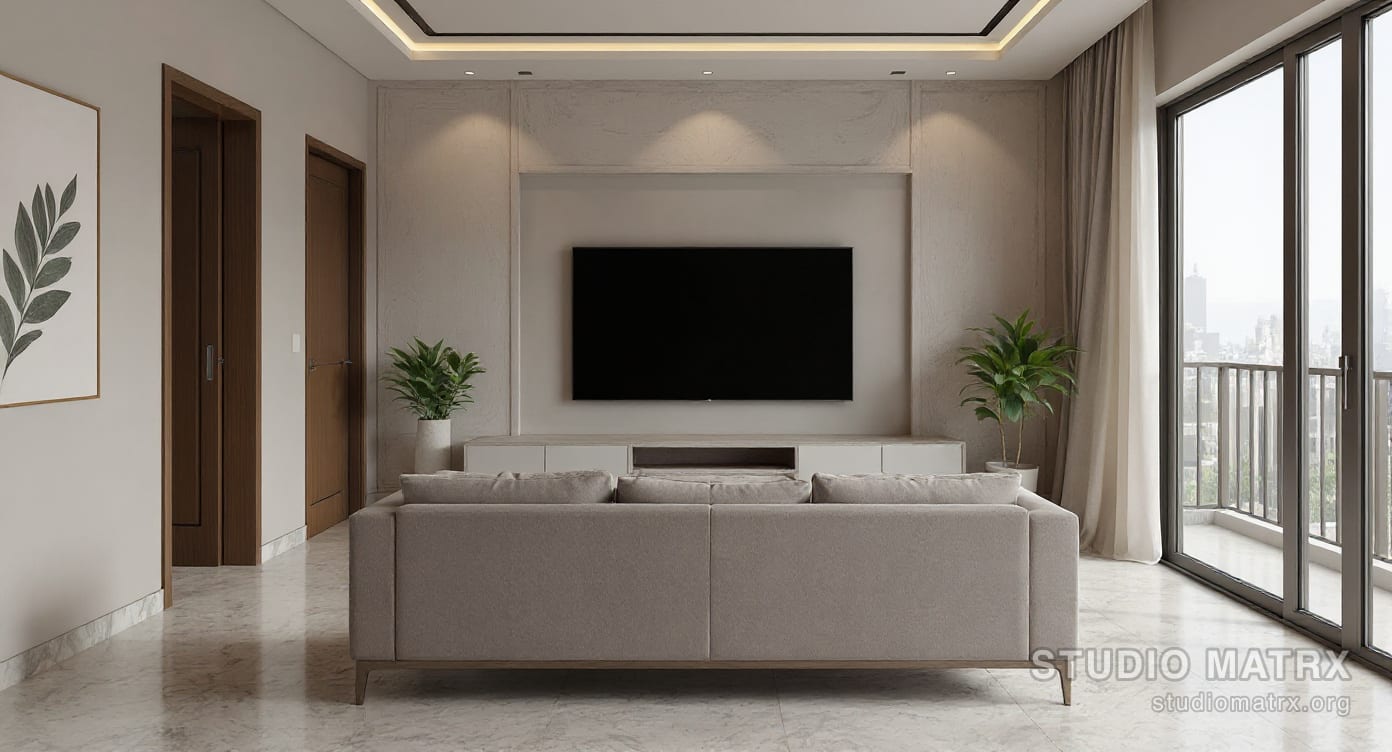
Transitional Interiors — A 2026 Style Guide for Indian Homes
The balanced middle path · Classic silhouettes, clean lines · Neutral base, one warm accent
Transitional interiors are the calm middle ground between heavy traditional decor and stark modern minimalism — classic furniture shapes softened into clean lines, dressed in a quiet neutral palette and one warm accent. For Indian families in 2026, this is the style that finally answers the most common brief interior designers hear: "we want something that isn't too modern and isn't too old-fashioned." It lets a carved wooden swing or an inherited rosewood cabinet sit happily beside a low-profile linen sofa, and it ages slowly — which matters in homes that are decorated once and lived in for decades. If you are still comparing aesthetics, browse the full set of Interior Styles or build a quick Moodboard before you commit.
What Transitional Is (and Isn't)
Transitional design is best understood as a deliberate blend, not a compromise. It borrows the comfort, warmth and recognisable silhouettes of traditional interiors, then strips away the fuss — the elaborate carving, the busy patterns, the dark heavy drapery — and replaces it with the restraint, breathing room and clean edges of contemporary design.
It is not pure contemporary. Contemporary interiors chase the now: glossy lacquer, glass and chrome, bold geometric statements, and an almost clinical lack of ornament. Transitional keeps things tactile and timeless instead of trend-chasing.
It is not pure traditional either. Traditional Indian interiors lean into ornate teak, jharokha-style detailing, rich jewel colours and layered textiles. Transitional respectfully quotes that heritage rather than reproducing it wholesale.
A frequent point of confusion is "fusion". Indo-fusion or modern-Indian deliberately collides cultures and eras for contrast — a Chettinad pillar against a concrete wall. Transitional does the opposite: it harmonises. The aim is that nothing in the room shouts, and no single piece dates the home. If everything feels intentional but quietly so, you are doing transitional right.
Five Principles of Transitional Design
1. Balance classic and modern in equal measure
The signature move is pairing a piece with a traditional silhouette against a clean-lined counterpart. Think a roll-arm or camelback sofa upholstered in plain linen, facing a minimal coffee table. Aim for a roughly even split so neither era dominates.
2. A neutral base with one warm accent
Build the room from greige, taupe and cream, then introduce a single warm accent — aged brass, terracotta, a muted ochre cushion — for soul. Restraint here is what separates transitional from bland.
3. Mix old and new — including what you already own
This is the principle Indian homes love. An inherited almirah, a brass urli or a grandmother's jhula can stay, provided the surrounding pieces are calm enough to frame them. Heirlooms become focal points, not clutter.
4. Restrained ornament
Decoration exists, but it is edited. One sculptural lamp, a pair of textured cushions, a single framed artwork — not a wall of them. Texture (linen weave, raw stone, matte wood grain) does the decorative work that pattern would do in a traditional room.
5. Comfort first
Transitional interiors are made to be lived in. Deep seats, soft cotton and linen, generous rugs underfoot. Nothing should feel too precious to use, which suits the realities of joint families, children and daily Indian entertaining.
The Transitional Palette
| Tone | Hex | Where to use | Indian paint reference (indicative) |
|---|---|---|---|
| Greige | #c9bda8 | Main walls, large upholstery | Asian Paints "Greige" / Dulux "Egyptian Cotton" family |
| Taupe | #8a7d6a | Accent wall, wardrobes, drapery | Asian Paints "Warm Stone" / Dulux "Soft Stone" family |
| Cream | #f0ebe2 | Ceilings, trims, sheer curtains | Asian Paints "Ivory" / Dulux "Natural Calico" family |
| Charcoal-brown | #4a443c | Window frames, console, contrast accents | Asian Paints "Dark Ebony" / Dulux "Espresso" family |
Treat the paint names as families to ask for at the dealer, not exact SKUs — get the swatch fan deck and match to the hex above under your own daylight, since Indian sunlight reads warmer than a showroom's LEDs.
Materials & Finishes
| Material | Role | Indian sourcing note |
|---|---|---|
| Wood (teak, sheesham, engineered oak veneer) | Furniture frames, flooring, panelling | Solid sheesham is widely available and good value; teak is premium. Matte or satin finish, never high gloss. |
| Linen & cotton | Sofa upholstery, drapery, cushions | Handloom cotton and linen-cotton blends from regional weavers wear well in heat and humidity. |
| Natural stone | Flooring, kitchen counters, bathroom | Kota, Jaisalmer and honed granite suit the muted palette better than shiny polished stone. |
| Soft metals (brushed nickel, aged brass) | Hardware, lighting, accents | Brass is deeply rooted in Indian craft; brushed-nickel fittings are stocked by most plumbing and hardware brands. |
| Jute & wool | Rugs, baskets, texture | Durries and hand-knotted wool rugs add the warmth that ties the neutral scheme together. |
Room by Room
Living Room
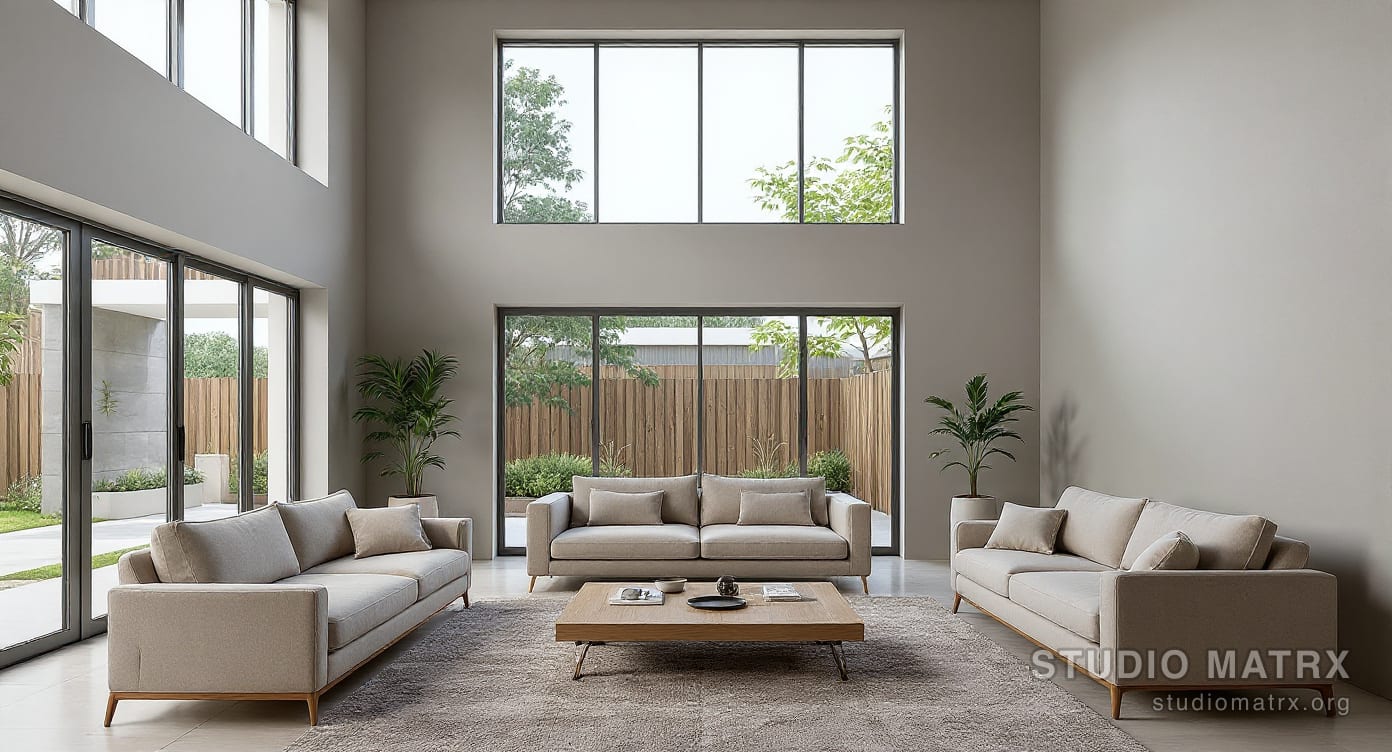
Anchor the room with a neutral linen sofa in a classic silhouette, set on a large jute or wool rug. Add a clean-lined coffee table, one heirloom or sculptural piece, and brass or brushed-nickel lighting. Keep walls greige, let one cushion or throw carry the warm accent, and resist over-accessorising. In a larger home the same logic scales up beautifully:
Kitchen
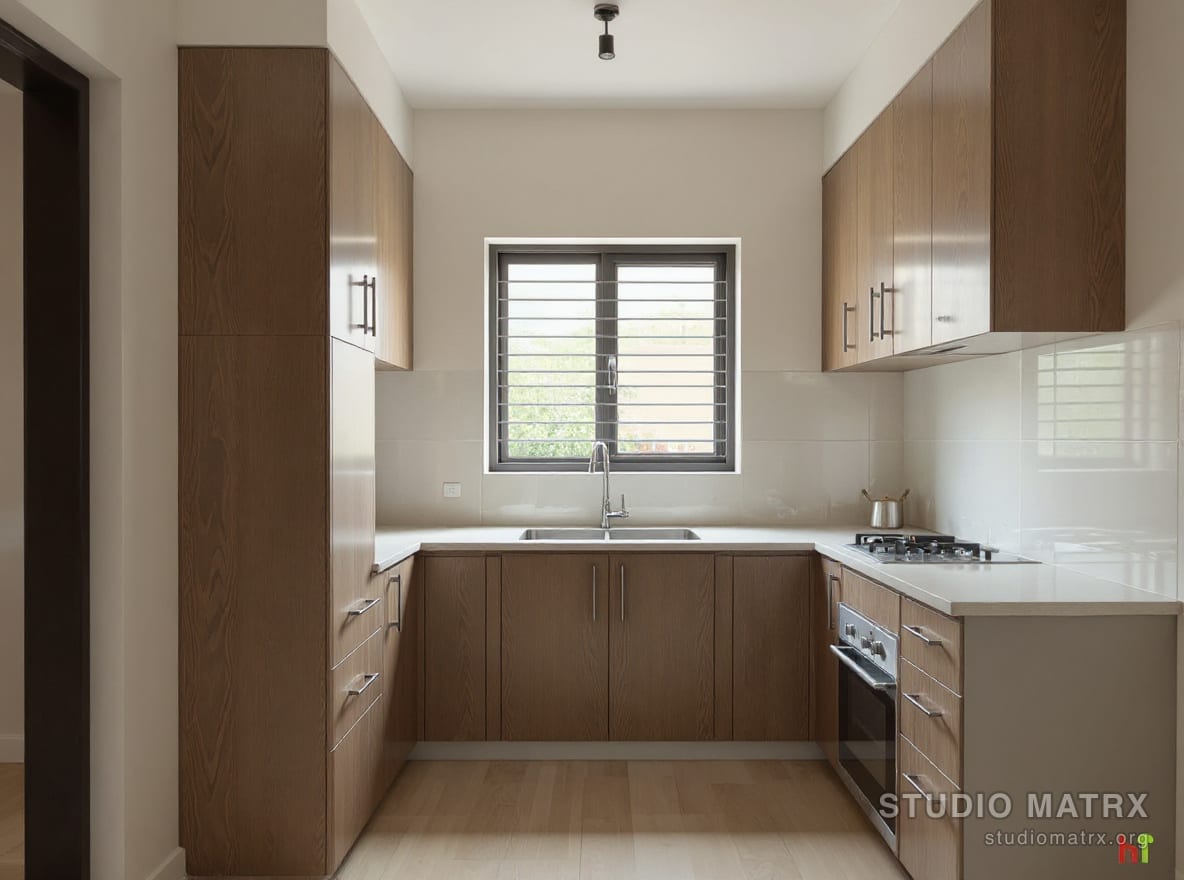
Shaker-style cabinet fronts are the transitional sweet spot — recessed-panel doors that read classic, finished in matte cream or taupe laminate or membrane. Pair with a honed stone or quartz counter, brushed-metal handles and warm under-cabinet lighting. A modern chimney and tall units keep it practical for daily Indian cooking without breaking the calm.
Master Bedroom
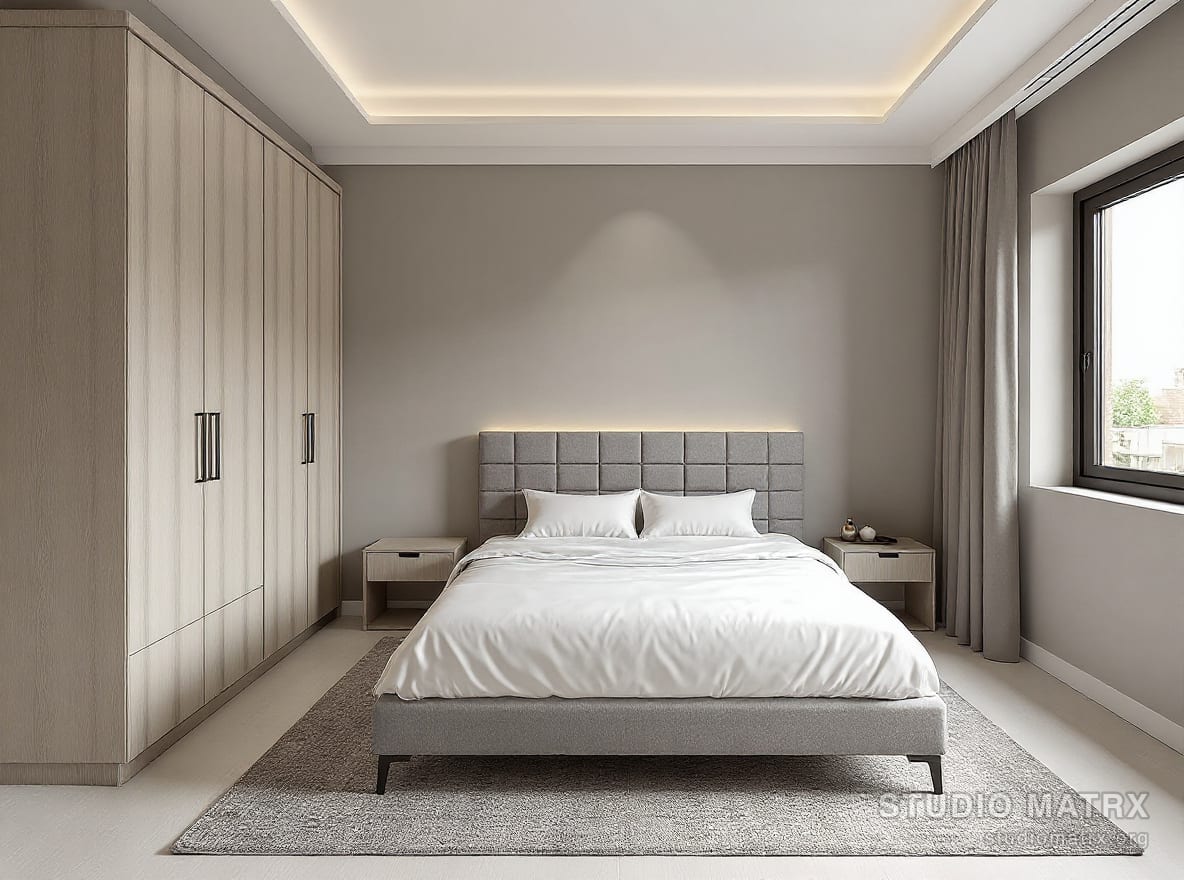
An upholstered headboard in linen sets the tone. Flank the bed with simple wooden side tables and matching lamps for symmetry — a quietly classic gesture. Keep bedding in cream and greige layers, add one textured throw, and choose wardrobes with plain shutters in a wood-tone or taupe finish.
Bathroom
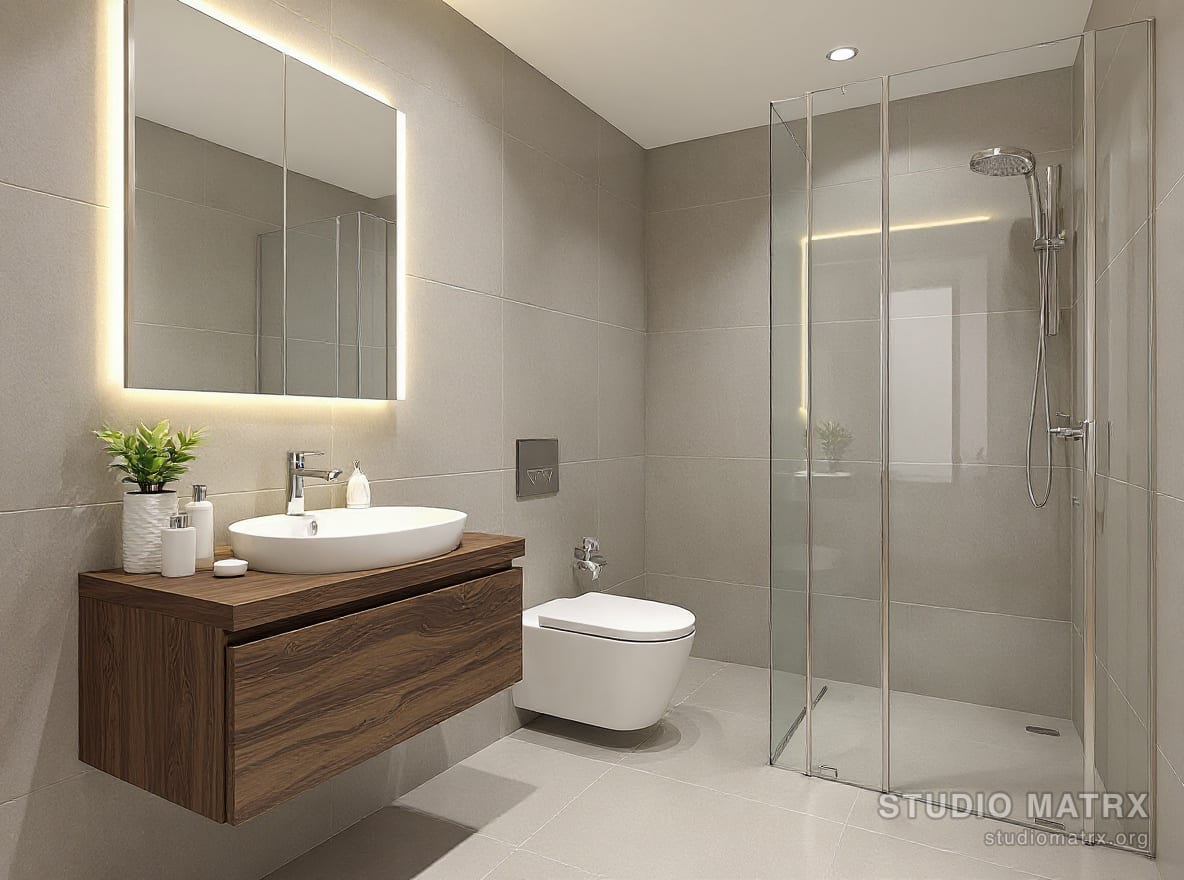
Use large-format matte tiles in greige or stone tones, a clean-lined vanity with a wood-grain front, and brushed-nickel or matte-black fittings. A framed mirror softens the modern fixtures. Warm white lighting keeps the space from feeling cold.
Dining Room
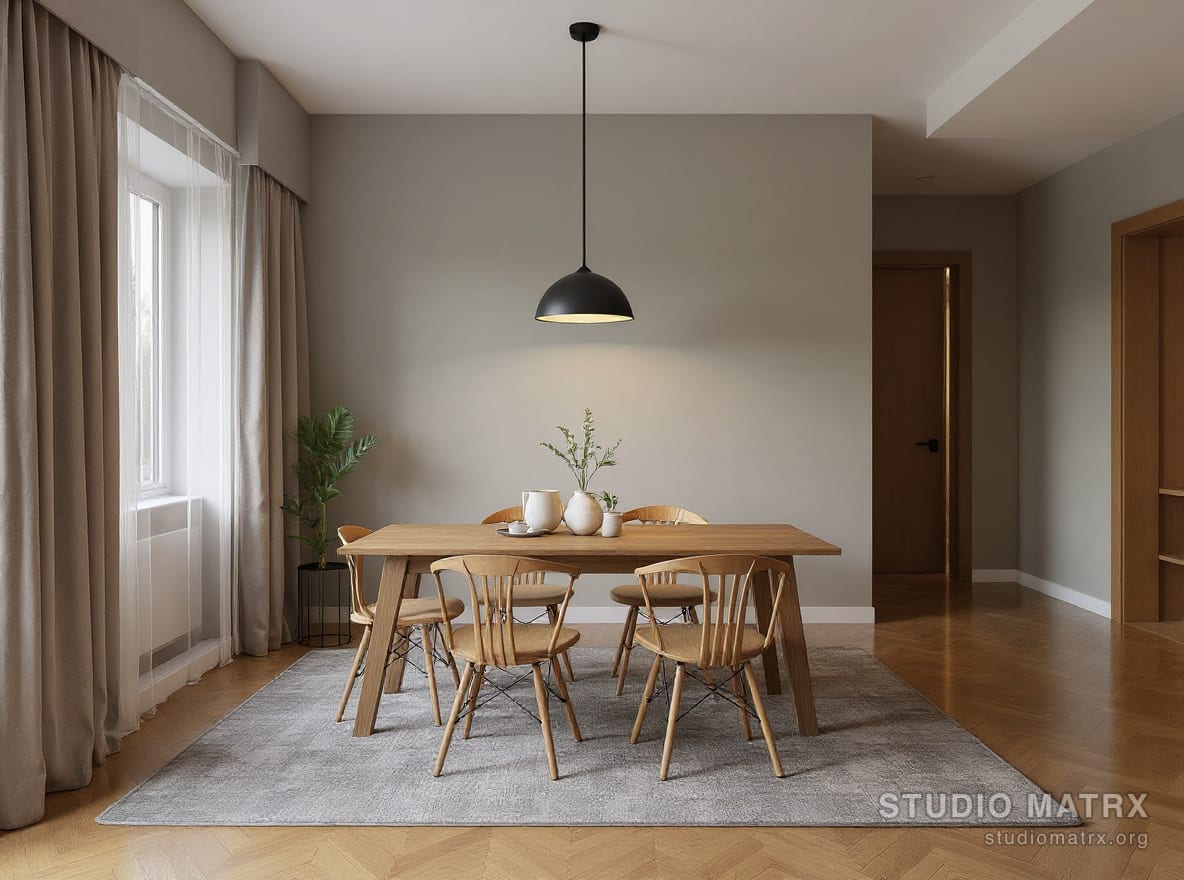
A solid wood table with clean legs, paired with upholstered or simple wooden chairs, is classic-meets-modern in one move. Hang a single statement pendant — brass or fabric-shaded — and keep the table styling minimal. This room is where Indian families gather daily, so prioritise sturdy, easy-clean surfaces.
Pooja Room
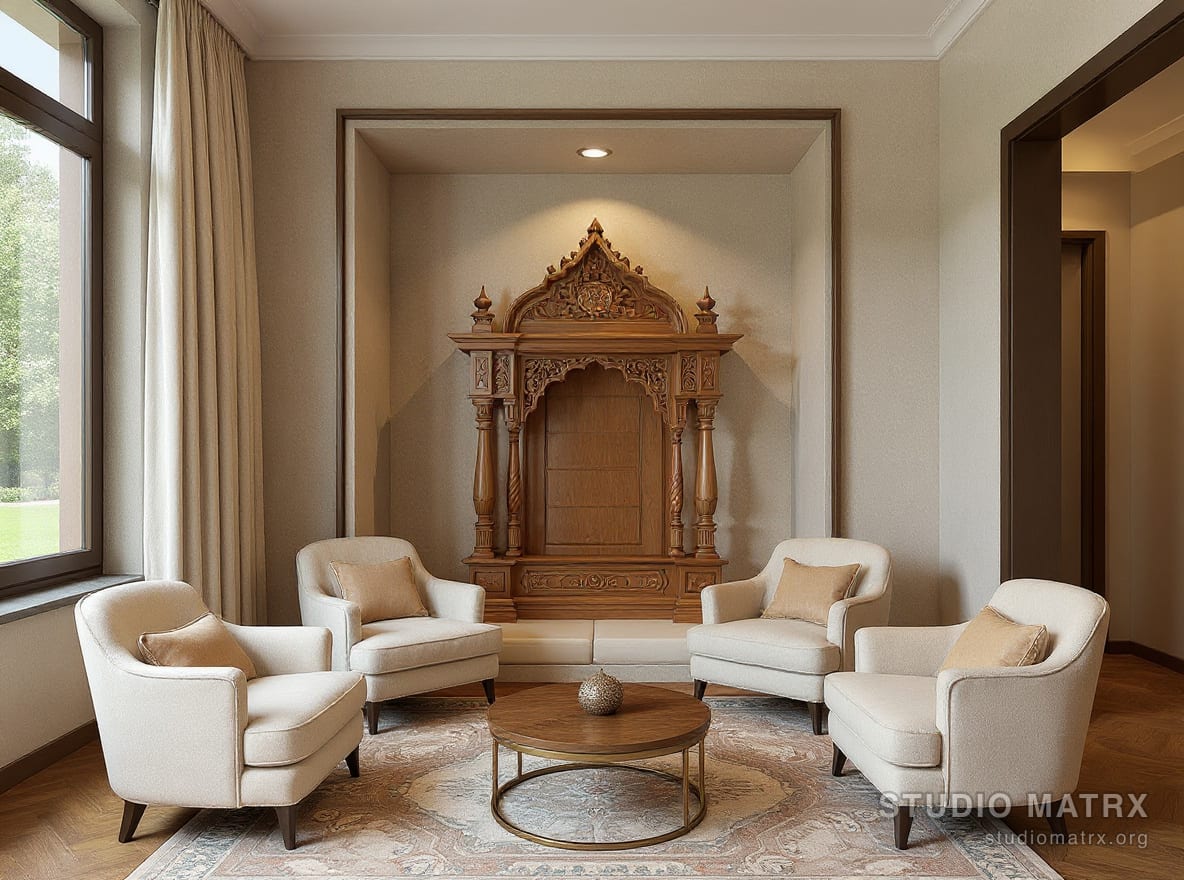
The pooja space is where transitional restraint shines. Choose a simple wooden mandir with clean lines rather than heavy carving, set against a cream or taupe wall. A single brass diya stand or bell carries the warm metallic accent, and concealed warm lighting adds reverence without clutter.
Budget — What It Costs in India
Indicative ranges for furnishing and refreshing a 2–3 BHK in a transitional scheme. These are typical market ranges, not guarantees, and vary by city, carpentry rates and how much you reuse.
| Tier | What you get | Indicative range (2–3 BHK) |
|---|---|---|
| Starter | Repaint, restyle existing furniture, new upholstery and soft furnishings, a few key buys | ₹2,00,000 – ₹5,00,000 |
| Mid | New sofa and dining set, modular wardrobes, modular kitchen refresh, lighting, rugs | ₹6,00,000 – ₹12,00,000 |
| Premium | Full custom carpentry, solid-wood furniture, designer pieces, premium stone and lighting | ₹15,00,000 – ₹30,00,000+ |
Soft furnishings and paint give the biggest visible change per rupee, so a Starter budget can still read convincingly transitional if you choose the palette carefully.
Where to Source in India
- Fabindia — handloom linen and cotton upholstery, cushions, durries and accents.
- Gulmohar Lane — classic-silhouette sofas and tables in calm, transitional-friendly finishes.
- Phantom Hands — heritage-inspired solid-wood and cane furniture with clean modern restraint.
- Jaipur Rugs — hand-knotted wool and neutral durries to ground the scheme.
- Sarita Handa — premium linen bedding, drapery and tableware in muted tones.
- The White Teak Company — brass and brushed-metal lighting and decor accents.
- Pepperfry — accessible mid-range furniture, lighting and rugs for Starter and Mid budgets.
- Local carpenters — the backbone of Indian interiors; give them the shaker and clean-line references above for custom wardrobes, mandir and kitchen fronts at the best value.
Ten Common Mistakes
1. Going so neutral the room feels flat — skipping the one warm accent entirely.
2. Choosing high-gloss laminates and lacquer, which tip the room into contemporary.
3. Over-carving the woodwork, which drags it back into pure traditional.
4. Mixing too many wood tones with no unifying logic.
5. Buying matchy "complete sets" instead of layering old and new.
6. Over-accessorising — defeating the restrained-ornament principle.
7. Cool-white lighting that drains the warmth from the neutral palette.
8. Ignoring texture, so the neutrals read cheap rather than calm.
9. Forgetting scale — oversized furniture in compact Indian flats kills the balance.
10. Treating heirlooms as clutter to hide instead of framing them as focal points.
FAQ
What is transitional interior style?
Transitional style is a blend of traditional and contemporary design. It pairs classic furniture silhouettes with clean modern lines, uses a calm neutral palette with one warm accent, and keeps ornament restrained — resulting in a timeless, comfortable home that doesn't date quickly.
Transitional vs contemporary — what's the difference?
Contemporary design follows current trends with glossy finishes, glass, chrome and minimal warmth. Transitional is warmer and more timeless: tactile natural materials, recognisable classic shapes softened with clean lines, and a neutral palette designed to outlast trends rather than reflect them.
Is transitional good for small Indian homes?
Yes — arguably better than most styles. Its neutral base visually expands compact 1–2 BHK flats, the restrained ornament prevents clutter, and the comfort-first, scale-aware approach suits real family living. Just choose appropriately sized furniture and keep the palette light.
Can I keep my old or inherited furniture?
Absolutely. Mixing old and new is a core transitional principle. An inherited almirah, jhula or brass piece becomes a focal point when surrounded by calm, clean-lined modern furniture and a neutral wall colour.
How much does a transitional home cost in India?
For a 2–3 BHK, expect roughly ₹2–5 lakh for a Starter refresh, ₹6–12 lakh for a Mid-level overhaul, and ₹15–30 lakh or more for Premium custom work. Soft furnishings and paint deliver the most visible transformation per rupee.
Ready to see it in your own space? Build the look on a Moodboard, compare it against other aesthetics in our Interior Styles guide, or let DesignAI generate a transitional scheme for your actual room.
Last verified: June 2026 · Next verify: June 2027.
Export this guide
Related Guides — Deep-dive reading
Warm Minimal Interiors — A 2026 Style Guide for Indian Homes
Restraint with warmth · Oat & oak & linen · Curated negative space
Design StylesBohemian Interiors — A 2026 Eclectic Style Guide for Indian Homes
Collected, layered, alive · Rust and jewel tones · Curated eclecticism, never clutter
Design StylesIndo-Contemporary Interiors — A 2026 Style Guide for Indian Homes
Modern shell, Indian warmth · Teak, brass, jaali · The urban India favourite
Design StylesRelated Tools — Try Free
Apartment Furniture Size Chart
Standard furniture dimensions for Indian apartments — sofas, beds, tables, dining, storage.
Reference ChartFalse Ceiling Cost Estimator
Live ₹/sqft across 8 ceiling types — POP, gypsum, designer, metal, PVC, wooden — with cove and spot lighting for 20 Indian cities.
Cost CalculatorFull-Room BOQ — Living, Bedroom, Kitchen, Bath
Room-wise BOQ across living, bedrooms, kitchen, utility, and bathrooms with line-item pricing.
Full-Room BOQ