
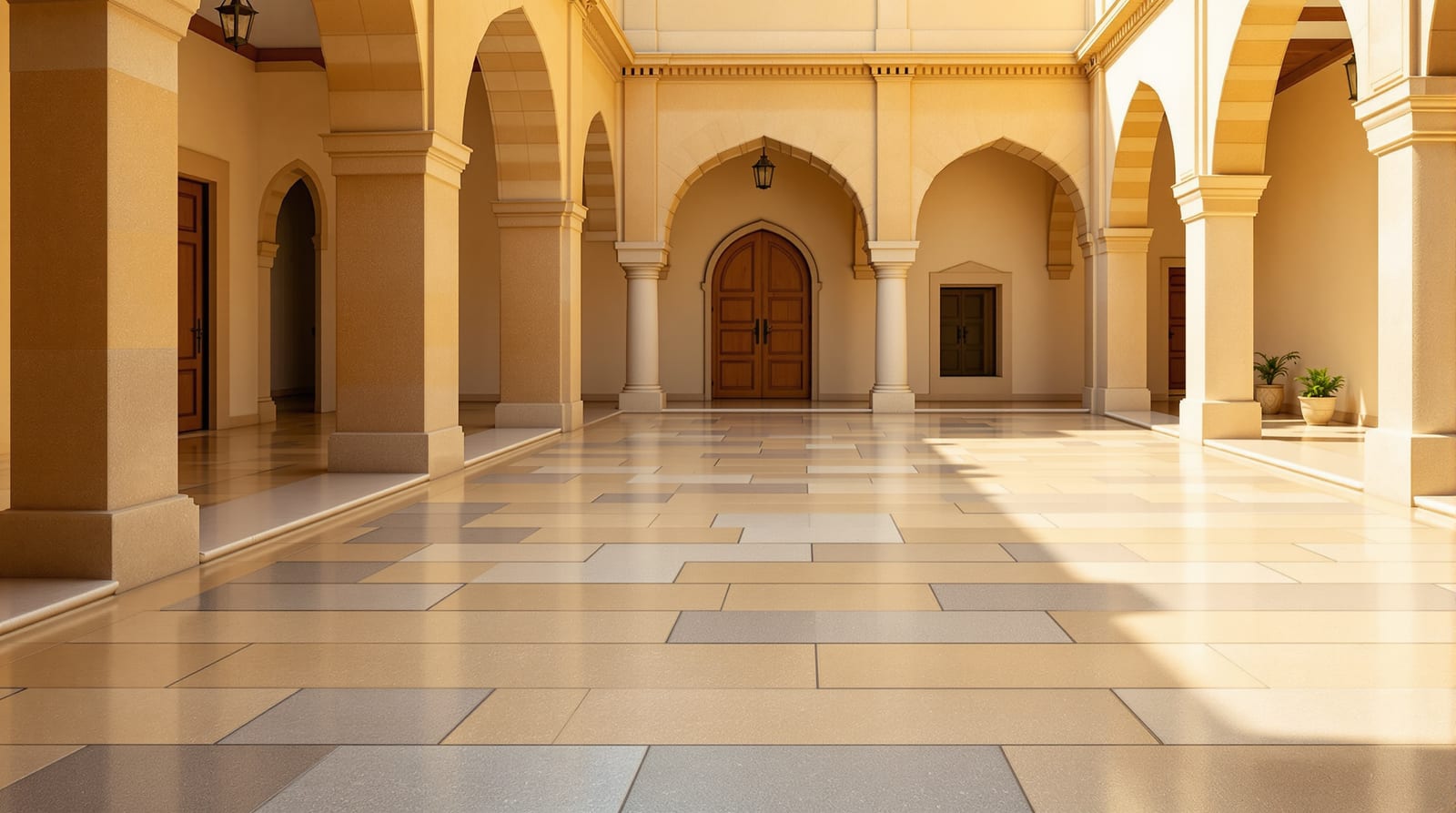
Tandur Stone Guide: Telangana's Affordable Grey & Yellow Limestone Flooring (India)
What Tandur stone costs, how its grey, yellow and blue shades look, and where this dense, cool, anti-skid limestone works best in Indian homes and commercial floors.
If you have walked across a cool, slightly textured grey floor in a Hyderabad bungalow, a Chettinad-style verandah or a temple corridor, there is a good chance you were standing on Tandur stone. Quarried around the town of Tandur in the Vikarabad district of Telangana, this dense limestone is one of South India's most loved budget flooring materials — quietly tough, naturally cool underfoot, and a fraction of the price of granite or marble. This guide explains its shades and finishes, how it behaves, what it costs per square foot in 2026, where it belongs in your home, and how to buy and look after it.
What Tandur stone actually is
Tandur stone is a sedimentary limestone — a calcium-carbonate rock formed in ancient shallow seas, compressed over millions of years into tight, fine-grained slabs. That sedimentary origin is why it splits into flat layers (good for paving and flooring) and why it carries soft, cloud-like tonal variation rather than the crystalline sparkle of granite.
It is closely related in family to two other famous Indian limestones: Kota stone from Rajasthan (blue-grey/green) and Kadappa (Cuddapah) black limestone from Andhra Pradesh. All three are dense, low-cost, hard-wearing limestones, but they differ in colour, finish character and where they are quarried. If you are weighing Tandur against those, read our companion guides on Kota stone flooring in India and Kadappa stone in India alongside this one.
The stone is sometimes sold under trade names like Tandur Yellow, Tandur Grey, Tandur Blue, Lime Grey or simply "Tandoor stone" (a common misspelling). It is also exported, where it appears as "Tandur Yellow Limestone" or "Lime Yellow."
The shades: grey, yellow and blue
Tandur is prized for a narrow but elegant palette. The three main commercial shades come straight out of the quarry beds and are not dyed.
| Shade | What it looks like | Character | Typical use |
|---|---|---|---|
| Tandur Grey (Lime Grey) | Soft mid-grey with faint lighter veining and cloudy tonal shifts | The classic, most available shade | Living rooms, corridors, commercial floors, paving |
| Tandur Yellow (Lime Yellow) | Warm sandy yellow to buff, sometimes with rust streaks | Earthy, traditional, pairs with terracotta | Verandahs, courtyards, temples, heritage-style homes |
| Tandur Blue / Blue-Grey | Cooler grey with a bluish cast, often picked when polished | Slightly more upmarket look | Living areas, feature floors, polished interiors |
Because it is a natural stone, expect tile-to-tile and lot-to-lot variation. That variation is part of the charm, but it means you should buy from one quarry lot where you can, and lay tiles dry first to blend tones before fixing. Order 5–10% extra for cuts, breakage and future repairs.
Natural vs polished finishes
How Tandur is finished changes both its look and how it performs underfoot. The same grey slab can read as a rustic farmhouse paver or a sleek semi-gloss interior floor depending on the surface treatment.
- Natural / rough (river-finish, leather, sand-blasted): the surface is left textured and matt. This is the most slip-resistant finish and the right choice for verandahs, courtyards, ramps, steps and any area that gets wet. It hides scuffs and is the cheapest to lay.
- Honed / matt: ground smooth but not shiny, giving a soft, understated stone look that is easy to maintain. Good all-rounder for living rooms and bedrooms.
- "Tandur polished": machine-polished to a semi-gloss or high-gloss sheen that deepens the grey/blue tones and brings out subtle veining. It looks closer to a budget marble and suits dry indoor floors — but it becomes slippery when wet, so keep it out of bathrooms and open verandahs.
A practical rule for Indian homes: polished for dry living areas, natural for anything that meets water or sun. For the science of grip ratings, our anti-slip flooring standards in India guide explains DIN R-values and how to specify them.
Properties: why South Indian builders trust it
- Dense and durable: as a tight limestone it resists everyday foot traffic well and serves for decades in homes, offices, schools and temples. Slab thickness for flooring is usually 20–25 mm; thicker (30–40 mm) for heavy paving.
- Naturally cool: like Kota and Kadappa, it stays pleasantly cool underfoot in hot, dry Telangana and Andhra summers — one reason it is a courtyard and verandah favourite.
- Anti-skid in natural finish: the unpolished surface gives genuine grip, useful around thresholds, ramps and outdoor steps.
- Affordable: it is one of the lowest-cost natural stones in India, well below granite and marble.
- Repairable: a damaged Tandur floor can be re-honed or re-polished on site, unlike most tiles which must be chipped out and replaced.
The trade-offs are typical of limestone. It is porous and reactive to acids, so it stains from spilled oil, turmeric, lime juice, vinegar and harsh acidic cleaners if left unsealed. It is softer than granite (Mohs roughly 3–4 versus granite's 6–7), so it can scratch and dull over years of heavy traffic. Both issues are managed with sealing and sensible cleaning, covered below. For the formal stone codes that govern absorption and quality, see our natural stone standards in India guide (IS 1124 for water absorption, and related stone IS codes).
What Tandur stone costs (2026, indicative)
Prices are indicative and vary by city, vendor, shade, finish, thickness and transport. They rise sharply the farther you move from the Telangana quarry belt. Add 18% GST on the works-contract/laying and the applicable slab rate; insist on a GST invoice. The figures below are installed (material + laying) per square foot.
| Finish / shade | Material ₹/sq ft | Installed ₹/sq ft (near source) | Notes |
|---|---|---|---|
| Tandur Grey, natural | 28–45 | 55–80 | Cheapest, best grip |
| Tandur Yellow, natural | 30–50 | 60–90 | Warm tone, slight premium |
| Tandur Grey/Blue, honed matt | 40–60 | 70–110 | Smooth indoor look |
| Tandur polished (semi/high gloss) | 50–80 | 90–140 | Marble-like dry-area floor |
| Heavy paving slabs (30–40 mm) | 35–60 | 65–100 | Driveways, courtyards |
Laying labour follows local rates: Hyderabad and other tier-2 cities run roughly ₹20–40/sq ft, while metros like Mumbai, Delhi-NCR and Bangalore can hit ₹35–60/sq ft. In Hyderabad and surrounding Telangana/Andhra towns Tandur is at its cheapest because there is almost no transport cost; ship it to Mumbai, Delhi or Kolkata and freight, loading and longer hauls can add ₹15–40/sq ft. For a side-by-side of how stone prices shift between cities, see our flooring cost in Hyderabad guide and the labour-rate breakdown in flooring labour cost in India. To model your own area, use our flooring cost calculator and natural stone slab calculator.
Where Tandur stone suits — and where to avoid it
| Area | Suitability | Recommended finish |
|---|---|---|
| Living room / dining | Very good | Honed matt or polished |
| Verandah / sit-out | Excellent | Natural / rough |
| Courtyard / open-to-sky | Excellent | Natural / rough, thicker slab |
| Corridors, staircases | Excellent | Natural (treads), honed (risers) |
| Commercial floors, offices, schools | Excellent | Honed or natural, sealed |
| Temples, heritage homes | Classic choice | Yellow natural |
| Driveways, paving | Good | Heavy natural slab |
| Bathrooms / wet areas | Use with care | Natural only, well sealed; never polished |
| Kitchens | Acceptable if sealed | Honed, re-seal often (oil/acid staining) |
Tandur shines outdoors and in high-traffic public floors where granite would blow the budget. Indoors, polished Tandur gives a calm, contemporary stone look for living and bedroom areas. Keep polished Tandur away from bathrooms and rain-exposed verandahs (slippery when wet), and seal it well in kitchens where oil and acidic spills are constant. For broader room-by-room logic, our living room flooring in India and balcony flooring in India guides compare Tandur against tiles and other stones.
Finishes, care and sealing
Limestone lives or dies by sealing. A penetrating (impregnating) stone sealer fills the pores so water, oil and acids cannot soak in, while leaving the natural look intact.
- Seal on installation. Apply a quality penetrating sealer once the floor is laid, cleaned and fully dry. Polished Tandur may also take a surface enhancer to deepen colour.
- Re-seal periodically. Reapply every 1–3 years for interiors and more often (yearly) for kitchens, courtyards and high-traffic floors. A quick test: drop water on the floor — if it stops beading and starts darkening the stone, it is time to re-seal.
- Clean gently. Sweep or vacuum grit (it scratches), then mop with plain water or a pH-neutral stone cleaner. Never use acidic cleaners, vinegar, lemon, harsh toilet acids or strong bleaches — they etch limestone.
- Wipe spills fast. Turmeric, oil, tea, coffee, wine and lime juice are the usual stain culprits; blot, do not rub.
- Restore when dull. A polished Tandur floor that has lost its shine can be re-honed and re-polished in place by a stone-polishing crew, which is far cheaper than replacement.
Our floor resealing guide in India and floor stain removal in India guides go deeper on products and techniques that apply directly to Tandur.
Buying Tandur stone well
- Buy near the source where possible. Dealers and quarries around Tandur, Vikarabad and Hyderabad offer the best rates and widest stock; pay more elsewhere for freight.
- Inspect slabs in daylight. Check for hairline cracks, pinholes, uneven thickness, warping and badly mismatched tones. Tap a slab — a dull thud can mean an internal crack.
- Match the lot. Buy one quarry lot and lay tiles dry first to blend the natural tonal variation. Order 5–10% spare for cuts and future repairs.
- Specify thickness and finish. Confirm 20–25 mm for floors (thicker for paving) and state natural / honed / polished clearly on the quote.
- Get an all-in, written quote. Compare material plus cutting, laying, skirting, grouting/pointing, sealing, transport, loading and GST — not just the slab rate. Ask for a GST invoice and an e-way bill for inter-state transport. For the tax detail, see flooring GST and billing in India.
- Compare against alternatives. If you want a denser, harder, near-zero-stain budget stone, weigh Tandur against granite using our South India granite guide; if you like the limestone family, compare with sandstone flooring in India and Kota stone flooring in India.
Tandur stone is also part of a wider South Indian story of low-cost, climate-smart natural floors — red-oxide IPS, Kadappa, Shahabad and Athangudi tiles among them — explored in our regional flooring traditions in India guide.
Frequently asked questions
Is Tandur stone good for flooring?
Yes. It is a dense, durable limestone that has served South Indian homes, temples, schools and commercial floors for decades. It is cool underfoot, anti-skid in its natural finish, repairable, and very affordable. Its main weakness is porosity, so seal it and avoid acidic cleaners.
What is the price of Tandur stone per square foot in 2026?
Near the Telangana source, expect roughly ₹28–80/sq ft for material depending on shade and finish, and about ₹55–140/sq ft installed. Polished and yellow shades cost more; freight to distant metros can add ₹15–40/sq ft. Prices are indicative and vary by city and vendor.
Tandur stone vs Kota stone — which is better?
Both are budget limestones. Kota (Rajasthan) is typically blue-grey/green and cheapest in the north and west; Tandur (Telangana) offers grey, yellow and blue shades and is cheapest in the south. Pick whichever is closer to your city to cut transport, and choose by the colour you prefer.
Can Tandur stone be polished like marble?
Yes. "Tandur polished" describes machine-polished semi-gloss or high-gloss Tandur that resembles a budget marble and deepens the grey/blue tones. Use it only in dry indoor areas, because the polished surface becomes slippery when wet.
Does Tandur stone stain easily?
Unsealed limestone absorbs oil, turmeric, lime juice and other acidic or oily spills. Apply a penetrating stone sealer on installation, re-seal every 1–3 years, wipe spills quickly, and clean only with water or a pH-neutral stone cleaner to keep it stain-free.
Export this guide
Related Guides — Deep-dive reading
Limestone Flooring India: Honed Matte Stone, Colours, Cost and Care
The soft sedimentary stone family — beige, grey, blue and cream limestone with an elegant honed matte look, cool underfoot — plus its porosity, sealing needs, ₹/sq ft cost and where it suits Indian homes.
Flooring & SurfacesKadappa Stone Guide: Andhra's Cheap Black Limestone for Floors, Stairs & Platforms (India)
What Kadappa (Cuddapah) black limestone costs, how it looks natural versus polished, why it is so dense, hard and budget-friendly, and where this South Indian stone works best in homes and commercial floors.
Flooring & SurfacesBrick Flooring India: Clay and Terracotta Brick Pavers for Warm Rustic Interiors and Durable Exteriors — Types, Patterns and Cost
The earthy farmhouse, heritage and courtyard look — clay and terracotta brick pavers laid flat for warm rustic interiors and tough, breathable exteriors — their types, laying patterns, ₹/sq ft cost, sealing and care, and exactly where brick flooring suits in an Indian home.
Flooring & SurfacesRelated Tools — Try Free
Flooring Cost Calculator
Estimate the all-in cost of a floor — material, laying, wastage, skirting and GST — by area and material.
Flooring CalculatorFull-Room BOQ — Living, Bedroom, Kitchen, Bath
Room-wise BOQ across living, bedrooms, kitchen, utility, and bathrooms with line-item pricing.
Full-Room BOQHome Building & Interior Cost Calculator — 20 Cities
Construction + interior costs for 20 Indian cities across kitchen, wardrobes, flooring, painting, ceiling.
Cost Calculator