
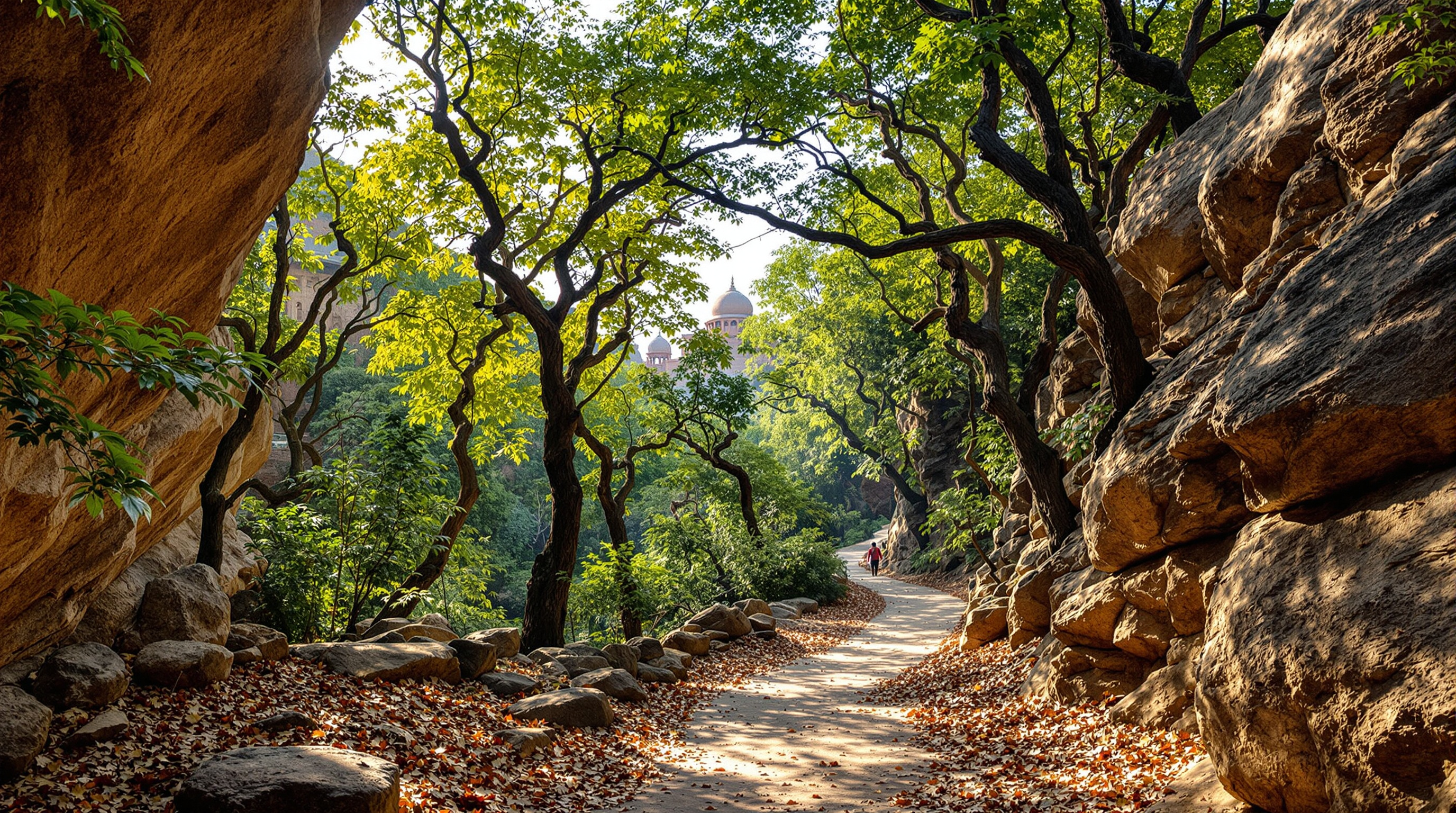
Sanjay Van and Delhi's Urban Forest Interventions: When Restoration Becomes Design
On the Mehrauli ridge, a 780-acre reserved forest and its ring of biodiversity parks are being remade not by an architect but by ecologists, courts and citizen volunteers — the clearest Indian case of a discipline expanding from building objects to reconstructing living ground, and a live argument about what a forest in a city is even for.
Most buildings in this canon have an architect, a completion date, and a photograph that settles the argument. Sanjay Van has none of these cleanly. It is roughly 780 acres of rocky, dry forest on the Mehrauli or South-Central spur of the Delhi Ridge — the last, weathered northern finger of the Aravallis, among the oldest fold mountains on Earth. There is no single designer to credit, no ribbon-cutting to date, and no single image that captures it. And yet it belongs in any honest account of where architecture is going, precisely because it is the kind of project the discipline is increasingly being asked to take on: not the making of an object, but the reconstruction of living ground.
This is architecture at the moment it stops being about buildings. On the Delhi Ridge, the design act is the deliberate removal of one forest and the assembly of another — a native ecosystem re-built, layer by layer, from soil and seed. The "client" is a court order and a warming city; the "structural engineers" are plant ecologists; the "contractors" are the Delhi Development Authority (DDA), the Forest Department, and a rotating cast of citizen volunteers. Where the Heydar Aliyev Center asked what is a wall?, Sanjay Van asks something stranger and more urgent for the century ahead: can a forest be designed, and who gets to decide what it should be?
The most radical thing an architect can build in a twenty-first-century Indian city may not be a structure at all. It may be the ground itself — remade, replanted, and handed back to the birds.
The site: a ridge that is also a wound
The Delhi Ridge is the reason Delhi is habitable at all. For centuries these quartzite hills acted as a green shield against the hot, dry winds off Rajasthan, recharged the aquifer, and held the monsoon runoff. Sanjay Van sits on the Mehrauli section, threaded with medieval history — the ruins of Qila Rai Pithora, Sufi shrines, and the silted tank of Neela Hauz, which historical accounts describe as a water source recharged by the surrounding forest. The DDA is generally reported to have carved out and named Sanjay Van in the 1970s; it was notified as a reserved forest under Section 4 of the Indian Forest Act, 1927, in a 1994 notification (dates here are usually given with some care, and older sources vary).
But the forest most visitors see is not the ancient Aravalli forest. It is a monoculture of a single hardy invader: Prosopis juliflora, known across north India as vilayati kikar or vilayati babul — "the foreign acacia." Introduced to the Ridge by British foresters in the early twentieth century (accounts commonly place the plantings in the 1910s–1920s) to green what colonial administrators dismissed as wasteland, the thorny Mexican shrub did its job too well. It now forms an estimated 75–80% of Sanjay Van's tree cover. It shades out native seedlings, its deep taproot drops the water table, and its allelopathic litter alters the soil so that little else can return. The Ridge, in other words, was already "designed" once — badly, by empire — and the current interventions are an attempt to undo that first, catastrophic edit.
The central move: restoration as a design discipline
The intellectual engine behind Delhi's urban-forest work is not an architecture studio but a laboratory: the Centre for Environmental Management of Degraded Ecosystems (CEMDE) at the University of Delhi, led for decades by the ecologist Professor C. R. Babu. Beginning with the Yamuna Biodiversity Park around 2002 and extending across a network that now includes the Aravalli, Northern Ridge, Tilpath Valley, Tughlakabad and — next to Sanjay Van — the Neela Hauz Biodiversity Park, CEMDE developed a repeatable method for manufacturing a native forest on ruined land.
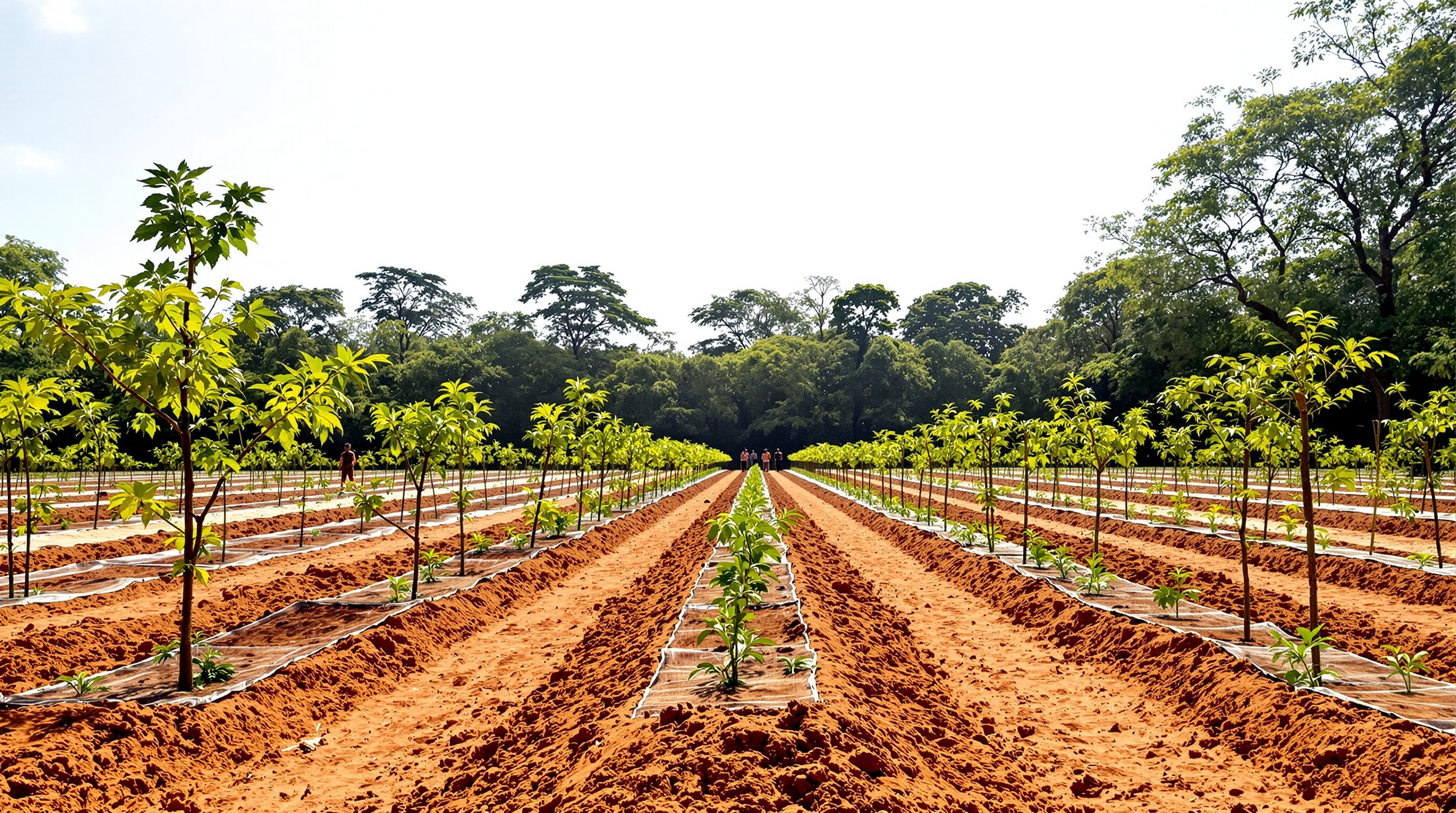
The method treats a forest the way an architect treats a section: as a set of designed layers. Invasive Prosopis is cut and its rootstock removed (CEMDE devised a specific "cut-rootstock" technique for the equally invasive Lantana). The exhausted soil is rebuilt. Then a native plant community modelled on surviving Aravalli reference forests is assembled deliberately — a canopy of Anogeissus, Acacia, Boswellia and other indigenous species; a mid-storey; a shrub layer; ground cover and grasses; and, where the topography allows, a restored wetland to reconnect the water cycle. The point is not to plant trees. It is to install an ecosystem — food webs, pollinators, seed-dispersing birds — that will eventually run itself. Restoration ecologists call the target a self-organising, self-sustaining native community; a designer would recognise it as a building meant to outlive its builders.
| Layer | Old (colonial) forest | Reconstructed native forest |
|---|---|---|
| Canopy | Prosopis juliflora monoculture | Mixed native Aravalli hardwoods |
| Understorey | Suppressed / bare | Deliberately planted mid-storey + shrubs |
| Ground | Allelopathic litter, low diversity | Native grasses, herbs, leaf litter |
| Water | Lowered water table, dried tanks | Recharged wetland (e.g. Neela Hauz) |
| Fauna | Few generalists | 200+ bird, 70+ butterfly species reported |
Reading the intervention as a section
Its place in the chapter: the ground between buildings
In this canon's thirteenth chapter — landscape, public realm and cultural ground — Sanjay Van sits at the far, deliberately awkward edge. The High Line, Cheonggyecheon and Madrid Río are designed landscapes: a landscape architect's authored composition laid over infrastructure. Sanjay Van is the opposite provocation. It is landscape as subtraction and succession rather than addition — an anti-design that hides its own hand, aiming to look as though no one designed it at all. That ambition connects it to the global "rewilding" turn and to the Miyawaki method now spreading across Indian cities, in which dense clusters of native species are planted to grow, its advocates claim, far faster and denser than conventional plantations.
But it is worth being honest that these two ideas — the slow, science-led CEMDE biodiversity-park model and the fast, replicable Miyawaki pocket-forest — are not the same thing, and are often conflated in press coverage and municipal targets. Delhi has repeatedly announced new urban forests and Miyawaki plots by the acre. Ecologists caution that a dense pocket forest is not ecologically equivalent to a restored ridge, and that a small planted patch is no substitute for conserving a large, functioning ecosystem.
The Indian significance: a forest held together by citizens and courts
What makes the Delhi Ridge distinctly Indian is who does the designing. This is not a state masterplan imposed from above, nor a private commission. It is a contested commons governed by an unusually plural set of actors. The Ridge's protection has repeatedly been forced by litigation — public-interest cases and court-ordered committees have done more to defend it than any planning document. Neela Hauz, next door, was restored after concerned citizens obtained a Delhi High Court order; the restored park is generally reported as inaugurated around 2016. Institutions such as WWF-India have signed on to run nature-education programmes. And a genuinely large volunteer base treats the forest as theirs to defend.
This is a model of authorship the profession will have to learn. The "designer" of Sanjay Van is a negotiation — between a scientist's restoration protocol, a judge's order, a bureaucrat's development brief, and a birdwatcher's fourteen-year species list. For a discipline used to the single-author signature building, that is both a loss of control and, arguably, a preview of how ecological ground will actually get designed in dense, democratic, resource-stretched cities.
The third position: forest, or park?
An honest study cannot end on harmony, because the Ridge is a fight. In March 2024, volunteers from the group "There is No Earth B" documented a large clearing where, by their account, hundreds of trees had been felled. The DDA has, since around 2021, floated proposals to add visitor amenities — reportedly including an eatery, conference facilities and adventure-tourism features such as trails and aerial activities — under the banner of making the forest more accessible. Activists read these plans as the slow conversion of a reserved forest into a landscaped recreation park.
The removal of Prosopis is itself contested. The restoration case is strong: the invader is genuinely destructive to native ecology and groundwater. But some — including environmental lawyers quoted in the Delhi press — argue that a mature Prosopis stand is still a functioning carbon sink and habitat, and that clearing it wholesale, before slow-growing native trees can replace it, should not happen without rigorous impact assessment. This is the real frontier debate in ecological design, and it maps onto a genuine scientific argument between native-purist restoration and the "novel ecosystems" school, which holds that in a permanently altered world we may have to work with naturalised species rather than wage endless war on them.
Studio Matrx's editorial position is to refuse the easy version of either side. Sanjay Van is a genuine and admirable act of ecological repair — one of the most important things being "built" in Delhi. It is also a place where the words used to justify design ("restoration," "accessibility," "biodiversity") can be bent to cover felling and commercialisation. The lesson for the future of architecture is that when the ground itself becomes the project, the fight over what the ground is for becomes the central design question — and it will rarely have a single, clean, buildable answer.
Why it belongs in the canon
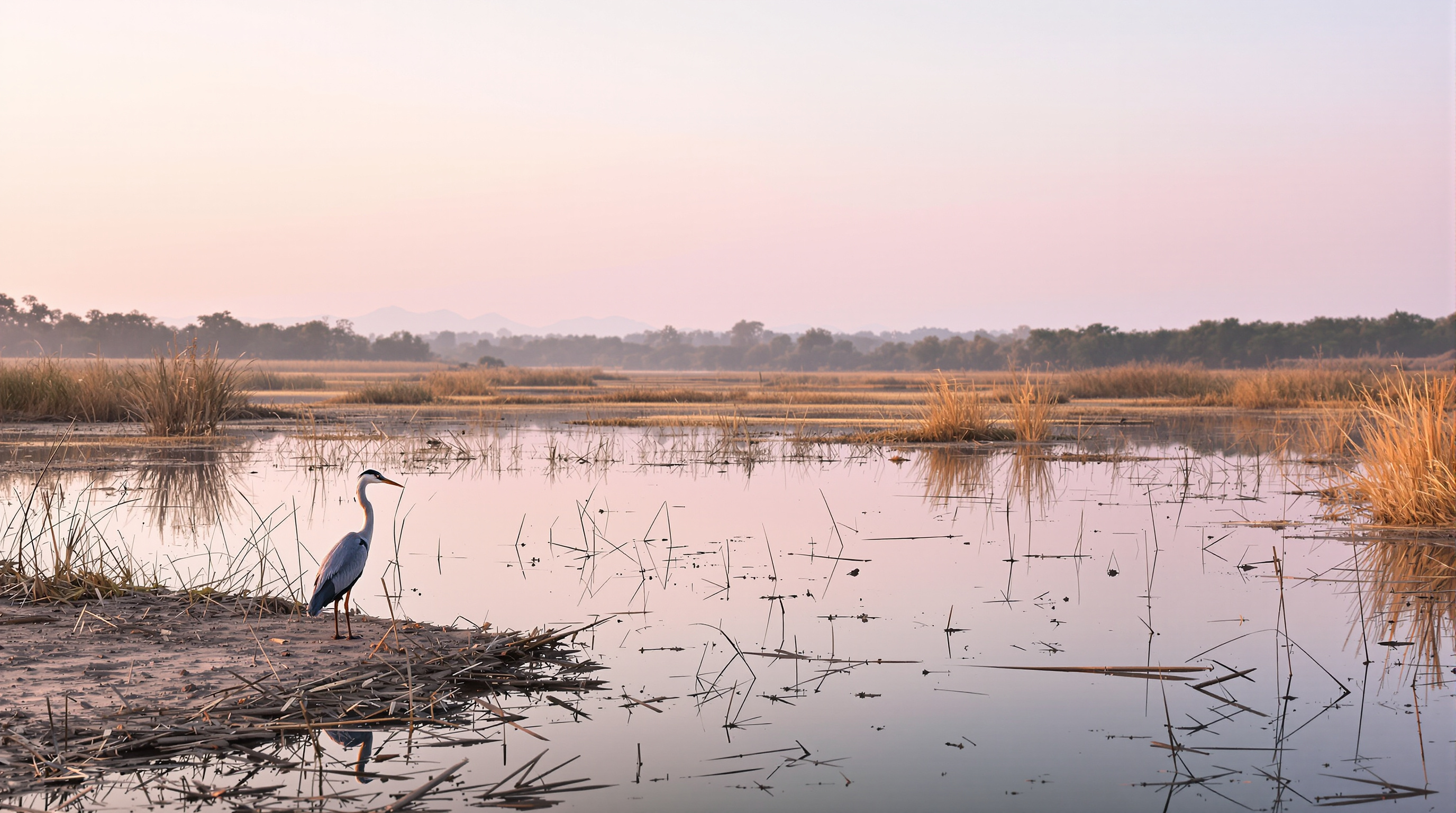
Strip away the litigation and the theory, and one shift remains: here, the design object is a self-sustaining native forest, and the measure of success is not a photograph but a returning food web — reportedly 200-plus bird species and 70-plus butterflies, jackals and nilgai moving back through ground that empire and neglect had flattened into thorn scrub. As Indian cities heat and their aquifers fall, this is the discipline architecture is quietly migrating toward: designing the living, breathing, contested ground between buildings. Sanjay Van tells us the future architect may sometimes hold not a pen but a spade — and may have to share the drawing with a scientist, a judge, and a thousand volunteers.
References
- Delhi Development Authority. "Aravali City Forest — Sanjay Van." Project note (area, 1994 reserved-forest notification, Prosopis degradation, DDA–citizen restoration). dda.gov.in (primary source)
- Sud, Megha (2017). Political Ecology of the Ridge: The Establishment and Contestation of Urban Forest Conservation in Delhi. Megacities and Global Change 23, Franz Steiner Verlag. steiner-verlag.de (peer-reviewed scholarly monograph)
- Centre for Environmental Management of Degraded Ecosystems (CEMDE), University of Delhi. Biodiversity Parks Programme — restoration methodology, C. R. Babu, native-community reconstruction, cut-rootstock method. du.ac.in/cemde and delhibiodiversityparks.org (primary / institutional source)
- Sabu, Ancy et al. (2022). "Ecological Networks in Urban Forest Fragments Reveal Species Associations between Native and Invasive Plant Communities." Plants / MDPI. ncbi.nlm.nih.gov/pmc/articles/PMC8879267 (peer-reviewed; Delhi Ridge native–invasive dynamics)
- Mongabay-India (2025). "New Delhi invests in natural capital through biodiversity parks." india.mongabay.com (press; overview of CEMDE parks model)
- Citizen Matters (2024). "Sanjay Van saga: Forest or park, what does Delhi need?" (2024 felling, DDA amenity proposals, native-vs-invasive debate). citizenmatters.in (press; documents the contestation)
- "Neela Hauz Biodiversity Park" and "Sanjay Van," Wikipedia (accessed 2026) — area figures, colonial Prosopis introduction, 2015–16 restoration timeline. en.wikipedia.org/wiki/Neela_Hauz_biodiversity_park (tertiary reference; figures cross-checked and hedged)
Part of The Future of Architecture in 300 Buildings — Studio Matrx's canon of the buildings asking where architecture goes next. Chapter 13: Landscape, Public Realm & Cultural Ground.
Export this guide
Related Guides — Deep-dive reading
Kampung Admiralty: WOHA's Vertical Village and the Architecture of Growing Old Together
On a tight 0.9-hectare plot beside a Singapore train station, WOHA stacked a hawker centre, a medical centre, a childcare centre and 104 elderly flats into a single 'club sandwich' — then draped it in more greenery than the ground it sits on. A deep study of the vertical kampung, its layered section, its 110% green plot ratio, and what a public-housing prototype for an ageing society tells us about where architecture is going.
The Future of ArchitectureCheonggyecheon Stream Restoration: How Seoul Tore Down a Highway to Uncover a River
In 2005 Seoul demolished an elevated expressway carrying 168,000 cars a day and put a 5.8-kilometre stream back in its place. This deep study reads the project's central move — subtraction as design — its pumped-water hydrology and flood engineering, its ambivalent ecology, and the politics of a restoration that never quite decided which past it was restoring.
The Future of ArchitectureNaga Tower, GIFT City: The Skyscraper That Lives Only as a Render
A pair of serpent-shaped towers designed for India's first financial city was approved, published and never built. Read the Naga Tower as a case study in the 21st-century render — how the image of a building now does more cultural work than the building, how a globalised icon gets grafted onto a Hindu symbol to sell a place, and what the gap between a 230-metre vision and a 122-metre reality tells us about where architecture is going.
The Future of ArchitectureRelated Tools — Try Free
Before & After Studio
Generate AI before-and-after renders to preview how your redesign could look.
DesignAIClient Brief Generator
8-section questionnaire that produces a professional design brief PDF with signature lines.
Brief GeneratorDesign Brief Generator
Answer 10 questions and generate a professional interior design brief PDF for your designer or architect.
Brief Generator