
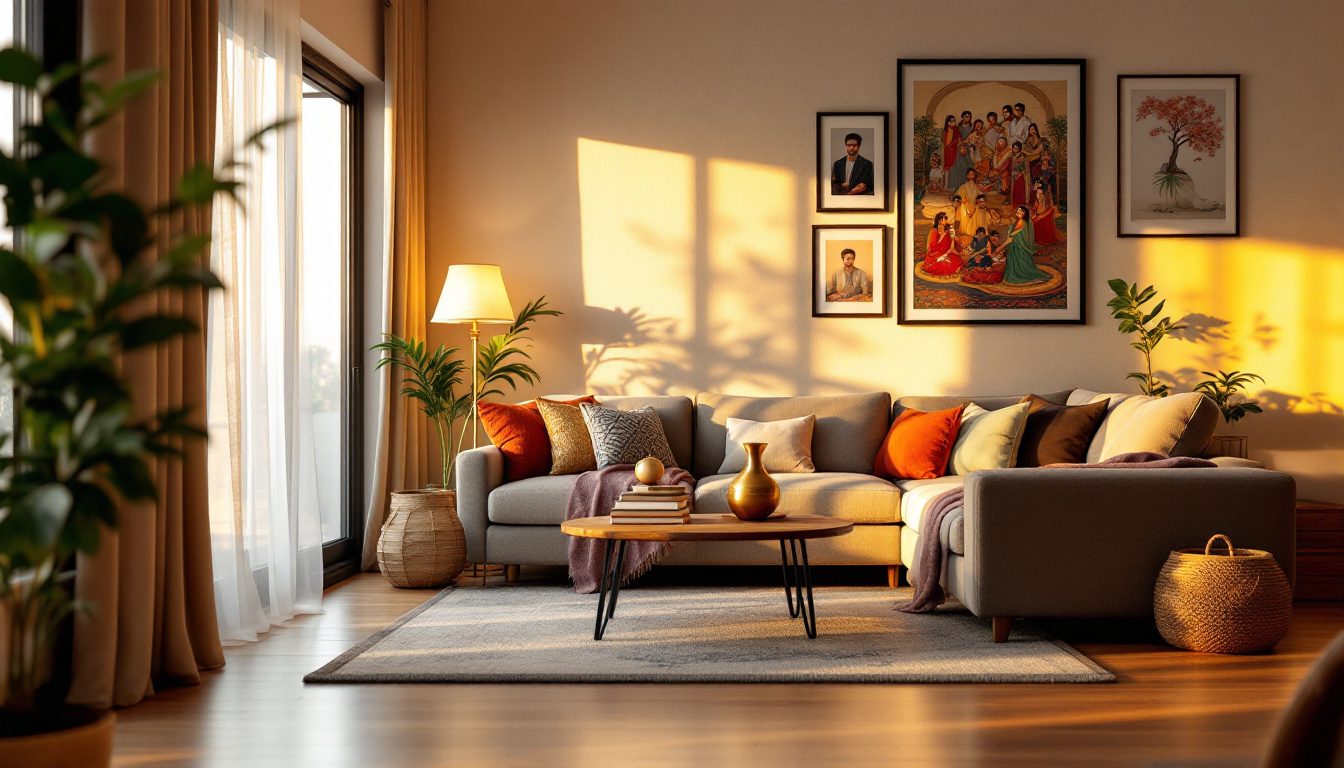
Avoiding the 'Other Guy Syndrome' in Home Design
Designing for the family who actually lives there — not the imagined buyer, the relatives, or the Instagram audience
Stand in the doorway of a freshly finished home and ask a quiet question: who is this for? Often the honest answer is not the family unrolling their lives inside it. It is the relatives who will come for the housewarming and run a finger along the marble. It is the unknown buyer who might, in some distant year, walk through and make an offer. It is the followers who will scroll past a single photograph of the living room. The drawing-room is roped off in the mind like a museum gallery; the family eats, sleeps and fights over the remote somewhere smaller and less photogenic, in the rooms nobody was designing for.
This is what we will call the Other Guy Syndrome — the slow, almost invisible habit of designing your home for a hypothetical other person instead of for yourself. It is not vanity, exactly. It is a mix of love, fear, status and good intentions that quietly hands the steering wheel to people who will never live in the house. The cost is not bad taste. The cost is a home that performs beautifully for an audience and fits its owners badly, every single ordinary day.
A home designed for the imagined buyer, the impressed relative or the scrolling stranger will photograph well and feel slightly wrong forever; the only brief worth building to is the real life of the people who will actually wake up inside it.
Where the syndrome comes from
Nobody sets out to design a home for a stranger. The syndrome creeps in through four doors, and most homes let in all four at once.
The first is status. A home is the largest, most visible purchase most Indian families ever make, and everyone who enters reads it as a statement of how the family is doing. Marble that announces itself, a chandelier two sizes too large for the room, a false ceiling with more coves than the room has corners — these are not always design choices. They are signals, aimed at the people who will see them and rank you.
The second is fear — the fear of getting it wrong in a way others will notice. It feels safer to do what everyone does: the modular kitchen in the standard L, the TV unit wall, the puja that looks like the neighbour's. Copying the crowd outsources the risk of judgement; if it turns out wrong, at least it was wrong the way everyone else is wrong.
The third is social pressure, which in India is rarely abstract. It has names and faces — the mother-in-law, the elder brother, the aunt whose own house is the family benchmark. Their approval is a real currency, and a home gets shaped, room by room, to earn it.
The fourth is resale anxiety — the voice that says "but think of the resale value" before you have lived a single day in the place. We will give resale its fair hearing later, because sometimes it genuinely matters. But used as a reflex, it is the most effective way to design for a person who does not exist yet and may never come.

These four forces are not evil and they are not stupid. They are deeply human, and in a culture where home is bound up with family standing and hospitality, they are unusually strong. The point is not to feel them less. It is to notice when they have quietly taken over the brief.
The Indian flavours of the syndrome
The Other Guy Syndrome wears local clothes. Anyone who has visited enough homes across India will recognise these by sight.
The show drawing-room. This is the syndrome's purest specimen. The front room holds the best sofa, the showcase of untouched crockery, the formal seating no child is allowed near — kept pristine for guests who come twice a year. Meanwhile the family lives in a back room or a bedroom: that is where the real sofa is, where food is eaten in front of the television, where life actually happens. The best room in the house is embalmed for an audience while the family crowds into the leftovers.
Marble-and-chandelier status signalling. Italian-marble flooring across rooms that would be warmer and quieter with something humbler, a crystal chandelier in a 9-foot room that fights the ceiling, a grand carved main door behind a grille — finishes chosen for the message they send on first sight rather than how they feel underfoot at 6 a.m.
Designing for relatives' approval. Layouts and finishes vetted not against the family's needs but against an imagined committee of relatives. Will the puja face the right way for what the aunt will say? Is the dining table large enough that the in-laws cannot call it small? The home becomes a defence prepared in advance against criticism that may never be voiced.
The unused formal dining. A six- or eight-seater set bought because a "proper" home has one, eating prime floor area, used three times a year — while the family eats at the counter, on the sofa, on the floor, anywhere but the table built for the guests who rarely sit at it.
The Instagram corner. Newer but spreading fast: a wall, a nook, an arch designed to photograph well, with the right plant and light, while the rest of the room is an afterthought. The home is curated for a feed, not furnished for a family.
| The other-guy room | Who it is really for | What the family does instead | The honest fix |
|---|---|---|---|
| Show drawing-room kept for guests | Visitors, twice a year | Live in a back room or bedroom | Make the best room the one you use daily |
| Formal eight-seater dining | The idea of a "proper" home | Eat at the counter, sofa or floor | Size the table to your real meals; add leaves for guests |
| Italian-marble everywhere | First-glance status | Wish it were warmer and quieter | Spend the finish budget where you touch it |
| Puja/layout for relatives' approval | The family committee | Quietly work around it | Decide by your own practice and belief |
| Instagram feature corner | Followers | Ignore the rest of the room | Design the whole room you sit in |
A home is not a stage you visit between performances. It is the place you are tired in, sick in, bored in and happy in — and it should be designed for that person, not for the one holding a camera.
How to tell future-proofing from other-guy thinking
Here is the genuinely hard part, because not every decision aimed at "later" or "someone else" is a mistake. A good home does plan ahead. The skill is telling a real future-proofing decision from other-guy thinking dressed up as prudence.
The cleanest test is to ask who benefits, and when. A true future-proofing choice benefits you or your own family at a foreseeable future point in your actual life. Other-guy thinking benefits a hypothetical person at an undefined time for appearances now.
Consider the difference. Putting grab-bar backing in the bathroom walls because your parents will move in within five years, or because you intend to age in this home — that is future-proofing; the beneficiary is real and the timeline is yours. Choosing a "neutral resale-friendly" beige everywhere because some unknown buyer might prefer it, when you yourself love colour — that is other-guy thinking; the beneficiary is imaginary and the cost is yours today.
| Question to ask | Future-proofing (keep it) | Other-guy thinking (drop it) |
|---|---|---|
| Who benefits? | You or your family, later | A hypothetical stranger or onlooker |
| When? | A foreseeable point in your life | An undefined someday, or just now-for-show |
| What does it cost you today? | Small, sensible margin | Real daily comfort or money |
| Would you still choose it if nobody ever saw it? | Yes | No |
| Is it based on a known need or an imagined one? | Known (kids, ageing parents, work-from-home) | Imagined (buyer's taste, relatives' verdict) |
The last row of that table is the sharpest knife. Would you still make this choice if no guest, relative, buyer or follower would ever know? Run any contested decision through that one question and the syndrome usually shows itself. The wider, harder, more honest version of this self-interview is laid out in our guide on how you really live: the questions to ask before designing — answer those first, and most other-guy choices fall away on their own.
The show-room versus the lived home
The single most expensive form of the syndrome in Indian homes is the gap between the room you show and the room you live in. Walk the typical 2BHK or 3BHK with this lens: the drawing-room — front-facing, best-lit, most generously sized — is furnished for display and used least. The family's real centre of gravity is elsewhere — a bedroom that doubles as the evening hangout, a corner of the kitchen, a covered balcony. The best square footage in the house, the part you paid the most per foot for, is doing the least work.
The fix is not to abolish hospitality — welcoming guests well is one of the deepest values in an Indian home. The fix is to stop sacrificing daily life to occasional display. Three moves do most of the work:
- Make the best room the one you actually use. If the family gathers in the evening, let it happen in the brightest, biggest, best room — and welcome guests into the life of the home rather than into a sealed showpiece. A home comfortable for you is, not by coincidence, more genuinely welcoming for guests too.
- Let rooms be honest about double duty. The "formal" dining can be your everyday table; the drawing-room can hold the toys and books your evenings actually contain. Designing for real use does not mean designing scruffy — it means rooms that are allowed to be lived in.
- Spend the budget where your hands and feet are. The marble nobody walks on barefoot matters less than the seating you sink into nightly, the counter you stand at daily, the bed you spend a third of your life in. Status finishes in show rooms are the classic case of money flowing to the Other Guy.
Our companion guide on the home that feels right goes deeper into why a lived-in, well-fitted home reads as warm while a perfect showpiece can feel cold.
When resale value legitimately matters — and when it does not
Resale deserves an honest hearing, because the reflexive answer ("never design for resale") is as wrong as designing only for it. The question is not whether resale matters but how much, and which kind of decision it should touch.
Resale legitimately matters when the time horizon is short and known. If you are quite sure you will sell within three to five years — a likely job transfer, a starter flat, buying to flip — then the next buyer is not hypothetical; they are a near-certain part of your plan, and designing with them partly in mind is simply realistic.
Even then, resale should govern only the hard-to-change, expensive-to-reverse layer, not the everyday-comfort layer. The market rewards a sensible layout, good light, sound waterproofing and plumbing, and finishes that are not bizarre. It does not reward — and rarely recovers the cost of — a hyper-personal colour scheme baked into permanent finishes, or an over-customised built-in that suits only you. The sane rule: keep the bones broadly sane and the skin truly yours.
| Decision layer | Let resale influence it? | Why |
|---|---|---|
| Layout, light, ventilation, structure | Yes, keep it sane | Hard to change; the market and you both value it |
| Plumbing, wiring, waterproofing quality | Yes, never skimp | A buyer's surveyor checks this; so should you |
| Permanent finishes (flooring, sanitaryware) | Mildly — avoid the bizarre | Costly to redo; stay this side of strange |
| Wall colour, soft furnishing, décor | No, please yourself | Cheap to repaint; buyers do anyway |
| Built-in furniture, hyper-custom storage | Mostly no | Suits you, rarely recovers cost on sale |
The trap is using resale to override decisions it has no business touching. "We can't paint the bedroom that colour, think of resale" is almost always other-guy thinking — a coat of paint costs a buyer a weekend, and you are surrendering years of a colour you love to a stranger who will repaint it anyway. Reserve the resale argument for the heavy, permanent layer; let yourself win everywhere it is cheap to reverse.
One honest note for the Indian market specifically: resale of flats here is driven far more by location, builder reputation, age of the building, legal clarity (clear title, occupancy certificate, RERA registration), floor and facing than by your interior choices. A buyer pays for the address and the paperwork; they barely price your false ceiling. Most interior decisions made "for resale" are protecting a value the interior was never going to move much anyway.
How to re-centre the design on your own life
Pulling the brief back from the Other Guy is not a single act of willpower; it is a few deliberate habits that keep the real family at the centre of every decision.
Write the brief for the people who live here. Before a single finish is chosen, write down — literally — who lives here, how they spend a normal weekday and weekend, what they fight over, what they wish their last home had. That document is your defence against every later pull toward an imagined audience. The structured way to build it is the how you really live questionnaire, and a quick first pass is the home lifestyle quiz, which surfaces how you actually use space rather than how you think you should.
Name the Other Guy out loud. When a decision is being argued, ask plainly: are we choosing this for us, or for the guests, relatives, buyer or the photo? Naming the phantom strips its power. Half the time the room goes quiet, because everyone knows.
Separate the two budgets in your head. One budget is for daily comfort — the things your body meets every day. The other is for occasional display. Fund the first fully before the second gets a rupee. Most homes do it backwards.
Let memory and feeling have a vote, not just status. The things that make a home feel like yours are usually personal, not impressive — covered in our guide on why nostalgia makes a home feel like home. A home built from your own life reads as warm in a way no showpiece can fake.
| Old, other-guy question | Re-centred, self question |
|---|---|
| What will people think of this? | Will we be comfortable living with this? |
| What do people usually do? | What does our family actually do? |
| Will this impress the relatives? | Will this make a normal Tuesday better? |
| Is this good for resale? (reflex) | Is this good for the years we will live here? |
| Will this look good in a photo? | Does this feel good to be in? |
Re-centring does not mean ignoring guests, status, or the future. It means putting the family who lives here first in the queue, and letting everyone else — the visitor, the relative, the buyer, the follower — be served by a home that is genuinely, comfortably good rather than performed.
What this means for your home
1. Write down who actually lives here and how they really spend a day before choosing anything. This brief is your shield against the Other Guy.
2. Make the best room the one you use most, not the one you show. Welcome guests into your life, not into a roped-off gallery.
3. Spend the comfort budget before the display budget — money to where your hands and feet meet the home every day.
4. Run every contested decision through the no-audience test. Would you still want it if nobody ever saw it?
5. Reserve the resale argument for the heavy, permanent layer and only when your selling horizon is short and real. Let yourself win on everything cheap to reverse.
6. Name the Other Guy when he shows up in a discussion. Naming the phantom is usually enough to dismiss him.
7. Let your own memory, faith and feeling shape the home — that is what makes it yours rather than anyone's.
If you are deciding how to even begin — whether you need an architect, a designer or can start with AI — our pillar guide on architect vs designer vs AI for an Indian home sets out the routes; this guide is about making sure that whichever route you take, you are designing for the right person.
How Studio Matrx helps
The Other Guy thrives on vagueness — when the brief is unwritten, the loudest imagined audience fills the gap. The antidote is to make your brief concrete and to see it before you commit, so the design answers your life rather than a stranger's expectations.
That is exactly what DesignAI is for. You describe your real family, your real rooms and how you actually live, and it visualises options built to your brief — not a generic template tuned for resale, not a showpiece staged for a feed. You can compare a lived-in layout against a show-room one, test finishes where your hands actually land, and feel the difference before a single rupee is spent. Pair it with the home lifestyle quiz to surface how you truly use space, and you start the project with the right person at the centre of it: you. It is the low-risk way to design for the home you will live in, not the one you will only ever photograph.
References
1. Susanka, S. & Obolensky, K. (1998). The Not So Big House — on building homes for how people actually live rather than for show, and the critique of the unused formal room.
2. Alexander, C., Ishikawa, S. & Silverstein, M. (1977). A Pattern Language — patterns on intimacy gradient, common areas at the heart, and the rooms a family really uses.
3. Gallagher, W. (2006). House Thinking: A Room-by-Room Look at How We Live — on the psychology of how rooms are used versus displayed.
4. Real Estate (Regulation and Development) Act, 2016 (RERA) — on the legal and disclosure factors (registration, title, completion) that drive resale value of Indian housing.
5. Pink, S. (2004). Home Truths: Gender, Domestic Objects and Everyday Life — on how homes are performed for social audiences.
6. Csikszentmihalyi, M. & Rochberg-Halton, E. (1981). The Meaning of Things: Domestic Symbols and the Self — on possessions, status signalling and personal meaning in the home.
Part of the Studio Matrx Planning Your Project series. Continue with architect vs designer vs AI for an Indian home, how you really live: questions before designing, the home that feels right, and why nostalgia makes a home feel like home.
Export this guide
Related Guides — Deep-dive reading
Storage Planning Before Interior Design
Why storage must be planned first — audited, budgeted and given its floor area — before a single layout, colour or sofa is chosen. The homeowner's plan-it-first master guide for Indian homes.
StorageHow You Really Live: The Questions to Ask Before Designing
The honest questions about your actual daily life to answer before any design decision, so your Indian home fits how you truly live, not a magazine image
Planning Your ProjectFrom Space to Place: Turning Empty Rooms into a Home
How to transform a bare builder flat into a warm, lived-in home — through scale, zones, layering, retreat corners and flow
Design EducationRelated Tools — Try Free
Apartment Furniture Size Chart
Standard furniture dimensions for Indian apartments — sofas, beds, tables, dining, storage.
Reference ChartFull-Room BOQ — Living, Bedroom, Kitchen, Bath
Room-wise BOQ across living, bedrooms, kitchen, utility, and bathrooms with line-item pricing.
Full-Room BOQInterior Layout Planner — Printable Graph Grid
Printable graph grid to sketch room layouts to scale before committing to furniture placement.
Layout Tool