
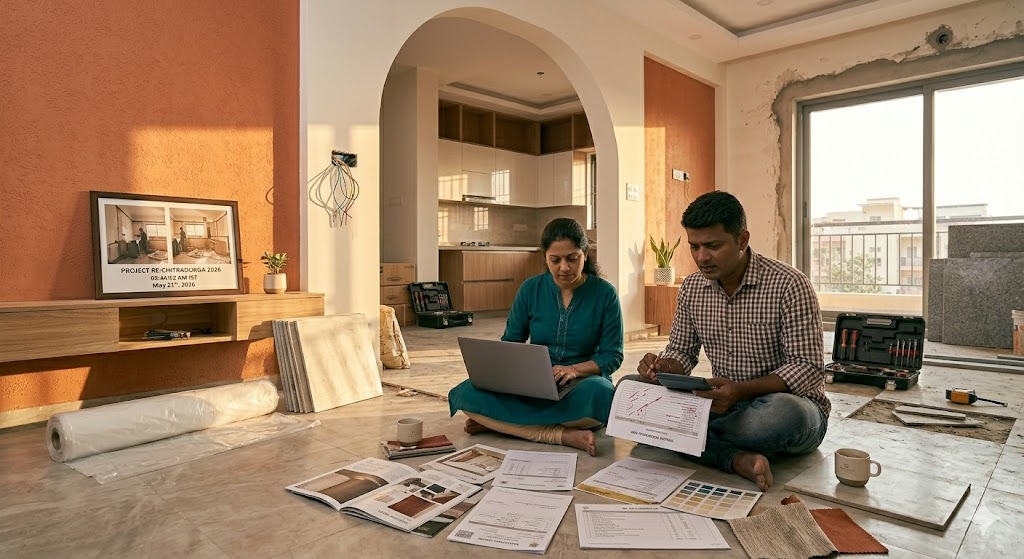
Hidden Costs in Interiors — The Twelve Line Items Homeowners Miss
The Categories That Turn a ₹ 21 L Quote Into ₹ 32 L, When They Reveal Themselves, and Ten Tactics to Prevent the Surprise
A ₹ 21 L "all-inclusive" interior quote routinely becomes a ₹ 32-35 L bill by handover — a 50-67% gap. The gap is systematic, not dishonest. Contractors quote what THEY do. Hidden costs are what the HOMEOWNER must add. Twelve specific categories account for nearly all of it.
This guide is the working catalogue of those twelve hidden cost categories — what they are, when in the project they reveal themselves, why they're routinely excluded from BOQs, and ten prevention tactics that catch most of them before they become surprises.
It is the companion guide to Interior Cost per Sft in India (which covers the BOQ-side cost framework), Home Renovation Cost in India (which covers renovation-specific costs), Turnkey Interiors in India (which covers turnkey contracts and red flags), and BOQ Explained for Indian Homeowners (which covers the BOQ format that limits hidden cost exposure).
The 50-67% gap between BOQ and all-in is systematic. Contractors quote what they do; hidden costs are what homeowners must add. Be the integrator of your own hidden-cost budget — list all twelve categories, size each one for your project, and finance the all-in figure, not the BOQ figure.
For the cost-cluster context, see Construction Cost in India for the parallel framework on construction.
The Twelve Hidden Cost Categories
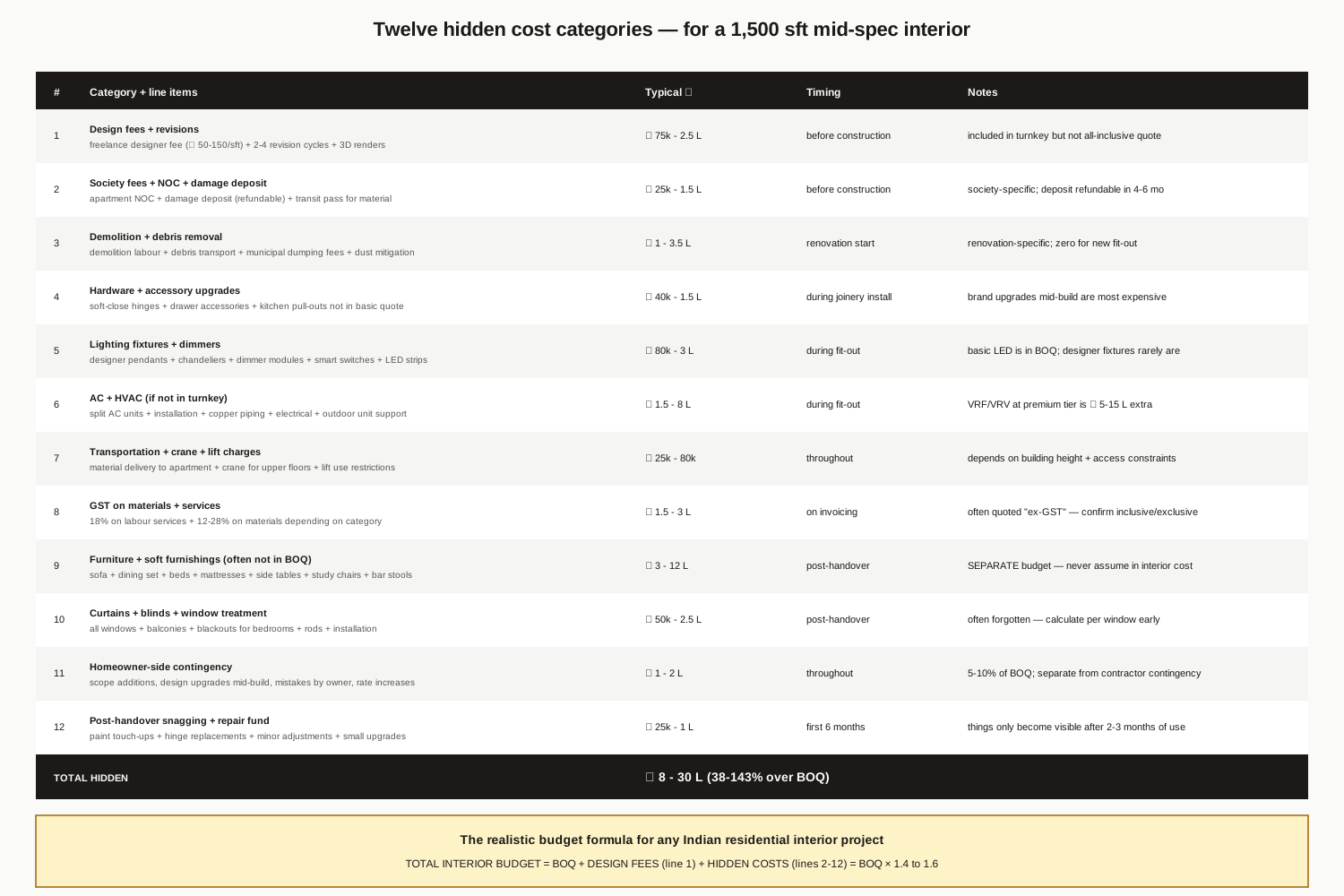
For a representative 1,500 sft mid-spec interior in Bangalore with a ₹ 21 L contractor BOQ, the twelve hidden cost categories add ₹ 8-30 L on top (38-143% over BOQ). The typical realistic figure is ₹ 10-14 L (50-67% over BOQ).
1. Design fees + revisions (₹ 75k-2.5 L)
The contractor's BOQ usually does NOT include the freelance designer's fee or the cost of design revision cycles. For owner-managed and single-contractor models, this is a separate line. For turnkey models it's bundled, but additional revisions are charged.
Freelance designer: ₹ 50-150/sft of carpet area for design + supervision. Turnkey design fee: 8-15% of total fit-out cost. Additional revisions beyond 2-3 cycles: ₹ 15-30k per cycle.
2. Society fees + NOC + damage deposit (₹ 25k-1.5 L)
For apartment renovations: society NOC processing fees + damage deposit (refundable) + transit pass for material movement.
Damage deposit is refundable but ties up cash for 4-6 months until society inspection clears the work. Some societies levy a per-day "construction fee" for the duration of work (₹ 100-500/day = ₹ 18-90k over 6 months).
3. Demolition + debris removal (₹ 1-3.5 L)
Renovation-specific overhead — zero for new fit-out. Demolition labour (₹ 30-80/sft of demolished area), debris transport (per truckload), municipal dumping fees, dust + noise mitigation curtains.
See Home Renovation Cost in India for the full renovation cost framework.
4. Hardware + accessory upgrades (₹ 40k-1.5 L)
Soft-close hinges, drawer accessories, kitchen pull-outs, internal organisers — frequently not in the base quote, then "upgraded" mid-build at premium prices.
Common pattern: contractor quotes with Sleek hinges. You see Hettich hinges at a friend's place mid-build. Upgrade adds ₹ 25-60k for kitchen alone, ₹ 1-2 L if wardrobes + study upgraded too.
5. Lighting fixtures + dimmers (₹ 80k-3 L)
Basic LED downlights are usually in the BOQ. Designer pendants, chandeliers, dimmer modules, smart switches, LED strips — usually NOT.
A "designer pendant" in dining can be ₹ 5-25k each. Master bedroom chandelier ₹ 15-60k. Smart dimmer modules ₹ 2-8k per circuit. The cost adds up.
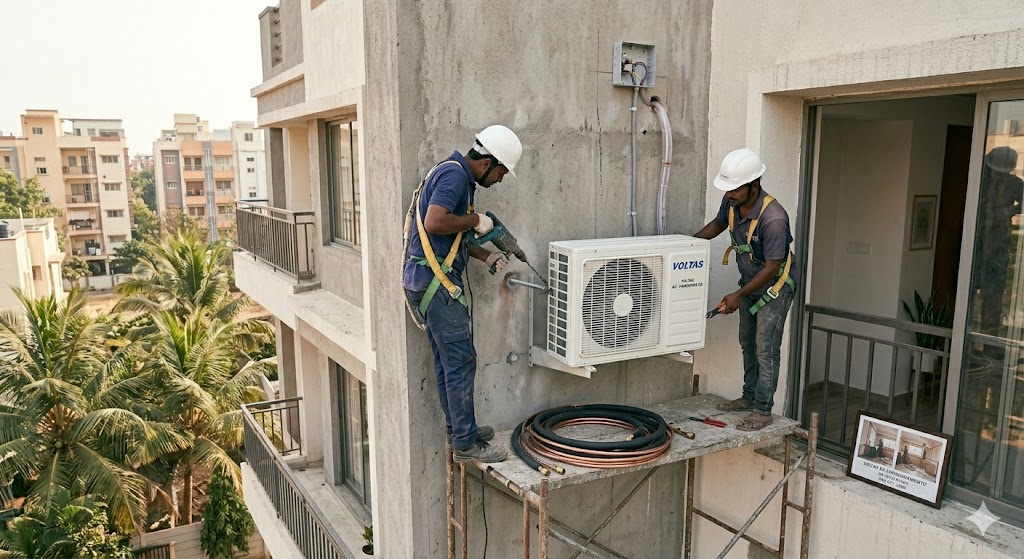
6. AC + HVAC (₹ 1.5-8 L)
Almost never included in basic turnkey or contractor BOQ. Split AC units (₹ 35k-70k each + ₹ 5-8k installation), ducted AC adds ₹ 1.5-3 L per system, VRF/VRV at premium tier is ₹ 5-15 L extra.
If FC is designed without AC routing, retrofitting AC later costs significantly more. Decide on AC scope BEFORE FC design.
7. Transportation + crane + lift charges (₹ 25-80k)
Material delivery to apartment + crane for upper floors + lift use restrictions. Each piece of joinery (kitchen module, large wardrobe) may need separate trip + lift coordination. High-rise buildings restrict lift use to specific hours/days.
8. GST on materials + services (₹ 1.5-3 L)
18% GST on labour services + 12-28% on materials depending on category. Often quoted "ex-GST" then added to invoice — sometimes a 12-18% jump at billing time.
ALWAYS confirm GST inclusive/exclusive in writing before signing. This single category accounts for 7-14% over BOQ and is the most common "I didn't realise" line.
9. Furniture + soft furnishings (₹ 3-12 L)
The big one, post-handover. Sofa (₹ 50k-3 L), dining set (₹ 30k-1.5 L), beds + mattresses (₹ 20-80k per bedroom), side tables, study chairs, bar stools. SEPARATE budget — never assume in interior cost.
Furniture is post-handover spending. Don't pull it into the same cash-flow window as fit-out. See Interior Cost per Sft in India for the furniture-as-separate-budget framework.
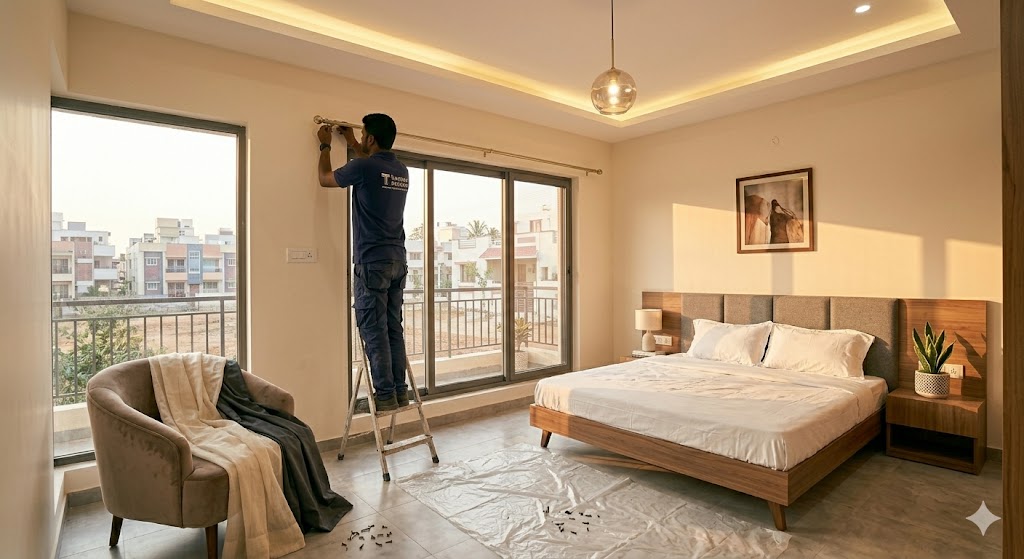
10. Curtains + blinds + window treatment (₹ 50k-2.5 L)
All windows + balconies + blackouts for bedrooms + rods + installation. Often forgotten because the BOQ doesn't include curtains and you don't see them until handover when the windows are naked.
8 windows + 2 balconies × ₹ 6-25k per treatment = ₹ 50k-2.5 L. Add motorised blinds and the cost jumps another ₹ 50k-1.5 L.
11. Homeowner-side contingency (₹ 1-2 L)
Separate from contractor contingency. This covers: scope additions you decide mid-build, design upgrades you choose ("let's add a bar shelf"), mistakes by owner (wrong wardrobe dimension), and rate increases on items you procure directly.
5-10% of BOQ. Most homeowners DON'T plan this — and run out of cash by Week 11-14.
12. Post-handover snagging + repair fund (₹ 25k-1 L)
Paint touch-ups + hinge replacements + minor adjustments + small upgrades. Things only become visible after 2-3 months of use. Hold back 10% of contractor payment for 30 days, then keep a separate ₹ 25k-1 L fund for the first 6 months.
When Hidden Costs Get Revealed — The Project Timeline
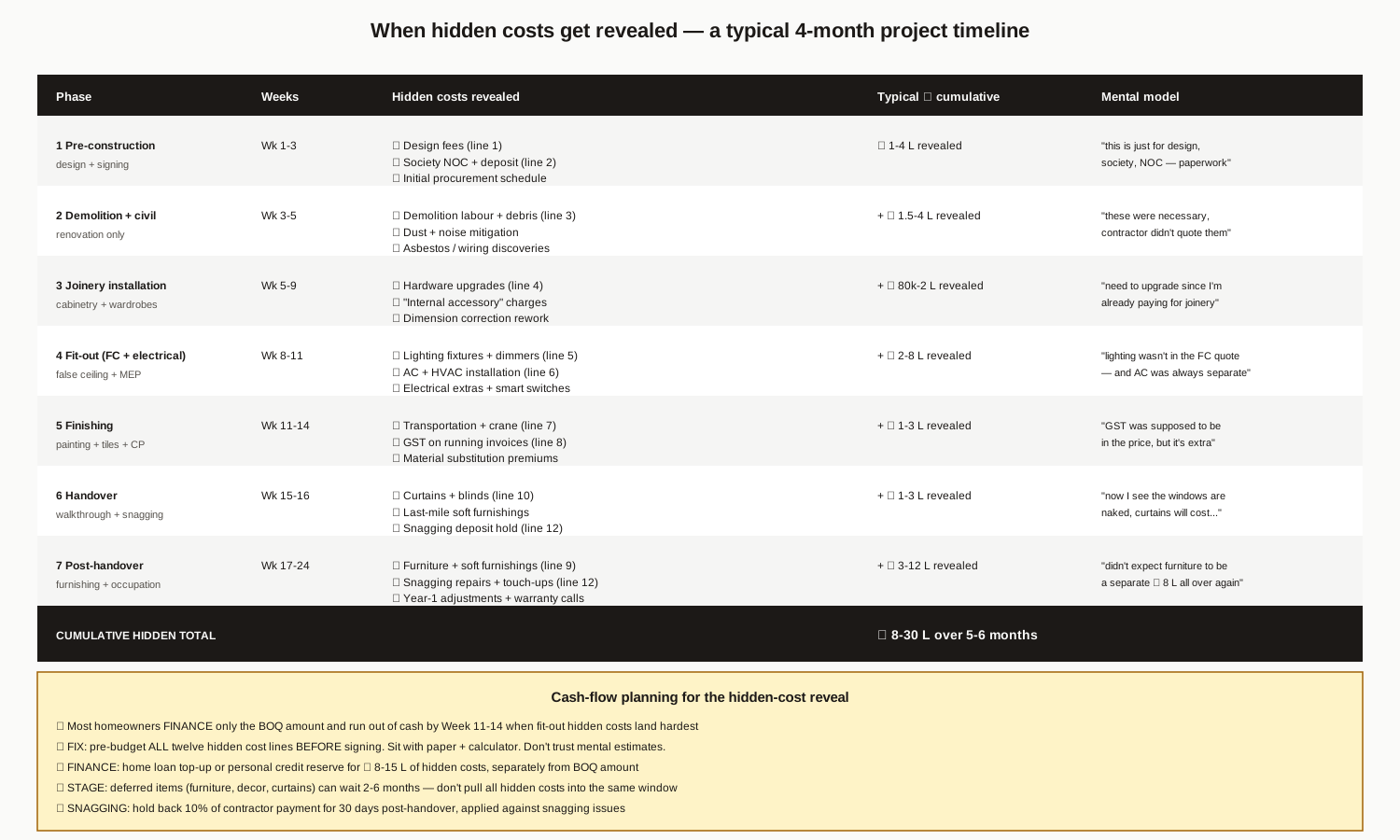
Hidden costs don't reveal themselves all at once. They emerge phase-by-phase over the 4-6 month project window. Knowing when each category lands helps with cash-flow planning.
Phase-by-phase reveal
Phase 1 — Pre-construction (Wk 1-3): ₹ 1-4 L revealed. Design fees + society NOC + damage deposit + initial procurement schedule. "This is just for design and paperwork."
Phase 2 — Demolition + civil (Wk 3-5): ₹ 1.5-4 L revealed. Demolition labour + debris + dust mitigation + asbestos discoveries. "These were necessary; contractor didn't quote them." (Renovation-only phase; zero for new fit-out.)
Phase 3 — Joinery installation (Wk 5-9): ₹ 80k-2 L revealed. Hardware upgrades + accessory charges + dimension rework. "Need to upgrade since I'm already paying for joinery."
Phase 4 — Fit-out FC + electrical (Wk 8-11): ₹ 2-8 L revealed. Lighting fixtures + dimmers + AC + smart switches. "Lighting wasn't in the FC quote — and AC was always separate." This is the single biggest revelation phase.
Phase 5 — Finishing (Wk 11-14): ₹ 1-3 L revealed. Transportation + crane + GST on running invoices + material substitution premiums. "GST was supposed to be in the price, but it's extra."
Phase 6 — Handover (Wk 15-16): ₹ 1-3 L revealed. Curtains + last-mile soft furnishings + snagging deposit hold. "Now I see the windows are naked, curtains will cost..."
Phase 7 — Post-handover (Wk 17-24): ₹ 3-12 L revealed. Furniture + soft furnishings + snagging repairs. "Didn't expect furniture to be a separate ₹ 8 L all over again."
Cash-flow implications
Most homeowners finance only the BOQ amount and run out of cash by Week 11-14 when fit-out hidden costs land hardest. The fix:
- Pre-budget ALL twelve hidden cost lines BEFORE signing. Sit with paper + calculator. Don't trust mental estimates.
- Finance a home loan top-up or personal credit reserve for ₹ 8-15 L of hidden costs, separately from BOQ amount
- Stage the deferred items (furniture, decor, curtains) for 2-6 months post-handover — don't pull all hidden costs into the same window
- Snagging: hold back 10% of contractor payment for 30 days post-handover, applied against snagging issues
Quote vs Reality — A Worked Decomposition
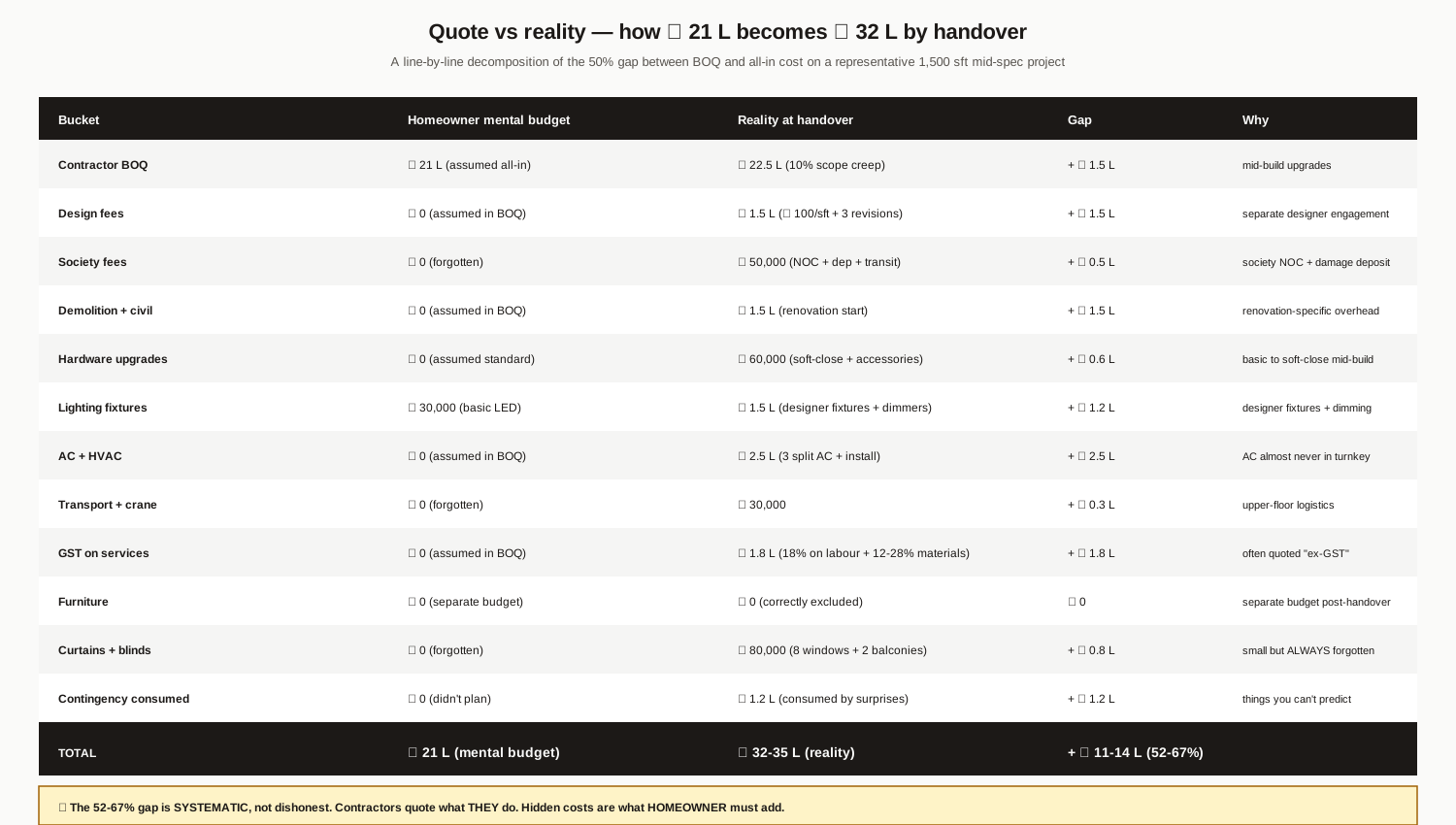
The figure above runs through a representative 1,500 sft mid-spec project line by line, showing how the homeowner's ₹ 21 L mental budget becomes a ₹ 32-35 L reality.
Where the 50-67% gap comes from
- Contractor BOQ: ₹ 21 L assumed → ₹ 22.5 L actual (₹ 1.5 L scope creep on mid-build upgrades)
- Design fees: ₹ 0 assumed → ₹ 1.5 L actual (separate designer engagement)
- Society fees: ₹ 0 assumed → ₹ 50k actual (NOC + deposit + transit)
- Demolition + civil: ₹ 0 assumed → ₹ 1.5 L actual (renovation-specific overhead)
- Hardware upgrades: ₹ 0 assumed → ₹ 60k actual (basic-to-soft-close mid-build)
- Lighting fixtures: ₹ 30k assumed (basic LED) → ₹ 1.5 L actual (designer + dimmers)
- AC + HVAC: ₹ 0 assumed → ₹ 2.5 L actual (3 split AC + install)
- Transport + crane: ₹ 0 assumed → ₹ 30k actual
- GST on services: ₹ 0 assumed → ₹ 1.8 L actual (18% on labour + materials)
- Furniture: ₹ 0 assumed → ₹ 0 actual in this comparison (correctly excluded, separate budget)
- Curtains + blinds: ₹ 0 assumed → ₹ 80k actual (8 windows + 2 balconies)
- Contingency consumed: ₹ 0 planned → ₹ 1.2 L consumed
Total: ₹ 21 L mental budget → ₹ 32-35 L reality. ₹ 11-14 L gap = 52-67% over BOQ. This pattern is consistent across most interior projects I have reviewed.
Ten Prevention Tactics — Avoid the ₹ 8-14 L Surprise
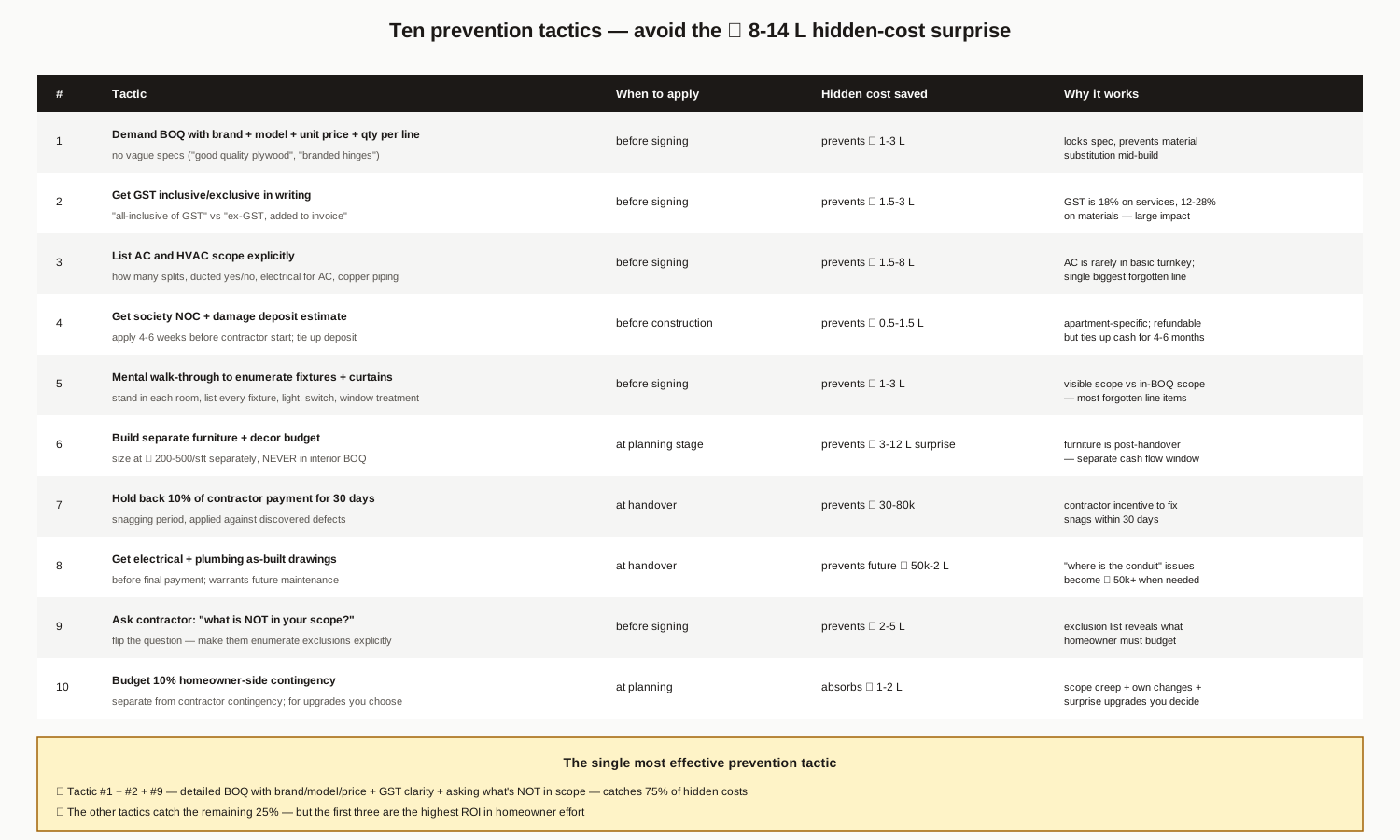
Ten specific tactics. Each one catches a particular hidden-cost category before it becomes a surprise. The first three are the highest ROI.
1. Demand BOQ with brand + model + unit price + qty per line
The single most effective prevention tactic. No vague specs like "good quality plywood" or "branded hinges". Demand: brand (Greenply / Century / Mehta), IS standard (IS 710 BWP / IS 303 commercial), thickness (18mm / 19mm), and unit price per line. Prevents ₹ 1-3 L of mid-build material substitution.
2. Get GST inclusive/exclusive in writing
"All-inclusive of GST" vs "ex-GST, added to invoice" — get it explicit. GST is 18% on services and 12-28% on materials. Prevents ₹ 1.5-3 L of "I didn't realise GST was extra."
3. List AC and HVAC scope explicitly
How many splits, ducted yes/no, electrical capacity for AC, copper piping. AC is rarely in basic turnkey — the single biggest forgotten line. Prevents ₹ 1.5-8 L of AC surprise.
4. Get society NOC + damage deposit estimate
Apply 4-6 weeks before contractor start. Tie up the deposit. Prevents ₹ 0.5-1.5 L of "didn't know about deposit" cash-flow issues.
5. Mental walk-through to enumerate fixtures + curtains
Stand in each room before signing. List every fixture, light, switch, window treatment. Cross-check against BOQ. Prevents ₹ 1-3 L of fixture and curtain surprise.
6. Build separate furniture + decor budget
Size at ₹ 200-500/sft separately, NEVER include in interior BOQ. Furniture is post-handover spending — separate cash-flow window. Prevents ₹ 3-12 L of furniture surprise.
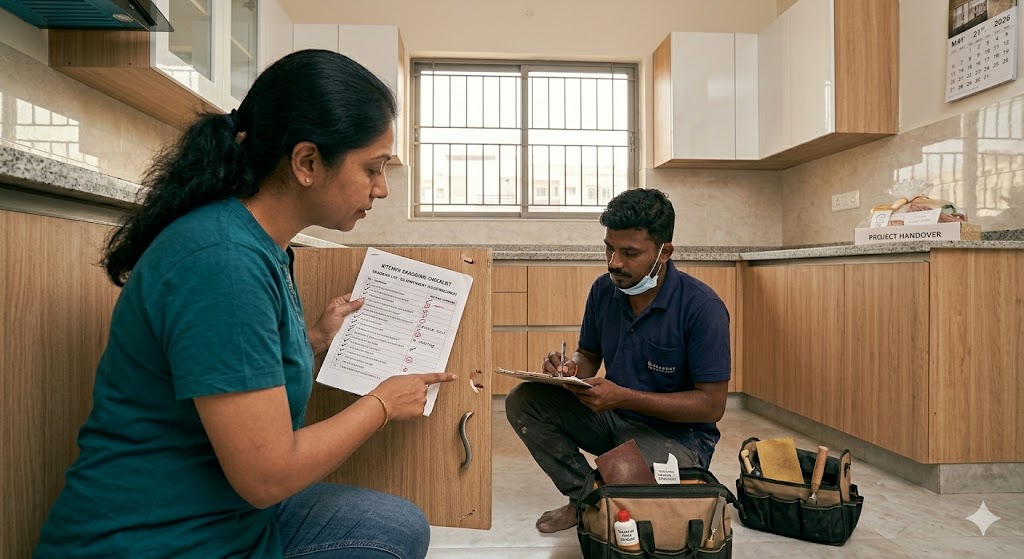
7. Hold back 10% of contractor payment for 30 days
Snagging period, applied against discovered defects. Contractor incentive to fix snags within 30 days. Prevents ₹ 30-80k of post-handover repair friction.
8. Get electrical + plumbing as-built drawings
Before final payment. Warrants future maintenance. "Where is the conduit" issues become ₹ 50k-2 L when needed later. Prevents future ₹ 50k-2 L surprises.
9. Ask contractor: "What is NOT in your scope?"
Flip the question — make them enumerate exclusions explicitly. The exclusion list reveals what homeowner must budget. Prevents ₹ 2-5 L of "I assumed it was included."
10. Budget 10% homeowner-side contingency
Separate from contractor contingency. For scope creep + own changes + surprise upgrades you decide. Absorbs ₹ 1-2 L of mid-build adjustments.
The 3-tactic combo
Tactics 1 + 2 + 9 (detailed BOQ + GST clarity + asking what's NOT in scope) catches roughly 75% of hidden costs. The other seven tactics catch the remaining 25%. If you have time for only three things, do these three.
The Realistic Budget Formula
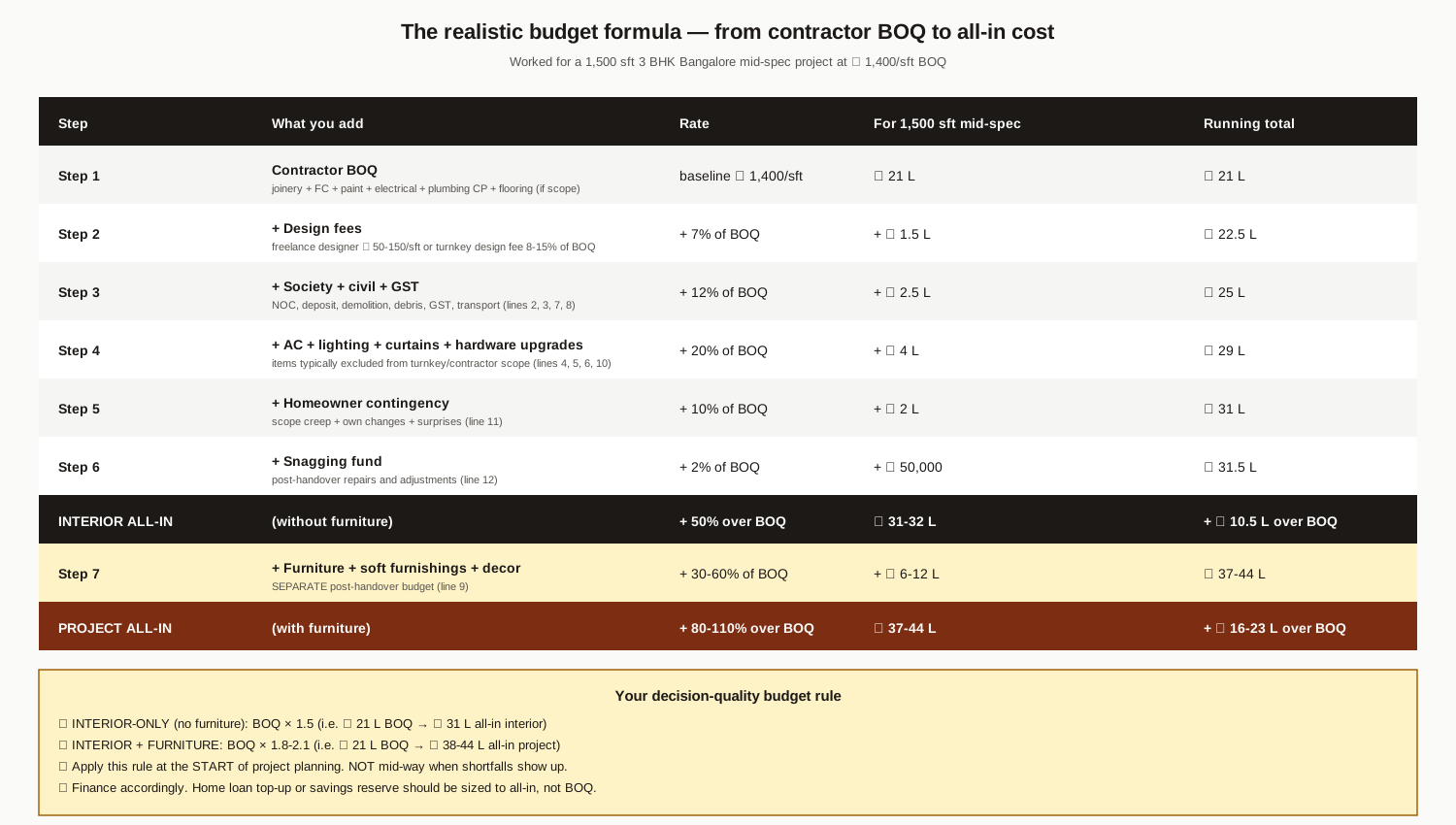
For a 1,500 sft 3 BHK Bangalore mid-spec project at ₹ 1,400/sft BOQ:
| Step | What you add | Rate | For 1,500 sft | Running total |
|---|---|---|---|---|
| 1 | Contractor BOQ | baseline | ₹ 21 L | ₹ 21 L |
| 2 | + Design fees | + 7% of BOQ | + ₹ 1.5 L | ₹ 22.5 L |
| 3 | + Society + civil + GST | + 12% of BOQ | + ₹ 2.5 L | ₹ 25 L |
| 4 | + AC + lighting + curtains + hardware | + 20% of BOQ | + ₹ 4 L | ₹ 29 L |
| 5 | + Homeowner contingency | + 10% of BOQ | + ₹ 2 L | ₹ 31 L |
| 6 | + Snagging fund | + 2% of BOQ | + ₹ 0.5 L | ₹ 31.5 L |
| INTERIOR ALL-IN (no furniture) | + 50% over BOQ | ₹ 31-32 L | ||
| 7 | + Furniture + soft furnishings | + 30-60% of BOQ | + ₹ 6-12 L | ₹ 37-44 L |
| PROJECT ALL-IN (with furniture) | + 80-110% over BOQ | ₹ 37-44 L |
Your decision-quality budget rule
- Interior-only (no furniture): BOQ × 1.5 (i.e. ₹ 21 L BOQ → ₹ 31 L all-in interior)
- Interior + furniture: BOQ × 1.8-2.1 (i.e. ₹ 21 L BOQ → ₹ 38-44 L all-in project)
Apply this rule at the START of project planning. NOT mid-way when shortfalls show up. Finance accordingly. Home loan top-up or savings reserve should be sized to all-in, not BOQ.
Six Common Hidden Cost Mistakes
1. Treating the BOQ as the total. "₹ 21 L" is what the contractor will do, not what the project will cost. Plan for ₹ 31 L.
2. Forgetting curtains. Always forgotten. 8 windows + 2 balconies = ₹ 50k-2.5 L line item.
3. Assuming AC is in turnkey. Almost never is. Get this in writing pre-signing.
4. Not asking about GST. 18% on services + 12-28% on materials. Ask explicitly.
5. Single cash flow plan. Bunching furniture + curtains + decor into the same 4-month window as fit-out. Stage these for 2-6 months post-handover.
6. No snagging holdback. Pay 100% at handover, lose leverage on defects. Hold 10% for 30 days.
Pre-Signing Hidden Costs Checklist
Before signing any interior contract:
1. BOQ in hand with brand + model + unit price + quantity per line
2. GST clarity — inclusive or exclusive — in writing
3. AC scope explicit — number of splits, ducted yes/no, electrical capacity
4. Society NOC application in progress (apartments)
5. Damage deposit estimated and budgeted
6. Demolition + debris explicitly in BOQ or budgeted separately (renovations)
7. Designer fees separately budgeted (if not turnkey)
8. Mental walk-through of every room — fixtures, lights, curtains enumerated
9. Hardware brand explicitly named (Sleek / Hettich / Hafele / Blum)
10. Lighting fixtures model + qty per room locked
11. Furniture budget sized separately at ₹ 200-500/sft
12. Curtains + blinds sized per window + balcony
13. Homeowner-side contingency at 10% of BOQ
14. Snagging fund at 2% of BOQ + 10% holdback at handover
15. All-in figure = BOQ × 1.5 (interior-only) or BOQ × 1.8-2.1 (with furniture) — finance this, not the BOQ
Where to Go Next
- For the BOQ format that prevents hidden costs: BOQ Explained for Indian Homeowners
- For interior cost framework: Interior Cost per Sft in India
- For renovation-specific hidden costs: Home Renovation Cost in India
- For turnkey decision and red flags: Turnkey Interiors in India
- For construction cost framework: Construction Cost in India
- For choosing the right designer: How to Choose the Right Architect or Interior Designer in India
- For kitchen design depth: Modular Kitchen Design Guide
- For the personalised cost estimator: BOQ Calculator, Budget Planner
References
1. GST Council India. GST rate schedules for services and construction materials (latest revision).
2. State Apartment Ownership Acts (Maharashtra, Karnataka, Tamil Nadu, etc.). Society NOC procedures.
3. CPWD Schedule of Rates, Interior Fit-out Section. Government rate benchmarks for interior trades.
4. BIS material standards (IS 303, IS 710, IS 12823, IS 14276). Material specification baselines.
5. Council of Architecture Interior Designer Practice Bylaws (2020). Designer fee benchmarks.
6. Indian Contract Act 1872. Contractual obligations on service exclusions.
7. Consumer Protection Act 2019. Homeowner remedies for service deficiency.
8. Bureau of Energy Efficiency (BEE) AC star rating + cost benchmarks (2024).
9. Asian Paints + Berger + Nerolac retail pricing. Paint cost benchmarks.
10. Hettich India + Hafele India + Sleek + Blum. Hardware cost benchmarks.
Author's note: The 50-67% hidden-cost gap is the single most predictable financial pattern in Indian residential interior projects. It is systematic, not dishonest — contractors quote what THEY do; homeowners must add the rest. Twelve categories cover nearly all of it. The pattern is so consistent that I now apply a rule-of-thumb: take any contractor quote, multiply by 1.5 for interior-only, multiply by 1.9 with furniture. If you can finance that figure, proceed. If you can only finance the contractor quote, scope down before signing. This rule has held across hundreds of projects I have reviewed, in every city, at every spec band, with every type of contractor — turnkey, single-contractor, owner-managed. The three highest-impact prevention tactics — detailed BOQ, GST clarity, exclusion-list explicit — catch 75% of the gap. The other seven tactics catch the rest.
Disclaimer: Hidden cost ranges are 2025-26 indicative for Indian metro and Tier-1 cities and vary by project scope, spec band, contractor model, society rules, applicable taxes, and procurement decisions. The reference 1,500 sft mid-spec project breakdown is illustrative for a representative Bangalore context; specific projects vary materially. GST rates are subject to GST Council revisions; verify current applicable rates at the time of contracting. Society NOC and damage deposit requirements vary by state Apartment Ownership Act and individual society bye-laws; verify with your society management. Furniture, decor, and soft furnishing costs vary widely with taste, brand, and procurement model. Studio Matrx, its authors and contributors accept no liability for budget decisions made on the basis of this guide; engage a quantity surveyor for project-specific budget development, a chartered accountant for tax verification, and a licensed designer + contractor with transparent BOQ practice for project execution.
Export this guide
Related Guides — Deep-dive reading
The Design Decisions With the Biggest Cost Consequences
A cost-leverage map of Indian home interiors — the handful of decisions that swing your total budget the most, so you spend your attention where a single choice has an outsized rupee impact.
Cost & MoneyThe Truth About Cost Per Square Foot
Why a ₹/sqft interior quote is the most misleading number in Indian home costing — and how to convert it into a real BOQ
Cost & MoneyThe Complete Guide to Planning Your Home Before You Spend a Rupee
Why the cheapest, most powerful work happens on paper — a planning playbook for Indian homeowners before any money moves
Home PlanningRelated Tools — Try Free
Apartment Furniture Size Chart
Standard furniture dimensions for Indian apartments — sofas, beds, tables, dining, storage.
Reference ChartFalse Ceiling Cost Estimator
Live ₹/sqft across 8 ceiling types — POP, gypsum, designer, metal, PVC, wooden — with cove and spot lighting for 20 Indian cities.
Cost CalculatorInterior Budget Planner
Live room-wise and component-wise cost breakdown in ₹ with contingency, GST, and PDF summary.
Budget Calculator