
How to Clean Bathroom Grout in India: Whiten, Seal & Regrout (2026)
Why grout goes black and yellow, the baking-soda, vinegar and oxygen-bleach methods that actually work, the right brush technique, and when to reseal, regrout or switch to epoxy grout for good.
Grout is the weak link in every tiled Indian bathroom. The tiles themselves are glazed, dense and shrug off water — but the thin lines between them are, in most homes, ordinary cement grout: porous, slightly rough, and sitting exactly where water, soap and shampoo pool. Give it a year of hard water and monsoon humidity and those crisp white joints turn grey, then yellow, then black. The good news is that grout almost always looks worse than it is. Most discoloured grout can be scrubbed back to near-new with kitchen-shelf ingredients; only a fraction of cases actually need regrouting.
This guide is India-first and practical. Read it alongside the bathroom cleaning guide for India for the whole-room routine, the bathroom tile cleaning guide for the glazed surfaces the grout sits between, and the bathroom mould removal guide when the black is living mould rather than dirt.
Ninety percent of "ruined" grout is just dirt and mould sitting on top of a porous surface. Before you chip anything out, scrub it — you will be surprised how much comes back.
Why grout goes black and yellow
Understanding the cause tells you which fix to reach for. Cement grout discolours by three different routes, and they need different treatments.
- Ingrained dirt and soap scum. Cement grout is microscopically porous, so body oils, soap film and hard-water scale sink in and darken it to a uniform grey or yellow. This is the most common cause and responds to a scrub.
- Mould and mildew. The classic black or pink speckling, especially in the shower and along the floor joints and silicone. It is a living growth feeding on soap residue in a warm, damp, poorly-ventilated room — a Studio Matrx recurring theme in Indian bathrooms with weak exhaust. It needs killing, not just cleaning.
- Hard-water and mineral staining. India's hard water leaves whitish limescale over the grout and rusty or yellow-brown streaks from iron in the supply. These are mineral deposits that need a mild acid to dissolve.
The reason all three take hold is that standard sanded cement grout is unsealed and absorbent. Water carries dirt, minerals and mould spores straight into it. Everything below flows from that one fact — you either keep the grout sealed so nothing soaks in, or you accept periodic deep-cleaning, or you replace it with a non-porous grout that cannot absorb anything.
The cleaning methods that actually work
Work from the gentlest method up. Ventilate the room, open the window, run the exhaust fan and wear gloves.
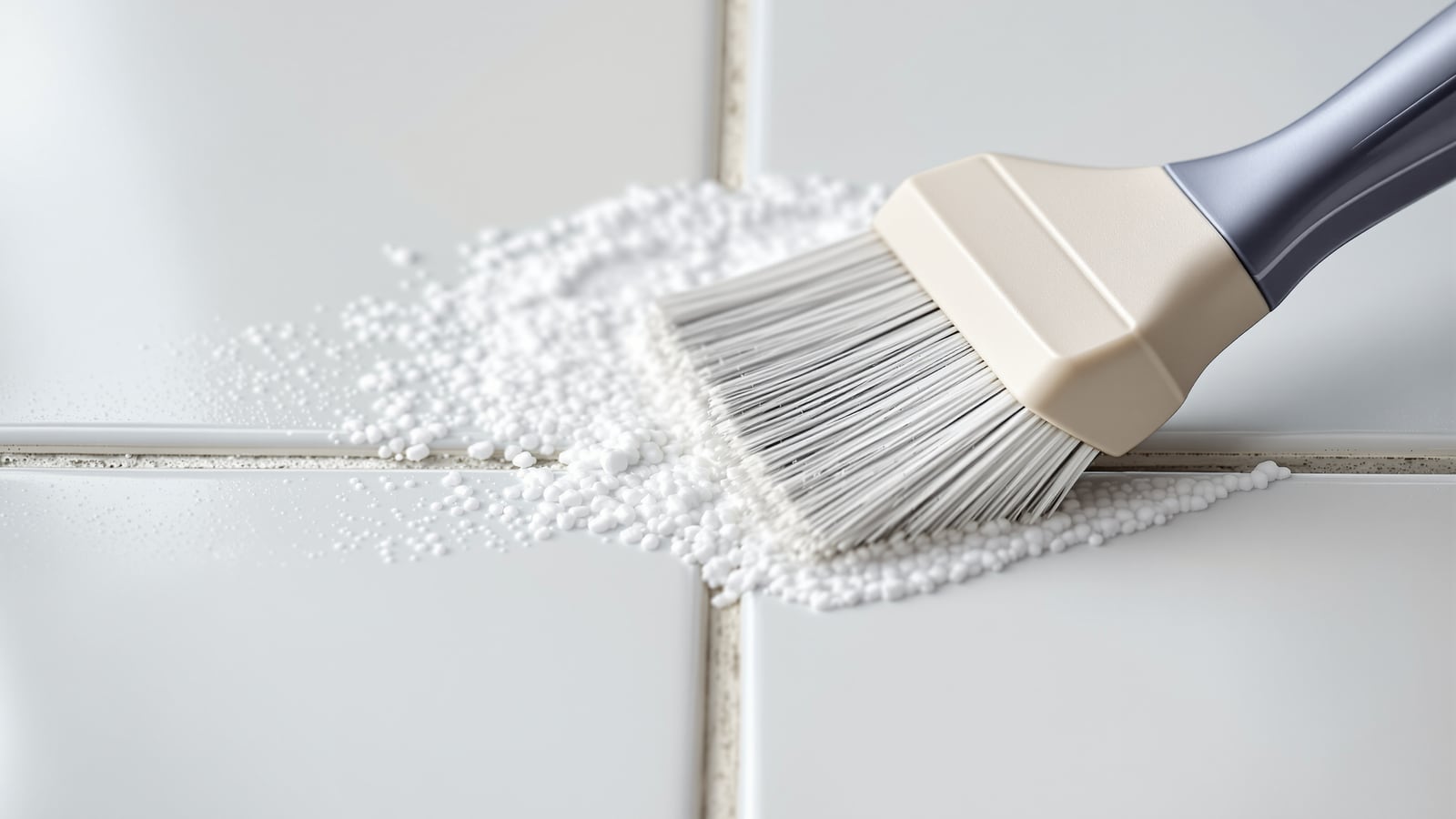
- Baking soda paste (everyday dirt and yellowing). Mix baking soda with a little water into a thick paste, or with a squeeze of dish soap for greasy scum. Spread it along the grout lines, leave ten minutes, then scrub. This is the safe workhorse for most Indian bathrooms and will not harm any tile.
- Baking soda then white vinegar (stubborn grey). Apply the paste, then spray white vinegar over it — it will fizz. Let it foam for a few minutes and scrub. The mild acetic acid in vinegar also cuts the hard-water film. Do not use vinegar on grout set against marble, granite or other natural stone tiles — acid etches stone; see the bathroom tile cleaning guide for stone-safe cleaners.
- Oxygen bleach (mould, deep stains and whitening). A powder such as sodium percarbonate (sold as oxygen bleach or "colour-safe" bleach) mixed into a paste with warm water is the best all-rounder for blackened, mouldy grout. Spread it on, leave fifteen to thirty minutes, scrub and rinse. It whitens and kills mould without the harsh fumes of chlorine bleach.
- Diluted chlorine bleach (last resort for black mould). For deeply mould-stained grout, a diluted household bleach solution works, but ventilate hard and rinse thoroughly. Chlorine bleach can weaken cement grout over time, so treat it as an occasional rescue, not a routine.
Never mix bleach with vinegar, acid cleaners or Harpic-type toilet cleaners. Chlorine plus acid releases toxic chlorine gas. Pick one method, rinse fully, and only then consider another.
After any method, rinse the grout well and dry it — leftover cleaner and moisture invite the next round of scum and mould.
The brush technique
The tool matters more than the chemical. A cloth wipes the tile face but skips over the recessed grout; you need bristles that reach into the joint.
- Use a stiff nylon grout brush (the narrow, angled kind) or an old toothbrush for tight lines. Avoid metal brushes and steel wool — they scratch tile glaze and gouge grout.
- Scrub along the line, then across it, in short firm strokes. The back-and-forth across the joint lifts dirt the lengthwise stroke loosens.
- Let the cleaner dwell before scrubbing — ten to thirty minutes doing the chemical work saves half your effort.
- For a whole bathroom, an old electric toothbrush or a drill-mounted nylon brush cuts the labour dramatically. Keep the speed low so you do not fling paste everywhere.
- Rinse as you go so you can see the true colour and are not just smearing grey slurry around.
| Method | Best for | Dwell time | Caution |
|---|---|---|---|
| Baking soda paste | Everyday dirt, yellowing | 10 min | Safe on all tile |
| Baking soda + white vinegar | Grey scum, light limescale | 5 min | Not on marble/granite grout |
| Oxygen bleach paste | Mould, whitening, deep stains | 15–30 min | Ventilate; wear gloves |
| Diluted chlorine bleach | Black mould, last resort | 5–10 min | Never mix with acid; weakens grout |
| Steam cleaner | Chemical-free deep clean | — | Do not over-soak old grout |
Reseal, regrout, or switch to epoxy
Cleaning restores colour; it does not stop the grout re-absorbing dirt next month. What you do after cleaning decides how long it stays clean.
- Reseal (do this after every deep clean of cement grout). Once the grout is clean and fully dry, brush on a penetrating grout sealer (silicone or fluoropolymer based, ₹300–₹800 for a small bottle). It soaks in and makes the grout water-repellent so dirt, minerals and mould sit on top and wipe away. Reseal cement grout once or twice a year — it is the single highest-value hour you can spend on a tiled bathroom.
- Regrout (when the grout is failing, not just dirty). If the grout is cracked, crumbling, powdery, missing in patches, or so deeply stained that no method touches it, rake out the old grout with a grout saw or carbide scraper and apply fresh grout. A skilled tiler in India charges roughly ₹20–₹50 per running foot, or a few thousand rupees for a standard bathroom. Regrout when more than a small area has failed — spot repairs rarely colour-match.
- Switch to epoxy grout (the permanent fix). Epoxy grout (resin plus hardener, no cement) is non-porous, stain-proof and mould-resistant — it never soaks up water, so it does not go black and never needs sealing. It costs more (₹120–₹300 per kg versus ₹15–₹40 for cement grout) and is fussier to apply, but in a wet shower or a bathroom you are tired of scrubbing, re-grouting in epoxy ends the problem for good. It is the same grade recommended for constantly-wet shower bases.
For persistent black speckling that returns within weeks of cleaning, the real problem is usually moisture and poor airflow, not the grout — fix the ventilation and dry the room, as the bathroom mould removal guide explains, or the mould simply regrows on whatever you install.
How often to clean grout
A light routine beats an annual heroic scrub. The less scum you let build up, the less mould has to feed on.
| Task | Frequency | Why |
|---|---|---|
| Wipe/squeegee tiles and joints dry | Daily / after showers | Removes the water film mould needs |
| Run exhaust fan 15–20 min | Every shower | Drops humidity, starves mould |
| Quick grout scrub in wet zones | Weekly | Stops scum turning to stain |
| Deep clean all grout (oxygen bleach) | Every 2–3 months | Resets colour before it ingrains |
| Reseal cement grout | Every 6–12 months | Keeps dirt and mould on the surface |
| Inspect and spot-repair grout | Yearly | Catch cracks before water gets behind |
Keeping grout dry is 80 percent of keeping it clean. A ₹150 squeegee used after each shower and a working exhaust fan will do more than any cleaner. When you do reach the point of scrubbing, match the method to the cause, seal it afterwards, and if you are still fighting the same black lines every season, switch that wet zone to epoxy and move on.
References
- Grout and sealer manufacturer care guidance — application, curing and cleaning instructions from tile-adhesive and grout brands (for example Roff/Pidilite, MYK Laticrete, Weber) supplied on the product pack.
- IS 15477 — Specification for laying of ceramic tiles using adhesives (relevant to grout joints and workmanship).
- National Building Code of India (NBC 2016), Part 9 — plumbing and sanitation guidance relevant to wet-area finishes and ventilation.
- Epoxy grout technical datasheets — manufacturer specifications for stain resistance, chemical resistance and mixing ratios.
Export this guide
Related Guides — Deep-dive reading
How to Clean Bathroom Tiles (India): Shine, Hard-Water Film & Soap Scum
A practical, India-first routine for cleaning bathroom tiles and keeping them glossy — the daily squeegee habit, weekly wash, monthly deep clean, and the safe cleaner for each tile type, including the golden rule that natural stone must never meet acid.
BathroomsGrout Cleaning and Whitening India: Why Grout Turns Yellow or Black and How to Restore It
Why porous cement grout yellows, stains and grows mould in Indian homes, plus the cleaning methods, grout whitener pens, regrouting and epoxy upgrades that actually restore white joints and keep them clean.
Flooring & SurfacesBathroom Cleaning India: The Complete Cleaning & Upkeep Guide (Daily, Weekly, Monthly)
The pillar guide to keeping an Indian bathroom clean — a daily/weekly/monthly/annual schedule, the right cleaner for every surface (tiles, grout, glass, chrome, sanitaryware, acrylic), safe DIY mixes, what you must never mix, the hard-water routine, and the 5-minute daily wipe that prevents most problems.
BathroomsRelated Tools — Try Free
Cross-Ventilation Analyzer
Estimate airflow and air changes per hour (ACH) from room size, window areas, layout, and local wind — with NBC 2016 Part 8 compliance check.
Ventilation CalculatorWindow Cleaning Cost Calculator
Estimate professional window cleaning cost per visit and per year by access and frequency.
Window CalculatorWindow Size Calculator
Get the right window size, glazing area and openable area for any room using NBC daylight rules.
Window Tool