
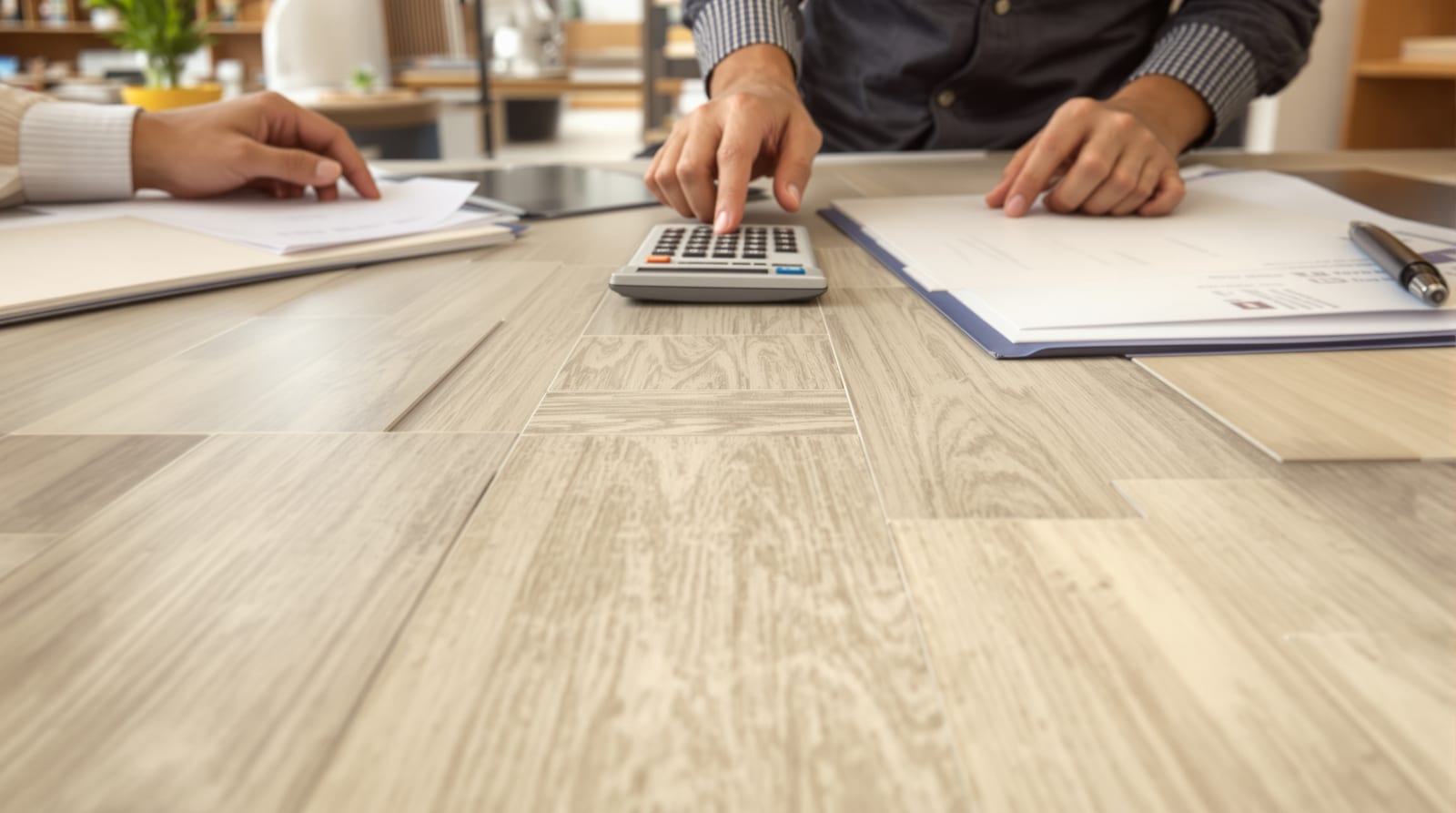
GST on Tiles, Marble & Granite in India: Flooring GST Rates, HSN Codes & Billing Guide (2026)
What GST you actually pay on tiles, stone, sand, cement, adhesive and laying labour — and why a proper GST invoice protects your warranty, your money and (for businesses) your input credit.
Almost every rupee of a flooring job carries a tax tail, and the way that tax is shown — or hidden — on your bill tells you a lot about who you are dealing with. The dealer who quotes one price "with bill" and a cheaper one "without bill" is offering you a discount that can cost far more than it saves: a lost warranty, no recourse if the lot is defective, and, for a business buyer, the input credit you were entitled to claim. This guide explains exactly what GST you pay on tiles, marble, granite, sand, cement, adhesive and laying labour, why you should always insist on a proper GST invoice, and how to read one so you are not quietly overcharged.
The GST rates on flooring, item by item
GST on building materials is not one flat number — it varies sharply by material, and on stone it even changes depending on whether you buy a rough block or a finished slab. Getting this wrong is how homeowners overpay, and how some vendors slip an extra few percent onto the bill hoping nobody checks. The table below is the working reference for a 2026 flooring purchase. Rates are indicative and can change with GST Council notifications, so confirm the current rate when you buy.
| Item | GST rate | Typical HSN | Notes |
|---|---|---|---|
| Ceramic glazed wall & floor tiles | 18% | 6907 / 6908 | The standard rate for almost all home tiles |
| Vitrified / porcelain tiles (GVT, PGVT, double-charged) | 18% | 6907 | Same 18% as ceramic; the tile type does not change the rate |
| Marble & granite ROUGH blocks | 12% | 2515 / 2516 | Lower rate applies only to crude/rough blocks |
| Marble SLABS, tiles & cut-to-size | 18% | 2515 / 6802 | Worked/polished stone is taxed at 18%, not 12% |
| Granite slabs, tiles & cut-to-size | 18% | 2516 / 6802 | Same as marble — finished stone is 18% |
| Natural sand (for mortar bed) | 5% | 2505 | Lower rate; note river vs manufactured sand both ~5% |
| Cement (OPC/PPC) | 28% | 2523 | The highest slab — a real cost in a mortar-bed job |
| Tile adhesive & grout | 18% | 3214 / 3824 | Cementitious and epoxy adhesives/grouts |
| Flooring laying LABOUR / works contract | 18% | 9954 (SAC) | Service code; labour-only or supply-and-fix |
| Wooden / laminate / vinyl flooring | 18% | 4411 / 4418 / 3918 | Most resilient and engineered floors sit at 18% |
The single most common confusion is stone. A trader importing a crude marble block pays 12% GST on the block (HSN 2515/2516), but the moment that block is sawn into slabs, polished and cut to size for your floor, it is "worked monumental or building stone" and attracts 18%. So when a dealer quotes you finished marble slabs at "12% GST", either they are mistaken or they are quietly pocketing the difference — the slabs you take home are an 18% item. For the wider stone-buying discipline this sits inside, see how to buy marble in India and how to buy granite in India.
Reading the GST breakup on a real flooring bill
It helps to see how these rates stack on an actual invoice. The diagram below breaks up a simple supply-and-laying bill for a vitrified-tile floor, separating the material, the consumables, the labour and the tax so you can see where each rupee goes.
The point of seeing it laid out is that a genuine invoice will name each item, give its HSN/SAC code, show the rate against it, and total the GST separately — and split it as CGST plus SGST within your state, or IGST for an inter-state supply. A scrawled "lumpsum flooring — Rs X" on a plain memo gives you none of that, and is your first clue that no tax may actually be reaching the government.
Why you should always insist on a proper GST invoice
A GST invoice is not paperwork for its own sake — it is the document that gives every later claim its legs. Without it you have nothing to fall back on. With it, you hold the vendor and the manufacturer to their word.
There are four concrete reasons it matters. First, warranty: vitrified-tile surface warranties (often 10 to 15 years from brands like Kajaria, Somany, Nitco, Johnson, Orient Bell, Simpolo or Varmora) are almost always conditional on a valid purchase invoice showing the dealer, the product and the date. No bill, no warranty claim — the flooring warranty guide for India covers exactly what these warranties cover and how to register. Second, genuineness: a GST invoice naming the brand, model and batch is your proof you received first-quality stock and not relabelled "seconds" — pair it with the checks in spotting fake tiles in India. Third, input tax credit: if you are buying for a shop, office, rented property or any registered business, the GST on materials and works contract can often be claimed back as input credit — but only against a proper tax invoice carrying your GSTIN. Fourth, recourse: a billed transaction is a legally recorded one, so if the lot is defective, short-delivered or wrongly charged, you have a paper trail for a refund or a consumer complaint.
The cash-versus-bill price game — and what it really costs
The most familiar trick at the dealer's counter is the two-price quote: a "with bill" price and a lower "cash, no bill" price, the gap roughly the size of the GST. The cheaper number is tempting, but it is a false economy, and on a flooring purchase the stakes are higher than on a small buy.
Here is what the discount actually buys you. You lose the manufacturer's warranty entirely, because there is no valid invoice to register. You lose any proof of what you bought, so if the calibre or shade lot is wrong, or the tiles are seconds dressed up as first quality, you have no grounds to return them. You forfeit input credit if you are a business. And you take on a small but real compliance risk yourself, because an unbilled high-value transaction is, by definition, off the books. Set against all that, the GST you "saved" is poor value — especially on a floor meant to last twenty years. The cleaner move is to negotiate the all-in rate down on a fully billed quote, the way the flooring vendor selection guide sets out, rather than chasing a tax-dodge discount.
E-way bills and the transport leg
For tiles and stone moving any meaningful distance — especially inter-state consignments from Morbi in Gujarat or Kishangarh in Rajasthan to your city — GST law requires an e-way bill for goods movements above the value threshold (commonly Rs 50,000). The e-way bill is generated on the GST portal and ties the consignment to a specific invoice, vehicle and route.
For you as the buyer this matters in two ways. It is further proof the supply is genuine and properly billed; and it protects you if the consignment is stopped in transit, because goods moving without a valid e-way bill can be detained and penalised, with delays and disputes landing on whoever is waiting for the floor. When you buy from a distant source — say tiles direct from the Morbi belt covered in the Morbi tiles guide — ask whether the quote includes the e-way bill and a GST invoice, not just the ex-factory rate.
Material supply versus works contract — keep them clear
Flooring is often a mix of goods (the tiles or stone) and a service (laying them). How the vendor structures this changes the tax treatment, and a clear bill keeps it honest.
If you buy the material and hire a separate labour contractor, the material is taxed at its goods rate (18% for tiles, slabs and adhesive) and the laying labour is a works-contract service at 18% under SAC 9954. If instead you take a single supply-and-fix contract, the whole job is typically billed as a works contract at 18%. Either way the headline rate on a tiled or stone floor lands around 18%, but the two routes give different bills, and a transparent vendor will show you which one you are on rather than blending everything into an opaque lumpsum. The checklist below is what a compliant flooring invoice must actually carry.
| Invoice element | What it must show | Why it matters |
|---|---|---|
| Supplier GSTIN & name | Valid 15-digit GSTIN, registered trade name | Confirms the vendor is GST-registered and the tax is real |
| Buyer details | Your name; GSTIN too if you want input credit | No GSTIN on the bill, no input credit for a business |
| Invoice number & date | Unique serial, dated | Anchors warranty, e-way bill and any later claim |
| Item description | Brand, model, size, finish, quantity | Proves first-quality stock, the right calibre and lot |
| HSN / SAC code | e.g. 6907 tiles, 6802 stone, 9954 laying | Wrong code can mean wrong rate — check it |
| GST rate & amount | Rate per line + CGST/SGST or IGST split | Lets you verify you were charged the correct rate |
| Taxable value & total | Pre-tax value and grand total | Separates material, labour and tax cleanly |
Common billing tricks to watch
A few patterns recur often enough to name. Watch for finished marble or granite slabs billed at the 12% block rate while you are charged the price the dealer pretends includes tax — you may be paying for 18% and the bill shows 12%. Watch for a single inflated "lumpsum" with no line items, which hides whether GST was charged at all and on what. Watch for adhesive, grout, skirting and transport quietly added at the end without their own GST lines. Watch for a missing or fake GSTIN — you can verify a GSTIN in seconds on the official GST portal. And watch for the classic bait-and-switch where a low headline tile price is quoted ex-GST, ex-adhesive and ex-laying, so the all-in billed number lands far higher than expected. The fix for all of them is the same: insist on a line-itemised GST invoice and compare quotes on the all-in, fully-taxed number, which is also the core lesson of the flooring buying mistakes guide and the practical steps in how to buy floor tiles in India.
To put real numbers against your own purchase, run the material, adhesive, cement, labour and GST lines through the flooring GST calculator, and sanity-check the underlying rates against flooring cost per square foot in India.
Frequently asked questions
What is the GST rate on tiles in India?
Ceramic and vitrified floor and wall tiles — including glazed, porcelain, GVT, PGVT and double-charged — all attract 18% GST, under HSN 6907/6908. The tile type does not change the rate; whether you buy economy ceramic or premium double-charged vitrified, the GST is 18%. Always confirm the current rate when you buy, as GST Council notifications can revise it.
Is GST on marble and granite 12% or 18%?
Both. Rough, crude marble and granite blocks attract 12% GST (HSN 2515/2516), but once the stone is sawn into slabs, polished and cut to size for your floor, it is worked building stone taxed at 18% (HSN 6802). The finished slabs and tiles you actually lay are an 18% item, so be wary of any dealer quoting 12% on cut-to-size or polished stone.
Why should I insist on a GST invoice for flooring?
Because it protects four things: your manufacturer warranty (which usually requires a valid invoice), proof you got genuine first-quality stock, input tax credit if you are a business with a GSTIN, and legal recourse if the lot is defective or wrongly charged. A "cash, no bill" discount of roughly the GST amount looks cheaper but strips away all of that — a poor trade on a floor meant to last decades.
Do I need an e-way bill when buying tiles or stone?
For consignments above the value threshold (commonly Rs 50,000), especially inter-state movements from hubs like Morbi or Kishangarh, the supplier must generate an e-way bill linking the goods to the invoice and vehicle. Goods moving without a valid e-way bill can be detained and penalised, so ask whether your quote includes a GST invoice and e-way bill, not just the ex-factory rate.
Can I claim GST back on flooring for my business?
If you are GST-registered and the flooring is for business premises — a shop, office or let property — you can often claim the GST on materials and the works-contract labour as input tax credit, reducing your net cost. But only against a proper tax invoice that carries your GSTIN, the correct HSN/SAC codes and a clear GST breakup. Input credit rules have exclusions, so confirm eligibility with your accountant before relying on it.
Export this guide
Related Guides — Deep-dive reading
Tile Flooring Cost in India 2026: ₹/Sq Ft by Tile Type + Installed Price Breakdown
What tile flooring really costs in India in 2026 — material ₹/sq ft for ceramic, vitrified GVT/PGVT, double-charged and porcelain tiles, PLUS the laying cost nobody quotes: tile adhesive vs cement-sand bed, grout, skirting, 5-10% wastage, labour and 18% GST, with a fully worked room example and how to estimate tiles needed.
Flooring & SurfacesDoor GST HSN India 2026: Codes, Rates, Invoice & Tax Guide
GST on doors is 18% across wood, uPVC and metal — here is the HSN code for every door type and why you must insist on a proper tax invoice.
Home Doors & EntrancesHow to Buy Floor Tiles in India: The Complete Buyer's Playbook for Size, Spec, Grade, Quote & Delivery (2026)
From deciding size, finish, PEI and water-absorption group for each room to reading the box spec and ISI mark, matching calibre and lot, spotting seconds, and getting an honest all-in quote.
Flooring & SurfacesRelated Tools — Try Free
Flooring Cost Calculator
Estimate the all-in cost of a floor — material, laying, wastage, skirting and GST — by area and material.
Flooring CalculatorFlooring GST Calculator
Calculate GST and the bill breakup on a flooring purchase — tiles, stone, cement, adhesive and laying labour.
Flooring CalculatorContractor Checklist Generator
Generate a customised 60-question checklist to ask your contractor across 8 work categories.
Checklist Generator