
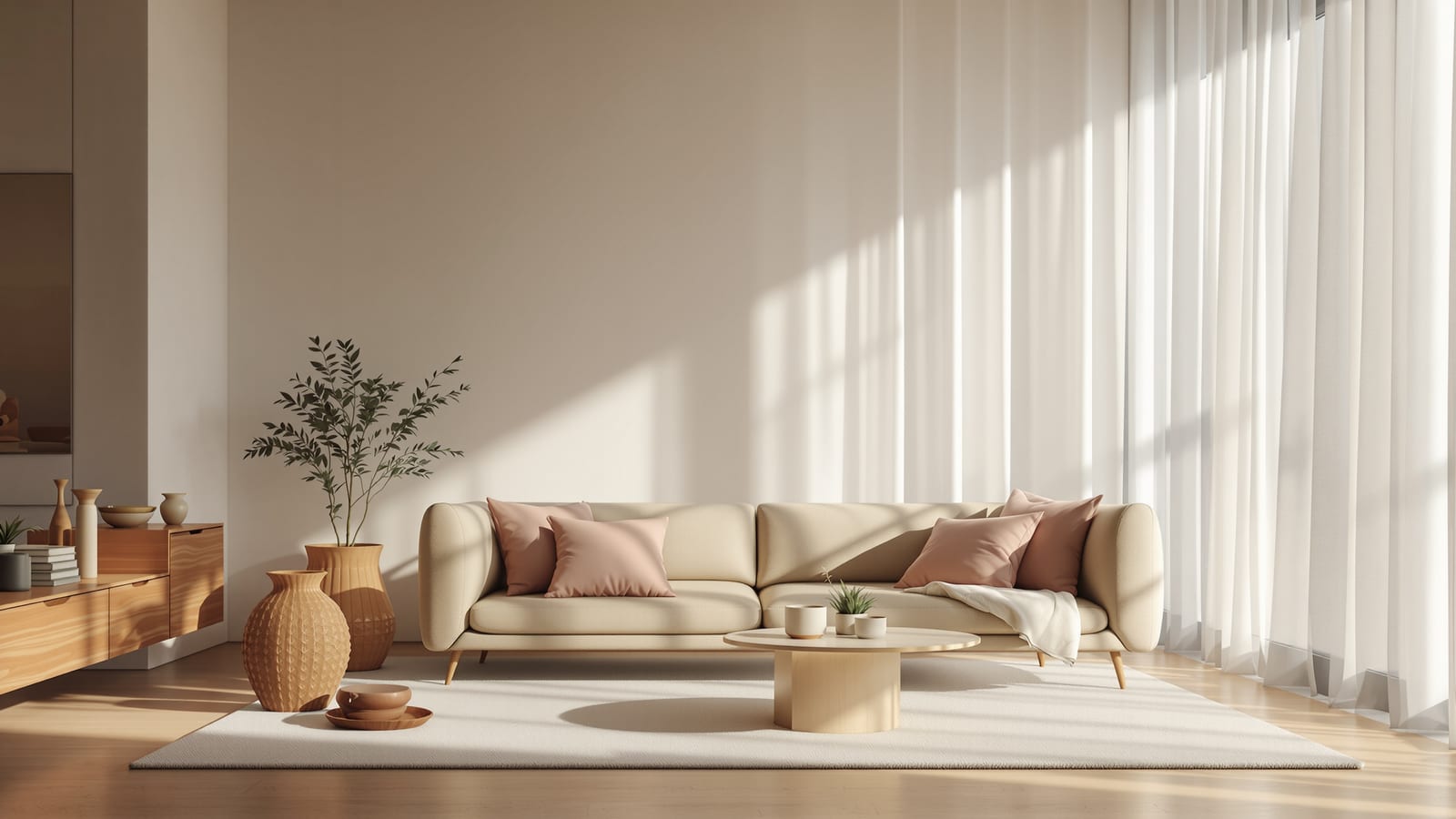
Contemporary Indian Curtain Design (2026)
The modern-Indian look decoded — handloom, block print, ikat and khadi reinterpreted with clean contemporary lines, jewel-and-earth tones, brass and wood hardware, and craft sheers layered with modern dim-outs. Idea-led, practical and free of kitsch.
There is a version of the Indian curtain most of us grew up with: heavy, dark, busy with gold-threaded print, swagged and tasselled, hung too short and too narrow over a frilly valance. It was warm and well-meaning and it dated badly. The contemporary Indian look is the quiet correction. It keeps everything that was genuinely beautiful about our textile heritage — the hand of a handloom weave, the irregular charm of a block print, the geometry of an ikat, the honesty of khadi — and it strips away the kitsch. The cloth still comes from a craft tradition. The way it hangs comes from modern restraint. That marriage is the whole idea.
This guide is idea-led but practical. It walks the moves that define indian curtain design for 2026 — which textiles to reach for, which colours, which hardware, and crucially how to layer craft against modern function — then grounds each one in how to specify it. For the full A-to-Z of types, fabrics, pleats and tracks underneath these ideas, the complete curtain guide for Indian homes is the parent reference.
Contemporary Indian is not "ethnic decor". It is craft cloth hung with modern discipline — one beautiful weave, one restrained colour, clean full-height lines, and hardware that whispers. Subtract the gold thread and the swag, and the heritage finally reads as luxury.
Start with the cloth: India's living textile traditions
The single decision that makes a curtain read as contemporary Indian rather than generic is the fabric, and India gives you a deep bench to choose from. The trick is to pick one craft and let it lead, rather than mixing five.
| Textile | Where it is from | Character | Best as |
|---|---|---|---|
| Handloom cotton | Tamil Nadu, West Bengal, the South | Soft, matte, slightly irregular weave | Everyday main curtain, sheers |
| Khadi | Pan-India hand-spun | Honest, textured, breathable | Casual sheers, layering cloth |
| Block print (Bagru, Dabu, Sanganeri) | Rajasthan | Hand-stamped motifs, indigo and madder | Statement living-room panel |
| Ikat | Telangana (Pochampally), Odisha, Gujarat (Patola) | Blurred-edge woven geometry | One accent window, restrained |
| Mangalgiri / South cotton | Andhra Pradesh | Fine, crisp, subtle stripe or zari edge | Tailored modern drapes |
| Linen-cotton blend | Mill-woven | Relaxed, behaves well in humidity | The all-rounder ground |
The restraint rule matters here: choose one craft cloth as the hero and keep its companions plain. A block-print main curtain wants a plain handloom or khadi sheer behind it, not a second pattern. For the deeper, fibre-by-fibre comparison of how each of these behaves in Indian humidity and sun, the curtain fabric guide for Indian homes is the reference.
Colour: jewel and earth, held in check
Contemporary Indian colour is where the heritage shows most, but it succeeds only with discipline. Two palettes dominate the well-designed 2026 Indian room:
- Earth tones — terracotta, rust, ochre, clay, mustard, olive, undyed beige. These echo our soil, our spices and our vernacular walls, and they recede gracefully against neutral interiors.
- Jewel tones — deep indigo, emerald, sapphire, garnet, aubergine. Drawn from our textile dyes, they read rich rather than loud when used as a single grounded accent in one room, against quiet walls.
The kitsch trap is the multi-colour, high-contrast, gold-shot curtain. The contemporary move is to take one of these saturated tones and let it carry the room, keeping everything around it calm. A tonal pairing — a rust curtain against a sand wall, an indigo against off-white — looks far more expensive than a riot of colour. For matching the exact tone to your walls, flooring and natural light, the curtain colour selection guide walks the method.
Layering: craft sheer in front, modern dim-out behind
Here is the most useful idea in the whole look, and the one that quietly solves a real problem. Hang two layers: a craft sheer in front — a fine khadi, an open handloom voile, a Mangalgiri cotton — for daytime softness, light filtering and that handmade texture; and a plain, modern dim-out or blackout behind it for night privacy, sleep and heat control.
This lets the heritage do what it is good at (texture, light, character by day) without asking it to do what it is bad at (blocking the brutal Indian afternoon sun or making a bedroom truly dark). The block-printed or handloom layer stays the star you see; the technical dim-out hides behind it and earns its keep at night. Keep both layers in the same colour family and both full-height, so the window reads as one composition. A double or parallel track makes this clean — the broader method is in the window treatments cluster and the modern execution in the modern curtain design guide.
Clean lines: the modern half of the marriage
The reason older Indian curtains dated is the way they hung, not the cloth. Fix the lines and even a traditional block print looks current:
- Floor-to-ceiling drops — start the curtain high, near the ceiling, and end it at the floor, whatever the window height. One unbroken vertical sheet replaces the short-and-frilly look instantly.
- Generous fullness — around 2 times the track width, so the cloth falls in proper folds rather than hanging flat and skimpy.
- No valance, no swag, no tassels — the single most dating elements. A clean heading and a slim rod or hidden track replace all of them.
- A restrained heading — a pinch pleat for a tailored look, a pencil pleat for an easy one, or a wave fold on a track for the most contemporary fall. Skip the rod-pocket-and-ruffle.
Get the height and fullness right and the craft cloth finally reads as quiet luxury instead of nostalgia.
Hardware: brass and wood, never chrome-and-gold
The finishing detail that ties contemporary Indian together is the hardware, and it has a clear vocabulary:
- Brass — the signature. Aged, antique or matte-brushed brass rods and finials feel warm, handmade and rooted, and they sing against earth and jewel tones. Avoid bright lacquered gold, which reads cheap.
- Wood — turned teak, walnut or dark stained rods bring craft warmth and suit handloom and khadi beautifully; pair with simple wooden or brass finials.
- Slim and simple finials — a plain ball, a turned wood end or a small brass cap. The ornate scroll-and-spear finial is part of the kitsch that dates a room.
- Hidden ceiling tracks — for the most modern, architectural version, drop the visible rod entirely and let the craft cloth fall from a recessed pocket.
The rule: hardware should feel like an artisan object, not a hardware-store afterthought. Matte brass and honest wood are the contemporary Indian default.
Avoiding kitsch: the honest line between heritage and costume
The whole look lives or dies on one judgement — keeping it rooted without tipping into theme-park "Indian decor". A few honest guardrails:
- One craft, one accent colour, per room. Mixing block print, ikat and zari in the same window is the fastest route to busy.
- Earn the saturation. A single deep-jewel curtain against calm walls reads luxurious; the same colour everywhere reads loud.
- Skip the gold thread, swag and tassel. These three elements date a room faster than anything else.
- Let imperfection be the point. A handloom slub, a block-print misregister, a khadi irregularity — these are signs of the hand, not flaws to hide. Machine-perfect "ethnic print" polyester is the thing to avoid.
What the look costs, honestly
Authentic craft cloth carries a real premium over mill fabric, and that is the trade you are making. Treat these as honest directions, not quotes:
- Handloom, block print and ikat cost meaningfully more per metre than mass polyester, because a person wove or stamped them. Genuine handloom GI-tagged cloth (Pochampally ikat, Sanganeri print) sits at the higher end.
- Floor-to-ceiling drops at 2 times fullness use noticeably more of that pricier cloth, so the height and fullness, not the print, drive the bill.
- Two layers roughly means two sets of fabric and a double track.
- Brass and solid-wood hardware cost more than basic steel rods, but they are the detail that makes everything above look intentional.
The curtain cost calculator sizes the fabric from your drop, width and pleat and gives a per-window price in seconds, so you can see exactly what the handloom, full-height, two-layer look adds before you commit. A quietly reassuring note: because authentic craft cottons and khadi are natural, breathable and often regionally made, the contemporary Indian look also tends to be the sustainable one — the sustainable curtain fabrics guide goes deeper on that overlap.
Honest caveats
- Real handloom and block print fade and relax. Natural dyes soften over years in Indian UV; that patina is part of the character, but choose fade-resistant or lined cloth on harsh west and south windows.
- Khadi and pure cotton crease. It is the honest, handmade look — but if you want crisp folds, a linen-cotton blend behaves better in humidity.
- "Ethnic" does not mean authentic. A lot of printed polyester imitates these crafts cheaply; if rooting it in real heritage matters to you, buy genuine handloom and verify the source.
- Cultural and Vastu colour preferences are guidance, not rules. Follow them if they matter to you, but never let a colour choice block light or heat control on a hard window.
How to get the contemporary Indian look, in five moves
1. Pick one craft cloth as the hero — a handloom, a block print, an ikat or khadi — and keep its companions plain.
2. Choose one earth or jewel tone, tonal to your walls, and let it carry the room.
3. Layer a craft sheer in front of a modern dim-out behind, both full-height on a double track.
4. Hang it with clean modern lines — floor-to-ceiling, 2 times fullness, no valance, swag or tassel.
5. Finish on brass or wood hardware, slim and simple, or a hidden ceiling track.
Do those five and the heritage finally reads as the luxury it always was — rooted, restrained and unmistakably contemporary.
Design your windows the contemporary Indian way with Studio Matrx. Find the right craft-and-modern treatment for each window with the window treatment selector, size the fabric and price the handloom, full-height, two-layer look with the curtain cost calculator, and start from the complete curtain guide for Indian homes for the full system.
Export this guide
Related Guides — Deep-dive reading
Curtain & Window Treatment Trends 2026 (India)
Wave-fold clean lines, ceiling tracks and floor-to-ceiling drops, natural textured fabrics, earthy and jewel tones, mainstream motorisation, layered sheers and considered Indian craft — what's in for 2026, with honest trend-versus-timeless guidance.
Window TreatmentsMinimalist Curtain Design: Quiet, Clean Windows (India 2026)
Restraint as the whole look — one clean layer, wave folds, hidden tracks and tonal neutrals — plus the two things minimalism quietly trades away and how to solve them without spoiling the calm.
Window TreatmentsModern Curtain Design Ideas for Indian Homes (2026)
The contemporary look decoded — wave fold, floor-to-ceiling drops, hidden ceiling tracks, restrained neutral palettes, sheer-plus-dim-out layering, motorisation and the 2026 trend directions from Japandi calm to contemporary Indian.
Window TreatmentsRelated Tools — Try Free
Curtain Cost Calculator
Get the fabric metres you need plus the total curtain cost by window size, fabric, pleat, lining and hardware.
Curtain CalculatorWindow Treatment Selector
Curtains, blinds or a layered system? Answer five questions about your room and get a specific recommendation.
SelectorCross-Ventilation Analyzer
Estimate airflow and air changes per hour (ACH) from room size, window areas, layout, and local wind — with NBC 2016 Part 8 compliance check.
Ventilation Calculator