
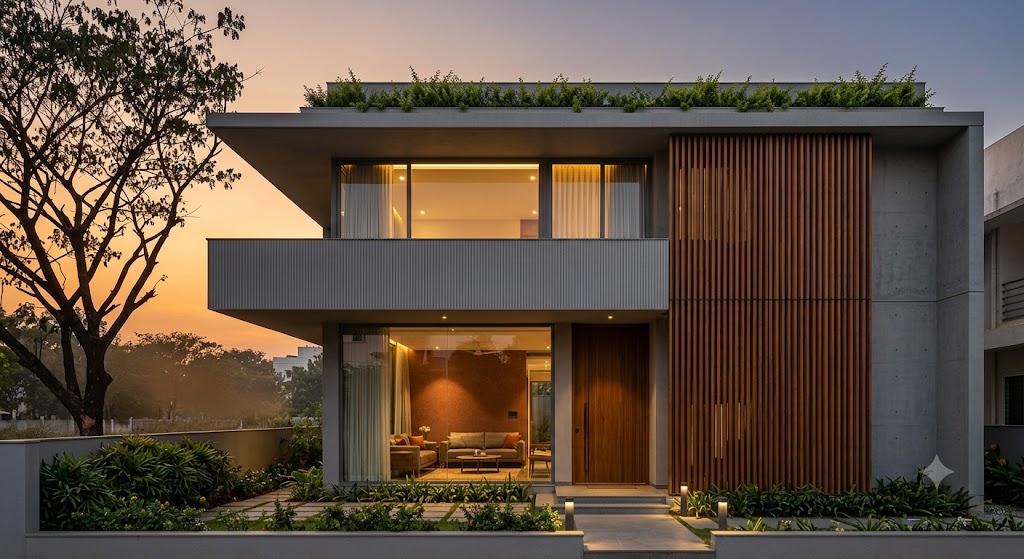
Contemporary House Elevation — The 2026 Indian Vocabulary
Eight Signature Elements, Five Fenestration Patterns, Five Roofline Strategies, Climate Adaptation & Four Cost Bands
The word contemporary is the most-used and least-understood label in 2026 Indian residential architecture. Builders advertise it on every brochure, buyers ask for it without being able to define it, and architects spend the first concept meeting trying to extract what the client actually means. The vocabulary exists — it has clear signature elements, a measurable climate response, an established cost range, and a roster of practitioners who have defined it. This guide is the working specification.
Two clarifications first. "Contemporary" is not "modern." Modern with a capital M refers to the doctrinal architectural movement that began in 1920s Europe (Bauhaus, ICRC, the International Style) and ran through the 1970s. It carried strict ideological commitments — function only, ornament forbidden, machine-aesthetic. Contemporary, in contrast, refers to now — the post-2000 vocabulary that has pulled freely from modernism, regional vernacular, craft revival, and global eclectic movements. A contemporary Indian house will quote modernism's clean lines but it will also use jaali, teak, Dholpur sandstone, and warm earthen palettes — all forbidden in strict modernism.
The second clarification: contemporary in India has a climate-first commitment that modernist orthodoxy mostly lacked. The early modernist villas in India (Le Corbusier's Chandigarh houses, the early SPA Delhi work) suffered notoriously from poor climate response. Contemporary Indian practice has rebuilt the vocabulary around passive design, deep shading, cross-ventilation, and material thermal mass — turning climate response into the central design feature rather than an afterthought.
A contemporary Indian house elevation in 2026 reads as: clean geometry + warm materials + visible climate response. Get those three right and the elevation will date well for 30 years. Miss any one and it will read as a renovation target by 2032.
This guide covers the eight signature vocabulary elements, the five fenestration patterns mapped to room and orientation, the five roofline strategies, the four-zone climate adaptation matrix, the four cost bands, the Indian designers who have defined the movement, the common mistakes, and a complete pre-construction checklist.
The Distinction That Matters — Modern vs Contemporary
The vocabulary distinction is not pedantic. It determines what ornament is admissible, what materials read as authentic, and what the client actually wants when they say "contemporary." The table below separates the two systematically.
| Dimension | Modern (Modernist movement) | Contemporary (now, post-2000) |
|---|---|---|
| Era | 1920 – 1970 (Bauhaus, ICRC) | 2000 – present |
| Style commitment | Doctrinal — function only | Eclectic — pulls from many |
| Ornament | Forbidden ("less is more") | Restrained but allowed |
| Materials | Steel, glass, RCC | Adds wood, stone, brick, ACP |
| Climate response | Largely ignored in early period | Climate-first by default |
| Geometry | Pure boxes, planar | Asymmetric, layered, cantilevered |
| Window strategy | Curtain wall or strip glazing | Mixed — picture, ribbon, slot, clerestory |
| India example | Chandigarh Secretariat (Corbusier) | A villa in Sadahalli or Lodhi Estate today |
The translation rule for client briefings: when an Indian client says "contemporary," they typically mean clean lines + warmth, not Modernist orthodoxy. They want the visual discipline of modernism but with admissible jaali, teak, stone, and earthen palette. Calibrate the brief to that interpretation, not to a doctrinaire reading of either label.
The Eight Signature Vocabulary Elements
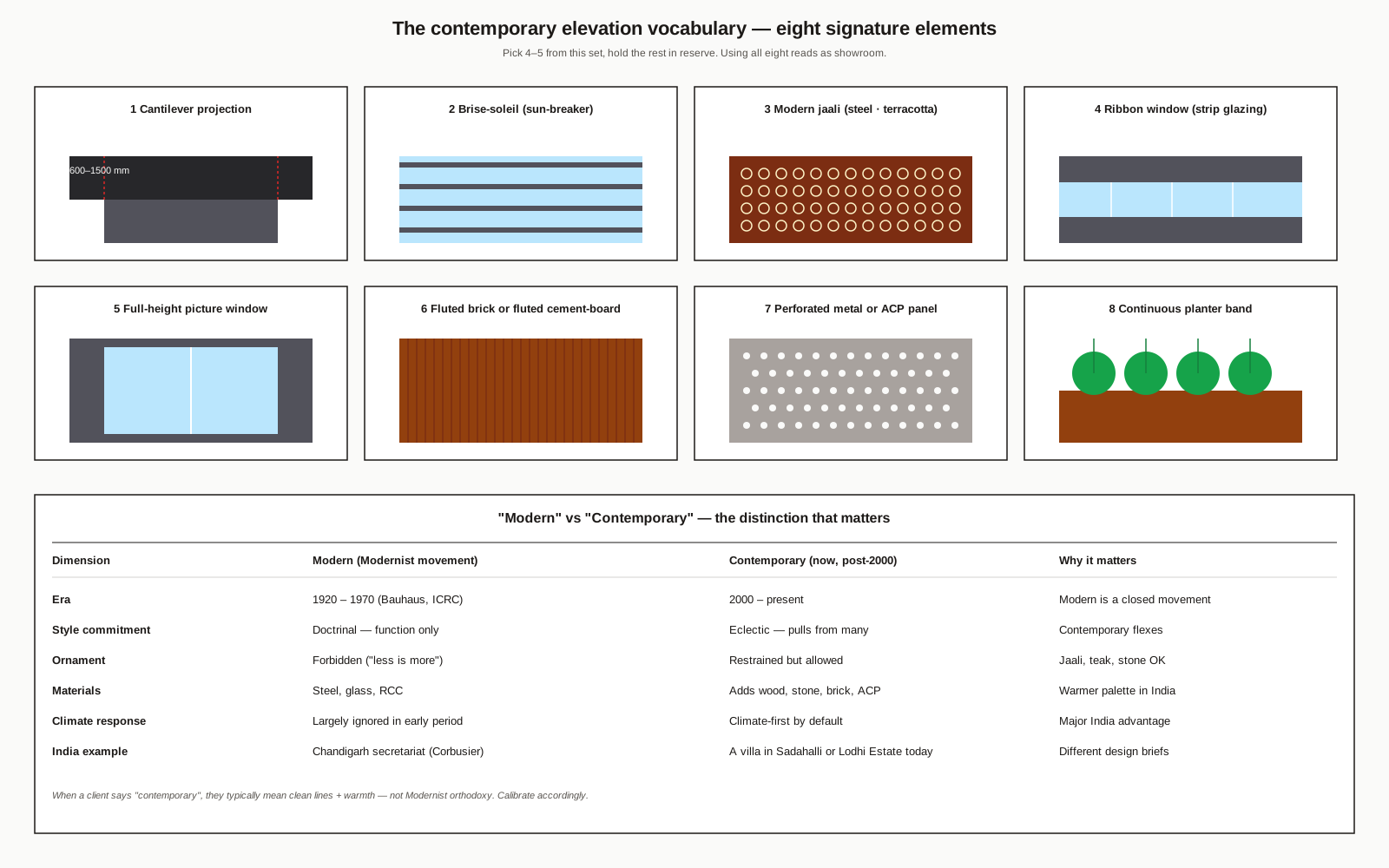
The eight elements above form the active vocabulary of contemporary Indian residential elevations. A contemporary house typically deploys four to five of these; using all eight reads as a builders' showroom.
1. Cantilever Projection
The most-recognisable contemporary move. The first floor (or terrace, or porch) projects 600 to 1,500 mm beyond the floor below, supported by the structural transfer in the slab. Visually creates lift — the upper mass appears to float — and functionally provides shade for the floor below. Typical span 4 to 6 m; structural transfer required above 1.2 m projection (always coordinate with structural engineer).
2. Brise-Soleil (Sun-Breaker)
Le Corbusier's invention from 1930s; remains the most-effective horizontal shading device. A set of horizontal louvres, typically 200 to 400 mm deep at 250 mm vertical spacing, projecting from the facade. Cuts summer sun (high angle, intercepted) while admitting winter sun (low angle, slips below) on a south-facing facade. Modern executions use aluminium, FRP, or even concrete fins.
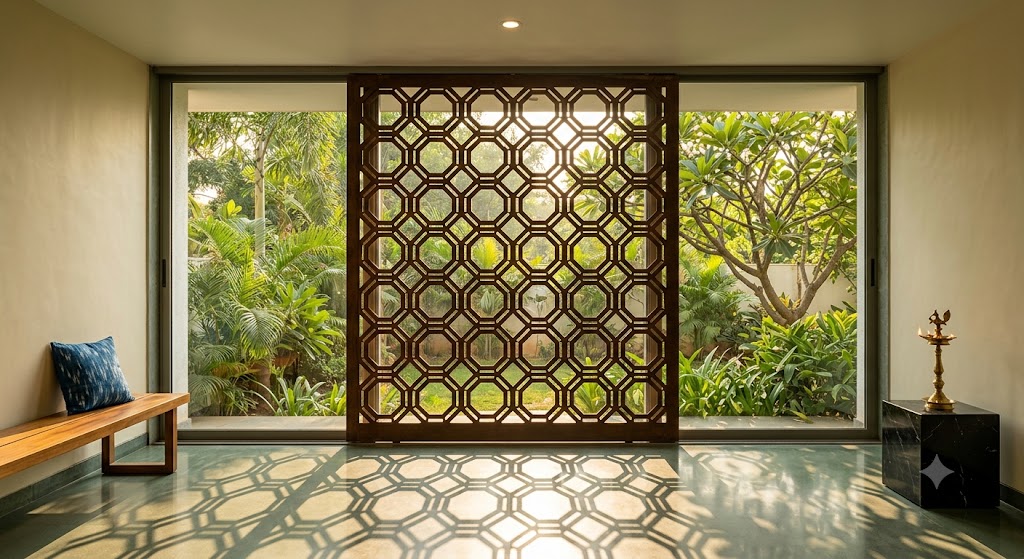
3. Modern Jaali
The Indian jaali — perforated screen — reinterpreted in contemporary materials. Traditional carved sandstone jaali is now joined by terracotta jaali (Studio Lotus pattern), CNC-cut steel jaali, perforated metal screens, and even cast-glass jaali. Function is unchanged: filter light, frame view, manage privacy, cool the air through Venturi cross-flow. A contemporary jaali costs ₹ 1,800 to ₹ 4,500 per sq ft installed.
4. Ribbon Window
A horizontal strip of glazing 600 to 900 mm tall, running the full width of a bedroom or kitchen. The "strip glazing" of early modernism, here used for the first-floor bedroom band — a continuous line of equal-height windows reads as one continuous element rather than punched openings. Easiest to shade with a single horizontal chajja.
5. Picture Window
Full-height, frameless-feel glazing for the formal living room or library. Typical size 2.4 × 2.4 m or 3.0 × 2.7 m. The picture window is the statement opening — it requires SHGC ≤ 0.35 spec on the glass, 600 mm chajja overhead (south orientation), and views beyond the compound. A picture window with no view is a daylight panel; a picture window with a thoughtful landscape is the elevation's hero.
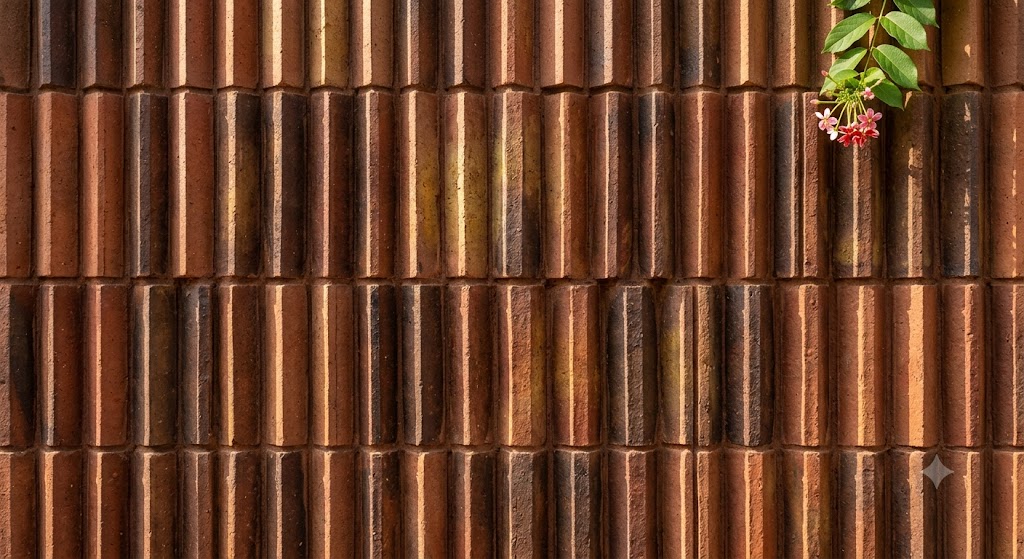
6. Fluted Brick or Fluted Cement-Board
The signature contemporary material of 2020–2026. A vertical fluted profile — either custom-fired clay brick (Wienerberger, Fosroc) or fluted cement-board (Equitone Tectiva fluted, Eternit) — creates a textured single-material band that catches grazing light dramatically. The fluted brick band typically runs the full height of a stair tower or as a horizontal accent band. Cost: ₹ 240 – 520 per sq ft installed.
7. Perforated Metal or ACP Panel
ACP (aluminium composite panel) and perforated metal screens form the "tech" face of contemporary Indian work. ACP carries cost-efficiency (₹ 280 – 450 / sft); perforated metal carries privacy + ventilation. Use ACP sparingly — pure-ACP elevations read as commercial signage; ACP as 15–20% accent reads as contemporary.
8. Continuous Planter Band
A horizontal planter integrated into the parapet line or the first-floor cantilever edge — 600 mm deep × continuous length, drip-irrigated, planted with creepers (madhumalti) or low shrubs (duranta). Adds horizontal green line, softens facade, and signals biophilic design. Maintenance is non-trivial (drip irrigation + monthly trim); plan the back-of-house water line at carcassing stage.
The Five-Element Rule
Pick four or five from the eight. The hierarchy:
- One structural move (cantilever)
- One shading device (brise-soleil OR deep chajja OR jaali — pick one)
- One material band (fluted brick OR cement-board OR ACP — pick one)
- One fenestration signature (ribbon OR picture window OR strip pattern)
- One green element (planter band OR vertical garden OR canopy tree)
Using all eight competes for the viewer's attention; using only two reads as under-articulated.
Five Fenestration Patterns Mapped to Room and Orientation
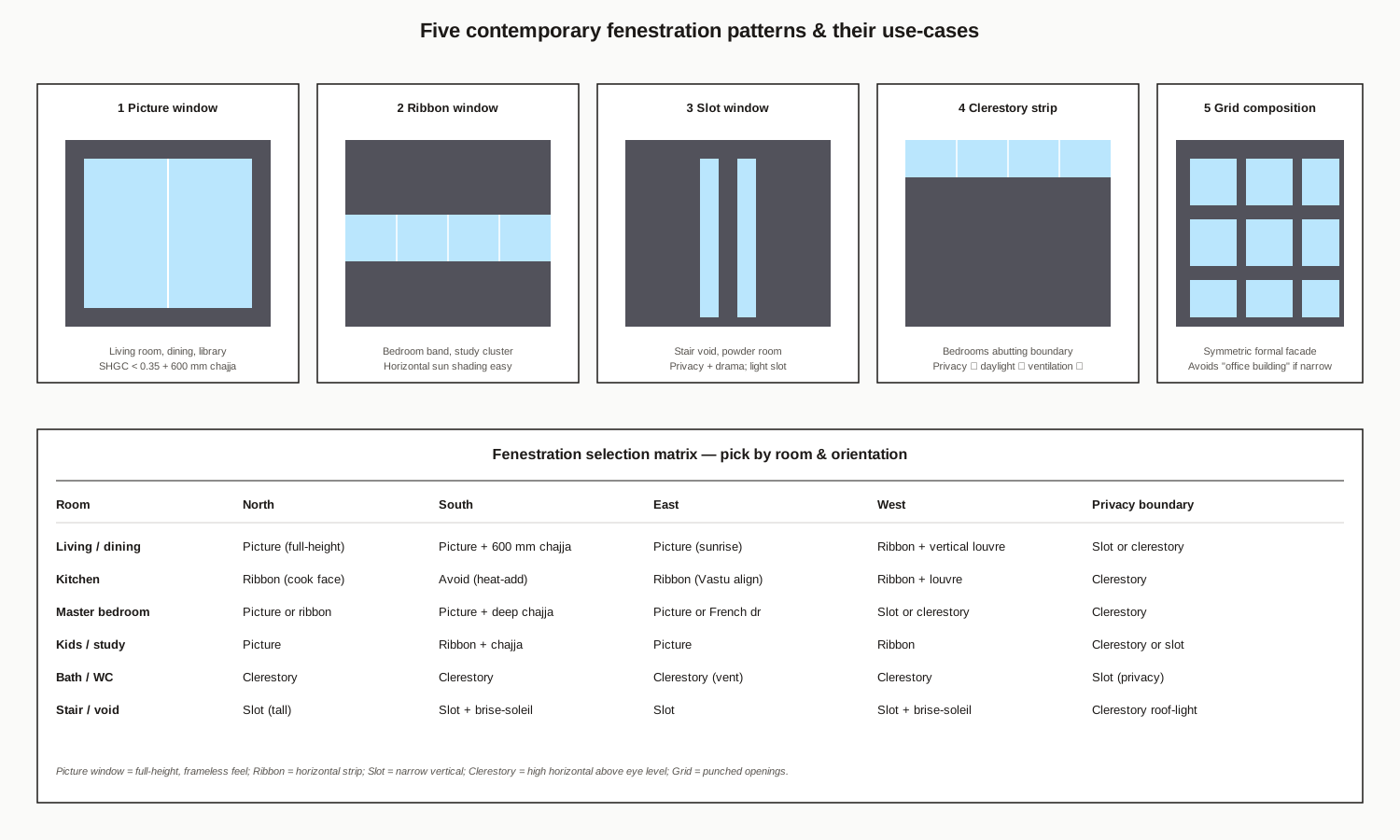
Fenestration choice is the single biggest determinant of a contemporary facade's character. The same eight vocabulary elements arranged with picture windows reads completely differently from the same set arranged with clerestory strips. Pick by room and orientation, not by inspiration mood-board.
The Five Patterns
Picture window — full-height (1.8 to 2.7 m tall) frameless-feel glazing for living, dining, library, family lounge. Use on north (best), east, and on south only with 600 mm chajja + SHGC ≤ 0.35.
Ribbon window — horizontal strip (600 to 900 mm tall) running width of a wall, for first-floor bedrooms, kitchens, study clusters. Easiest to shade. Visually unifies multiple rooms behind one element.
Slot window — narrow vertical (200 to 400 mm wide × 1.8 to 3.0 m tall) for stair voids, powder rooms, double-height spaces. Creates a vertical light slot. Use sparingly — they read as dramatic punctuation, not as workhorse fenestration.
Clerestory strip — high horizontal (300 to 600 mm tall) above eye level (typically at 1.8 to 2.1 m sill height). For bedrooms abutting a boundary wall or facing a neighbour. Admits daylight and cross-ventilation while preserving complete visual privacy.
Grid composition — multiple punched openings (typically 1.2 × 1.5 m) in a symmetric arrangement. The "modernist apartment building" pattern, used for formal facades. Risk: reads as office building if openings are too small or too regularly spaced; rescued by varying frame depth and proportions.
The Selection Matrix
| Room | North | South | East | West | Privacy boundary |
|---|---|---|---|---|---|
| Living / dining | Picture (full-height) | Picture + 600 mm chajja | Picture (sunrise) | Ribbon + vertical louvre | Slot or clerestory |
| Kitchen | Ribbon (cook face) | Avoid (heat-add) | Ribbon (Vastu align) | Ribbon + louvre | Clerestory |
| Master bedroom | Picture or ribbon | Picture + deep chajja | Picture or French door | Slot or clerestory | Clerestory |
| Kids / study | Picture | Ribbon + chajja | Picture | Ribbon | Clerestory or slot |
| Bath / WC | Clerestory | Clerestory | Clerestory (vent) | Clerestory | Slot (privacy) |
| Stair / void | Slot (tall) | Slot + brise-soleil | Slot | Slot + brise-soleil | Clerestory roof-light |
The matrix is the working rule-book. South-facing kitchens are still occasionally specified — they should not be. West-facing master bedroom picture windows are widely specified — they should be deferred to ribbon + heavy shading, not picture. Apply the matrix at concept stage; saving 6 hours here saves 6 lakh later on retrofit shading.
For the broader plan-level fenestration logic for 2BHK and 3BHK floor plans, cross-reference 2BHK House Plan — Complete Guide for India and 3BHK House Design — Complete Guide for India.
Five Roofline Strategies
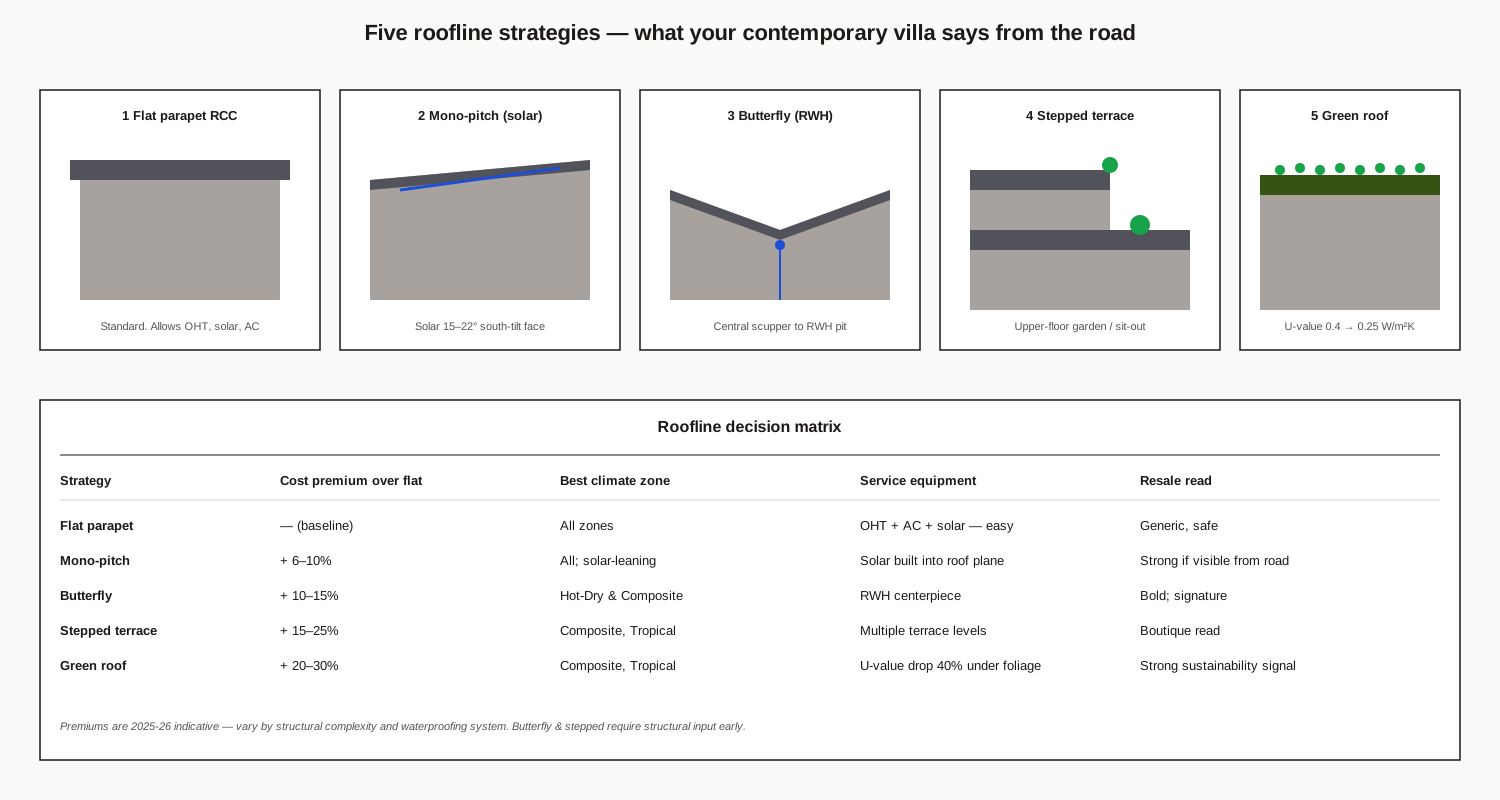
The roof is the elevation's terminus — the silhouette that the building leaves against the sky. Five strategies dominate contemporary Indian work; each carries a different functional and visual commitment.
1. Flat Parapet (Baseline)
The default contemporary roof. RCC slab, 1.1–1.2 m parapet around the perimeter, services (OHT, AC ODU, solar, DG) hidden behind. Reads as clean and generic. Premium over no-detail: zero. Best for: any climate zone. Caveats: the parapet must be high enough to fully hide services — set 1.5 m for service-heavy roofs.
2. Mono-Pitch (Solar-Optimised)
Single-slope roof tilted 15–22° to the south, optimising the angle for solar PV capture in Indian latitudes. Reads as deliberately functional — the solar logic is visible from the road. Premium: 6–10%. Best for: all zones, particularly when solar capacity > 5 kWp is planned. The tilt should be sized to the building's roof span; a 60° "designer slope" sacrifices solar yield for visual drama.
3. Butterfly (RWH-Centric)
Inverse pitch — the roof slopes inward from both sides toward a central valley with a scupper that drains to the rainwater harvesting pit. Originally a Le Corbusier innovation, popular in 2018–2024 Indian contemporary work. Premium: 10–15%. Best for: Hot-Dry and Composite zones where every drop of monsoon water has high marginal value. Structural complexity is real — the central valley requires careful waterproofing.
4. Stepped Terrace
The upper floor is pulled back from the lower floor by 3–5 m, creating a private upper-floor terrace garden facing one direction. Reads as boutique and biophilic. Premium: 15–25%. Best for: Composite and Warm-Humid zones. The waterproofing line at the step is the failure point — invest in the detail.
5. Green Roof
The flat roof is overlaid with a planted substrate — 75 to 150 mm soil depth, extensive (sedum, ground cover) or intensive (small shrubs, lawn). U-value drops from 0.4 to 0.25 W/m²K — equivalent to 100 mm of insulation. Premium: 20–30%. Best for: Composite and Warm-Humid zones. Structural load is the constraint (saturated soil weighs 1,800 kg/m³); add 1.5 kN/m² to slab design at concept stage.
For the broader rainwater integration that pairs with butterfly and stepped strategies, see Rainwater Harvesting Design & Costs.
The Climate Adaptation Matrix
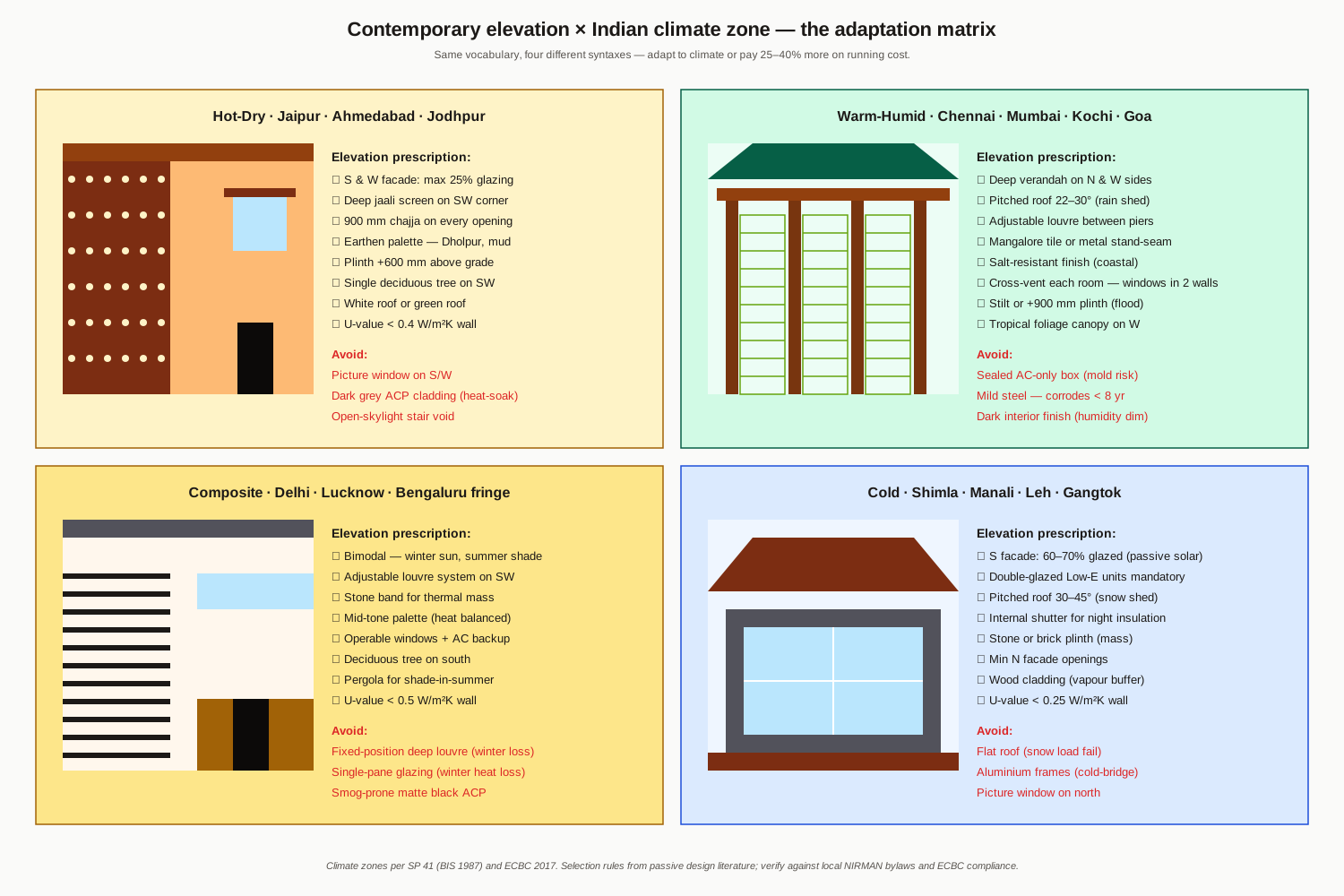
The same eight-element vocabulary takes four different syntaxes across India's climate zones. Pick the zone, then pick the vocabulary subset that fits.
Hot-Dry — Jaipur, Ahmedabad, Jodhpur
The most aggressive climate adaptation. Deep shading, earthen palette, minimum south-west glazing.
- South and west facades: max 25% glazing
- Deep jaali screen on south-west corner (hand-carved sandstone for premium, terracotta for mid)
- 900 mm chajja on every opening
- Earthen palette — Dholpur sandstone, mud-tone plaster, fluted brick in natural fire
- Plinth +600 mm above grade
- Single deciduous tree on south-west (gulmohar, neem) for summer shade + winter sun
- White or green roof to reduce roof heat gain
- U-value < 0.4 W/m²K on walls (cavity wall or insulated panel)
Avoid: picture window on south or west · dark grey ACP (heat-soak) · open-skylight stair void · curtain-wall glazing.
Warm-Humid — Chennai, Mumbai, Kochi, Goa
The high-humidity zone. Cross-ventilation is the central design move; mould management is the maintenance challenge.
- Deep verandah on north and west sides — 2.4 to 3.0 m projection
- Pitched roof 22–30° (rain shed); alternatively flat with deep overhang
- Adjustable louvre system between verandah columns
- Mangalore tile, metal stand-seam, or RCC with multi-layer waterproofing
- Salt-resistant finish within 1 km of coast (no marble, no mild steel)
- Cross-ventilation in every room — windows on two perpendicular walls
- Stilt or +900 mm plinth in flood-prone micro-markets
- Tropical foliage canopy on west — coconut, rain-tree, jacaranda
Avoid: sealed AC-only box (mold risk) · mild steel structural elements (corrode < 8 years) · dark interior finish (humidity dims rooms).
Composite — Delhi, Lucknow, Bengaluru fringe
The bimodal zone — hot summer and cold winter, both significant.
- Adjustable louvre system on south and west (track-mounted, retractable)
- Stone band for thermal mass on ground floor — moderates diurnal swing
- Mid-tone palette (neither too dark nor too light)
- Operable windows for shoulder-season natural ventilation
- AC backup for summer peak; gas-heater backup for winter peak
- Deciduous tree on south (gulmohar, sausage tree, kachnar) for summer shade + winter sun
- Pergola for adjustable shade over terrace
- U-value < 0.5 W/m²K on walls (double-skin brick or insulated cavity)
Avoid: fixed-position deep louvre (blocks winter sun) · single-pane glazing (winter heat loss) · smog-prone matte-black ACP.
Cold — Shimla, Manali, Leh, Gangtok
The passive-solar zone. The design strategy inverts most Indian residential intuitions.
- South facade 60–70% glazed for passive solar gain
- Double-glazed Low-E units mandatory (single-pane unacceptable)
- Pitched roof 30–45° for snow shed
- Internal shutter for night-time insulation (closed at sunset, opened at sunrise)
- Stone or brick plinth for thermal mass
- Minimum north-facing openings
- Wood cladding (cedar or pine) for vapour buffering
- U-value < 0.25 W/m²K on walls (200 mm cavity wall or SIPS panel)
Avoid: flat roof (snow load fails) · aluminium frames (cold-bridge) · picture window on north (heat-loss sink).
The climate-zone matrix is the first design decision for any contemporary elevation. The elevation vocabulary is identical; the deployment differs by zone.
The Four Cost Bands
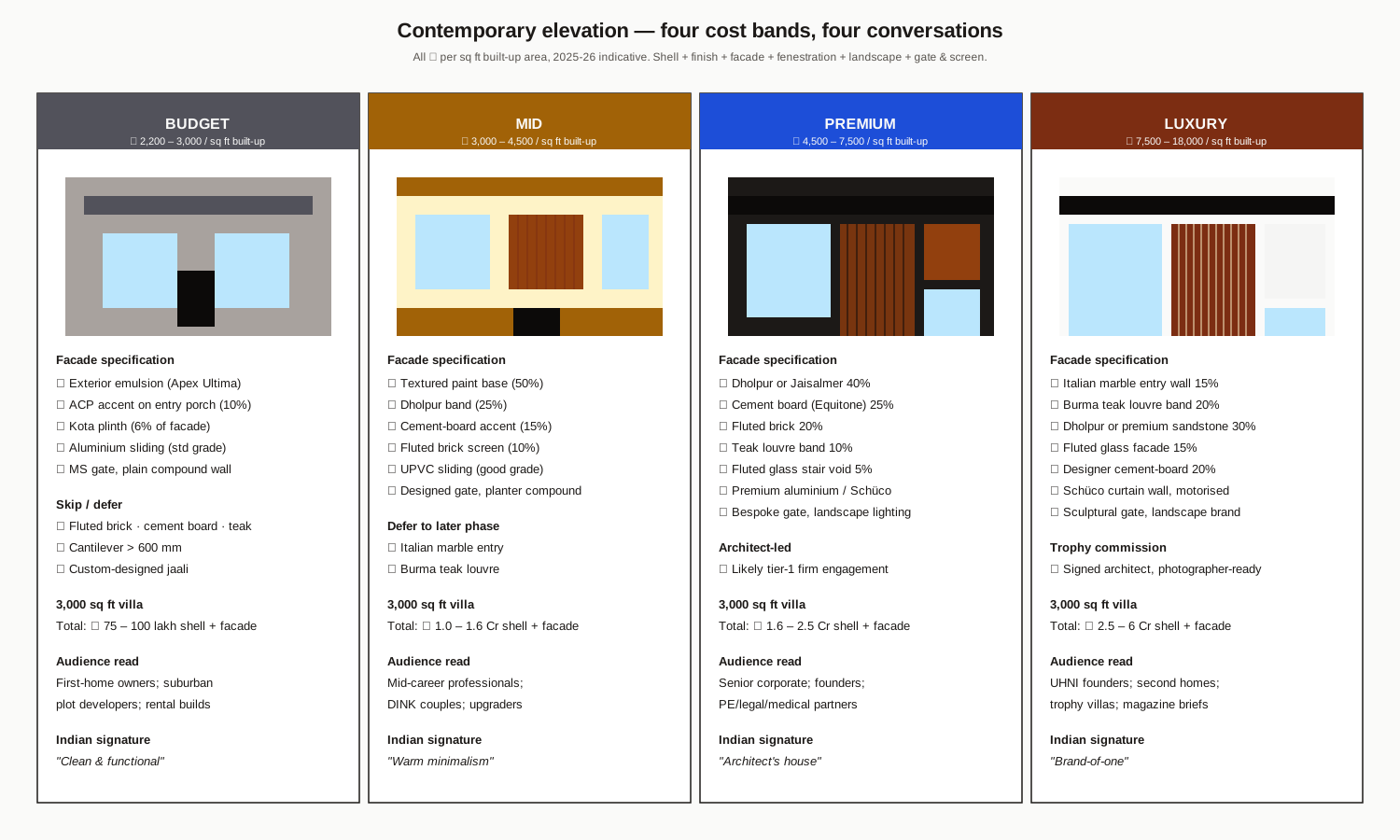
Contemporary house elevations in 2026 India price across a 6× range — from ₹ 2,200/sft built-up at the budget end to ₹ 18,000/sft at the luxury end. Each band corresponds to a different client conversation, a different architect tier, and a different material vocabulary.
Budget (₹ 2,200 – 3,000 / sft built-up)
Specification: exterior emulsion (75% of facade), ACP accent on entry porch (10%), kota plinth (6%), brick screen (10%). Aluminium sliding standard grade. MS gate, plain compound wall.
Skip / defer to later phase: fluted brick, cement board, teak louvre. Cantilever > 600 mm. Custom-designed jaali.
Audience: first-home owners, suburban plot developers, rental builds. Signature read: "clean and functional."
Mid (₹ 3,000 – 4,500 / sft built-up)
Specification: textured paint base (50%), Dholpur band (25%), cement-board accent (15%), fluted brick screen (10%). UPVC sliding good grade. Designed gate, planter compound.
Defer to later phase: Italian marble entry, Burma teak louvre.
Audience: mid-career professionals, DINK couples, upgraders. Signature read: "warm minimalism."
Premium (₹ 4,500 – 7,500 / sft built-up)
Specification: Dholpur or Jaisalmer (40%), cement board Equitone (25%), fluted brick (20%), teak louvre band (10%), fluted glass stair void (5%). Premium aluminium or Schüco glazing. Bespoke gate, landscape lighting.
Architect-led: typically tier-1 firm engagement.
Audience: senior corporate, founders, PE/legal/medical partners. Signature read: "architect's house."
Luxury (₹ 7,500 – 18,000 / sft built-up)
Specification: Italian marble entry wall (15%), Burma teak louvre band (20%), Dholpur or premium sandstone (30%), fluted glass facade (15%), designer cement-board (20%). Schüco curtain wall, motorised systems. Sculptural gate, landscape brand engagement.
Trophy commission: signed architect, photographer-ready, magazine-brief.
Audience: UHNI founders, second homes, trophy villas. Signature read: "brand-of-one."
The cost band sets the conversation. A client briefing for a budget contemporary house and a client briefing for a premium contemporary house use the same eight vocabulary elements but deploy them at completely different intensities — and engage different architect tiers, contractors, and suppliers. Match the band to the brief at week one of the engagement.
For the integrated villa-scale cost discussion (where contemporary is one of five style options), see Villa Elevation Design in India.
Indian Designer Signatures — Who Has Defined the Movement
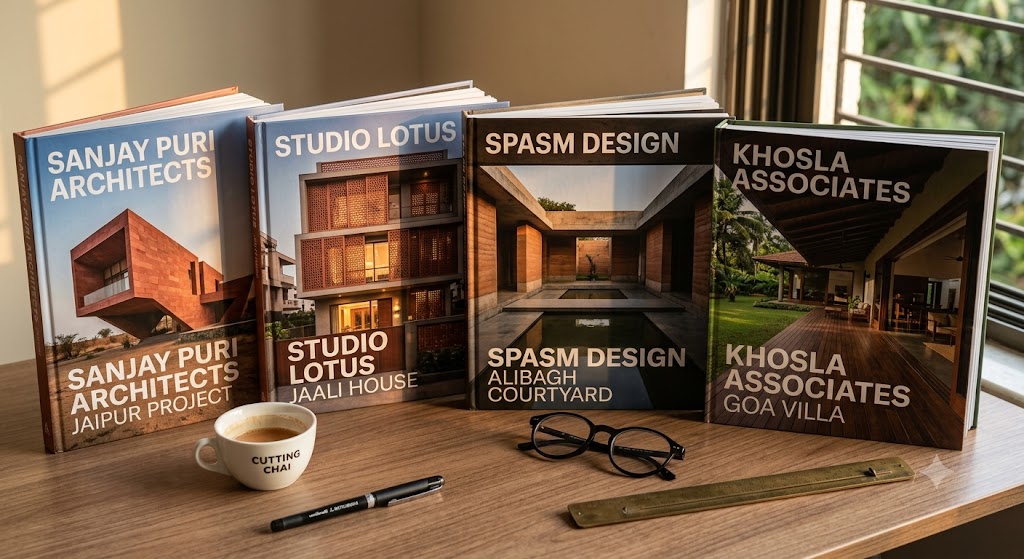
Contemporary Indian residential architecture has been shaped by a roster of practitioners over 2005–2025. Knowing their signature work helps a client articulate a brief; "we want something like SPASM's Belavali" carries more brief-density than three paragraphs of mood-board.
| Practice | Signature Move | Key Project |
|---|---|---|
| Sanjay Puri Architects | Dramatic cantilevers, sculptural geometry, red sandstone | The 18 Screens (Jaipur), 72 Screens (Hyderabad) |
| Studio Lotus | Terracotta jaali, craft revival, climate-driven facades | Krushi Bhavan (Bhubaneswar), RAAS Devigarh (Rajasthan) |
| SPASM Design Architects | Earthen palette, vernacular contemporary fusion, courtyard | Belavali House, Maharashtra Nature Park |
| Khosla Associates | Tropical modernism, deep verandah, indoor-outdoor flow | The Library House (Bengaluru), Pool House (Bengaluru) |
| Rajiv Saini & Associates | Restrained luxury, fluted brick, neutral palette | Mumbai penthouses, Lodhi Estate villas |
| Brinda Somaya (SNK) | Stone and craft sensibility, conservation-adjacent | Multiple Mumbai bungalows, restorations |
| Hiren Patel Architects | Stone and texture, Indo-modern fusion | Ahmedabad bungalows |
| Sameep Padora & Associates | Material exploration, brick craft, contemporary detail | Several Mumbai houses, public projects |
| DCOOP / Nikhil Dhar | Linear discipline, climate response | Bengaluru, Pune houses |
| Cadence Architects | Stone-and-light, gallery-finish interior-exterior continuity | Bengaluru houses |
The roster is not exhaustive — Indian contemporary practice has many more practitioners. The point is that a contemporary house in 2026 India sits inside an established lineage with named signatures, not in a stylistic vacuum.
Eight Common Mistakes and Their Fixes
Mistake 1 — Calling Glass "Contemporary"
A facade with 70% glazing is not contemporary in the Indian climate — it is either a Modernist quotation (acceptable only in cold zones) or a brief misread. Contemporary Indian elevations carry glazing ratio 30–45%, not 70%. Fix: re-spec glazing budget downward, redistribute to fluted brick or cement-board.
Mistake 2 — Six Materials in One Elevation
The "everything-board" syndrome. Six materials read as cacophony, not as contemporary. Fix: three dominant + one accent, hard cap at four.
Mistake 3 — Cantilever Without Structural Coordination
The visual element overlap-budget is large; the structural reality often catches up only in execution. Fix: structural engineer's sign-off at concept stage for any cantilever > 1.2 m. Budget the steel transfer or slab thickening.
Mistake 4 — Climate-Mismatched Vocabulary
A villa with a glass-curtain-wall living room in Jaipur. A green roof on a flat dust-loaded site in Jodhpur. A jaali screen on an apartment that never sees direct sun. Each is a vocabulary-deployment error — the right move on the wrong site. Fix: use the climate-adaptation matrix as the first filter; vocabulary is the second.
Mistake 5 — Skipping the Plant Zone
Contemporary elevations are particularly unforgiving of visible service equipment because the visual discipline is so clean. The same exposed OHT looks worse on a contemporary house than on a Modern Indian house with stone and texture. Fix: draw the plant zone at concept stage and architect a screen for it.
Mistake 6 — Pastiche Detail
A contemporary house with a small Mughal arch detail above the front door, "for tradition." A contemporary roof line with a small dome at the corner, "for Vastu." Each detail individually small; cumulatively they destroy the contemporary discipline. Fix: single-style commitment. If Vastu is the concern, the eight authoritative Vastu rules can be satisfied within contemporary vocabulary — see Vastu House Plan.
Mistake 7 — Wood Where Wood Won't Survive
Burma teak louvres on a south-facing facade in Mumbai. Without overhang, the wood weathers to grey in 18 months, splits in 4 years. The mistake is specifying the right material on the wrong exposure. Fix: wood louvres on recessed positions (back to the wall by 600+ mm), or on cantilever undersides, or on protected north/east facades.
Mistake 8 — Generic ACP Everywhere
The cheapest contemporary elevation move — wrap the whole house in ACP. Reads as office building, not as house. Fix: ACP as 15–20% accent, not as primary cladding. The exception is the trophy curtain-wall house where Schüco-grade systems are used — that is a different conversation entirely.
ECBC and Energy Compliance for Contemporary Elevations
The Energy Conservation Building Code (ECBC) 2017 does not yet apply to private residential construction in most Indian states, but is increasingly being adopted by lighthouse states and is the directional target for all new residential design. The contemporary elevation vocabulary, applied with climate discipline, naturally satisfies most ECBC residential standards.
Key ECBC-residential targets:
| Parameter | ECBC Residential Target |
|---|---|
| Wall U-value | < 0.55 W/m²K |
| Roof U-value | < 0.33 W/m²K |
| Glazing SHGC (Hot-Dry) | < 0.25 |
| Glazing SHGC (Composite) | < 0.27 |
| Glazing SHGC (Warm-Humid) | < 0.27 |
| Glazing-to-wall ratio | < 40% |
| Solar PV (mandatory > 100 m² roof) | 0.5 kWp per 100 m² |
A contemporary elevation that follows the climate-adaptation matrix in this guide will hit ECBC residential targets without retrofit. An elevation that ignores climate (over-glazed, no shading, dark heat-soaking cladding) will fail ECBC even when its visual vocabulary reads as contemporary.
Adopting ECBC voluntarily costs roughly 3–6% facade premium but reduces operational AC load by 25–40% — typically a 5-year payback on the premium. Worth committing to at concept stage.
Pre-Construction Checklist for Contemporary Elevations
Concept-stage decisions
- [ ] Cost band locked (Budget / Mid / Premium / Luxury) — informs architect tier
- [ ] Climate zone identified — Hot-Dry, Warm-Humid, Composite, Cold
- [ ] Four to five vocabulary elements selected from the eight
- [ ] Single fenestration pattern primary, with secondary supports
- [ ] Roofline strategy locked (Flat / Mono-pitch / Butterfly / Stepped / Green)
- [ ] Glazing-to-wall ratio target set (30–45%)
- [ ] SHGC spec on glazing matched to zone
- [ ] Wall U-value target set per ECBC
Drawings
- [ ] Facade composition drawn to scale with material call-outs
- [ ] South & west shading drawn for every opening with chajja/louvre dimensions
- [ ] Structural engineer's note on any cantilever > 1.2 m
- [ ] Service plant zone drawn with screen detail
- [ ] Landscape integration drawn (anchor tree, hedge, planter band)
- [ ] Night-elevation lighting plan drawn
Procurement
- [ ] Material BoQ matched to band-specific allocation in the cost banding figure
- [ ] Premium materials sourced from approved vendor list (Dholpur, Jaisalmer, fluted brick, teak)
- [ ] Aluminium / UPVC system specified with frame profile and SHGC documentation
- [ ] Contingency 8–10% on facade allocation
Approvals
- [ ] Bylaw compliance verified — setbacks, FAR, height, parking
- [ ] OC-route confirmed before foundation cast
- [ ] ECBC voluntary compliance documented (if pursued)
- [ ] Rainwater harvesting integrated for plots > threshold
References
1. Bureau of Energy Efficiency (2017). Energy Conservation Building Code (ECBC) 2017 — Residential. Ministry of Power, Government of India.
2. Bureau of Indian Standards (1987). SP 41 — Handbook on Functional Requirements of Buildings. New Delhi: BIS.
3. Bureau of Indian Standards (2016). NBC 2016, Part 11 — Approach to Sustainability.
4. Krishan, A. (2017). Climate Responsive Architecture — A Design Handbook for Energy-Efficient Buildings. TERI Press.
5. Lang, J. (2002). A Concise History of Modern Architecture in India. Permanent Black.
6. Mehrotra, R. (2011). Architecture in India Since 1990. Pictor Publishing.
7. Lefas, P. (2009). Dwelling and Architecture — From Heidegger to Koolhaas. Jovis. (Theoretical framing of "contemporary" as eclectic.)
8. Studio Lotus (2018). Building With Roots — Material, Craft, Climate. Mapin.
9. SPASM Design (2020). Site-Specific — A Practice. Niyogi Books.
10. Khosla Associates (2018). Tropical Modernism Reinterpreted. Pictor.
11. Sanjay Puri Architects (2022). The Geometry of Place — Selected Projects. Mapin.
12. JLL India (2025). Indian Premium Residential Market Report.
See it before you build it. Browse 50 front-elevation & facade designs from across India — contemporary cantilever-and-glass homes, jaali and fluted-brick facades, regional vernacular, compact plots and luxury villas — and recolour each one instantly across five exterior palettes to picture your elevation before you build.
Author's note: Contemporary Indian residential architecture in 2026 has earned its vocabulary. The eight signature elements are not arbitrary — each emerged from a specific design problem and a specific climate response. The cantilever solves the porte-cochère + shade-and-lift problem. The brise-soleil solves the equator-facing solar gain problem. The jaali solves the privacy + cross-ventilation problem. The fluted brick solves the textured-mass + craft-revival problem. When clients say "contemporary," they are pointing at this assembled vocabulary — not at any one element, but at the whole syntax of clean lines + warm materials + visible climate response. The architect's job is to deploy four or five of the eight elements with discipline, climate-match the deployment to the site, hold to the single-style commitment, and let the elevation read as one composition rather than as a sampler.
Disclaimer: Cost ranges quoted are 2025-26 indicative for Indian Tier-1 and Tier-2 cities and vary by micro-market, architect engagement, and procurement channel. ECBC residential compliance figures reflect the 2017 framework; some Indian states have local amendments. Designer signature attributions reflect publicly recognised practices and key projects as of 2025; the contemporary Indian practice landscape is broader than the roster above. Material specifications must be validated by your project architect and MEP consultant for site-specific applicability. Studio Matrx, its authors and contributors accept no liability for decisions made on the basis of this guide; engage a licensed architect, structural engineer, MEP consultant, and (if pursuing ECBC certification) a qualified energy modeller for project-specific application.
Export this guide
Related Guides — Deep-dive reading
Designing a Naturally Energy-Efficient Indian Home
Comfort first, gadgets last — passive design, orientation, insulation, ventilation and the climate wisdom that cuts Indian energy bills
SustainabilityHospital Façade & Daylight Design in India
An Architect's Working Reference — Climate-Responsive Envelope · India's Five Climate Zones · WWR by Programme · Daylight Strategy & Glare Control · Shading Device Library (Overhang · Fin · Jaali · Brise-Soleil · Verandah · BIPV) · Courtyard Organisation · ECBC 2017 Compliance · BIPV Integration · Cyclone-Zone Specs · Acoustic Envelope
Healthcare ArchitectureVilla Landscape Design — Indian Villa Gardens, Hardscape & Vastu Landscape (2026)
8 landscape zones · Climate-zone tree palette · Vastu landscape · NBC 2016 Part 10 · 1.5 acre worked example
Design StylesRelated Tools — Try Free
Brise-Soleil Visualizer
Interactive horizontal-louvre cut-off angle calculator — sun altitude, louvre depth, and spacing inputs with a live shadow preview. Computes θ = arctan(spacing/depth) for façade shading, ECBC envelope compliance, hospital daylight design, and tropical sun-control detailing.
Sun Shading ToolCross-Ventilation Analyzer
Estimate airflow and air changes per hour (ACH) from room size, window areas, layout, and local wind — with NBC 2016 Part 8 compliance check.
Ventilation CalculatorRainwater Tank Sizer
How big should your rainwater tank be? Computes annual harvest, recommended tank capacity in litres, water-bill savings, and payback — for 10 Indian cities.
RWH Calculator