
Concealed vs Exposed Plumbing India: Which Bathroom Fittings Are Better?
A fair head-to-head on concealed (in-wall) versus exposed bathroom plumbing and fittings for Indian homes — how each looks, what each costs to fit, and the one trade-off that decides it: a hidden concealed leak means breaking tiles, while exposed stays reachable.
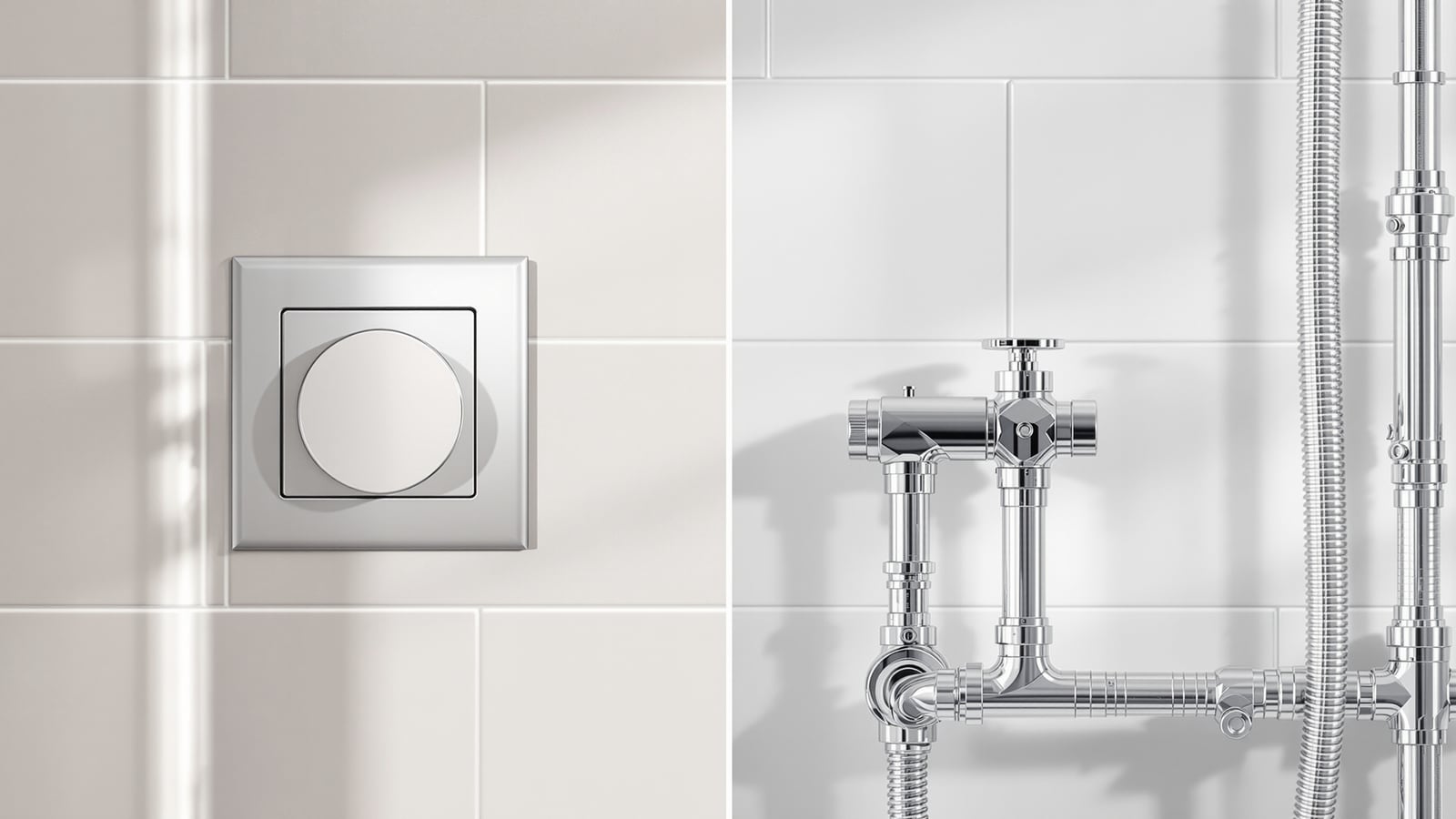
Walk into two Indian bathrooms fitted the same year and you can often tell the budget from the wall. In one, the shower controls are a single flat plate set flush into the tiles, with no pipe in sight. In the other, a chunky wall-mixer sits proud of the tiles with the supply lines running visibly up to the shower arm. Both work. Both can last decades. But they represent two very different philosophies of bathroom plumbing — concealed (buried in the wall) versus exposed (mounted on its face) — and choosing between them is one of the first real decisions in any Indian bathroom build.
This is the concealed-versus-exposed comparison in the Studio Matrx bathroom hub. It is not a sales pitch for the fancier option: exposed plumbing wins several rows outright, and for a lot of readers it is genuinely the smarter choice. Read this alongside the broader bathroom plumbing guide for India for the whole supply-and-drainage picture, the concealed diverter faucet guide for the in-wall detail, and the plumbing cost guide to price your own room.
The whole decision comes down to one sentence: concealed plumbing looks better and costs more, but the day something leaks, exposed lets a plumber fix it in an hour while concealed can mean breaking tiles and re-waterproofing a wall.
What each one actually means
Concealed (in-wall) plumbing buries the working parts — the mixing valve, the diverter body, and often the supply pipes — inside a chase cut into the masonry. These are plastered over, waterproofed and tiled, leaving only a slim trim plate, lever or spout proud of the tile face. The expensive brass concealed body lives permanently behind the wall.
Exposed plumbing keeps everything on the finished surface. A wall-mixer, pillar taps or an exposed shower set bolt onto the tiles over a pair of concealed inlet nipples, and any visible pipework runs on the face of the wall. Nothing important is sealed away; every joint and valve is within reach of a spanner.
Note the wrinkle: even "exposed" fittings usually have a short buried inlet, and even "concealed" set-ups have exposed trim. The real difference is where the serviceable valve lives — on the wall, or behind it.
Head-to-head: the verdict table
Here is the honest attribute-by-attribute comparison for Indian conditions. Neither column sweeps it.
| Attribute | Concealed (in-wall) | Exposed (on-wall) | Winner |
|---|---|---|---|
| Looks | Clean, flush, hotel-like | Functional, visible pipes | Concealed |
| Fittings cost | Higher — body + trim priced separately | Lower — one integrated fitting | Exposed |
| Labour & time | More — chasing, testing, waterproofing, tiling sequence | Less — mount onto tiled wall | Exposed |
| Leak access / serviceability | Poor if body isn't front-serviceable; wall-breaking repair | Excellent — unscrew and swap | Exposed |
| Cleaning & upkeep | Easy — one flat plate, few edges | More edges and pipe to catch limescale | Concealed |
| Change finish later | Easy — swap trim, keep the body | Replace the whole fitting | Concealed |
| Risk with hard water | High — hidden cartridge you can't inspect | Low — visible, reachable, replaceable | Exposed |
| Suits new build | Yes — plan the rough-in before tiling | Also fine | Concealed |
| Suits rental / quick job | Poor — needs wall work | Ideal — fast, cheap, portable | Exposed |
| Resale / perceived value | Higher on premium homes | Neutral | Concealed |
Count the winners and exposed edges ahead on practicality; concealed wins on looks and long-term flexibility. That split is the decision.
The big trade-off: what happens when it leaks
Everything else is preference. This is the row that should actually decide your choice, so it deserves its own section.
With exposed plumbing, a dripping cartridge or a weeping joint is a visible, reachable problem. A plumber shuts the angle valve, unscrews the fitting, replaces a washer or the whole mixer, and you are done in an hour for the price of the part. No wall damage, no tiles lost, no waterproofing to redo.
With concealed plumbing, the working valve is behind cement and tile. If a good, front-serviceable body was installed, a plumber can often pull the cartridge out through the trim opening without touching the wall — this is the best case and the reason body quality matters so much. But if the body itself cracks, the inlet joint weeps, or a cheap zinc body seizes, the only route in is to break the tiles, cut out the body, re-plumb, re-waterproof and re-tile. On a shower wall that can run into tens of thousands of rupees and days of a bathroom out of use.
This is why the golden rule of concealed work is: spend on the buried body, not the visible finish. A forged-brass, front-serviceable, IS-marked body from a trusted range is what keeps a concealed set from becoming a wall-breaking liability. The full argument, with rough-in heights and testing sequence, is in the concealed diverter faucet guide.
Cost difference in rupees
Concealed is dearer on two lines at once — the fitting is split into a body plus a separately-priced trim, and the labour is longer because of chasing, pressure-testing and the fixed tile-then-trim sequence. Indicative, brand-neutral figures per control point (a shower or a basin):
| Item | Concealed (in-wall) | Exposed (on-wall) |
|---|---|---|
| Fitting (body + trim, or unit) | ₹6,000 – ₹35,000 | ₹2,500 – ₹15,000 |
| Extra labour vs exposed | ₹1,500 – ₹4,000 per point | baseline |
| Typical worst-case leak repair | ₹8,000 – ₹40,000 (tiles + waterproofing + refit) | ₹300 – ₹3,000 (part + visit) |
Across a full bathroom, going all-concealed typically adds ₹15,000 – ₹60,000 over an all-exposed spec, before you count the risk premium of a future hidden repair. Use the bathroom plumbing cost guide to build the number for your own layout.
Which should you choose?
There is no single right answer — it depends on whether you are building or just fitting out, and on how much you value looks versus safe access.
Pick concealed if you are building or gutting the bathroom anyway, you can afford a quality body, and a calm, flush wall matters to you — especially at the shower, which is the most-photographed wall in the room. Buy the best body, front-serviceable and IS-marked, and treat the trim finish as the flexible part.
Pick exposed if you are in a rental, want a quick weekend swap, are on a tight budget, or the wall simply cannot be opened up cleanly. It is also the safer default in hard-water areas where you want to reach a valve to descale or replace it, and for utility taps and washing-machine points where looks barely matter.
Genuine toss-up? Do both. The most sensible Indian spec for a mid-range home is concealed at the shower (where the look pays off and you plan the rough-in during construction) and exposed everywhere else — the health-faucet supply, the utility area, the second bathroom you may re-fit later. You get the hotel wall where it counts and keep cheap, reachable valves where you don't. Plan this zone-by-zone as part of the bathroom planning guide for new homes.
The bottom line
For a new build where you can plan the rough-in and buy a forged-brass, front-serviceable body, concealed plumbing at the shower is worth the extra ₹15,000-plus for the look and the easy finish changes. For rentals, quick jobs, tight budgets or hard-water homes that value easy access, exposed wins on every practical count. When unsure, go concealed at the shower and exposed elsewhere.
Concealed is not "better" and exposed is not "cheap" — they are two different bets on how you value looks against access. Make the bet deliberately, spend on the buried body if you go concealed, and you will be happy with either wall for the next twenty years.
References
- National Building Code of India (NBC) 2016, Bureau of Indian Standards — Part 9, water supply, drainage and plumbing provisions covering concealed and exposed pipework.
- IS 8931 — Copper alloy fancy single taps, combination tap assembly and stop valves (concealed body and diverter mechanisms).
- IS 781 — Cast copper alloy screw-down bib taps and stop valves for water supply (exposed fittings).
- IS 1172 — Code of basic requirements for water supply, drainage and sanitation.
- CPHEEO Manual on Water Supply and Treatment, Ministry of Housing and Urban Affairs — pressure and pipe-sizing guidance for bathroom supply lines.
Export this guide
Related Guides — Deep-dive reading
Concealed Diverter Faucet India: In-Wall Body, Diverters, Cost & Servicing Guide
In-wall concealed faucets and diverters for Indian bathrooms — how the concealed body buried behind the tiles works with the exposed trim plate and lever, single, two-way and three-way diverters that route water to the overhead rain shower, hand shower and spout, why the hidden brass body is the part that really matters, and how to plan the rough-in before you tile.
BathroomsWall Mounted Basin Tap India: Spout Projection, Concealed Plumbing, Height & Cost
A practical, India-first guide to wall-mounted basin faucets — where the spout emerges from the wall above a countertop or vessel basin, plumbing hidden in the wall. Spout projection and height over the basin, why it must be planned before tiling, pros and cons versus deck-mounted taps, servicing, and rupee costs.
BathroomsBathroom Planning for New Homes in India: Get It Right Before You Build
The bathroom decisions you cannot undo once the slab is cast — location and stacking, sunken vs non-sunken slabs, waterproofing, and the plumbing, electrical and ventilation you must coordinate with the civil work, stage by stage.
BathroomsRelated Tools — Try Free
Interior Layout Planner — Printable Graph Grid
Printable graph grid to sketch room layouts to scale before committing to furniture placement.
Layout ToolMonsoon-Readiness Checklist
Pre-rain home audit across 9 categories — terrace, drains, waterproofing, electrical, HVAC, pest, vehicles, documents.
Seasonal AuditPlumbing Pressure-Test & Leak Checklist
Pre-closure pressure and leak test — 9 categories, 60+ checkpoints across water supply, drainage, fixtures, waterproofing, hot water, tanks.
Pre-Closure Test