
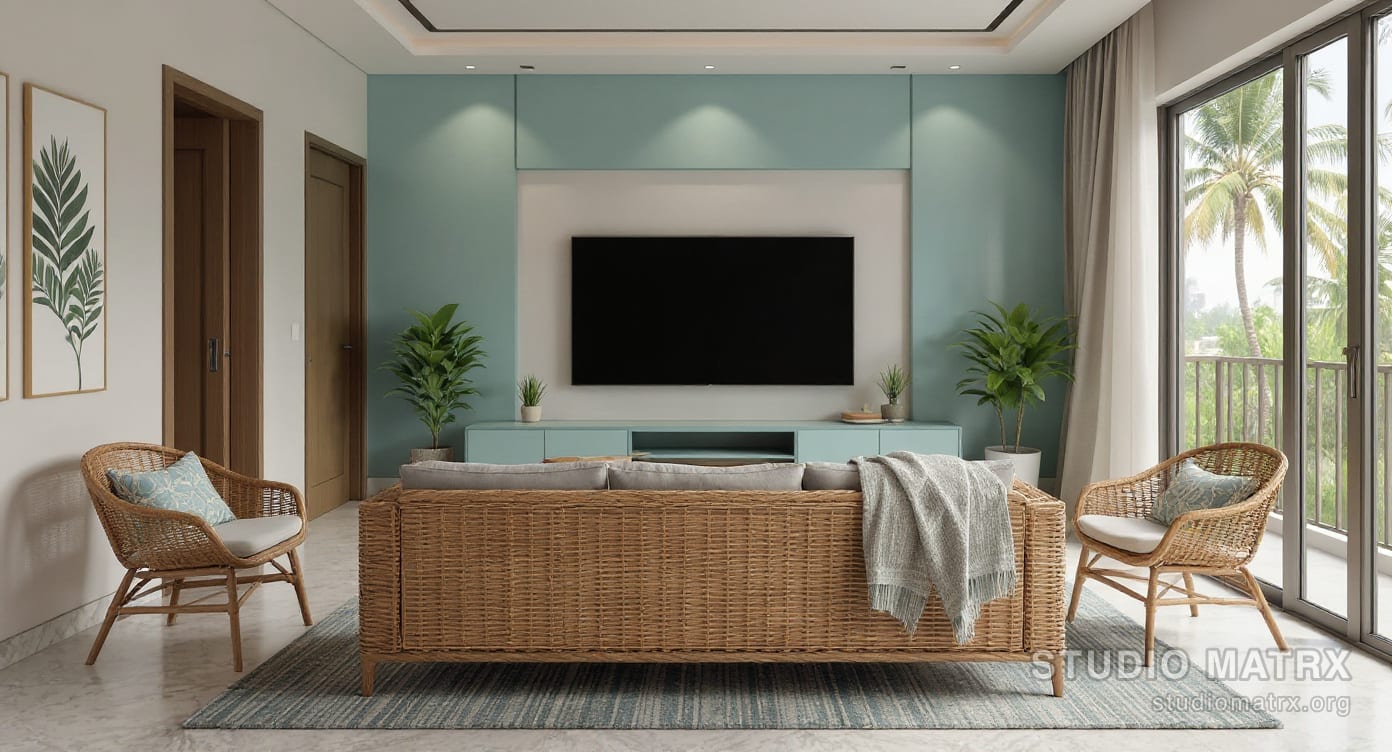
Coastal & Tropical Interiors — A 2026 Style Guide for Indian Homes
Goa-Kerala resort calm · Whitewash, rattan, teak · Climate-smart for humidity and salt
Coastal Tropical is the interior language of a slow, sun-washed Indian morning — whitewashed walls, the creak of cane, a sea breeze moving thin linen, and just enough blue to remember the water is close. It is the resort calm of a Goa villa, the verandah patience of a Kerala home, and the salt-air practicality of the Konkan coast, translated into a way of living that any Indian home — beachside or three floors up in a humid city — can borrow. In 2026, as second homes near the sea multiply and homeowners chase rooms that feel like a holiday rather than an office, Coastal Tropical has become one of the most asked-for moods in Indian interiors. This guide is the homeowner's version: what it really is, how to build it for our climate, what it costs, and where to buy it.
What Coastal Tropical Is (and Isn't)
Coastal Tropical is a climate-honest style. It grew out of places where the sea, the sun and the monsoon set the rules: deep verandahs, high ceilings, cross-ventilation, lime-washed walls that breathe, and locally grown materials like teak, cane and terracotta that age gracefully in humidity. The look is airy and pale, with natural textures doing most of the talking and a single restrained note of sea-blue or teal as punctuation.
What it is not is "fake resort" — the airport-lounge version where someone glues on a ship's wheel, a coil of rope, a porthole mirror and a NAUTICAL sign in distressed white. That is nautical kitsch, not coastal living. Authentic Coastal Tropical almost never uses literal motifs. There are no anchors, no seashell borders, no navy-and-white stripes shouting "beach". The seaside is implied through light, air, texture and a calm palette — not illustrated.
It is also not the same as a generic white minimalist flat. Minimalism strips texture away; Coastal Tropical layers it in — the grain of teak, the weave of cane, the slub of handwoven linen, the matte of lime plaster. The result should feel relaxed and lived-in, like a home that has learned to live well with heat and salt rather than fight them.
Five Principles
1. Light and air come first
Before colour, before furniture, design for daylight and breeze. Keep windows unobstructed, choose sheer or light linen curtains over heavy drapes, and prefer pale walls that bounce light deep into the room. Where you have cross-ventilation, protect it — do not block the path between two openings with tall cabinets. Ceiling fans (cane-bladed or simple matte) are part of the look, not a compromise. A Coastal Tropical room should feel cooler the moment you walk in.
2. Natural materials over synthetics
The backbone is honest, breathable material: teak and other hardwoods, rattan and cane, jute and coir, terracotta and lime plaster, handloom cotton and linen. These age into the style rather than out of it. Avoid high-gloss laminates, chrome and plastic-heavy furniture — they read cold and they sweat in humidity. If you must use engineered materials, choose matte finishes and let natural texture sit beside them.
3. Indoor-outdoor flow
The style assumes the boundary between inside and outside is soft. Pull the garden, balcony or verandah into the home — large openings, a continuous floor finish from living room to balcony, plants treated as architecture rather than afterthought. Even a city apartment can do this: a planted balcony visible from the sofa, a folding glass door, an outdoor-grade rug that lets the balcony read as a room.
4. A restrained sea-blue accent
Blue is the temptation that ruins most coastal rooms. The discipline is restraint. Let pale sand, off-white and warm tan dominate, and use sea-teal as roughly one-tenth of the room — a few cushions, a vase, a single painted door or a tiled splash. One considered blue moment reads as the sea. Blue everywhere reads as a swimming pool changing room.
5. Humidity- and salt-resilient choices
Near the coast, the climate is the client. Salt-laden air corrodes cheap metal, monsoon damp breeds mildew, and the sun bleaches anything left exposed. Build resilience in from day one: anti-rust hardware, mould-resistant finishes, removable washable covers, sealed natural stone and treated wood. This is the difference between a coastal home that looks beautiful for a decade and one that looks tired in two monsoons.
The Coastal Tropical Palette
The palette is warm-neutral led, with green and teal as the only saturated notes. Keep roughly 70% pale neutrals, 20% warm tan and wood, 10% teal and palm green.
| Tone | Hex | Where to use | Indian reference |
|---|---|---|---|
| Whitewash sand | #ede6d8 | Walls, ceilings, large upholstery, base layer | Lime-washed Goan villa wall |
| Sea teal | #3a7d8c | Accent door, cushions, a tiled splash, ceramics | Arabian Sea at midday off the Konkan |
| Rattan tan | #c9a36a | Cane furniture, jute rugs, teak tones, woven baskets | Kerala cane verandah chair |
| Palm green | #7fae9a | Plants, a soft sofa or chair, glassware, planters | Banana and areca foliage |
Materials and Climate-Smart Finishes
In coastal India, every material choice is also a durability choice. The list below is what survives our humidity, salt and monsoon — and why.
| Material | Role | Why it survives coastal humidity and salt |
|---|---|---|
| Mangalore tile | Roofing, accent walls, verandah ceilings | Fired terracotta sheds rain, breathes, and is the regional vernacular for the wet coast |
| Lime plaster | Wall finish | Breathable and alkaline, so it resists mould and lets damp walls dry out instead of trapping moisture |
| Teak | Furniture, doors, window frames | High natural oil content repels water and resists rot, swelling and insects far better than soft woods |
| Coir and jute | Rugs, matting, upholstery texture | Coir in particular is naturally moisture-tolerant; both add texture without plastic |
| Cane and rattan | Chairs, headboards, light fittings | Light, airy, lets moisture pass through; choose well-sealed pieces and keep out of direct rain |
| Terracotta | Floor accents, planters, ceramics | Local, breathable, cool underfoot, ages beautifully and shrugs off salt air |
| Anti-rust hardware | Hinges, handles, fasteners, fixtures | Stainless steel (marine grade where possible), powder-coated or brass hardware resists the salt corrosion that destroys cheap mild-steel fittings |
| Vitrified or sealed natural stone | Flooring in wet zones | Low water absorption and easy cleaning beat porous stone that stains and grows mildew |
A simple rule: if a material would not last on a Goan verandah through one monsoon, it does not belong in a coastal home.
Room by Room
Living room
This is the room that sells the whole mood. Anchor it with a low, deep sofa in whitewash-sand cotton or linen, layer a jute rug, and bring in one or two cane armchairs for texture. Keep the coffee table low and wooden — teak or reclaimed. Add a generous plant (areca palm, monstera or a fiddle-leaf fig), sheer curtains, and a single teal cushion run or ceramic group as the only saturated colour. Resist filling every corner; the empty air is the luxury.
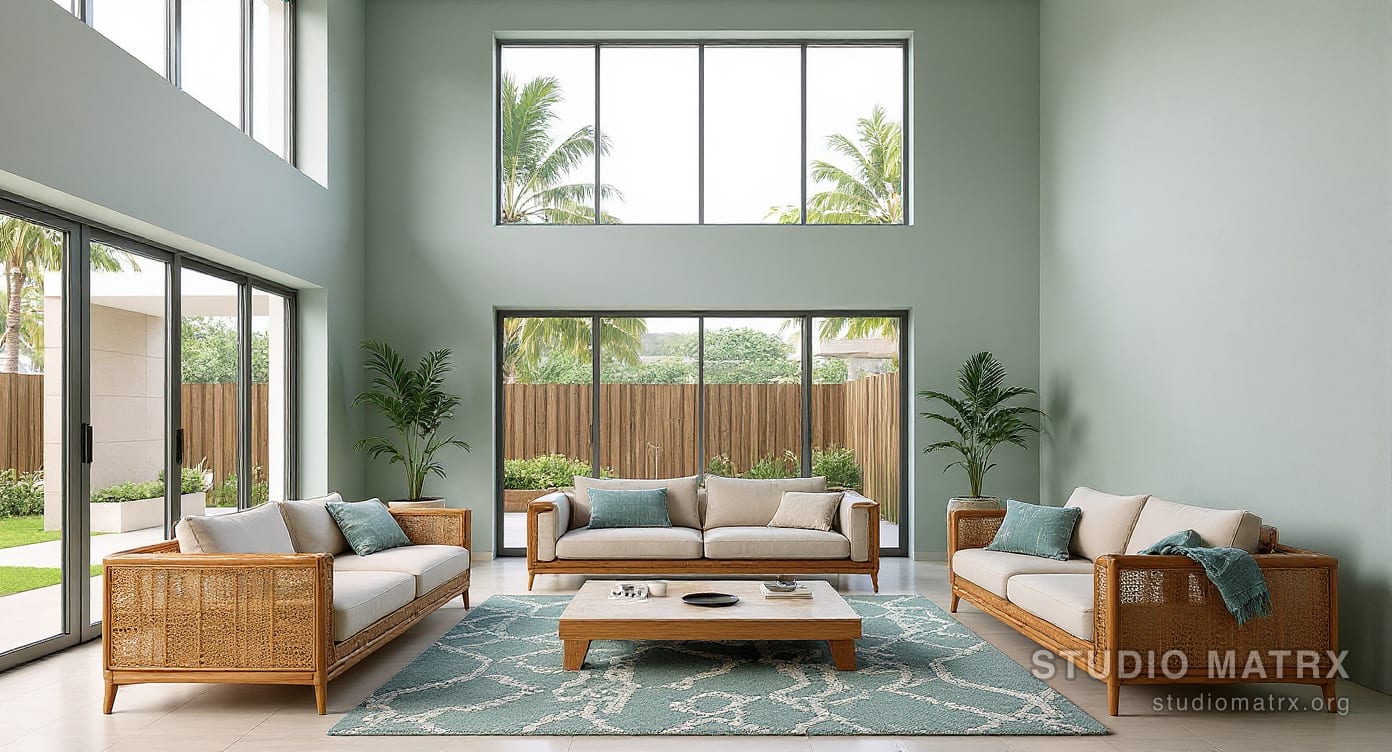
In a villa, the same logic scales up around an indoor-outdoor axis: a continuous floor finish flowing to the verandah, taller openings, and Mangalore-tile or exposed-rafter ceiling detail. Let the verandah furniture match the indoor pieces so the eye reads one connected space.
Kitchen
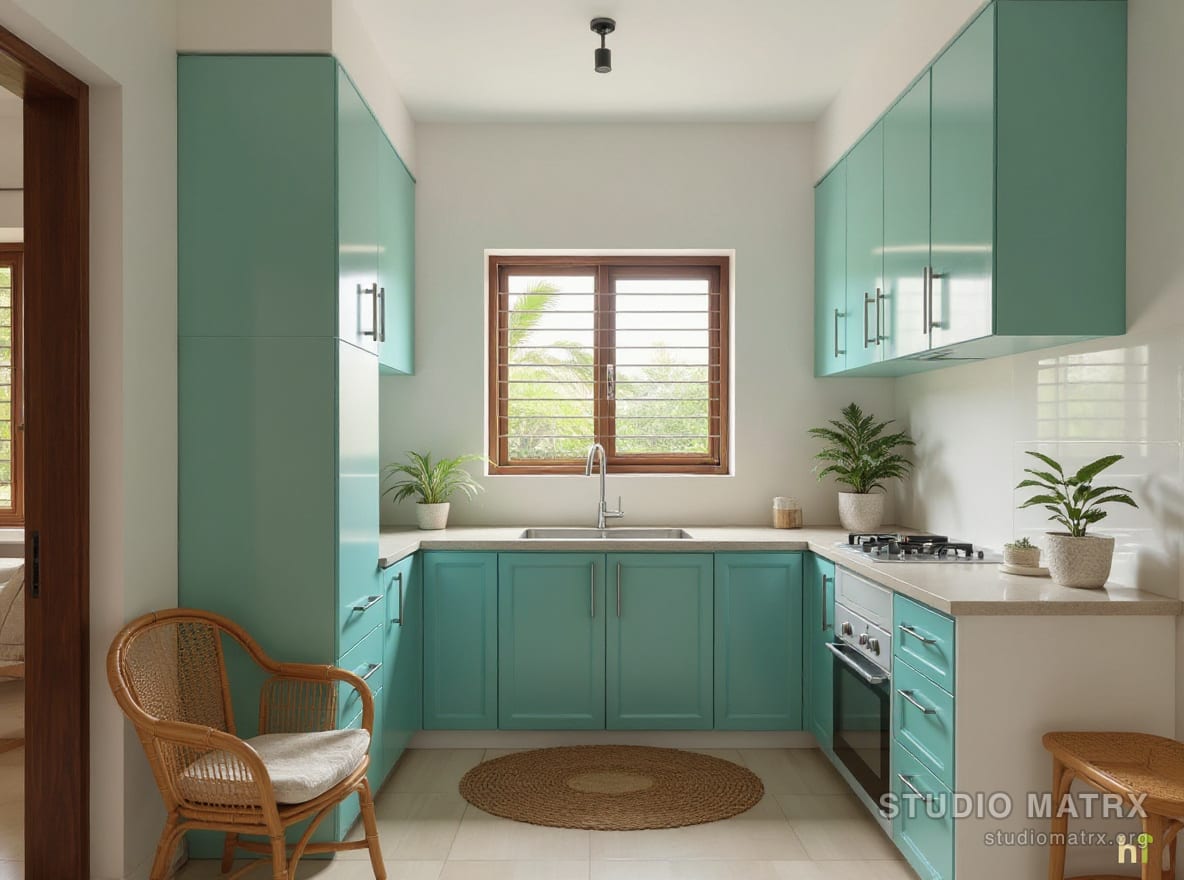
Coastal kitchens stay pale and matte: whitewash-sand or soft-green cabinetry, wooden or warm-toned counters where budget allows, and a teal or terracotta tile splash for the single accent. The climate-smart priorities here are moisture and ventilation. Use a strong exhaust to clear steam, keep a window or louvre open, choose marine-grade or stainless hardware, and seal counters and joints carefully so damp cannot creep behind units. Open cane or wooden shelving works beautifully but keep it away from the immediate splash zone where grease and steam settle.
Master bedroom
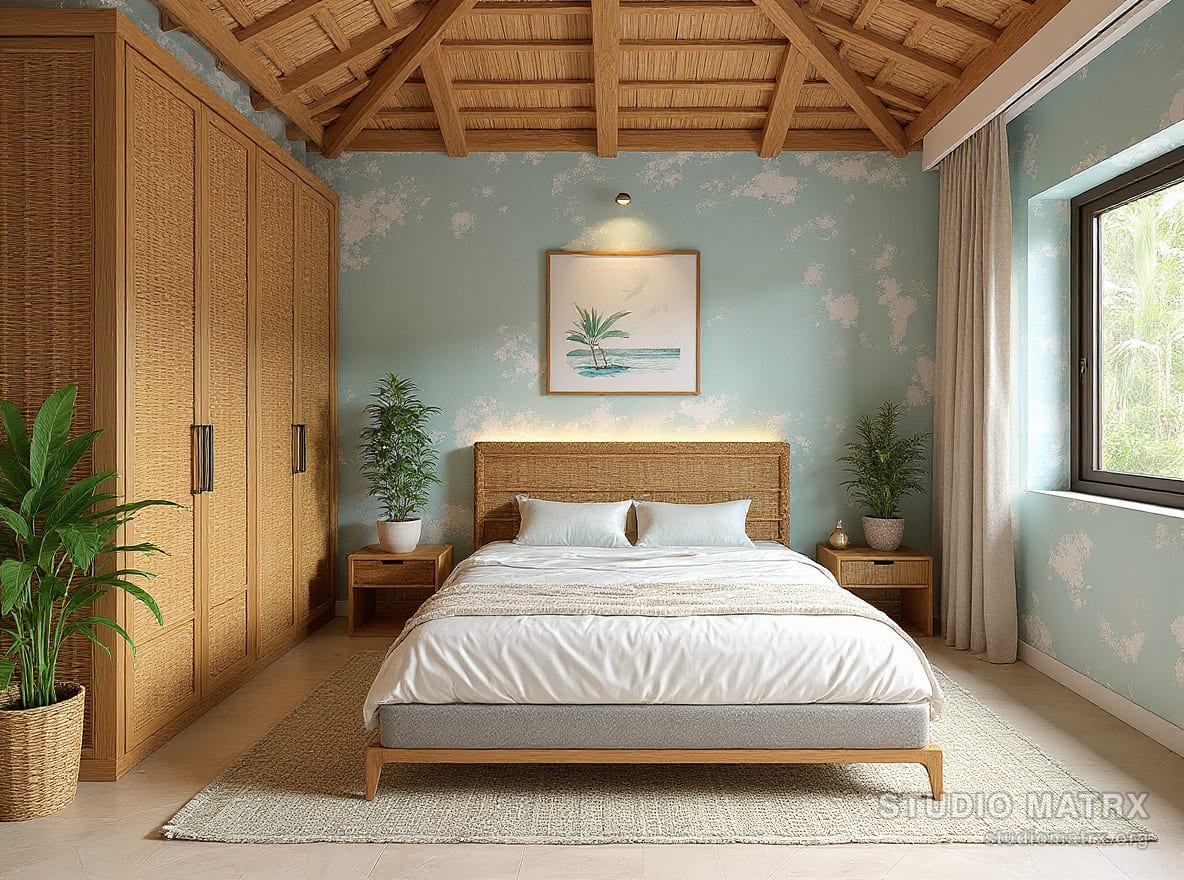
The bedroom is the calmest room in the house. A cane or teak bed, crisp white or sand linen bedding, a light woven headboard, and a ceiling fan overhead. Keep window treatments breezy — sheer day curtains with a separate blackout layer only if you need it. One framed botanical print or a teal throw is enough accent. Place a plant near the window and leave floor space open so air can move.
Bathroom
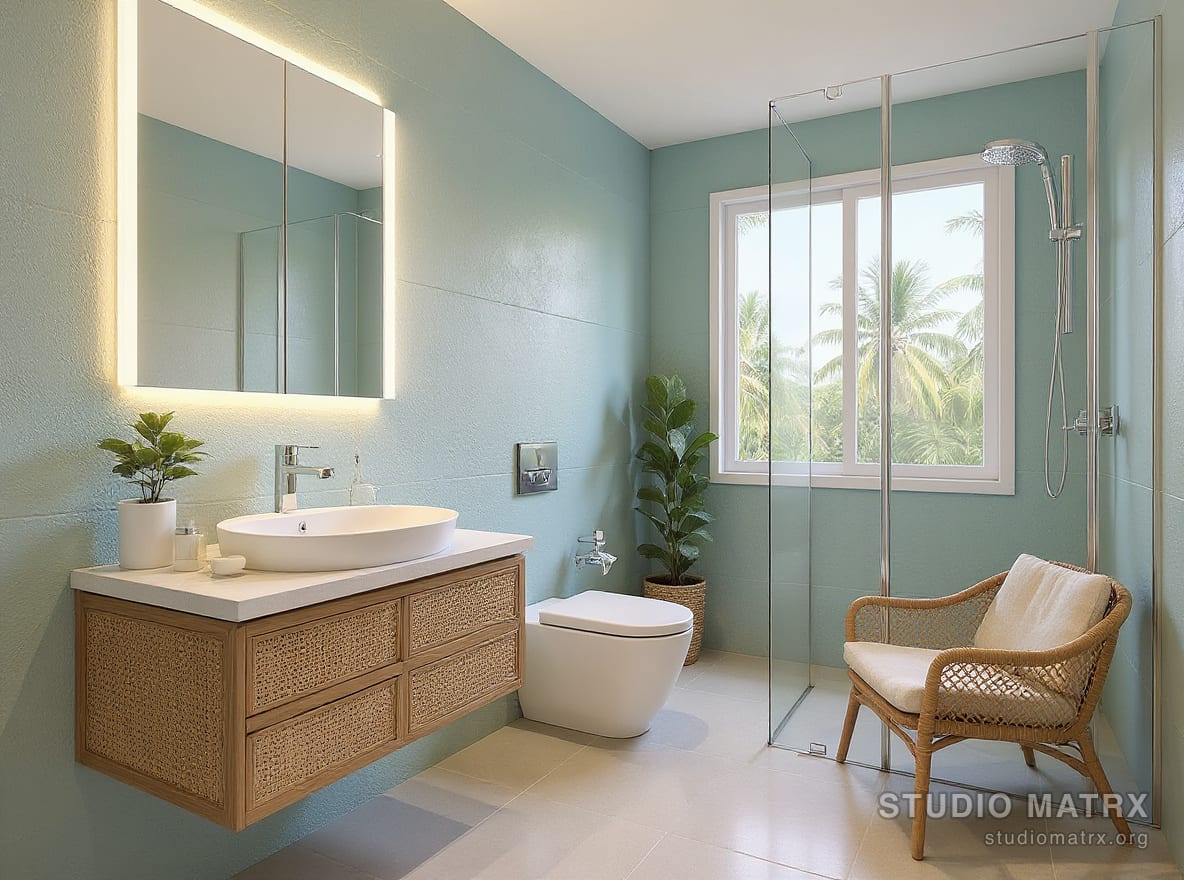
The bathroom is where coastal style meets the toughest moisture test, so finishes must be uncompromising. Use sealed stone or vitrified tile, a teal or terracotta accent band, and marine-grade or brass fittings that will not rust. Ventilation is non-negotiable: an exhaust fan plus a window or louvre to dry the room between uses. Teak duckboards and bath accessories add warmth, but choose properly oiled or treated wood and let it dry fully. Keep grout sealed and inspect it yearly — open grout is where mildew starts.
Dining
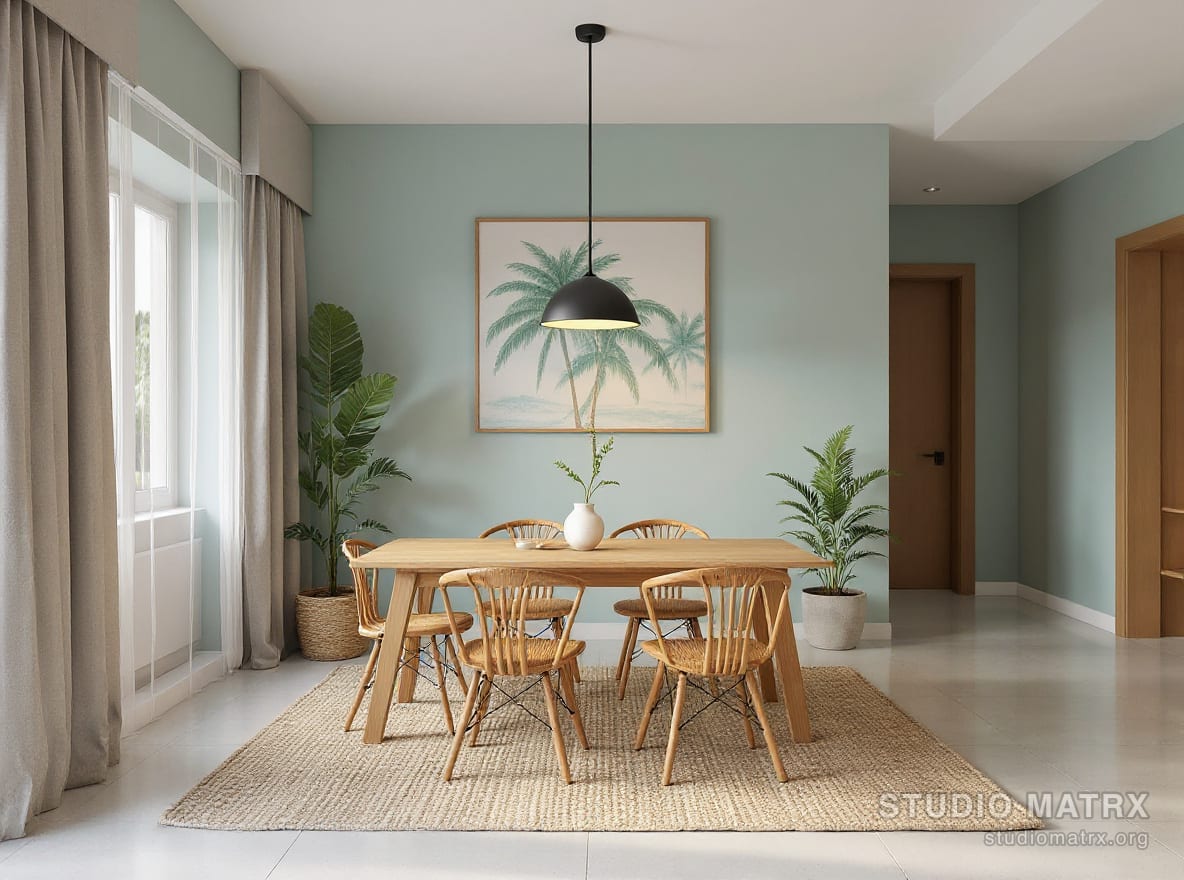
A solid teak or reclaimed-wood table with cane-backed chairs is the heart of a coastal dining space. Keep the tabletop bare or set with terracotta and pale ceramics, hang a woven cane or rattan pendant overhead, and let one wall stay plain lime-washed plaster. Plants and a single teal or green serving piece carry the colour. If the dining sits near a balcony or garden, orient the table to face the green — the view is the centrepiece.
Pooja
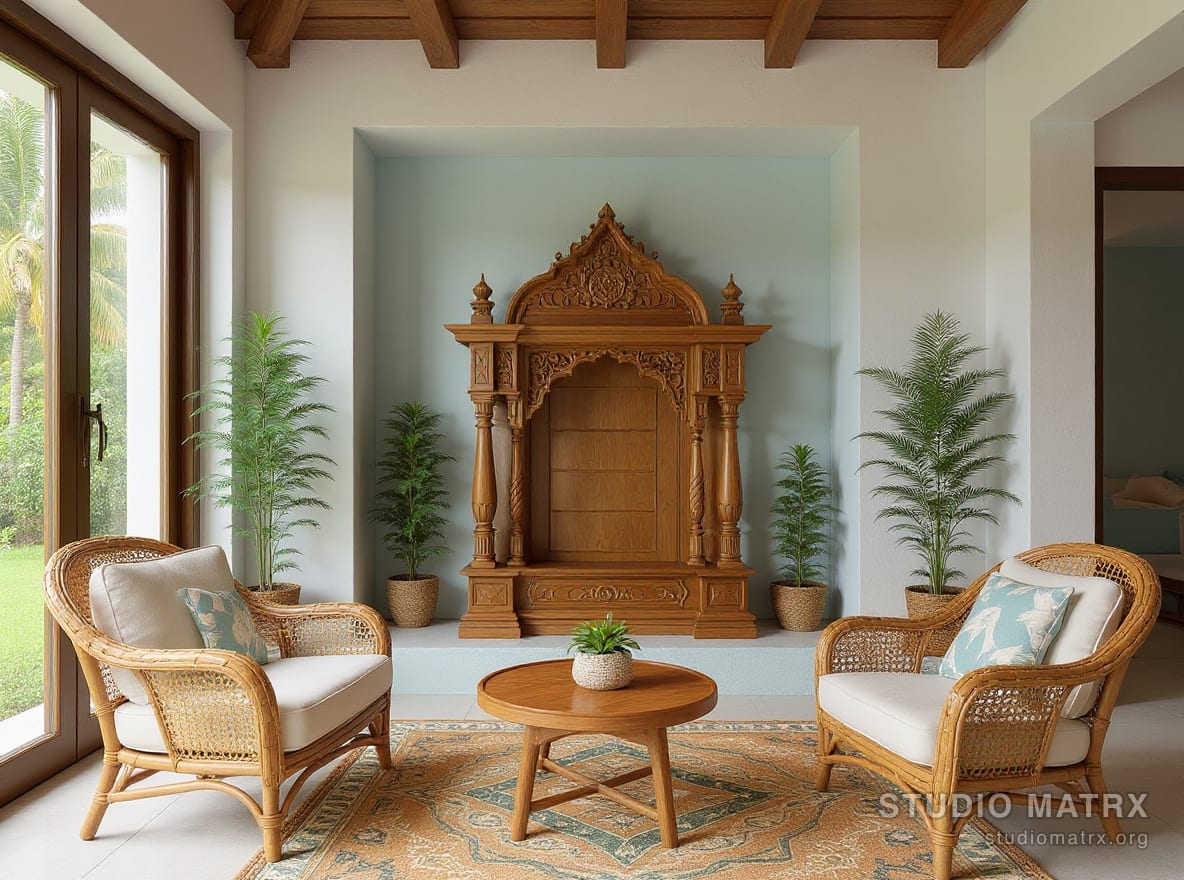
The pooja space stays serene and material-honest within the same palette: a teak or carved-wood mandir, lime-washed or pale backdrop, brass lamps and bells (which also fit the anti-rust, salt-friendly logic), and a terracotta or stone floor accent. Keep it uncluttered and well-lit with warm light. A small woven mat and a single plant nearby keep it grounded in the coastal mood without disturbing its quiet.
Budget — What It Costs in India
The figures below are indicative ranges for furnishing and finishing a 2–3 BHK or a small coastal villa in a Coastal Tropical scheme in 2026, covering furniture, soft furnishings, key finishes and styling. They exclude major civil work and full modular kitchens. Costs vary widely by city, sourcing and how much you reuse.
| Tier | Approach | Indicative range (2–3 BHK / villa) |
|---|---|---|
| Essential | Mostly off-the-shelf cane and wood, painted walls, handloom textiles, a few statement pieces, plants | ₹3,00,000 – ₹6,00,000 |
| Comfortable | Mix of branded and artisan furniture, lime plaster on feature walls, teak accents, quality linen, marine-grade hardware throughout | ₹6,00,000 – ₹14,00,000 |
| Premium villa | Custom teak and cane joinery, Mangalore-tile detailing, sealed stone floors, designer textiles, full indoor-outdoor landscaping | ₹14,00,000 – ₹35,00,000+ |
Spend first on the things that touch air and water — ventilation, hardware, sealed finishes — and on a few honest natural pieces. Texture and plants stretch a small budget further than any expensive accent.
Where to Source in India
You can build this style almost entirely from Indian makers.
- Fabindia — handloom cottons, linen, jute rugs, terracotta and ceramic accents in exactly the right palette.
- Nicobar — pared-back coastal-leaning furniture, linen bedding and tableware with a calm, resort sensibility.
- Cane Boutique and similar cane specialists — rattan and cane chairs, headboards, pendants and storage.
- Sources Unlimited — for higher-end designer and statement furniture when the budget allows.
- Goa and Kerala artisans — local carpenters and cane workers for custom teak and woven pieces; coastal towns have generations of this craft, often at a fraction of city prices.
- Terracotta and Mangalore-tile suppliers — regional yards and roofing-tile makers along the west coast for tiles, planters and floor accents.
- Local nurseries — for areca palms, monstera, ferns and other tropical foliage; buying near home means hardier, climate-matched plants.
Buy hardware and fittings from suppliers who can confirm stainless or brass; this is the one place where saving money costs you the most.
Ten Common Mistakes
1. Letting mildew win. Ignoring ventilation and sealing, so monsoon damp blooms into black mould on walls, grout and cane.
2. Cheap hardware that rusts. Mild-steel hinges and fittings corrode in salt air within a season — use stainless or brass.
3. Overdoing nautical motifs. Anchors, ropes, ship's wheels and porthole mirrors turn calm into kitsch.
4. Too much blue. Blue on walls, sofa, curtains and rug at once reads like a pool, not the sea. Keep it to a tenth.
5. Dark, heavy wood everywhere. Chocolate-brown bulky furniture kills the airy feeling; favour pale and light-framed pieces.
6. Blocking the breeze. Tall cabinets and heavy drapes that cut off cross-ventilation defeat the whole climate logic.
7. Glossy synthetic finishes. High-gloss laminate, chrome and plastic look cold and sweat in humidity.
8. Skipping the exhaust in kitchen and bathroom. Trapped steam is the fastest route to mildew and peeling finishes.
9. Untreated wood and cane left exposed to rain. Even teak needs oiling; unsealed cane on an open balcony degrades quickly.
10. Plastic plants instead of real ones. Greenery is structural to this style — fake foliage reads instantly and dust-traps in humid air.
FAQ
What is coastal interior style?
Coastal interior style is a relaxed, airy look inspired by life near the sea — pale neutral walls, natural materials like cane, teak and jute, abundant light and air, plants, and a restrained sea-blue or teal accent. In its authentic Indian form it draws on Goan and Keralan vernacular homes rather than literal beach motifs.
What are the best materials for coastal homes in India?
Teak and other oil-rich hardwoods, lime plaster, Mangalore terracotta tile, coir and jute, sealed natural stone or vitrified tile, and anti-rust hardware in stainless steel or brass. These breathe, resist rot and corrosion, and age well through humidity, salt and the monsoon.
What is the difference between coastal and tropical?
Coastal leans cooler and paler — sand, whitewash and sea-blue, evoking the shoreline. Tropical leans warmer and greener, with lush foliage, rattan and richer wood, evoking the jungle and verandah. In India the two blend naturally, which is why the combined Coastal Tropical look fits Goa, Kerala and the Konkan so comfortably.
How do I stop mildew in coastal homes?
Prioritise ventilation — exhaust fans and openable windows or louvres in kitchen and bathroom, and cross-ventilation elsewhere. Use breathable lime plaster, mould-resistant paints, sealed grout and counters, and dry wet rooms after use. Keep cane and wood oiled and out of standing damp, and inspect grout and sealing once a year.
Can I do coastal style in a city apartment, away from the sea?
Yes. Keep walls pale, choose cane and light wood furniture, layer jute and linen, add plenty of plants and one teal accent, and treat a planted balcony as an extra room. The resort calm comes from light, texture and restraint, not from a sea view.
Coastal Tropical rewards patience and restraint more than budget — get the light, air and materials right, hold the blue back, and let the textures do the work. Start with a Moodboards board to lock your palette, browse the broader Interior Styles to see how it sits beside other looks, and use DesignAI to visualise your own rooms in this calm, sun-washed mood before you spend a rupee.
Last verified: June 2026 · Next verify: June 2027.
Export this guide
Related Guides — Deep-dive reading
Earthy Interior Palette — A 2026 Style Guide for Indian Homes
Rooted · Regional · Biophilic · Indian craft-anchored
Design StylesWarm Minimal Interiors — A 2026 Style Guide for Indian Homes
Restraint with warmth · Oat & oak & linen · Curated negative space
Design StylesBohemian Interiors — A 2026 Eclectic Style Guide for Indian Homes
Collected, layered, alive · Rust and jewel tones · Curated eclecticism, never clutter
Design StylesRelated Tools — Try Free
Cross-Ventilation Analyzer
Estimate airflow and air changes per hour (ACH) from room size, window areas, layout, and local wind — with NBC 2016 Part 8 compliance check.
Ventilation CalculatorCurtain Cost Calculator
Get the fabric metres you need plus the total curtain cost by window size, fabric, pleat, lining and hardware.
Curtain CalculatorFalse Ceiling Cost Estimator
Live ₹/sqft across 8 ceiling types — POP, gypsum, designer, metal, PVC, wooden — with cove and spot lighting for 20 Indian cities.
Cost Calculator