
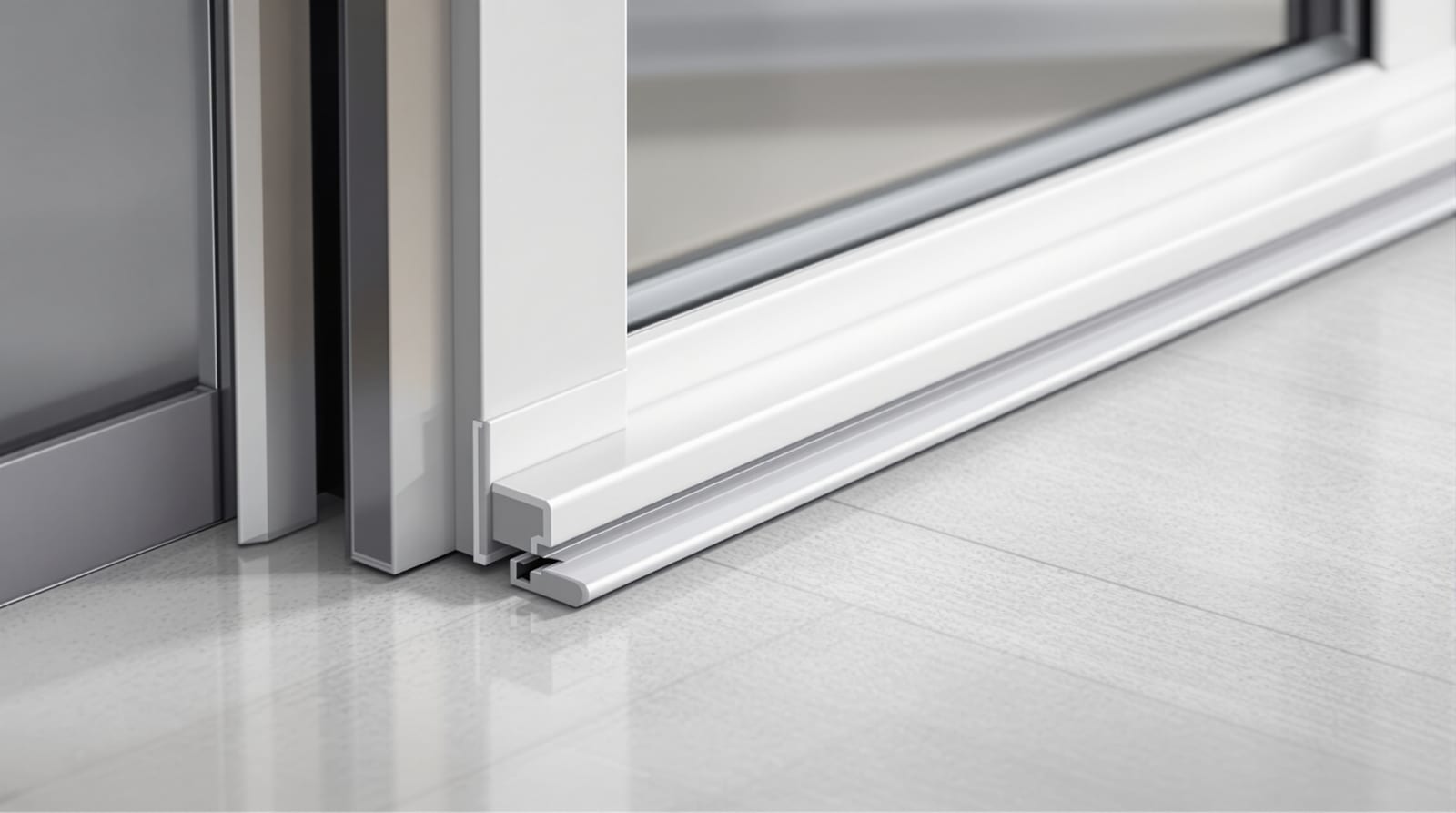
Acoustic Door Seals: Seal the Gaps for Quiet (India 2026)
Why sealing the perimeter gap and the gap under the door is the single biggest STC win, and how compression seals and drop-down bottom seals work.
The biggest secret in door soundproofing is almost embarrassingly simple: sound leaks through the gaps, not through the door slab. You can hang a heavy ₹40,000 solid-core door and still hear every word from the next room if there is a finger-width gap under it. This is why acoustic door seals — the perimeter compression seals around the frame, the automatic drop-down bottom seal at the threshold, and the saddle or threshold seal at the floor — are the single most cost-effective quietening upgrade you can make. They turn an ordinary door into a genuinely quiet one, and they retrofit onto a door you already own.
Why the gaps beat the door slab
Sound behaves like water or smoke: it finds the smallest opening and pours through. Acousticians have a rule of thumb that a gap of just 1% of a door's area can let through as much noise as the other 99% of the surface combined. A typical Indian flush door hung with a 10–15 mm gap under it, plus thin air gaps at the frame, is acoustically little better than a half-open window — no matter how solid the slab.
This is the heart of acoustic door seals: you are not making the door heavier, you are closing the leaks. The chain of weakness in a normal door is, in order of importance:
1. The gap under the door (the biggest leak by far, often 8–15 mm of open air).
2. The perimeter gap at the two sides and the top, where the slab meets the frame rebate.
3. The keyhole, letter plate or undercut in some doors.
4. The slab itself (only relevant once the gaps are sealed).
Fix the first two and you typically gain more sound reduction, rupee for rupee, than any other intervention. This is why our door STC ratings guide stresses that a lab STC number assumes a perfectly sealed installation; the on-site, fitted performance depends almost entirely on the seals. The broader physics of how doors block noise is covered in door acoustic performance.
Acoustic seals vs weather seals: not the same job
It is easy to assume the rubber strips you buy to keep out draughts and rain will also keep out noise. They help a little, but they are designed for a different problem. Weather seals (covered in our door seals and weatherstripping guide) prioritise keeping water and dust out and surviving UV and monsoon; acoustic seals prioritise an airtight, continuous, gap-free compression specifically to block airborne sound.
| Feature | Weather seal | Acoustic seal |
|---|---|---|
| Primary goal | Block rain, dust, draughts | Block airborne sound |
| Continuity | Some gaps tolerable | Must be unbroken, all four edges |
| Compression | Light, for easy closing | Firm, even compression critical |
| Bottom of door | Brush/weather strip | Automatic drop-down seal preferred |
| Material | EPDM, brush, PVC | Dense EPDM/silicone, often magnetic |
| Typical use | External doors, monsoon | Bedrooms, theatres, studios, clinics |
The overlap is real — a good acoustic seal also stops draughts, which is why sealing improves both quietness and door air-tightness and energy efficiency at once. But for serious noise control you want seals chosen and fitted as acoustic seals.
The three families of acoustic door seal
Perimeter compression seals
These run around the two stiles and the head of the frame. The door, when closed, compresses a dense rubber bulb or fin against the frame rebate, closing the side and top gaps. Types you will find in India:
- Adhesive-backed EPDM/silicone strips — the cheapest retrofit, peel-and-stick into the rebate. Effective if applied continuously and replaced when they harden.
- Kerf-mounted seals — a flexible fin pressed into a saw-cut groove in the frame; neater and more durable, common on factory acoustic frames.
- Magnetic seals — like a fridge-door gasket, a magnetic strip that pulls tight against a steel strike. Excellent, gap-free closure used on premium acoustic and cold-room doors.
- Compression/cam-action seals — engaged firmly as the door latches, giving the firm, even pressure acoustics needs.
Automatic drop-down bottom seals
This is the hero of the system. An automatic drop seal is a concealed mechanism mortised into (or surface-mounted on) the bottom edge of the door. When the door opens, a spring holds the seal up so the door swings freely over the floor and any rug. When the door closes, a plunger hits the frame and a cam lowers a gasket firmly onto the floor or threshold, sealing the all-important bottom gap — then lifts again when you open it. It is the only way to fully close a large bottom gap without a raised threshold you would trip over. Fixed brush or fin bottom seals are a cheaper alternative but never seal as completely.
Threshold / saddle seals
A threshold seal (saddle) is a low aluminium or hardwood bar fixed to the floor across the doorway, often with a rubber gasket that the drop seal lands on. It gives the drop-down seal a clean, flat surface to meet and closes the floor gap from below. For bedrooms a low-profile saddle is usual; for studios and home theatres a deeper saddle paired with a drop seal gives the best result.
How a sealed door blocks the sound paths
The lesson the diagram makes plain: a slab with open gaps leaks like a sieve, while the same slab with a continuous perimeter seal and a drop-down bottom seal closes every airborne path. The slab matters most only after the gaps are gone.
What sealing actually buys you (indicative)
As a rule of thumb, sealing the gaps on an otherwise ordinary door delivers a noticeable jump in fitted sound reduction — often the difference between hearing a clear conversation and hearing only a muffled murmur. The bands below are indicative; real results depend on fitting quality and the wall around the door.
| Door setup | Fitted STC band (rule of thumb) | What you hear |
|---|---|---|
| Hollow flush door, unsealed | ~17–22 | Conversations clearly audible |
| Hollow flush door + perimeter & drop seals | ~24–28 | Speech muffled, raised voices audible |
| Solid-core door, unsealed | ~26–30 | Loud speech audible |
| Solid-core door + perimeter & drop seals | ~33–38 | Normal speech barely audible |
| Engineered acoustic door, fully sealed + saddle | ~40–45+ | Most speech and TV inaudible |
Notice that adding seals to a solid-core door can lift fitted performance by 5–8 STC points — a bigger gain than you would get from a much heavier slab left unsealed. Sealing is the highest-return step. For how these numbers are measured and rated, see door STC ratings, and for the wider material and how-to picture, door sound insulation.
Retrofit vs new: which seals for which door
Retrofitting an existing door is the common Indian scenario, and most of the win is available cheaply:
- Stick or kerf a perimeter compression seal into the frame rebate (continuous, all three edges).
- Add a surface-mounted automatic drop-down seal to the bottom edge, or a good brush seal if budget is tight.
- Fit a low threshold saddle for the drop seal to land on.
- Plug a keyhole or letter plate, and pack the architrave-to-wall gap with acoustic sealant.
A new acoustic door comes with seals integrated: kerf or magnetic perimeter gaskets, a factory-mortised drop seal, and a matched saddle, all tuned to the slab's rated STC. If you are buying new for a home theatre or studio, specify the seal kit as part of the door, not an afterthought.
| Priority | Action | Relative cost | Relative benefit |
|---|---|---|---|
| 1 | Seal the bottom gap (drop seal + saddle) | Low–medium | Very high |
| 2 | Perimeter compression seal, all edges | Low | High |
| 3 | Plug keyhole / letter plate / undercut | Very low | Medium |
| 4 | Upgrade slab to solid-core / acoustic | High | High (only after 1–3) |
The order matters: never spend on a heavy new slab while leaving a finger-gap under the door.
Fitting tips that decide whether it works
- Continuity is everything. A 5 cm break in the perimeter seal can undo most of the benefit. Run it unbroken into the corners.
- Even compression. The door must close firmly against the seal along its whole length — not so hard it will not latch, not so loose it leaves an air gap. A misaligned or warped door is the usual reason seals underperform.
- Set the drop seal height carefully. Too high and it does not touch the floor; too low and the door drags. Adjust the plunger so the gasket meets the saddle just as the door fully closes.
- Mind the floor. A drop seal needs a flat, hard landing surface. Over carpet or an uneven floor, fit a threshold saddle so the seal has something to press against.
- Replace hardened seals. EPDM and silicone last years but eventually compress and harden in the heat; a flattened seal leaks. Treat them as a wear item.
- Pair with the wall. Acoustic sealant around the frame-to-wall junction stops sound flanking around the door entirely.
For a quick estimate of how much your current bottom and perimeter gaps are costing you in leakage, our door air leakage calculator is a useful first check, and the door U-value calculator shows the parallel energy benefit of a well-sealed door. For the whole-door view, start from the complete door guide and the door acoustic performance pillar.
Frequently asked questions
What is the single most effective acoustic door seal?
The automatic drop-down bottom seal. The gap under a door is usually the biggest single leak (often 10–15 mm of open air), so closing it cleanly gives the largest fitted STC gain per rupee. Pair it with a threshold saddle so it has a flat surface to seal against. See door STC ratings for how this shows up in measured numbers.
Can I just use weatherstripping for soundproofing?
It helps, but it is a compromise. Weather seals (see door seals and weatherstripping) are designed for rain and draughts, not airborne sound. For real noise control use dense, continuous acoustic-grade seals on all four edges, with an automatic drop seal at the bottom. The good news is that acoustic seals improve door air-tightness too.
Will acoustic seals work on my existing flush door?
Yes — sealing is the most retrofit-friendly upgrade there is. Adding perimeter and drop seals to an existing door lifts its fitted performance noticeably, often more than swapping in a heavier slab. The limit is the slab itself: a hollow flush door, even perfectly sealed, will never match a sealed solid-core or acoustic door. See door sound insulation.
How long do acoustic door seals last in India?
Good EPDM, silicone or magnetic seals last several years, but India's heat and humidity eventually harden and compress them. Treat seals as a wear item: if a previously quiet door starts leaking sound, the seals have likely flattened and should be replaced. Magnetic and kerf-mounted seals tend to outlast cheap peel-and-stick strips.
Do I need a raised threshold for a drop seal?
Not always. An automatic drop seal can land directly on a flat, hard floor. But over carpet, rugs or uneven flooring, fit a low threshold saddle so the seal has a clean surface to press onto. For studios and home theatres a saddle plus drop seal gives the best, most repeatable result.
Are acoustic seals worth it for a normal bedroom?
Yes, and they are among the cheapest comfort upgrades in the home. Sealing the perimeter and the gap under a bedroom door noticeably cuts conversation, TV and corridor noise, helps sleep, and as a bonus reduces draughts and dust. For the full bedroom and home-theatre approach, see door acoustic performance.
Export this guide
Related Guides — Deep-dive reading
Door Sound Insulation: Improve It Step by Step (India 2026)
The physics of mass, sealing and decoupling — and how to upgrade an ordinary Indian door to genuinely cut the noise coming through it.
Home Doors & EntrancesSoundproof Doors in India: How Doors Leak Sound, STC Ratings, Seals & Real Costs
A door is the weakest acoustic link in any wall - and it usually leaks through the gaps, not the panel - so here is how to actually quieten a bedroom, home theatre or street-facing room, from a 1,500-rupee seal kit to a proper acoustic door.
Home Doors & EntrancesDoor Acoustic Performance: STC & Sound Control (India 2026)
How sound travels through and around a door, what STC ratings really mean, and what makes a door genuinely quiet in an Indian home.
Home Doors & EntrancesRelated Tools — Try Free
Acoustic Privacy (STC) Visualizer
Indian healthcare acoustic visualizer — compare wall assemblies and noise sources, see received SPL after STC attenuation, and check FGI 2018 / IS 1950 / NABH speech-privacy compliance with live dual-canvas waveform.
Acoustic ToolDoor Weather Seal Calculator
Estimate weatherstrip seal length and cost for your doors — perimeter gasket plus bottom sweeps, by seal type.
Door CalculatorAcoustic Window Calculator
Estimate how much outside noise a window blocks and the resulting indoor dB level and comfort.
Window Tool