
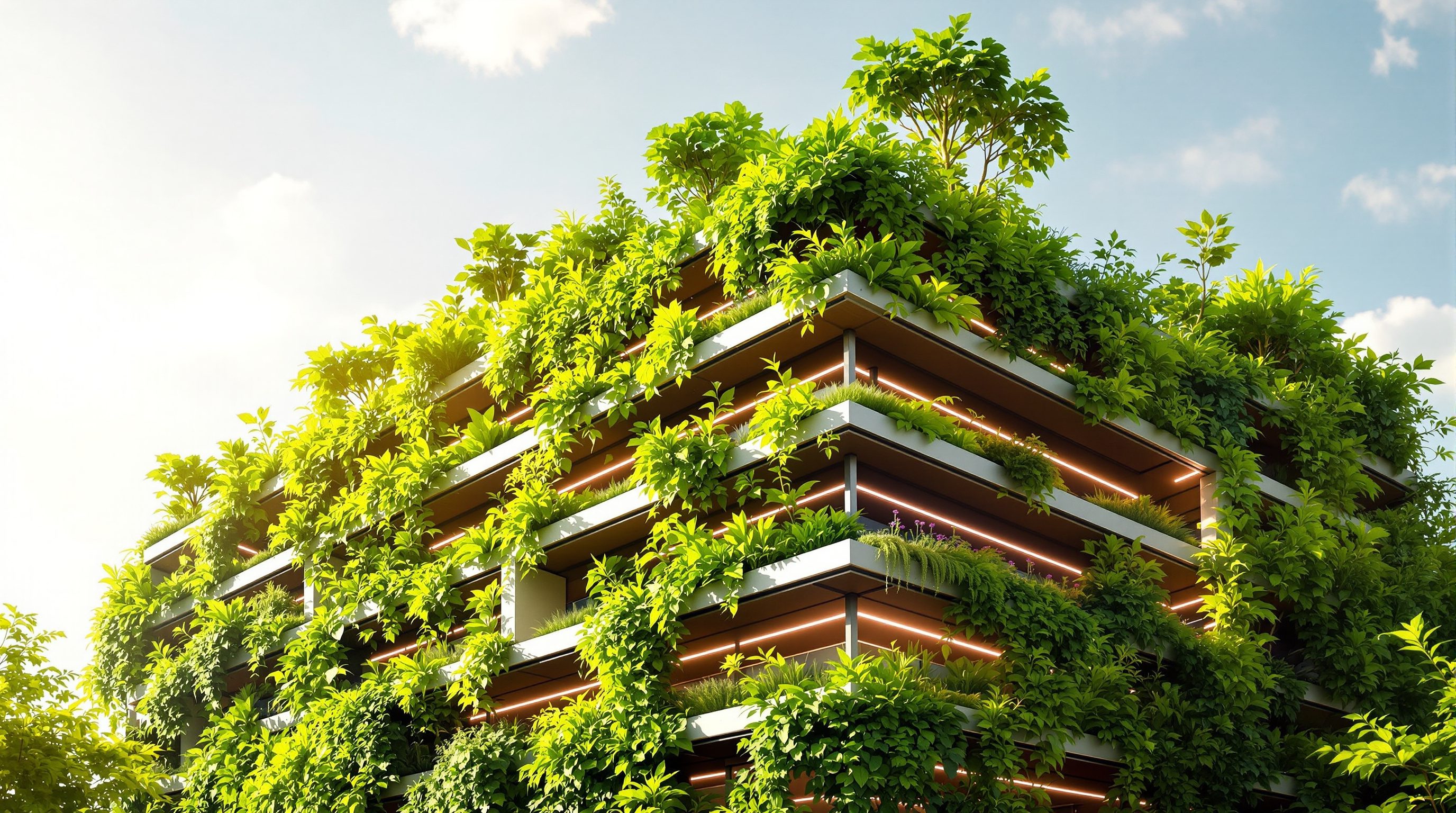
 Lesson 9.4
Lesson 9.4 · Reality, Limits & Honesty
When Not to Grow Indoors
The module's honesty becomes a decision - a clear go/no-go for indoor farming that first asks whether the free sun can do the job, then tests the narrow conditions under which paying for light is genuinely justified, so you default to sun-powered growing and switch the sun off only when you truly must
The most valuable answer a designer can give about an indoor farm is often: do not build one.
This module has argued a hard case - that indoor farming is oversold, energy-intensive, often not greener, and able to grow only garnish, not dinner. But rigorous is not the same as cynical, and the module's honest heart is not a verdict of 'never'; it is a decision procedure. There are real situations where a fully-indoor farm genuinely makes sense, and many more where it plainly does not, and the professional skill is telling them apart before money is spent and buildings are shaped.
So this final lesson turns everything before it into a clear go/no-go. It starts with the master question the whole course has been building toward - can the free sun do this job here? - because if it can, the decision is usually made: prefer sun-powered growing. Only when the sun genuinely cannot do the job do you test the narrow set of conditions that can justify paying for light with electricity: a high-value crop, cheap and clean power, an absence of land or an extreme climate, a premium market, and a real operator to run it. We will lay out plainly when not to build an indoor farm, when it can be justified, and why the honest default - strongly prefer sun-powered, reserve indoor for the narrow justified cases, and defer the binding engineering to specialists - is the mark of good judgement rather than pessimism. This is where the module's honesty becomes useful.
Go/no-go: FIRST ask - can the free sun do the job? If yes -> sun-powered, stop. NO-GO if: cheap sun / dirty or dear power / low-value crop / no operator. GO only if ALL: high-value crop + cheap clean power + no land or extreme climate + premium market + real operator. Prefer the sun; defer engineering.
The honest go/no-go, and the master question
A good decision procedure is ordered: it asks the most powerful question first, so that most cases are settled before you get into detail. For indoor farming, the most powerful question is the one this whole course has been sharpening: can the free sun do this job here? Before comparing lighting systems or crops or business plans, ask whether the food could be grown with sunlight instead - on a roof, a terrace, a facade, in a greenhouse, or simply on nearby land. If the answer is yes, the decision is very often already made, because sun-powered growing avoids the entire energy elephant: it gets its light energy free, so it is cheaper to run and usually far greener, and it can grow a wider range of crops than any indoor farm. Defaulting to the sun is not a bias; it is the rational response to the fact that the sun is a vast free energy supply and electricity is not.
This reframes the whole decision. The question is not 'should we build an exciting indoor farm?' but 'is there any good reason not to use the free sun here?' - and the burden of proof sits on the indoor option. An indoor farm has to earn the right to switch the sun off, by showing that sun-powered growing genuinely cannot do the job and that the narrow justifying conditions all hold. Framing it this way protects you from the pull of the glowing render, because it forces the indoor proposal to justify its enormous energy cost rather than assuming it.
Only when the sun honestly cannot do the job - no roof, no land, a climate too harsh, a crop or market that needs the control indoor growing uniquely provides - do you proceed to the detailed test. And even then the test is a gate, not a green light: indoor farming makes sense only if several conditions hold together, and any one of them failing is usually enough to stop. The next two sections lay out those conditions as a clear no-go list and a clear go list. Throughout, remember the discipline of the whole course: whatever the decision, the binding results - structural loads of a heavy wet growing system, electrical capacity and cooling loads, water and drainage, food safety - stay with qualified engineers and specialists, verified data and the governing codes. The designer's judgement is about whether and where to grow; the engineering of how stays with those qualified to bind it.
When NOT to build an indoor farm
Most of the time, the honest answer is not to build a fully-indoor farm, and it helps to name the clear no-go signals plainly, because any one of them should stop the project. The first and most common is simple: cheap sun is available. If there is a usable roof, terrace, wall or patch of land that gets good sunlight - which in India means almost everywhere - then a sun-powered farm can grow food there for a fraction of the running cost, and building an indoor farm instead means paying for light you could have had free. Abundant available sunlight is, by itself, usually a decisive argument against indoor farming.
The second no-go is dirty or expensive electricity. Because the indoor farm's whole premise is buying light as power, the nature of that power is make-or-break. If the grid is carbon-intensive, the farm's food can be dirtier than produce trucked from a distant sunny field, defeating the sustainability rationale; if the electricity is expensive, the dominant cost balloons and the economics collapse. In much of India both are true - power is comparatively costly and often carbon-heavy - which is why indoor farming is especially hard to justify here. A dirty or dear grid turns the energy elephant from a burden into a killer.
The third no-go is a low-value crop. If the plan involves anything but light, fast, high-value produce - and certainly if it drifts toward staples or bulk vegetables - the value of the output cannot cover the cost of the bought light, and the venture is doomed by the arithmetic of the last lesson. Ambitions to grow 'lots of food' or 'staple crops' indoors are a clear signal to stop. The fourth no-go is the absence of a real operator. An indoor farm is a demanding, technical, full-time growing business - not a piece of architecture that runs itself - and without a skilled, committed operator to manage the crops, systems and sales day after day, even a well-designed farm will fail; many have. If no one is genuinely going to run it as a serious horticultural business, do not build it. Any one of these four - cheap sun available, dirty or costly power, low-value crop, no operator - is usually enough to say no, and in India at least two of them apply almost by default. Recognising them early saves clients from expensive, well-intentioned mistakes, which is among the most valuable things a designer can do.
When it genuinely makes sense
Rigour cuts both ways, so it is just as important to state clearly when a fully-indoor farm genuinely can make sense, because these cases are real and dismissing them would be its own kind of dishonesty. Indoor farming can be justified when a set of conditions hold together - not one of them alone, but the combination. The first is a genuinely high-value crop: premium herbs, specialty salad leaves, microgreens, or particular high-value or medicinal plants that command a price high enough to cover the cost of bought light. The second is cheap and clean electricity: access to power that is both low-cost (so the economics can work) and low-carbon (so the sustainability case survives) - for instance abundant cheap renewables - which directly tames the energy elephant on both its cost and carbon fronts.
The third condition is that the sun genuinely cannot do the job: no available land or suitable roof, as in an extremely dense city centre, or an extreme climate - bitter cold, harsh desert, polar darkness - where outdoor and even greenhouse growing fail for much of the year, so the control an indoor farm offers is not a luxury but a necessity. The fourth is a premium market: nearby customers - high-end restaurants, retailers, or a population that will pay for ultra-fresh, clean, reliable, local, pesticide-free produce year-round - so the high-value crop actually sells at the price the economics require. And the fifth, threaded through all of it, is a capable operator and a real business plan, because even with every other condition met, the farm must be run expertly to survive.
When these line up - a high-value crop, cheap clean power, no viable sun-powered option, a premium market, and a serious operator - an indoor vertical farm is not hype but a legitimate, if specialised, enterprise, and the technology continues to improve at the edges of this niche. Notice how narrow the window is, and how it is defined precisely by the module's honesty rather than in spite of it: the conditions are simply the answers to the energy elephant and the garnish-not-dinner line. A cold, dense, wealthy city with clean cheap hydropower and a taste for premium local greens is close to the ideal case; a sunny, warm Indian city with costly coal-heavy power and lower crop premiums is close to the opposite. Judging where a real project sits between those poles, honestly and case by case, is exactly the skill this module has been building - and even in the justified cases, the binding structural, electrical, water and food-safety design stays with qualified engineers and specialists.
Prefer sun-powered; defer the engineering
The whole module resolves into a single, durable design stance, and it is worth stating as the conclusion you carry forward. Prefer sun-powered growing wherever it can do the work. Start every building-agriculture question at the sunny end of the spectrum - rooftop farms and gardens, edible facades and living walls, integrated greenhouses and conservatories - because these let the free, abundant sun do the expensive energy part, so they are cheaper to run, usually far greener, able to grow a wider range of food, and they green and cool the building too. Move toward the fully-lit indoor end only when you must - when the sun genuinely cannot do the job and the narrow justifying conditions all hold - and treat that move as switching off a free energy supply and paying to replace it, a decision that must be earned. This is not pessimism about growing food in buildings; it is optimism aimed correctly, at the approaches that actually deliver.
For India the stance is especially clear and especially hopeful. India has abundant year-round sunlight, huge flat roofs, a living tradition of terrace and kitchen gardening, and real reasons to want fresher, more resilient, more local food - all of which point strongly to sun-powered building agriculture as genuinely well-suited, affordable and culturally rooted, while its costly, often carbon-heavy electricity and lower crop premiums make energy-hungry indoor farming especially hard to justify. The honest recommendation for India is not 'grow food in high-tech towers' but 'green the roofs and terraces with the sun', reserving indoor farming for the rare genuinely justified case.
And threaded through every part of this course is the boundary that keeps the judgement responsible. The designer's contribution is the judgement of whether and where to grow food in a building, and the honest reasoning about energy, crops and context that this module has taught. The binding results are not the designer's to give: the structural design for a heavy, wet growing system that loads roofs and facades; the waterproofing, water and drainage; the electrical and cooling loads; and the food-safety and horticultural design of any system growing food people will eat - all of these belong to qualified structural, services and food-safety engineers and horticultural specialists, to verified data, and to the governing codes and standards, including the National Building Code of India, the relevant IS standards, and food-safety regulation. Any yield, energy, cost or crop figure in this course is illustrative, never a specification. Hold the judgement, defer the binding engineering, prefer the sun - and you will bring food-growing into buildings where it genuinely delivers, and decline it, with clear reasons, where it does not. That is the honest heart of the whole subject.
Master question first
Ordering the decision
Ask 'can the free sun do this job here?' before anything else; if yes, default to sun-powered growing (rooftop, greenhouse, facade). The indoor option carries the burden of proof. Lessons 9.2-9.4, Module 4.
Four no-go signals
When not to build indoors
Cheap sun available; dirty or expensive electricity; a low-value crop; no real operator. Any one is usually enough to stop the project. At least two apply across much of India by default. Lesson 9.4.
The justifying conditions
When indoor is legitimate
High-value crop + cheap clean power + no viable land or an extreme climate + premium market + capable operator - all together, not singly. A narrow window defined by the energy and crop limits. Lesson 9.4.
Binding results to specialists
However the decision goes
Structural loads of a heavy wet system, electrical and cooling loads, water, drainage, and food safety belong to qualified structural, services and food-safety engineers and horticultural specialists, verified data and the codes (NBC India, IS, food-safety regulation). Figures are illustrative.
Workshop - run the go/no-go on a real site
This capstone workshop puts the module's honesty to work as a decision. Take a real building or site and run the full go/no-go, from the master question to the gates, reaching a clear, reasoned recommendation.
A real site and a notebook - the tool is the decision procedure itself. Every energy, cost and crop figure is illustrative, and all binding structural, electrical, water, drainage and food-safety design stays with qualified engineers and specialists and the governing codes.
Goal: turn honest analysis into a defensible grow / do-not-grow recommendation
Inputs: a real building or site you know + this whole module + a notebook
Time: ~50 minutes
- 1Ask the master question: assess honestly whether the free sun can grow food here - is there a usable sunlit roof, terrace, facade or nearby land? If yes, note that sun-powered growing is the likely answer.
- 2Run the four no-go checks: test the site against cheap-sun-available, dirty-or-costly-power, low-value-crop, and no-operator - and mark any that apply, since any one usually means do not build indoors.
- 3If indoor survives, test the gates: only if the sun genuinely cannot do the job, check the five justifying conditions together - high-value crop, cheap clean power, no viable land or extreme climate, premium market, capable operator.
- 4Reach a verdict: state clearly whether this site should grow food with the sun, build an indoor farm, or grow no food at all - and give the honest reasons, referencing energy, crop and market.
- 5List what needs a specialist: note every binding result you would hand to structural, services, food-safety and horticultural engineers before anything is built - flagged as the boundary of your judgement, with all figures illustrative.
You’ll walk away with
A one-page go/no-go report for a real site: the master-question answer, the no-go checks, any gate test, a clear grow / do-not-grow verdict with honest reasons, and the list of binding results for specialists. Your capstone piece of building-agriculture judgement.
Three altitudes on the same idea
Read the band that fits you — or all three.
Your most valuable move on any food-growing brief is to run the go/no-go before the design, and often to advise against the indoor farm. Ask the master question first - can the free sun do this job on a roof, terrace, facade or greenhouse here? - and if it can, steer the project to sun-powered growing, which will cost less to run, perform better on carbon and grow more variety. Only if the sun genuinely cannot do the job do you test the gates: high-value crop, cheap clean power, no viable land, premium market, real operator - any failure is a no. Where an indoor farm is justified, design deliberately around its large electrical, cooling and structural demands and co-locate it with clean cheap power. Everywhere, keep the binding structural (a wet growing system is heavy), electrical, water, drainage and food-safety design with qualified engineers and specialists and the codes (NBC India, IS, food-safety regulation). Advising a client not to build an energy-hungry farm that would fail is not lost work; it is the judgement they are paying for.
The go/no-go scales down to your work as a simple discipline: default to daylight and small scale, and be honest about anything larger. A herb wall or microgreen unit near a window, growing high-value fresh accents, passes the test easily - it uses mostly free light, grows the right crops, and its energy cost is trivial. The moment a client wants to grow serious quantities indoors under lights as a food supply or sustainability showpiece, apply the same honesty the architects do: ask whether daylight or a nearby roof could do it, and whether the crop, power and operation really justify the lit approach - usually they do not, and the honest recommendation is to keep it small, daylit and delightful. Coordinate water, drainage, electrical and food-safety details with specialists. Your role is to bring the pleasure and freshness of growing into interiors at the scale where it genuinely works, and to steer clients away from oversized indoor ambitions that would cost much and deliver little.
This lesson gives you a decision procedure you can apply for the rest of your career, so learn its shape. Ask the master question first - can the free sun do this job here? - and default to sun-powered growing whenever it can, because that avoids the whole energy elephant. Only when the sun genuinely cannot do the job do you test whether indoor farming is justified, and it takes several conditions together: a high-value crop, cheap and clean electricity, no viable land or an extreme climate, a premium market, and a capable operator. Any one missing is usually a no, and the four clear no-go signals - cheap sun available, dirty or costly power, low-value crop, no operator - stop most proposals, at least two of them applying in India by default. The stance to carry is not cynicism but optimism aimed correctly: prefer the sun, reserve indoor for the narrow justified cases, and defer the binding engineering to specialists. Being the person who can say honestly when not to grow indoors, and why, is real expertise.
“Being honest about vertical farming's limits basically means concluding it never makes sense and should always be avoided - the responsible position is just to be against indoor farming.”
Do it yourself
No tools needed - reason it through.
- 1State the master question of the go/no-go, and why it comes first.
- 2List the four no-go signals, and explain why any one usually stops an indoor farm.
- 3Give the conditions that together can justify a fully-indoor farm, and why the combination matters.
- 4Why does an indoor proposal carry the burden of proof against sun-powered growing?
- 5Why does the honest stance for India point strongly to sun-powered building agriculture?
The one line to carry out
Peer-reviewed journals & authoritative standards
- 01Rooftop farming — Wikipedia - Rooftop farming, 2026.
- 02Building-integrated agriculture — Wikipedia - Building-integrated agriculture, 2026.
- 03Electricity pricing — Wikipedia - Electricity pricing, 2026.
- 04Sustainable agriculture — Wikipedia - Sustainable agriculture, 2026.
- 05Agriculture in India — Wikipedia - Agriculture in India, 2026.
That completes the module's honest heart - hype seen through, the energy elephant faced, the garnish-not-dinner line drawn, and the go/no-go in hand. The final module turns from limits to practice and the future: the designer's role, getting started, India, and becoming food-literate.
The author
Amogh N P
Architect, interior designer, and creative polymath. Studio Matrx began in his notebooks — his vision of design made honest, useful, and open to everyone. Its Academy is written and taught in his memory, and free, forever.
More about Amogh →