
 Lesson 10.2
Lesson 10.2 · Practice & the Future
Getting Started with Building Agriculture
A practical, humble on-ramp to actually beginning: start small and sun-powered with a herb pot, a terrace bed or a rooftop garden, learn hands-on what grows and what it needs, engage the right partners as you scale, and grow from there - deliberately avoiding the seductive, expensive, energy-hungry indoor trap that has bankrupted so many who started at the top
The best way to begin growing food in buildings is not a spreadsheet or a grand plan - it is a single pot of herbs on a sunny sill.
Building agriculture can feel intimidating from the outside - a field of hydroponics, controlled environments, structural loads, food-safety plans and cautionary tales of bankrupt vertical farms. Faced with all that, it is easy either to freeze, or to overreach: to leap straight to an ambitious, expensive, high-tech indoor system because that is what 'serious' building agriculture looks like in the magazines. Both responses are mistakes.
The humble truth is that the best on-ramp is small, cheap, sun-powered and hands-on. You begin with a pot of herbs, a terrace bed, a herb wall, a corner of a flat roof - something where the free sun does the energy work, where a failure costs almost nothing, and where you learn, in your hands, what growing food actually involves. From there you grow: more space, more crops, the right partners, more ambition, step by step. This lesson is that on-ramp - practical, honest, and deliberately steering you away from the energy-hungry trap that catches those who start at the top.
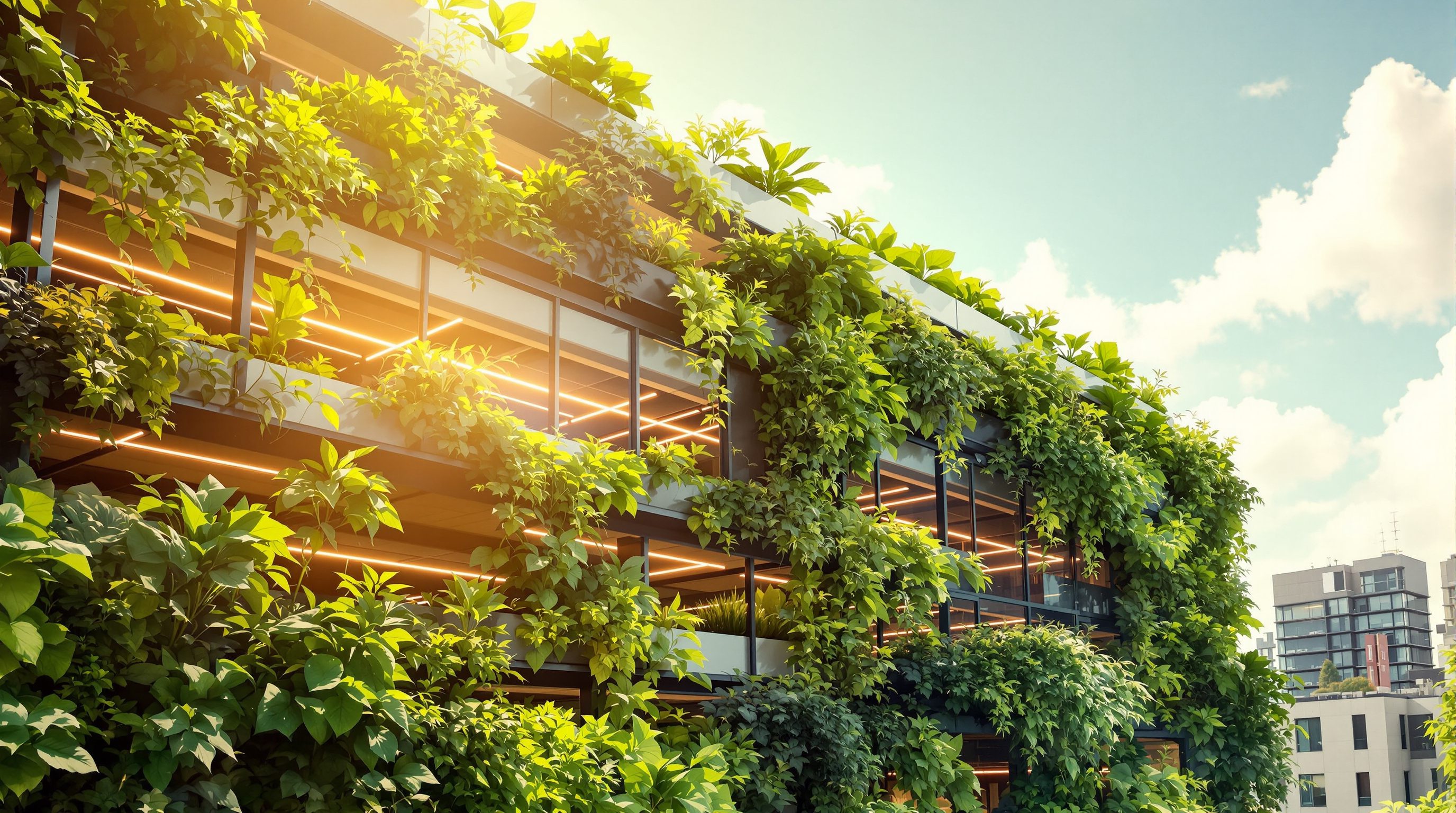
On-ramp: pot -> herb wall -> terrace bed -> rooftop garden. All SUN-POWERED (free light). Learn what grows + what it needs (light first!). Engage partners at thresholds (structural = wet load heavy). AVOID the indoor trap: expensive to run, punishes beginners.
Start small and sun-powered
The first principle of getting started is to start small, and the second is to start sun-powered - and the two reinforce each other. Small means low cost, low risk and fast learning; sun-powered means the free sun does the light-energy work, so you are gardening rather than running an energy-intensive factory. Together they give you the gentlest, cheapest, most forgiving possible entry into growing food in buildings.
Concretely, starting small and sun-powered looks like a pot of basil, mint or coriander on a bright windowsill; a herb wall or a few grow-bags on a balcony; raised beds or containers on a sunny terrace; a corner of a flat roof planted with easy vegetables. None of these needs a grow-light, a controlled environment, a structural upgrade or a business plan. They need sun, water, a growing medium, and attention. The cost of failure is a few dead plants and a lesson learned, not a bankrupted venture. And because the sun is doing the expensive part, the economics are benign from the start.
This matters enormously as an on-ramp, because it lets you learn by doing at a scale where mistakes are cheap. You discover that plants need more light than you thought, that pots dry out fast in the heat, that some crops are easy and some are fussy, that pests arrive, that watering is a daily discipline. You build intuition that no reading can give. And you do it without the crushing running costs that make indoor farming so unforgiving of beginners' errors. The temptation, especially for the technically minded, is to skip this stage and buy an impressive indoor system - but that is exactly backwards. Start with the pot, the terrace, the herb wall. Let the sun do the work. Learn cheaply. The ambition can grow later, once the fundamentals are in your hands; the worst way to begin is at the expensive, energy-hungry top, where a beginner's mistakes are most costly and least recoverable. Small and sun-powered is not a lesser start - it is the right one.
Learn what grows and what it needs
Once you have started small, the work is to learn - genuinely, hands-on - what grows and what it needs, because building agriculture is a living practice, not a product you install. Plants are not machinery; they are organisms with real, specific requirements, and the single most valuable thing a beginner can build is a felt understanding of those requirements in the particular place they are growing.
Start with light, because light is everything. Learn how much sun your space actually gets - not how much you assume, but how many hours of direct light, at what times, in what season. Leafy greens and herbs tolerate less; fruiting crops like tomatoes and chillies need a lot. Match the crop to the light you have. Then water: learn how often your pots or beds dry out, how drainage works, how over-watering kills as surely as under-watering. Then the growing medium - soil, compost, potting mix - and the nutrients plants draw from it, which deplete and must be replenished. Then the calendar: what to sow when, how long to harvest, what suits your climate and season. And then the troubles: pests, disease, heat stress, the ordinary setbacks every grower meets.
The way to learn all this is to grow, observe, keep notes and repeat. Which crops thrived and which sulked? What died, and why - too little light, too much water, the wrong season? A simple grower's notebook is worth more than any amount of theory. Start with easy, forgiving crops - herbs, salad leaves, spinach, chillies - and expand as your confidence and your understanding of your own space grow. Talk to other growers; local knowledge about what does well in your climate and on your kind of roof or balcony is gold. This hands-on literacy - knowing what grows here, in this light, in this season, and what it needs to thrive - is the foundation everything else rests on. A designer who has actually grown food, even a little, brings a grounded realism to building-agriculture projects that no purely theoretical knowledge supplies, and it is the surest antidote to the glossy fantasies the field is prone to.
Engage the right partners as you scale
A pot of herbs needs no team. But as your ambition grows from a windowsill to a terrace to a rooftop farm, the moment comes - earlier than most beginners expect - when you must bring in the right partners, because scaling up crosses thresholds where binding expertise is not optional. Knowing when and whom to engage is part of getting started well.
The clearest threshold is structural. The instant you contemplate a serious growing system on a roof, terrace or facade, you need a structural engineer, because a wet, soil-laden or water-based growing system is heavy, and no amount of enthusiasm substitutes for a qualified confirmation that the structure can carry it. This is not a step to skip or to guess at; it is a safety matter, governed by the codes. Alongside it, waterproofing and drainage become critical the moment standing water and saturated medium meet a building, so a waterproofing specialist and a services engineer belong in the conversation early. If you intend to grow food for others to eat, food-safety expertise enters - water quality, contamination, safe materials. And a grower or horticulturist, if you are not one yourself, will save you from expensive mistakes about what to grow and how to keep it alive at scale.
The skill is to engage these partners at the right moment - early enough that they shape the project rather than patch it, but proportionate to the scale. A herb wall does not need a structural engineer; a rooftop farm absolutely does. Getting started well means recognising the thresholds honestly rather than pushing past them because bringing someone in feels like admitting you cannot do it alone - you cannot, and no competent grower or designer pretends otherwise. It also means using the good sources of help available: local nurseries and growers, community gardening groups, agricultural extension advice, and reputable suppliers, alongside the qualified engineers and specialists whose results are binding. Building your network of partners as you scale is not a detour from getting started; it is part of doing it properly, and it keeps your growing ambition both safe and sound as it climbs.
Grow from there - and avoid the energy-hungry indoor trap
The whole shape of getting started is a climb: from the pot to the herb wall to the terrace to the rooftop, each step building on the last, each staying sun-powered, each teaching you more. Grow from there - expand as your skill, your space and your partners allow, and let ambition follow competence rather than lead it. But this lesson must end with the trap it has been circling, because it is the single most common and most costly beginner's mistake: leaping straight to an expensive, energy-hungry indoor farm.
The indoor trap is seductive precisely because it looks like the serious, high-tech, future-facing version of building agriculture - stacked trays glowing under LED light, sensors and automation, a clean windowless room. It promises to skip the fuss of weather and seasons. And it is, for a beginner, close to the worst possible way to start. It is expensive to build, and far worse, expensive to run, because electricity must buy every bit of the light energy the sun would give free, plus cooling and pumping. Those running costs are relentless and unforgiving: a beginner's inevitable mistakes, which cost a few plants on a sunny terrace, can cost a fortune in an indoor farm. The economics are brutal even for experts - the sector is littered with well-funded failures - and for a newcomer they are near-hopeless. And it can grow only high-value, low-calorie crops, so it will never be the productive food source the beginner imagines.
The honest advice, therefore, is blunt: do not start indoors. Start with the sun. Grow food where the free light does the work, learn cheaply, build competence and partners, and let your ambition climb the sun-powered ladder. If, much later, you have a specific, defensible reason for an indoor system - a genuinely high-value crop, a premium market, cheap clean power, a controlled requirement - approach it with clear eyes, real figures and the right specialists. But as an on-ramp, indoor farming is a trap that punishes exactly the exploratory, mistake-rich learning that getting started requires. Begin small, begin sun-powered, learn, engage partners, and grow from there. That path is affordable, forgiving, genuinely productive, and it is how almost everyone who succeeds at growing food in buildings actually began.
Structural threshold
When a growing idea needs an engineer
A pot or herb wall needs none; the instant a serious growing system goes on a roof, terrace or facade, a structural engineer must confirm the load, because a wet, soil-laden or water-based system is heavy. Governed by NBC India and IS. Module 5.1.
Water, drainage and food-safety thresholds
When services and safety experts enter
Standing water and saturated medium meeting a building trigger waterproofing and services engineering early; growing food others will eat triggers food-safety expertise. These belong to qualified specialists and the governing regulation, not beginners' guesses.
Sun-powered on-ramp
The right way to begin
Begin small and sun-powered - pot, herb wall, terrace bed, rooftop corner - so the free sun does the light-energy work, failure is cheap and learning is fast; avoid the expensive, energy-hungry indoor trap. Module 10.4.
Workshop - plan your own real first step
Getting started is not a thought experiment; it is a pot you actually plant. In this workshop you plan - and ideally begin - one small, sun-powered, real first step in a space you have, and set out how you will learn from it.
A real sunny space, a few cheap containers, a growing medium, easy seeds or seedlings, water and a notebook. No grow-lights, no controlled environment - the sun does the work; binding structural, water, electrical and food-safety design always stays with qualified specialists.
Goal: a concrete, sun-powered first step you can actually take
Inputs: a real space you have (sill, balcony, terrace, roof corner) + this lesson + a notebook
Time: ~40 minutes to plan; then weeks to grow
- 1Find your sun: in a real space you have, note honestly how many hours of direct sunlight it gets, at what times - this decides what you can grow.
- 2Choose forgiving crops matched to that light: herbs and salad leaves for modest light, chillies or tomatoes only where there is a lot; write down two or three to try.
- 3List what they need - a container with drainage, a growing medium, water, and a watering routine you can realistically keep - and gather it cheaply.
- 4Start a grower's notebook: date, what you planted, in what light; then observe weekly what thrives, what struggles and why (light, water, season, pests).
- 5Write down the threshold you would hit if you scaled this up - at what point would you need a structural engineer, waterproofing, services or food-safety help - and note that those results are always for qualified specialists.
You’ll walk away with
A planted (or ready-to-plant) small, sun-powered first step with a grower's notebook started, forgiving crops matched to real sunlight, and an honest note of the thresholds at which scaling up would require named specialists and the codes.
Three altitudes on the same idea
Read the band that fits you — or all three.
Getting started - for yourself and for advising clients - means start small and sun-powered, learn what grows hands-on, engage the right partners at the right thresholds, and grow from there, steering hard away from the energy-hungry indoor trap. Encourage clients to begin with the achievable sun-powered move - a terrace garden, a rooftop bed, a greenhouse - rather than the ambitious indoor system, and to let ambition follow competence. Know the thresholds that trigger binding expertise: the instant a serious growing system goes on a roof, terrace or facade you need a structural engineer, because the wet, soil-laden load is heavy, plus waterproofing, drainage and services early. A designer who has actually grown even a little brings grounded realism no theory supplies. Defer the structural (roof and facade loads), waterproofing, water and drainage, electrical, food-safety and horticultural results to qualified specialists and the codes (NBC India, IS, food-safety regulation); own the humble, sun-first on-ramp and the honest warning against starting at the expensive, energy-hungry top.
The interior on-ramp is the gentlest of all: a herb pot on a sunny sill, a kitchen herb wall, a tray of microgreens, salad leaves in a bright cafe - start small, use the daylight you have, learn what these easy crops need, and grow from there. These small edible elements are achievable, delightful and low-risk, and they connect people to food; they are also the honest limit of casual indoor growing, because growing serious quantities indoors needs the energy-hungry, specialist lighting the course warns about. Learn, hands-on, how much light a windowsill or a modest grow-light actually delivers, how often pots dry out, and which herbs and leaves are forgiving. Match the ambition to the daylight and the upkeep the client will genuinely sustain. Coordinate any binding water, drainage, electrical, weight and food-safety matters with the specialists and the codes; own the small, sun-lit, edible interior and the honesty about where a lovely herb wall ends and an expensive grow-room begins.
The best way to learn building agriculture is to start growing - small and sun-powered - not to read about indoor farms. Get a pot of herbs on a sunny sill, then a terrace bed or a corner of a roof, learn hands-on what grows and what it needs, and grow from there. This hands-on start is the most valuable thing you can do, because it turns theory into felt understanding: you learn that light is everything, that watering is a daily discipline, that some crops are easy and some fussy, that pests arrive, that failure teaches. Keep a grower's notebook. Start with forgiving crops. Learn when a project crosses a threshold that needs a structural engineer, waterproofing, services or food-safety expertise, and never guess at those binding results. Above all, avoid the beginner's trap of leaping to an expensive, energy-hungry indoor system: it punishes exactly the cheap, exploratory, mistake-rich learning that getting started requires. Begin with the sun; let ambition follow competence.
“If you are serious about building agriculture, you should start with a proper high-tech indoor vertical farm - hydroponics, LED grow-lights, controlled environment, automation. That is the real, modern, professional way to grow food in buildings; pots on a windowsill are just a hobby that teaches you nothing useful.”
Do it yourself
No tools needed - reason it through (then go plant something).
- 1Explain why starting small and starting sun-powered reinforce each other as an on-ramp.
- 2List the things a beginner must learn hands-on about what a crop needs, starting with light.
- 3At what point does a growing project cross the threshold that requires a structural engineer, and why must this never be guessed?
- 4Describe the energy-hungry indoor trap and why it is such a poor way for a beginner to start.
- 5Why does a designer who has actually grown food, even a little, bring something a purely theoretical designer cannot?
The one line to carry out
Peer-reviewed journals & authoritative standards
- 01Urban agriculture — Wikipedia - Urban agriculture, 2026.
- 02Rooftop farming — Wikipedia - Rooftop farming, 2026.
- 03Container garden — Wikipedia - Container garden, 2026.
- 04Kitchen garden — Wikipedia - Kitchen garden, 2026.
This sun-first, humble on-ramp fits some places better than others - and nowhere better than India. Next, the Indian context in full: the strong fit of sun-powered building agriculture, and the real scepticism energy-hungry indoor farming deserves here.
The author
Amogh N P
Architect, interior designer, and creative polymath. Studio Matrx began in his notebooks — his vision of design made honest, useful, and open to everyone. Its Academy is written and taught in his memory, and free, forever.
More about Amogh →