
 Lesson 6.4
Lesson 6.4 · Making It Work
Food Safety & Quality
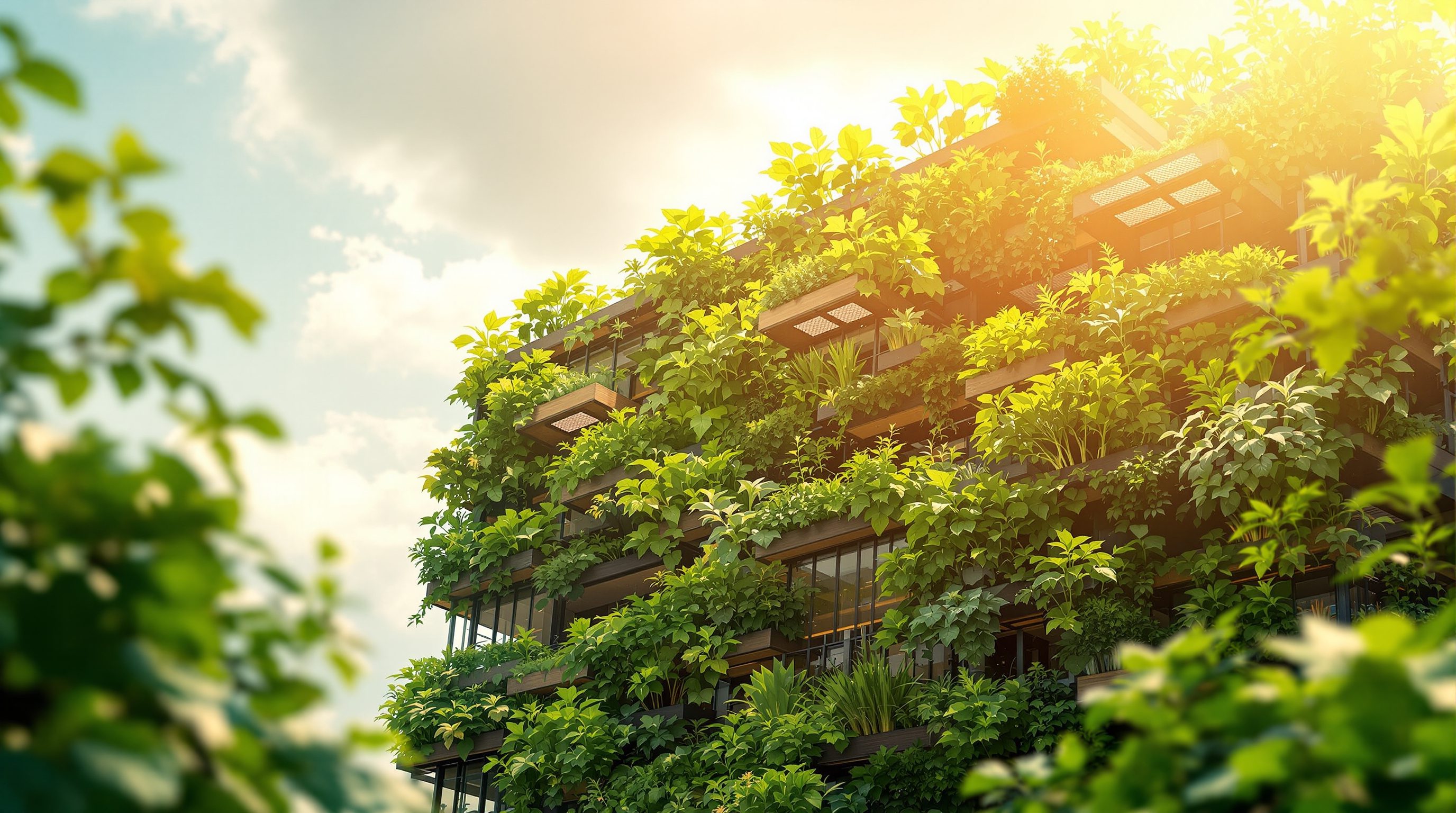
The moment a building grows food that people will actually eat, it takes on a serious and non-negotiable obligation that ornamental planting never carries - because a building is not a clean farm, and leafy greens eaten raw give a pathogen no cooking step to make it safe, food safety, water quality and contamination are real risks whose binding design belongs to specialists and the governing regulation, never to guesswork
An ornamental green wall that gets it wrong looks a bit sad. A food wall that gets it wrong can make people ill.
Everything shifts the moment a building grows food that people will actually put in their mouths. A green wall of ferns, a living wall of ornamental foliage, a decorative planted facade - if these are imperfect, the consequence is aesthetic: some plants look tired, some die, it is disappointing but harmless. The instant the same wall grows salad leaves or herbs that someone will eat, often raw and often unwashed, the stakes change completely. Now an invisible failure - contaminated water, a surface harbouring bacteria, a pest, a lapse in hygiene - is not a matter of appearance but of whether the food is safe to eat, and food that is not safe can make people seriously ill.
This is the obligation that food-growing carries and ornamental greening does not, and it is easy to forget precisely because building agriculture is often framed as a greening or design gesture. But it is agriculture: it produces food for human consumption, and that places it under the same serious duty of care - and, importantly, the same governing food-safety regulation - as any other food business. This lesson faces that duty honestly: why a building is not the clean, sunlit, open field we imagine, the pathways by which contamination can reach the crop, why leafy greens eaten raw are an unforgiving product, how a designer can shape a farm that is possible to keep safe, and - the firm boundary of the whole course - why the binding food-safety, water-quality and drainage design belongs to specialists and the governing regulation, never to a designer's guesswork.
Food to EAT = serious duty of care (unlike ornamental greening). Building != clean farm: water (spreads pathogens), surfaces/biofilm, air/HVAC, pests, workers, inputs. Crop = greens eaten RAW -> no cooking step to save a lapse. Designer: design FOR hygiene (cleanable, clean/dirty flows, pest exclusion, hand-wash). DEFER binding food-safety plan + water quality + compliance to specialists + regulation (FSSAI). Safety = floor under quality.
A building is not a clean farm
It is tempting to imagine an indoor or building farm as intrinsically cleaner than a muddy field - enclosed, controlled, no soil, no weather, no animals. Some of that is true, but the comforting picture is misleading, and the honest reality is that a building growing food carries its own distinct and often concentrated set of contamination risks. The figure maps the main pathways, and it is worth walking through them because each is a route by which something harmful can reach food that people will eat.
Water is the first and often the most serious, especially in hydroponic and aquaponic systems where crops sit in or are fed by circulating water. If that water carries harmful bacteria or contaminants, it can spread them efficiently to every plant it touches - water is a superb distributor of both nutrients and pathogens. Surfaces in a warm, humid growing environment are ideal for microbial growth and biofilms; tanks, pipes, trays, channels and tools can all harbour and spread contamination if not properly cleaned. Air and dust, moved around by ventilation and HVAC, can carry contaminants, mould spores and particles onto crops. Pests - insects, and in many buildings rodents - are drawn to food and water and can contaminate crops directly. Workers are a major pathway: people carry and transfer microorganisms, and hygiene lapses (unwashed hands, illness, cross-contamination between tasks) are among the commonest causes of food-safety failures anywhere food is handled. And the inputs themselves - nutrients, growing media, seeds - can introduce contamination if they are not clean and controlled.
The uncomfortable truth is that a building farm often concentrates these risks: it is warm, wet and enclosed (good for microbes), densely planted (so contamination spreads fast through a uniform crop), close to people and building systems, and sometimes retrofitted into spaces never designed for food production. Being indoors removes some field risks (weather, wild animals, some soil-borne hazards) but introduces or intensifies others, and 'controlled environment' controls the growing conditions, not automatically the contamination. The honest starting point is therefore respect, not complacency: a building that grows food to eat is a food-production environment with real hazards, and it must be treated as one - not assumed clean because it is indoors and looks tidy.
The unforgiving product: greens eaten raw
Food safety would matter for any crop, but building agriculture grows a category of food that is unusually unforgiving, and this compounds every risk in the previous section. The staple products of building farms - leafy greens, salad, herbs, microgreens, sprouts - are very often eaten raw, frequently with minimal washing, and sometimes marketed precisely as fresh, ready-to-eat, straight-from-the-farm produce. That is a genuine selling point, but it removes the single most important safety net in the whole food system: cooking.
For most staple foods, a cooking step - boiling rice, baking bread, frying, stewing - kills the great majority of harmful pathogens before the food reaches the plate, forgiving many upstream lapses. Raw leafy greens have no such step. Whatever pathogen reaches the leaf in the farm can travel all the way to the eater alive, and salad leaves are physically hard to clean thoroughly - their crinkled surfaces, tight heads and delicate structure trap and shelter microbes, and washing reduces but does not reliably eliminate contamination. This is not a theoretical worry: leafy greens and sprouts are, in the wider food world, among the produce categories most often implicated in food-borne illness outbreaks, precisely because they are eaten raw, are hard to clean, and can carry pathogens from water, soil or handling. A building farm growing exactly these crops inherits exactly this vulnerability.
The consequence for a designer and operator is a raised, not a relaxed, standard. The very product that makes building agriculture attractive - fresh, local, raw-eaten greens - is the product that makes food safety most critical, because there is no cooking step to catch a mistake. Freshness and rawness are features to be proud of and hazards to be managed at the same time. This is also why quality and safety are entangled: a farm selling on freshness and premium quality is selling a promise about the food, and a safety failure does not merely disappoint, it can harm people and destroy the venture's reputation and legal standing overnight. The honest stance is to treat raw-eaten greens with the seriousness they deserve: assume no cooking step will save a lapse, design and operate so lapses do not happen, and never let the greening or design framing obscure the fact that this is food people will eat uncooked.
Designing for hygiene, deferring the binding design
Given real hazards and an unforgiving product, what is a designer's proper role? It is precise and important, and the figure divides it into two clear halves. The designer's job is to shape a farm that CAN be kept safe - to design *for* hygiene - while the binding food-safety design itself is deferred to specialists and the governing regulation. Both halves matter, and confusing them is dangerous.
On the design-for-hygiene side, many decisions that make safety possible are architectural and spatial. A farm should be cleanable: surfaces, tanks, channels and equipment that can be reached and thoroughly cleaned, with materials and details that do not trap water and grime. It should separate clean and dirty flows - keeping, for example, harvested ready-to-eat produce and packing away from waste, cleaning and incoming materials, so contamination is not carried across. It should support pest exclusion - sealing, screening and detailing that keep insects and rodents out. It should provide the facilities hygiene needs - hand-washing points, appropriate drainage, waste handling, storage. And it should give the operation room and layout to stay hygienic under the daily loop, rather than forcing shortcuts. These are genuine design responsibilities, and getting them wrong makes safe operation harder or impossible, so a good designer thinks about them from the start.
On the defer side stands the firm boundary of this whole course. The binding food-safety design - the formal food-safety plan (of the hazard-analysis kind, such as HACCP-style systems), the water-quality standards and testing regime, the contamination-control protocols, and compliance with the governing food-safety law - is specialist, regulated work that belongs to food-safety professionals, water and services engineers, and the relevant regulation, in India centrally the food-safety authority and its rules (FSSAI), not to a designer's judgement. Likewise the binding water-quality, drainage and waterproofing engineering belongs to qualified services engineers. A designer who tries to specify a food-safety regime from general knowledge is doing something genuinely hazardous, because errors here can make people ill. The competent, honest stance is to design a farm that is inherently possible to keep safe and clean, to raise food safety early and insist it is properly resourced, and to bring in the food-safety and water specialists and follow the governing regulation for every binding result. Design *for* safety; defer the *specification* of safety. That division is exactly right, and it protects both the people who will eat the food and the integrity of the design.
Quality, trust and the honest whole picture
Food safety sits inside a larger idea - quality - and building agriculture lives or dies on the trust that quality earns. A building farm sells not just food but a story: fresher, cleaner, more local, more traceable, grown with care close to where it is eaten. That story can be genuinely true and is a real advantage - produce harvested and eaten the same day, grown in a controlled setting, with a short traceable chain, can be excellent. But the story is also a promise, and food safety is the floor beneath it: no amount of freshness, provenance or premium branding survives making a customer ill. Quality without safety is worthless, and a single serious safety failure can end a venture's reputation, custom and legal standing overnight. So safety is not a constraint on the quality proposition; it is its foundation.
This connects food safety back to the whole module. The economics are brutal partly because doing food production *properly* - safely, hygienically, with proper water quality, testing, cleaning and compliance - costs real money in equipment, labour and discipline, and cutting those corners to save money is both dangerous and, ultimately, self-destructive. The operations must be run well partly *because* safety depends on the daily discipline of the loop - the cleaning, the monitoring, the hygiene - never slipping. A farm that is under-resourced or badly run is not just unprofitable; it is a food-safety risk. So the honest whole picture of 'making it work' is that economics, crops, operations and food safety are one interlocking reality: a viable building farm is one that grows the right crop, for a real market, run well by skilled people, safely and to a quality that earns trust, at a cost the produce can cover. Miss any part and it fails - unprofitably, or worse, unsafely.
For India the same principles hold with local specifics: the governing food-safety regulation (FSSAI) applies to food produced for sale, water quality can be a particular concern where supply is variable, and the strong sun-powered rooftop and terrace tradition still carries real food-safety obligations the moment produce is sold or shared beyond a household - simplicity does not remove the duty of care. Whether a lavish indoor farm or a community rooftop garden, the moment a building grows food people eat, it takes on this serious, non-negotiable responsibility, and the honest, competent designer designs for it, respects its limits, defers the binding parts to specialists and the governing regulation, and never lets a greening or design framing disguise the fact that this is food, and food safety is real.
A building is not a clean farm
Contamination pathways
Water (a powerful pathogen spreader in hydroponics), warm humid surfaces and biofilm, air and HVAC, pests, workers and inputs are all real routes, often concentrated indoors. Controlled environment controls growing, not automatically contamination. Module 5.2.
Raw-eaten greens are unforgiving
Why the product raises the standard
Leafy greens, salad, herbs and sprouts are eaten raw, hard to clean, with no cooking step to kill pathogens - among the produce most linked to food-borne illness. Freshness is a feature and a hazard to manage. Module 6.2.
Design for hygiene
The designer's proper role
Shape a farm that CAN be kept safe: cleanable surfaces and systems, separated clean and dirty flows, pest exclusion, hand-washing and drainage, room to stay hygienic. Module 8.3, 5.2.
Defer the binding design
Food-safety specialists and regulation
The formal food-safety plan (HACCP-type), water-quality standards and testing, and compliance belong to food-safety specialists, services engineers and the governing regulation - in India, FSSAI - never to designer guesswork. Module 5.2, 8.2.
Workshop - map the contamination pathways and split the responsibilities
Food safety becomes real when you trace how something harmful could actually reach the food. In this workshop you map the contamination pathways of a building farm, test its design for hygiene, and practise the crucial split between what a designer shapes and what must be deferred to specialists and regulation.
Just a farm idea and a notebook. No food-safety plan or water-quality specification is claimed or attempted - this workshop builds hazard awareness and the design-for-hygiene versus defer discipline; the binding food-safety, water-quality and drainage design always belongs to food-safety specialists, services engineers and the governing regulation.
Goal: a working grasp of contamination pathways and the design-for-hygiene versus defer split
Inputs: a building-farm idea (yours or a real one) + this lesson + a notebook
Time: ~45 minutes
- 1Map the pathways: for this farm, list how contamination could reach the crop - water, surfaces and biofilm, air and HVAC, pests, workers, inputs - and note which the design concentrates.
- 2Weigh the product: note that the crop is likely eaten raw with no cooking step, and mark why that raises the standard rather than relaxing it.
- 3Test the design for hygiene: is it cleanable, are clean and dirty flows separated, are pests excluded, are there hand-washing and drainage, is there room to stay hygienic under the daily loop? Mark the weak points.
- 4Split the responsibilities: draw two columns - what the designer shapes (design for hygiene) versus what must be deferred (the food-safety plan, water-quality standards and testing, compliance) - and place each safety issue in the right column.
- 5Write a short honest note: how this farm should be designed to be kept safe, and exactly which binding food-safety and water-quality questions you would hand to specialists and the governing regulation (in India, FSSAI) - flagged clearly as reasoning, not a safety specification.
You’ll walk away with
A one-page food-safety map: the contamination pathways, a design-for-hygiene test marking weak points, a two-column split of designer-shapes versus must-defer responsibilities, and an honest note - all framed as reasoning, with every binding food-safety and water-quality result deferred to specialists and regulation.
Three altitudes on the same idea
Read the band that fits you — or all three.
The moment your building grows food people will eat, it becomes a food-production environment with a serious, regulated duty of care - completely unlike ornamental greening - and your design either makes safe operation possible or quietly impossible. Understand that a building is not a clean farm: water (a superb spreader of pathogens in hydroponic systems), warm humid surfaces and biofilm, air and HVAC, pests, workers and inputs are all real contamination pathways, often concentrated indoors, feeding a crop - leafy greens - usually eaten raw with no cooking step to catch a mistake. Your job is to design FOR hygiene: cleanable surfaces and systems, separated clean and dirty flows, pest exclusion, hand-washing and drainage, and room to stay hygienic under the daily loop. Your firm boundary is to DEFER the binding design - the formal food-safety plan (HACCP-type), water-quality standards and testing, and compliance - to food-safety specialists, services engineers and the governing regulation (in India, FSSAI). Raise food safety early, insist it is resourced, and never specify a safety regime from general knowledge. Design for safety; defer the specification of safety.
An ornamental herb wall that struggles just looks sad; an edible herb wall that harbours contamination can make people ill - so the instant an interior installation grows food to eat, it crosses into a serious duty of care. Recognise the shift: decorative planting is a design matter, but a herb wall, kitchen garden or edible installation whose produce goes into food is food production, with real contamination risks (water, damp surfaces and biofilm, pests, handling) and, because herbs and salad are eaten raw with minimal washing, no cooking step to forgive a lapse. Design for hygiene at your scale: make the installation genuinely cleanable and drainable, keep it away from contamination sources, use safe materials and clean water, and be honest with clients about the care and hygiene it demands. Crucially, defer the binding food-safety and water-quality questions to specialists and the governing regulation whenever produce is actually consumed or sold - do not improvise a safety regime. Coordinate water, drainage and food-safety with the specialists; your domain is the delightful, edible, human-scale interior that is designed to be kept clean and safe, not a pretty installation that quietly becomes a hazard.
The moment a building grows food people will actually eat, it takes on a serious, non-negotiable, regulated obligation that ornamental greening never carries - and understanding this is part of being genuinely food-literate. A building is not the clean sunlit field we imagine: water (which spreads pathogens efficiently in hydroponic systems), warm humid surfaces and biofilm, air and HVAC, pests, workers and inputs are all real contamination pathways, often concentrated indoors. Worse, building farms grow exactly the unforgiving crops - leafy greens, salad, herbs, sprouts - eaten raw and hard to clean, so there is no cooking step to kill a pathogen before it reaches the eater, which is why these are among the produce most often linked to food-borne illness. The designer's role splits cleanly: design FOR hygiene (cleanable systems, separated clean and dirty flows, pest exclusion, hand-washing, room to stay clean) but DEFER the binding food-safety plan, water-quality standards and compliance to food-safety specialists and the governing regulation (in India, FSSAI). Quality sells building-farm produce, but safety is the floor beneath it - one serious failure ends a venture. Food safety is real; never let a greening framing disguise it.
“Indoor and vertical farms are inherently safer and cleaner than ordinary field farming - they are enclosed and controlled, use no soil, keep out weather and animals, and can even skip pesticides - so food safety is much less of a concern for building-grown produce than for field crops.”
Do it yourself
No tools needed - reason it through.
- 1Explain why a building growing food is not intrinsically a clean farm, naming the main contamination pathways.
- 2Why does water deserve special attention as a contamination pathway in hydroponic and aquaponic systems?
- 3Why are raw-eaten leafy greens an unusually unforgiving product from a food-safety point of view?
- 4Divide a designer's role into what to design FOR and what to DEFER, with examples of each.
- 5Why is food safety the foundation beneath a building farm's quality and freshness story rather than a mere constraint on it?
The one line to carry out
Peer-reviewed journals & authoritative standards
- 01Food safety — Wikipedia - Food safety, 2026.
- 02Hydroponics — Wikipedia - Hydroponics, 2026.
- 03Aquaponics — Wikipedia - Aquaponics, 2026.
- 04Food system — Wikipedia - Food system, 2026.
Making a building farm work means facing all of it at once - the brutal economics, the honest crops and yields, the relentless operations, and the real obligation of food safety - and from here the course widens to the bigger picture of urban food systems, community, sustainability and equity.
The author
Amogh N P
Architect, interior designer, and creative polymath. Studio Matrx began in his notebooks — his vision of design made honest, useful, and open to everyone. Its Academy is written and taught in his memory, and free, forever.
More about Amogh →