
 Lesson 6.3
Lesson 6.3 · Making It Work
Operations & Labour
A farm is not a building you finish and hand over - it is a living process that must be run, skilfully, every single day, for as long as it exists; designing a beautiful farm is a project that ends, but keeping it productive is a relentless business that never does, and most building farms fail not on their design but on their operations
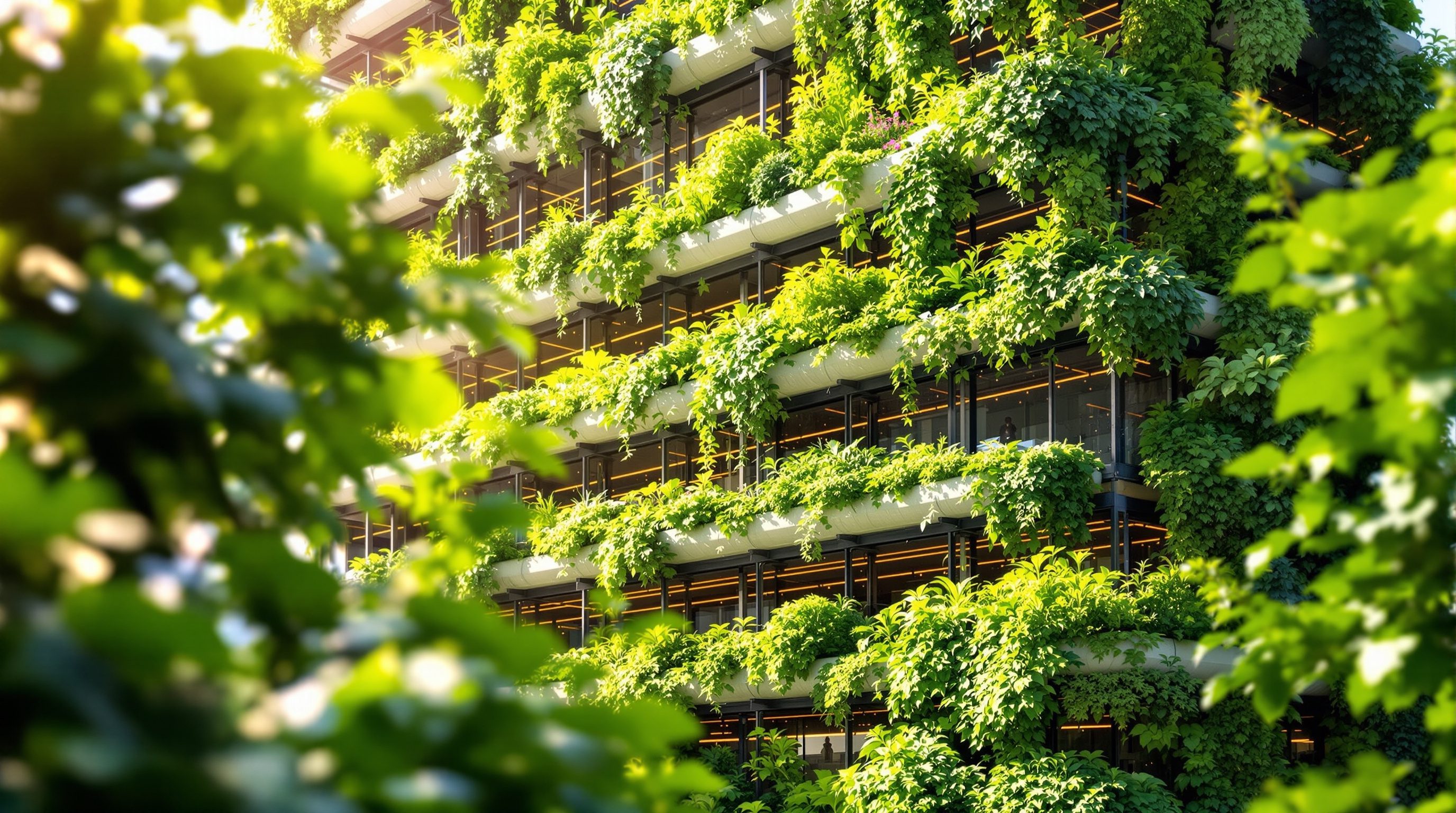
The render shows a spotless farm glowing under perfect light. It never shows the person who has to be there at 6am, every day, forever.
Architects and designers are trained to make things that get finished. You design a building, it gets built, the ribbon is cut, the client moves in, and the project - however long and hard - ends. This is such a deep habit of the profession that it quietly shapes how we imagine everything, including farms. We picture the beautiful finished farm: the clean stacked trays, the healthy plants, the glowing light, the moment of completion. And that picture is a trap, because a farm is not a thing you finish. It is a process you run.
The most important and least glamorous truth about growing food in buildings is that a farm must be operated - actively, skilfully, tirelessly - every single day, for as long as it exists, or it stops producing food and starts producing dead plants. The plants do not pause because it is a weekend, a holiday, or a crisis; they grow, get thirsty, get sick, and must be harvested on their own schedule, not yours. This lesson is about that operational reality: the daily grind of running a farm, the skilled and costly labour it demands, and the deep gulf between designing a farm and keeping it productive. It matters enormously because, alongside the economics, operations is where building farms most often fail - not because they were badly designed or the technology did not work, but because no one could run them well enough, day after day, to make them succeed.
A farm is RUN, not finished. Loop that never stops: sow -> transplant -> tend/dose -> monitor -> harvest -> pack -> clean -> repeat (7 days, plants don't wait). Labour = 2nd big bill after energy (skilled grower scarce + manual work). DESIGN (finite project) != RUN (endless business). Most farms fail on operations, not design. Prefer sun-powered = more forgiving.
The loop that never stops
A farm runs on a cycle that never pauses, and understanding its shape is the first step to respecting it. Crops are sown (seeds started in trays or plugs); seedlings are transplanted into the growing system as they develop; growing plants are tended - checked, spaced, pruned, and in a hydroponic system dosed with the right nutrients at the right strength and pH, with water levels and flow maintained; conditions are monitored constantly - light, temperature, humidity, nutrient solution, and above all the plants themselves, watched for the first signs of stress, deficiency, pest or disease; mature crops are harvested at exactly the right moment, because a day early or late loses value; the produce is packed and moved to sale fast, because it is perishable; and the emptied system is cleaned thoroughly before the next cycle, because a dirty system breeds disease. Then it begins again - and in a well-run farm many of these stages are happening at once, on staggered batches, so the whole loop is running continuously across the farm at all times. The figure shows this loop as a wheel that turns without stopping.
Two features of this loop make it demanding. First, it is relentless and time-critical: plants do not wait, so the work must happen when the plants need it, not when it is convenient - seven days a week, through holidays, at whatever hour the crop dictates. A farm cannot be switched off for a week; leave a hydroponic system unattended and crops die fast. Second, it is unforgiving of small lapses: a nutrient dose slightly wrong, a pump left off, a pest missed for two days, a cleaning step skipped, a harvest a day late - each can cascade into lost crops, and in a low-margin business lost crops are lost money the farm can ill afford.
For a designer, the loop has a direct lesson: the farm must be designed to be run, not just to look finished. Can staff physically reach every tray to tend and harvest it? Can the system be cleaned easily and thoroughly? Is there space to sow, transplant, pack and store? Can a sick batch be isolated? Are the daily paths short and sensible, or does the layout force hours of awkward movement? A farm that is beautiful in a render but exhausting to operate will quietly fail, because the loop that never stops will grind down the people running it. Designing for the loop is one of the most valuable and most overlooked things a designer can do.
Skilled labour is the other big bill
The last lesson named two dominant running costs for a fully-indoor farm; energy was the first, and labour is the second, often close behind. Running the loop takes people, and not just any people - it takes a mixture of genuinely skilled labour and a good deal of steady manual labour, and both cost money every month whether or not the farm has a good season.
The skilled end is easy to underestimate. Growing crops well - especially soil-free in a controlled environment - is a real expertise, part horticulture, part agronomy, part systems management. Someone has to understand plant health, read the subtle early signs of nutrient deficiency or disease, get the nutrient chemistry and pH right, respond correctly when something goes wrong, and manage the whole biological system so it stays productive. A farm can have flawless equipment and still fail because it lacks a skilled grower who knows what the plants are telling them. This expertise is scarce and not cheap, and in the newer high-tech end of the field it combines old horticultural knowledge with new technical skills, which makes the right person harder still to find and keep.
The manual end is relentless. Sowing, transplanting, tending, harvesting, packing and cleaning are largely hands-on tasks, repeated constantly across the whole farm, and while automation can reduce some of them, much remains stubbornly manual - plants are delicate, varied and awkward, and machines that handle them well are expensive and imperfect. So a farm carries a real, ongoing wage bill for people doing physical work, day in and day out. This collides hard with the economics: a low-margin product carrying both a heavy energy bill and a heavy labour bill has very little room, and labour is one reason indoor farming struggles to compete with field farming, where sunlight is free and large areas are worked with heavy machinery and seasonal labour. In India the labour calculus differs - manual labour is comparatively less costly, which can help a labour-intensive sun-powered rooftop or terrace operation - but skilled growers are still scarce, and the energy bill of a fully-lit farm remains the harder problem. The honest point stands: a farm is a payroll, not just a piece of equipment, and that payroll must be paid out of thin-margin produce, forever.
Designing a farm is not the same as running one
Here is the gulf at the heart of this lesson, and the one designers most need to internalise: designing a farm and running a farm are completely different activities, done by different people with different skills, on completely different timescales - and the profession is trained for the first and largely blind to the second. The figure sets them side by side. Designing and building is a project: finite, front-loaded, glossy, fundable, the thing architects and engineers are good at and paid for, ending at handover. Running the farm is a business: open-ended, relentless, unglamorous, dependent on skilled people and daily discipline, and it begins exactly where the project ends and never finishes.
This gulf causes real failures. A farm can be superbly designed - elegant, efficient, technically excellent - and still collapse because the operating team was under-resourced, under-skilled, or simply overwhelmed by the relentless loop; conversely, a modest, unglamorous farm run by skilled, committed people can thrive. The design is necessary but nowhere near sufficient. Yet the excitement, the funding and the media attention cluster almost entirely around the design-and-build project - the render, the launch, the flagship farm - while the operating reality that actually determines success gets far less thought and money. Many celebrated farms were designed and built brilliantly and then could not be run profitably, and the operating difficulty, not the design, is what sank them.
For a designer this has a clear professional consequence. Your job does not end at a beautiful, workable design; part of doing that design well is thinking hard about the operation it will have to support and being honest with the client that the building is the easy half. Ask who will actually run this farm, whether they have the skills, whether the operating costs and labour have been realistically budgeted, and whether the design genuinely makes daily operation easier rather than harder. Bring the eventual operators into the design conversation early, because they know things about running a farm that no designer does. And resist the seduction of the finished render: the render is the beginning of the hard part, not the end of it. A designer who understands that a farm must be run - and designs, budgets and advises accordingly - is far more useful, and far more honest, than one who hands over a glowing object and walks away.
Why building farms fail on operations, not design
Pull the threads together and a clear, sobering picture emerges of why building farms fail, and it is rarely the reason people expect. The plants usually grow; the technology usually works; the design is often excellent. What breaks is the operation - the relentless, skilled, costly daily running of the farm - because that is genuinely hard, chronically underestimated, and where the economics bite hardest.
The failure modes are operational. A farm cannot find or keep a skilled grower, so crop health slowly degrades and yields fall. The labour bill, added to the energy bill, proves impossible to cover from thin-margin produce. A disease or pest outbreak, missed early because no one skilled was watching closely, sweeps through the tightly-packed, uniform crop that a farm's very efficiency makes vulnerable. The farm cannot reliably sell everything it grows before it perishes, so a chunk of every harvest becomes waste. The relentless seven-day loop exhausts a thin team, quality slips, a big customer leaves. None of these is a design failure or a technology failure; each is an operations failure, and together they are the real story behind much of the sector's collapse. The economics set the trap; operations is usually how a farm falls into it.
The honest lessons are threefold. First, respect operations as the hard part: budget for it properly, staff it with genuinely skilled people, and design explicitly to make it easier, because a farm lives or dies on the loop, not the launch. Second, this is another strong argument for sun-powered simplicity where it will serve: a rooftop garden or greenhouse is generally simpler, more forgiving and less relentless to run than a fully-controlled indoor farm where every variable is a human responsibility and any failure is total - fewer things to run means fewer things to fail. Third, be honest, early and specific with clients about the operating commitment before anything is built - who runs it, at what skill, at what cost, forever - because a client who understands they are taking on a demanding daily business, not commissioning a pretty installation, can plan to succeed, while one who thinks the render is the finish line is already on the path so many farms have taken to closure. Design the farm; but never forget that someone has to run it, tomorrow morning, and the morning after that.
The operations loop
What running a farm means
Sow, transplant, tend and dose, monitor, harvest, pack, clean, repeat - continuous, time-critical, seven days a week, unforgiving of lapses. Design so every stage is physically doable. Binding operational planning belongs to growers and operators. Module 8.4, 2.2.
Labour is the second bill
The cost of running
After energy, labour (scarce skilled growers plus relentless manual work) is the dominant running cost, paid monthly out of thin-margin produce. A farm is a payroll. India: cheaper manual labour, still-scarce skilled growers. Module 6.1.
Design vs run
Two different activities
Designing a farm is a finite fundable project; running it is an open-ended daily business needing skilled people. The profession is trained for the first and blind to the second. Bring operators in early. Module 8.1, 8.4.
Fails on operations
Why farms collapse
Building farms fail on operations - skilled-labour scarcity, labour-plus-energy cost, missed disease, waste, team burnout - far more than on design or technology. Respect it; prefer sun-powered simplicity where it serves. Module 9.1, 6.1.
Workshop - walk a day in the life of a farm you would design
The best cure for the finished-render illusion is to mentally run the farm for a day. In this workshop you take a building-farm idea and walk through its relentless operating loop hour by hour, testing whether the design actually supports the daily reality of keeping it productive.
Just a farm idea and a notebook. No real staffing plan or budget is claimed - this workshop builds operational judgement and design-for-running instincts; binding operational, labour and agronomic planning always belongs to growers, operators and specialists.
Goal: a felt understanding that a farm must be run, and design judgement that supports it
Inputs: a building-farm idea (yours or a real one) + this lesson + a notebook
Time: ~45 minutes
- 1Sketch the operations loop for this farm: list every recurring task (sow, transplant, tend, dose, monitor, harvest, pack, clean) and how often each must happen.
- 2Walk a single day: write, hour by hour, what a person would actually be doing to keep this farm alive - and note the weekend, holiday and out-of-hours reality that plants do not pause.
- 3Test the design against the loop: can staff reach every tray, clean the system, isolate a sick batch, sow and pack and store, move on short sensible paths? Mark where the layout fights the operation.
- 4Cost the people honestly (as reasoning, not figures): what skilled and manual roles are needed, and does the thin-margin produce plausibly support that payroll alongside the energy bill?
- 5Write a short honest verdict: who runs this farm, at what skill and commitment, is the design serving the operation, and would a simpler sun-powered version be more forgiving to run - flagged as reasoning, with binding operational planning deferred to growers and operators.
You’ll walk away with
A one-page operational walk-through: the loop, a day-in-the-life, a design-versus-operation test marking where the layout helps or fights, an honest read on the people and payroll, and a verdict - all framed as reasoning to be confirmed by growers and operators.
Three altitudes on the same idea
Read the band that fits you — or all three.
Your training makes farms feel like projects that end at handover, and that instinct is the single biggest blind spot in designing food-growing buildings - because a farm is not finished, it is run, every day, forever. Learn the operations loop (sow, transplant, tend and dose, monitor, harvest, pack, clean, repeat) and design explicitly for it: can staff reach and tend every tray, clean the system thoroughly, isolate a sick batch, sow, pack and store, and move efficiently on short sensible paths? A farm that is beautiful in a render but exhausting to operate will fail. Understand that skilled labour is the second great running cost after energy, that a genuinely skilled grower is scarce and decisive, and that most building farms fail on operations, not design or technology. Bring the eventual operators into the design early, be honest with clients that the building is the easy half and the daily business is the hard one, and favour sun-powered simplicity where it will serve because it is more forgiving to run. Defer binding operational, labour, agronomic and systems planning to growers, operators and specialists - and design as if you will have to run it yourself.
A herb wall or small growing installation looks effortless in the photograph, but it is a living thing that someone must tend, water, harvest and keep alive - and if no one will, it becomes a sad wall of dead plants that reflects badly on everyone. The interior-scale version of this lesson is maintenance realism: even a modest edible installation needs regular watering, feeding, harvesting, replanting, cleaning and pest attention, and someone specific must own that or it will not happen. Design for it - make the installation genuinely reachable, waterable, drainable and easy to replant, not a beautiful trap that is impossible to maintain - and be honest with clients about the ongoing care commitment before it goes in. Consider who will actually look after it (kitchen staff, a facilities team, a gardener, an automated system with a human check) and whether that is realistic for this space. A small, well-tended herb wall is a delight; a large, neglected one is a liability. Coordinate water, drainage, weight and food-safety with specialists; your domain is the edible interior that stays alive because someone can and will run it.
The least glamorous and most important truth about farms is that they must be RUN - actively, skilfully, every single day, forever - and this is where most building farms actually fail, not on design or technology. Learn the operations loop that never stops: sow, transplant, tend and dose, monitor, harvest, pack, clean, repeat, running continuously across staggered batches, seven days a week, unforgiving of small lapses, because plants do not wait. Understand that skilled labour is the second great running cost after energy - a scarce, decisive skilled grower plus relentless manual work - and that a farm is a payroll, not just equipment. Grasp the gulf the profession is blind to: designing a farm is a finite, fundable, glossy project, while running it is an open-ended, unglamorous, daily business, and the second decides success. That is why celebrated, beautifully-designed farms have collapsed: the operation, not the design, sank them. The takeaways - respect operations as the hard part, prefer sun-powered simplicity that is more forgiving to run, and be honest that someone has to be there tomorrow morning - make you genuinely food-literate.
“Modern vertical farms are so automated - robots, sensors, AI-controlled climate and dosing - that they barely need people; you design and build the farm, switch it on, and the technology largely runs itself, which is exactly why they will out-compete labour-intensive traditional farming.”
Do it yourself
No tools needed - reason it through.
- 1Describe the operations loop of a building farm and explain why it is relentless, time-critical and unforgiving of small lapses.
- 2Why is skilled labour the second great running cost after energy, and why is a skilled grower so decisive?
- 3Explain the gulf between designing a farm and running one, and why the profession is trained for the first and blind to the second.
- 4Give three operational failure modes that sink building farms even when the design and technology are excellent.
- 5How should understanding that a farm must be run change how a designer designs, budgets and advises?
The one line to carry out
Peer-reviewed journals & authoritative standards
- 01Vertical farming — Wikipedia - Vertical farming, 2026.
- 02Controlled-environment agriculture — Wikipedia - Controlled-environment agriculture, 2026.
- 03Plant factory — Wikipedia - Plant factory, 2026.
- 04Plant nutrition — Wikipedia - Plant nutrition, 2026.
Running a farm well is not only about keeping plants alive but about keeping the food safe to eat - so next we face the real obligations of growing food people consume: food safety, water quality and contamination, and why the binding design belongs to specialists and regulation.
The author
Amogh N P
Architect, interior designer, and creative polymath. Studio Matrx began in his notebooks — his vision of design made honest, useful, and open to everyone. Its Academy is written and taught in his memory, and free, forever.
More about Amogh →