
 Lesson 1.2
Lesson 1.2 · The Idea & the Market
The Types of Homestay
From a spare city room to a thousand-acre plantation, 'homestay' covers a wide spectrum — knowing which one your home and your temperament actually fit saves you from building the wrong business.
There is no single 'homestay' — there is a spectrum from a spare room in a flat to a thousand-acre estate, and your home already decides which part of it you are on.
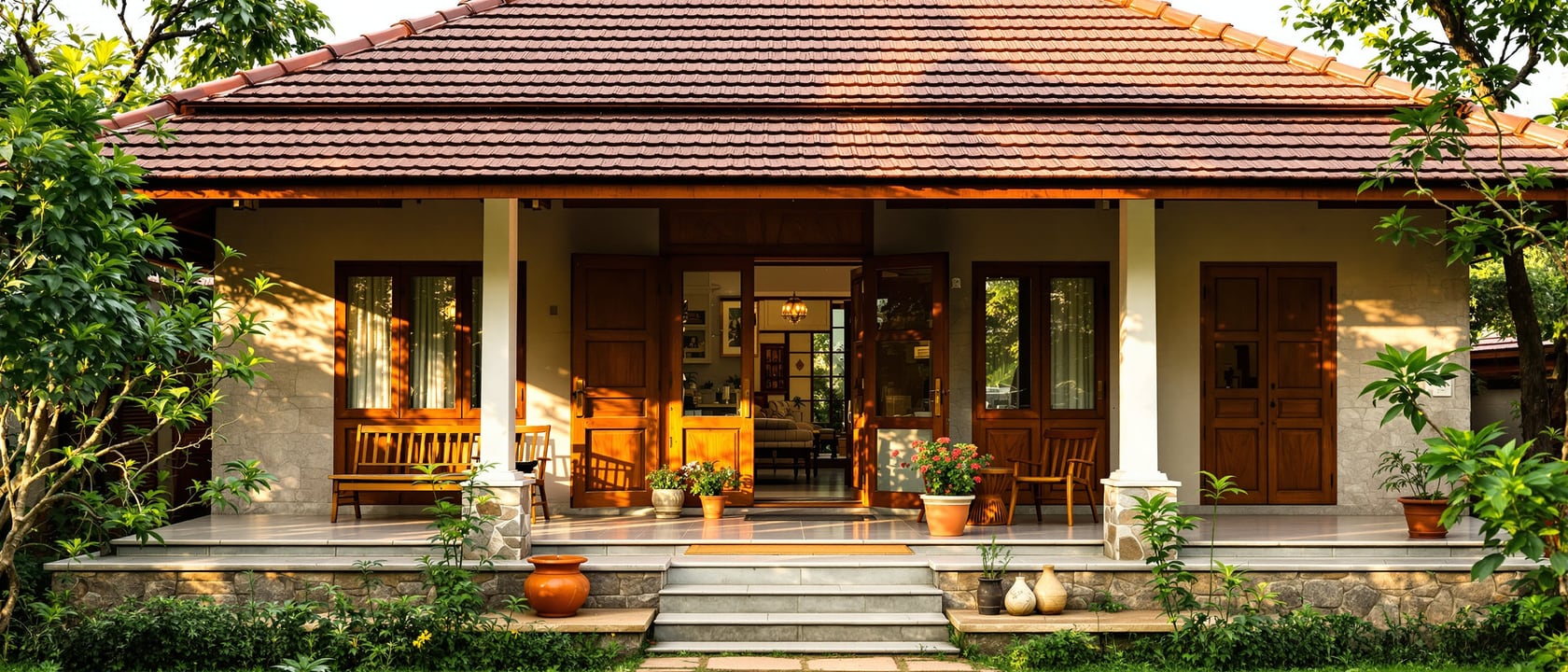
Say the word 'homestay' to five different people and they will picture five different things: a spare bedroom in a Bengaluru apartment, a colonial bungalow above a Coorg coffee estate, a centuries-old haveli in Jodhpur, a wooden cottage above a Himachal apple orchard, a family hut in a Meghalaya village, a working farm outside Nashik. All of them are correct, and all of them are genuinely different businesses wearing the same name — different capital needs, different time demands, different guests, different regulation, different ceilings on what you can charge.
This lesson maps that spectrum honestly, because the single biggest planning mistake a first-time owner makes is borrowing a business model that does not match their actual home. A couple with a spare room in a city flat should not plan around a Coorg plantation's economics, and a family sitting on ancestral farmland should not design a tiny urban side-let's guest experience. Know your type — or your honest blend of two — and the rest of this course becomes far easier to apply to your real situation rather than a generic one.
Six types, one name. Name your honest blend before you spend — grandeur is not the same thing as profit.
The six faces of a homestay
Start with a map of the spectrum as it actually exists across India today. The urban side-let is a spare room or floor in a city home — Bengaluru, Pune, Mumbai, Delhi — let to business travellers, students' parents, or tourists who want a city base cheaper and more personal than a hotel; low capital, high guest turnover, modest nightly rates. The estate or plantation homestay sits on working agricultural land — coffee in Coorg and Chikmagalur, tea in Munnar and Darjeeling, spice gardens in Kerala — where the land itself, not just the room, is the draw; guests walk the plantation, meet the harvest, eat what is grown there.
The heritage homestay occupies an old family building with real architectural or historical weight — a haveli in Jodhpur or Shekhawati, a Chettinad mansion in Tamil Nadu, a Portuguese-era house in Goa — where the building's age and craftsmanship is itself the headline. The hill or mountain homestay sits in Himachal, Uttarakhand, Sikkim or the higher reaches of the Western Ghats, selling altitude, air and view, usually with a sharp seasonal swing between a packed summer and a near-empty winter (or the reverse, for a ski-adjacent village). The community or village homestay is rooted in a specific local culture — Meghalaya's Khasi and Garo villages, parts of rural Kerala, tribal belts of the North-East — often organised through a cooperative or community tourism scheme rather than a single owner alone. And the experiential or farm homestay centres on an activity — organic farming, pottery, weaving, cooking, beekeeping — where guests come specifically to learn or do, not just to stay.
Six types, one word. Find the one your home and your land actually are, not the one that sounds most impressive.
Matching the type to the owner
Each type suits a genuinely different kind of owner, and the mismatch between owner and type is where many homestays struggle before they even open. The urban side-let suits a working professional or retiree with a genuinely spare room, limited capital, and limited daily time to spend hosting — it asks the least of you and gives back the least per night, but it starts fastest and recovers its (small) setup cost quickest. The estate or plantation model suits an owner who already holds substantial agricultural land and wants hosting to be a second income stream layered onto farming they are doing anyway; it needs the biggest capital outlay (guest cottages, pathways, staff) and the most sustained presence, but commands the highest premiums per room.
The heritage model suits an owner who has inherited or bought an old building and faces a specific choice: let it decay, sell it, or restore it and let hosting pay for the upkeep; it demands conservation-minded spending (often more expensive than ordinary renovation, because materials and craft must match the original) and patience with heritage-specific red tape. The hill or mountain model suits owners already living in a scenic but seasonal location — Himachal, Uttarakhand, the North-East hills — who must plan deliberately for the off-season rather than be surprised by it, since access, weather and demand all compress into a shorter window. The community or village model suits owners who want to host within, and share benefit with, an existing local cooperative or tourism initiative rather than compete against their neighbours — it trades some individual control for shared marketing and shared risk. And the experiential or farm model suits owners with a genuine skill or working land who enjoy teaching it — it fails quickly if the 'experience' is staged rather than real, because today's guests can tell the difference within an hour.
Pros and cons of each type
Laid out side by side, the trade-offs become easier to weigh against your own situation.
| Type | Capital needed | Owner time/presence | Seasonality risk | Regulatory complexity | Premium ceiling | |---|---|---|---|---|---| | Urban side-let | Low | Low-moderate | Low | Low-moderate | Modest | | Estate / plantation | High | High | Moderate | Moderate-high | High | | Heritage | High (conservation) | High | Moderate | High (heritage rules) | Highest | | Hill / mountain | Moderate-high | Moderate-high | High | Moderate | High | | Community / village | Low-moderate (shared) | Moderate (shared) | Moderate | Low-moderate | Modest-moderate | | Experiential / farm | Moderate | High | Moderate | Moderate | Moderate-high |
Treat every cell as indicative, not a formula — a well-run urban side-let can quietly out-earn a badly-run estate, because occupancy and management matter more than category grandeur. What the table is actually useful for is an honest gut check: if you have low capital and little spare time, do not plan around a plantation's economics just because it sounds more glamorous; if you are sitting on heritage architecture you cannot bear to lose, the conservation cost is real and belongs in your numbers from day one, not as a surprise in Module 3.
Look closely at the seasonality column too, because it is the one owners most often underestimate before they open. A hill or mountain homestay can swing from fully booked in May to nearly empty in August; a heritage property in a desert city like Jaipur or Jodhpur can swing the other way, baking through summer and filling through the pleasant winter season. An urban side-let is the most forgiving here, because city demand (business travel, family visits, hospital stays, weddings) runs through most of the year with only modest dips, which is part of why it recovers its setup cost fastest even though its ceiling is lower. None of this means avoid the seasonal types — a plantation or hill homestay can still be an excellent business — it means you must plan your cash flow, staffing and even your own other income around the trough, not just the peak, a theme Module 3's occupancy lesson returns to in detail.
The regulatory column deserves the same honesty. A heritage building may sit inside a protected zone or require specific structural approvals before you can add a bathroom or a staircase; estate land may carry agricultural-use restrictions that affect what you can legally build for guests; a community or village scheme may have its own local rules about how many outside operators can participate. None of this is a reason to avoid these types — thousands of owners navigate it successfully every year — but it is a reason to read Module 2 before you spend heavily on fit-out, so the compliance stack is a planned step rather than a late, expensive surprise.
Choosing (or honestly blending) your type
Very few real homestays are a pure single type — most are a blend, and that is completely fine as long as the blend is honest rather than accidental. A Kerala backwater homestay in a traditional nalukettu house is simultaneously heritage (the architecture) and estate (if there is land and water around it) and sometimes experiential (a cooking class, a canoe trip). A Himachal apple-orchard homestay is simultaneously hill (the altitude and season) and experiential (the harvest) and occasionally community (if it sits within a village tourism circuit). Naming your own honest blend — 'mostly heritage, with a hill-season rhythm' — is more useful than forcing yourself into exactly one box.
The decision in front of you now is simply this: given your actual home, your actual land (if any), your actual capital, and the honest self-assessment you did in Module 0's 'Is a Homestay Right for You?' workshop, which type or blend are you genuinely closest to? Write it down before Lesson 1.3, because the next lesson asks who will travel to a homestay exactly like yours — and that question only has a useful answer once you know, honestly, what kind of homestay you are building.
Side-let
A spare room, floor or annexe in an owner's existing home let to guests
The lowest-capital entry point into hosting; typically urban, often the fastest to set up and recover costs.
Estate / plantation homestay
A homestay on working agricultural land — coffee, tea, spice or orchard
The land and its produce are part of the guest experience, not just a backdrop. Common in Coorg, Chikmagalur, Munnar, Darjeeling.
Heritage homestay
A homestay in an architecturally or historically significant old building
Conservation costs and heritage rules often apply; see the Vernacular architecture reference below and Module 5.
Community-based tourism
Tourism organised through, and benefiting, a local community or cooperative rather than one owner alone
The model behind many North-East India village homestays. See the reference below.
Workshop — place your home on the spectrum
This exercise turns the six types from a list you read into a judgement about your own property. You will end it with a named type (or honest blend) and a short list of what that choice already implies for your budget and time.
Your Module 0 self-assessment notebook; no other tools needed yet.
Goal: name your homestay type (or blend) and its two biggest implications
Inputs: your Module 0 self-assessment, a notebook
Time: ~25 minutes
- 1Re-read the six types and underline every sentence that genuinely describes your home, land and situation — not the type that merely sounds appealing.
- 2If more than one type applies, write your honest blend as a short phrase: 'mostly _, with some _.'
- 3List the capital implication of your type from the comparison table — is it realistically low, moderate or high for you, and can you fund it?
- 4List the time/presence implication — can you honestly give the level of daily involvement your type demands, given your other commitments?
- 5Note one regulatory flag your type raises (heritage rules, agricultural land conversion, village/cooperative scheme) to carry into Module 2.
- 6Write one sentence: 'I am building a _ homestay, which means I need to plan for _ and _.'
You’ll walk away with
A named homestay type or honest blend for your property, with its two biggest budget and time implications written down.
Three altitudes on the same idea
Read the band that fits you — or all three.
For you, the owner-host, this lesson is a sorting exercise, not a brochure. Resist picking the type that sounds most impressive at a dinner party and instead pick the type your actual home, land, capital and available time genuinely support. An honest urban side-let, well run, beats an aspirational plantation homestay that is permanently under-capitalised and under-staffed. Name your real type (or blend) now; every later budget and plan in this course will be more useful if it is built against the truth rather than the fantasy.
If you are advising an owner, your first job is to help them name their type honestly before you design anything. A heritage brief needs conservation-literate materials and detailing a plantation brief does not; a hill-climate brief needs insulation and seasonal-closure thinking an urban side-let never will. Many design mistakes in this sector come from applying a generic 'boutique homestay' aesthetic regardless of type — push your client toward the type-specific brief, because it is also what later makes their marketing and their regulatory path (Module 2) coherent rather than contradictory.
If you are new to this, do not worry about picking 'the best' type — there is no universal best, only the one that fits your actual home. Read the six types slowly, re-read the ones closest to your situation, and write one honest sentence naming which type (or blend of two) you are. This single sentence becomes the lens for every later lesson in the course, from pricing to design to marketing, so it is worth getting right now rather than guessing and correcting later.
“The grander or more scenic types — heritage havelis, plantation estates — are always the most profitable kind of homestay to run.”
Do it yourself
No tools needed — place your own home honestly on the spectrum.
- 1Name the six broad types of homestay covered in this lesson.
- 2Why might an urban side-let out-earn, as a percentage return, a grander estate homestay?
- 3Which type typically carries the highest conservation and regulatory burden, and why?
- 4Why do most real homestays end up as a blend of two types rather than a single pure type?
- 5What is the risk of choosing a homestay type based on what sounds impressive rather than what your home and capital actually support?
The one line to carry out
Peer-reviewed journals & authoritative standards
- 01Vernacular architecture — regional building traditions behind heritage and estate homestays — Wikipedia, 2026.
- 02Community-based tourism — the cooperative model behind many village homestays — Wikipedia, 2026.
- 03Regional Homestay Playbooks — how type and region combine in practice — Studio Matrx, 2026.
- 04Plantation Homestay (Coorg & Chikmagalur) — a worked estate-type example — Studio Matrx, 2026.
Knowing your type is only half the picture — the other half is knowing who will actually travel to a homestay like yours, in your region, in which season, and that is exactly where we go next.
The author
Amogh N P
Architect, interior designer, and creative polymath. Studio Matrx began in his notebooks — his vision of design made honest, useful, and open to everyone. Its Academy is written and taught in his memory, and free, forever.
More about Amogh →