
B.Arch CurriculumFree, forever
A tribute to Amogh N P
Lighting Design
Light is the medium that makes architecture visible. This dedicated lighting elective goes deep: the nature of light and the photometric quantities that measure it; daylighting and the daylight factor; the artificial sources — and the lumen-method calculation that sizes a scheme; the luminaires and controls that deliver it; the architectural techniques — cove, wall-wash, grazing, luminous ceilings — that shape it; and the physiology of vision that, in the end, judges it all.
Course byAmogh N P· Architect & interior designer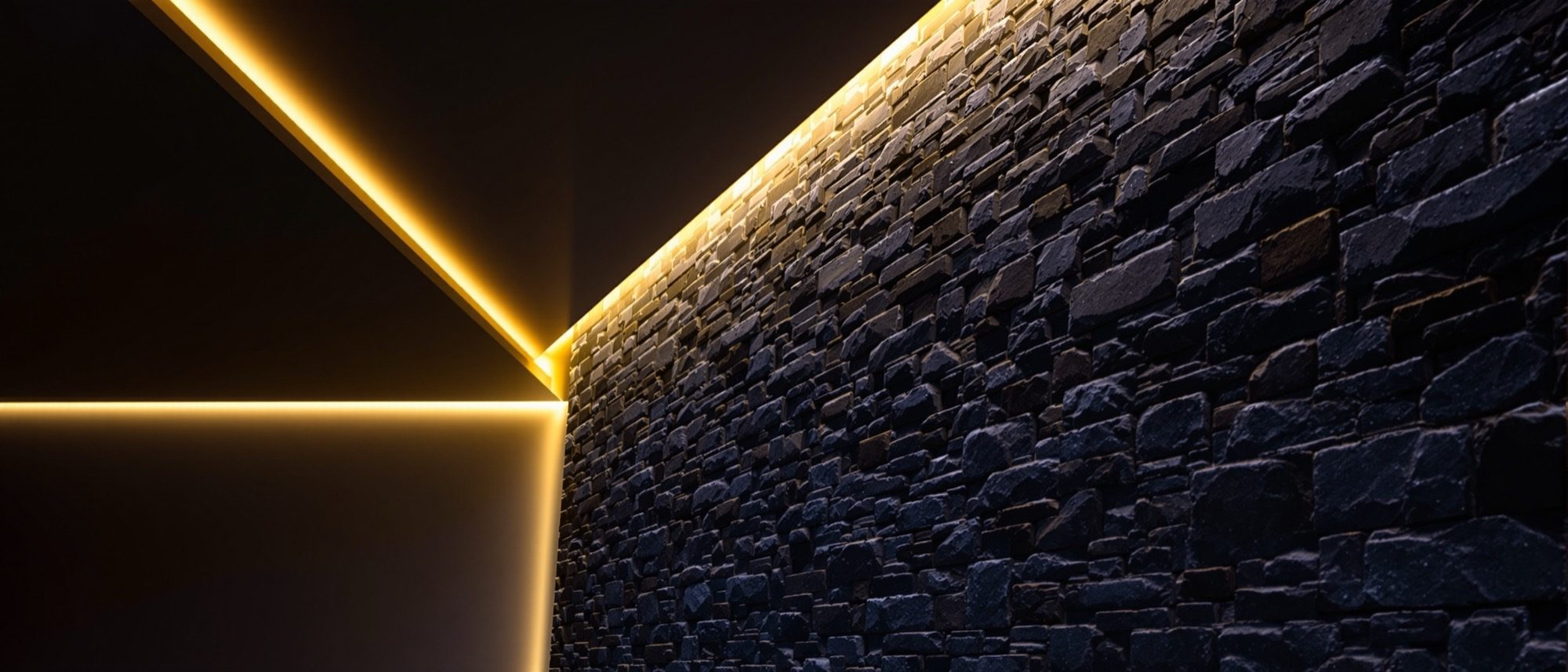
Five units, from the photon to the night façade.
5 units · 5 liveTranscribed from the official B.Arch syllabus. All 5 units are live as full interactive lessons, each with original diagrams, a self-assessment quiz and a studio task.
Unit 1 — Daylighting & the Nature of Light
LiveThe nature of light — wavelength and the visible spectrum; the photometric quantities (luminous flux, intensity, illuminance, luminance) and the inverse-square and cosine laws; the daylight factor, the design sky and daylighting requirements.
Unit 2 — Artificial Lighting
LiveThe artificial light sources — incandescent, halogen, fluorescent, sodium, metal-halide and LED — and their efficacy, colour and life; task and special-purpose lighting; the lumen-method calculation; and glare.
Unit 3 — Luminaires & Fixtures
LiveThe luminaire — its forms (recessed, surface, pendant, track, cove, wall-washer, sconce) and the CIE classification by light distribution (direct to indirect); and lighting control systems — switching, dimming, sensors and DALI.
Unit 4 — Types of Lighting
LiveGeneral and local lighting; applied and accent lighting; architectural lighting — cove, valance, wall-washing and grazing, up- and down-lighting; recessed lighting; and luminous walls and ceilings.
Unit 5 — Vision, Interior & Exterior
LiveThe physiology of vision — rods and cones, photopic, scotopic and mesopic vision, adaptation and contrast; light measurement and units; the cultural and social aspects of lighting; and exterior, façade and landscape lighting with light pollution.
Course outcomes
What you will be able to doUnderstand the basic principles of light — the photometric quantities and daylighting.
Apply artificial-lighting design — source selection and the lumen-method calculation.
Understand luminaire types, light distribution and lighting control systems.
Apply the types and techniques of lighting — general, accent, architectural and luminous.
Analyse lighting in interior and exterior through the physiology of vision and measurement.
Create a lighting scheme for an interior or exterior space and present it.
The author
Amogh N P
Architect, interior designer, and creative polymath. Studio Matrx began in his notebooks — his vision of design made honest, useful, and open to everyone. Its Academy is written and taught in his memory, and free, forever.
More about Amogh →Light makes architecture visible.
Photometry, daylighting, the lumen method, luminaires, the architectural techniques and the eye that judges them. Read the five units, study the diagrams, then test yourself.
The curriculum is free, forever