
B.Arch CurriculumFree, forever
A tribute to Amogh N P
Integrated Building Management Systems
A modern building is not just walls and structure — it is a nervous system of sensors and controls that keep it safe, secure, comfortable and efficient. This elective is about that intelligence. It begins with LIFE SAFETY — the minimum requirements of the National Building Code, especially for high-rises. It covers the systems that fight FIRE — detection and alarm, and the suppression systems from sprinklers to clean agents. It covers SECURITY — access control, CCTV, intruder and perimeter protection. It covers building AUTOMATION — the BAS/IBMS that integrates and controls all of a building's utility, safety and security systems from one platform. And it ends at the frontier — the growing role of ARTIFICIAL INTELLIGENCE in how buildings are built and run. For the architect, these systems are no longer an add-on but part of the design.
Course byAmogh N P· Architect & interior designer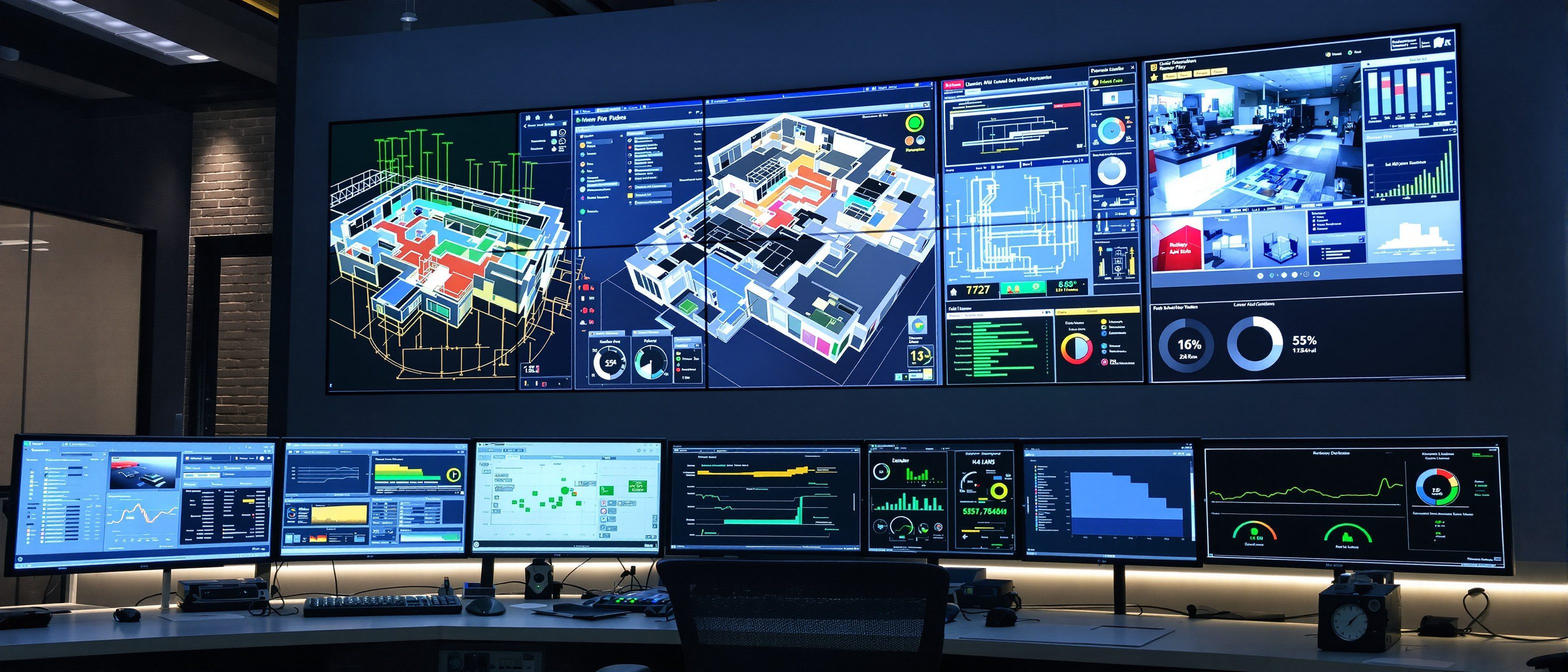
Five units, from life safety to the AI-run building.
5 units · 5 liveTranscribed from the official B.Arch syllabus. All 5 units are live as full interactive lessons, each with original diagrams, a self-assessment quiz and studio work.
Unit 1 — Safety Requirements
LiveThe minimum safety requirements for a building — particularly for a high-rise building — as per the National Building Code of India: occupancy and fire classification, means of egress, travel distances, compartmentation, refuge areas, fire lifts and staircases.
Unit 2 — Fire Alarm & Suppression Systems
LiveFire ALARM systems — objectives, components, detection technology, statutory standards and how they are designed and installed; and fire SUPPRESSION systems — the fire triangle, components, the different types (sprinklers, gaseous, foam, kitchen), standards and installation.
Unit 3 — Security Systems
LiveThe types of security systems and why they are required — access control, CCTV, intruder alarm and perimeter protection; the essential components of each system; the technologies employed; and how they are designed and installed.
Unit 4 — Building Automation Systems
LiveThe objectives of the Building Automation System (BAS); the utility, safety and security systems monitored and controlled through an IBMS; the components of an IBMS; the types of integration with utility, safety and security systems; and how they are designed and installed.
Unit 5 — Artificial Intelligence for Buildings
LiveThe continuing and growing capabilities of artificial intelligence for use in the construction and maintenance of buildings — predictive maintenance, energy optimisation, smart-building operation, computer-vision security, digital twins and AI in construction.
Course outcomes
What you will be able to doUnderstand the practice of safety standards for buildings.
Gain knowledge of fire-safety standards and practice considerations.
Understand integrated building management systems.
Understand building automation systems.
Be familiar with integrated services for multi-storeyed buildings.
Develop proficiency in a field programme, interviews and documentation of building systems.
The author
Amogh N P
Architect, interior designer, and creative polymath. Studio Matrx began in his notebooks — his vision of design made honest, useful, and open to everyone. Its Academy is written and taught in his memory, and free, forever.
More about Amogh →A building is a system, not just a shell.
Life safety, fire, security, automation and AI. Work the five units, study the diagrams, then test yourself.
The curriculum is free, forever