
 Lesson 9.3
Lesson 9.3 · Managing the Works
Site Visits, Quality & Snagging
How to watch over quality without standing over shoulders - the few stages that matter most, the check you must make before work is covered up forever, and the disciplined snagging list that turns almost-finished into finished
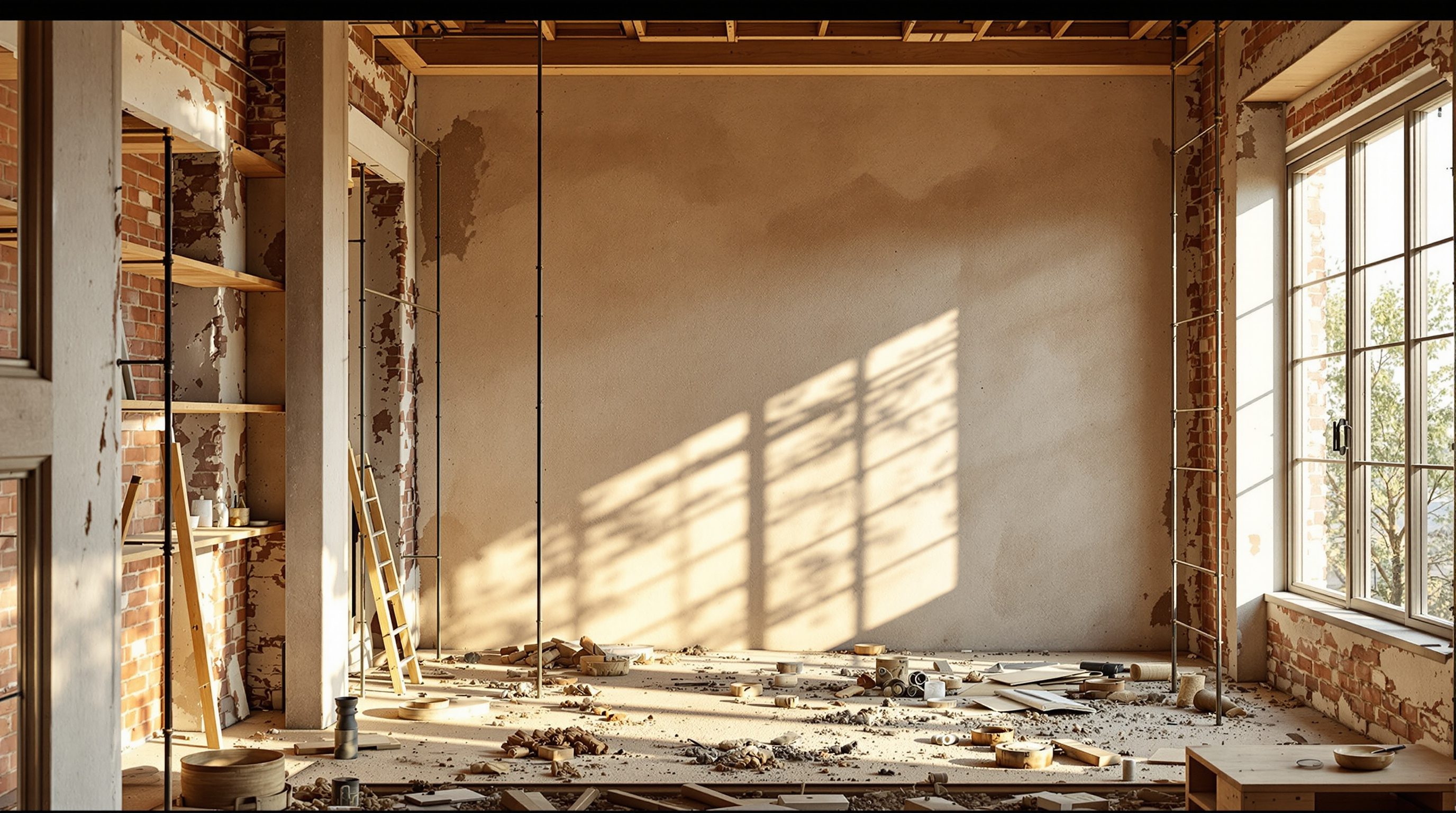
The most important inspection of your whole renovation is the one you make of a bare wall full of pipes and cables - because tomorrow the plasterer buries it, and after that you can never see it again.
There is a version of the attentive client that helps a renovation and a version that wrecks it. The unhelpful version hovers, questions every trowel of mortar, treats every worker as a suspect, and slows good people down while learning nothing useful. The helpful version is almost the opposite: calm, trusting of competent trades to do their work, but present and sharp-eyed at the few moments that genuinely matter - and utterly immovable about one thing, checking work before it is covered up forever. Quality on a renovation is not won by constant surveillance; it is won by knowing what to look at, and when.
The when is the key insight. A renovation buries most of its own work: first-fix pipes and cables vanish behind plaster, waterproofing disappears under tiles, structural connections hide inside finishes. Once that happens, a defect becomes invisible and ruinously expensive to reach - you are demolishing finished work to fix something that a five-minute look would have caught. So the discipline of quality is built around hold points: the stages, especially just before close-up, where you stop, inspect, photograph and sign off before the next trade seals it all in. This lesson teaches how to watch over quality without micromanaging, what to check at those decisive stages, and how the snagging list - the catalogue of defects and unfinished items - and a proper final inspection turn a job that looks done into one that truly is. It is the difference between a renovation you trust and one you merely hope about.
Photograph every wall before it is plastered. Future-you will be grateful.
Staying on top of quality without micromanaging
The goal of your presence on site is confidence, not control - to know the work is good without standing over it, and to let skilled trades work at their pace while still catching problems early. Micromanaging is counter-productive on several fronts: it slows good trades down, it breeds resentment that sours the whole job, it signals distrust that competent people resent, and - worst of all - it usually focuses on the wrong things, fussing over a half-laid course of tiles while the real issue, a pipe run with the wrong fall, goes unnoticed behind it. A client who questions everything tends to understand nothing.
The better model is informed, periodic oversight. Agree with your builder at the outset how you will communicate - a brief regular check-in, a walk-round at agreed intervals, a shared photo log - so you stay informed without interrupting. Visit with purpose rather than wandering: know what stage the work is at and what you have come to look at. Raise concerns through the builder or project lead, not by instructing individual trades directly, which undermines the chain of responsibility and causes confusion about who decided what. And distinguish clearly between your role and the professional's: you are checking that work matches the agreed scope and looks sound, not certifying that a circuit is safe or a beam is adequate - those sign-offs belong to the licensed trades and the structural engineer, as this course always insists.
Trust, in this context, is not naivety; it is calibrated. You extend competent, recommended trades the trust to do their work, while verifying at the points that matter and keeping a record. The aim is a relationship where the builder tells you about a problem before you find it - which happens when they feel trusted and communicated with, not policed. Set that tone early: clear expectations, agreed check-ins, concerns raised calmly and through the right channel, and genuine appreciation of good work. A site where the client is respected but not feared, informed but not interfering, produces better quality than one run on suspicion - because the people doing the work want to do it well for a client who will notice, at the moments when noticing counts.
Trust the trades; verify at the hold points. Confidence, not surveillance.
What to check - especially before it is covered up
If micromanaging is watching everything badly, good oversight is watching a few decisive things well - and the most decisive of all are the hold points before close-up, because a renovation permanently hides most of its own work. The single rule that matters most here is: inspect before it is covered up. Once plaster, screed, boarding or tiles go on, the work beneath is invisible, and a defect that a five-minute look would have caught becomes a demolition job to reach. These pre-cover-up checks are the highest-value moments of the entire project.
Several stages deserve a deliberate hold point. New structure - beams, bearings, props, straps - should be inspected and signed off by the structural engineer before it is plastered or boarded; you should never close up structural work no one has checked. First-fix services - the runs of pipe and cable, the pipe falls for drainage, the positions of boxes and outlets against your frozen layout - should be verified, and where required tested and certified by the licensed electrician and plumber, before plaster buries them. Waterproofing in wet areas must be complete and flood-tested before a single tile seals it in, because a leak found after tiling means lifting the tiles. Insulation, damp-proofing and any membranes likewise get their look before they are concealed.
Beyond the hidden work, check that the built reality matches the agreed design and scope: that walls are where the drawings say, openings are the right size, levels and falls run the right way, and the substrate is sound before finishes go on. At each hold point the cheapest and most valuable habit you have is the photograph: a dated picture of every wall and floor before it is closed up, filed by room. It costs nothing, and a year later when a nail needs to avoid a cable or a leak needs tracing, that photo log is worth more than any drawing. Remember the boundary throughout: you are looking that work matches scope and looks sound; the binding verification that a circuit, a beam or a waterproofing detail is actually compliant rests with the licensed trade, the engineer and - where the jurisdiction requires it - the statutory inspector. Your job is to make sure that look happens before the work disappears.
The snagging list
As a renovation nears completion, the character of quality control changes from checking hidden work to cataloguing the visible imperfections that remain - and the tool for that is the snagging list (called a punch list in American usage). A snag is a small defect or unfinished item: a chip in a worktop, a door that rubs, an uneven silicone bead, roller marks on a ceiling, a loose socket, a missing bit of trim. Individually trivial, collectively they are the difference between a job that looks finished and one that actually is, and capturing them systematically is how you make sure they get fixed rather than quietly forgotten once the trades have moved on.
A good snagging list is specific, located, owned and tracked. Each item records where it is (room and exact spot), precisely what is wrong, who is responsible for fixing it, and its status - open, fixed, to be re-checked, or signed off. Vague entries like "kitchen not right" never get resolved; "chip in worktop 200mm left of sink, fitter to replace or repair" does. Go room by room in good light, systematically, top to bottom and wall to wall; snag when the room is essentially finished but before final payment, because your leverage to get snags fixed is strongest while money is still owed. Photograph each snag against its list entry so there is no dispute about what was meant.
Crucially, nothing is closed until you have re-checked it yourself. A trade marking a snag "fixed" is a claim, not a fact; you verify each repair before you sign it off, and a repair that created a new problem goes straight back on the list. Keep the list as a living document shared with the builder, so both sides see what remains and progress is visible rather than argued about. In the Indian context the same discipline applies whether or not anyone uses the word "snagging" - a written, tracked punch list of defects, agreed with the contractor and tied to the final payment, protects both you and a conscientious builder who wants clear confirmation that the job is accepted. A renovation without a proper snagging list tends to end not with completion but with slow abandonment, a trail of small faults no one quite gets back to fix.
A snag marked 'fixed' is a claim, not a fact. Re-check before you sign it off.
Final inspection and handover
The renovation ends not when the last tradesperson leaves but when you have done a proper final inspection and handover - the deliberate close-out that confirms the job is complete, the snags are cleared, and you have what you need to live in and look after the home. Rushing this stage, out of exhaustion or eagerness to be done, is how people end up with lingering faults, missing paperwork and no record of what is buried in their walls. A disciplined handover is the last act of managing the works, and it is worth the day it takes.
The final inspection is a thorough, unhurried walk-through with the builder, ideally in good daylight, going room by room against the agreed scope and the snagging list. You confirm that every snag is genuinely closed, that the work matches what was agreed, that everything functions - taps, drains, switches, appliances, heating and cooling - and that the house is clean and clear of the builder's materials and debris. Anything outstanding stays on the list with a date to be completed, and it is reasonable and common to hold a final payment or a small retention until the last items are done, as Module 8 covers - money is your fairest lever for completion.
Handover is also about information, the quiet paperwork that makes the difference years later. Collect the certificates and test documents for the work that legally requires them - electrical, gas, waterproofing guarantees - because these are the binding records and you will need them to be safe, to comply, and to sell the home one day. Gather warranties and manuals for appliances and systems, the paint colours and tile references for future touch-ups, and - above all - your own photo log of the hidden services taken at the hold points, which tells a future tradesperson where the pipes and cables run. File it all together.
Finally, handover is the moment to understand how to operate and maintain what you now have: how the new systems work, what needs servicing and when, what the guarantees require of you. Module 10's last lesson treats finishing well and looking after the home in full. But the principle belongs here: a renovation is properly complete only when the work is inspected and accepted, the snags are cleared, the certificates and records are in your hands, and you know how to care for what has been made. Close it out deliberately, and the surgery ends with a patient that is not only repaired but documented and understood.
Inspect before close-up
Structure, first fix, waterproofing, membranes
The governing rule of renovation quality. Never let structural or services work be plastered, screeded or tiled over before it is inspected, signed off where required, and photographed.
Certificates for notifiable work
Electrical, gas, waterproofing guarantees
Licensed trades issue the binding test certificates; where the jurisdiction requires it, a statutory inspector signs off. Collect these at handover - your checking does not replace them.
A specific, tracked snagging list
Defects and unfinished items
Location, defect, owner, status for every item. Snag before final payment; re-check each repair yourself before signing it off. Vague lists never get fixed.
Photo log of hidden services
Pipe and cable runs before cover-up
A dated photo of every wall and floor before close-up, filed by room. The cheapest record you will ever keep and invaluable for future work.
Workshop - build a hold-point schedule and a snagging list
Quality control is a set of habits you can design in advance. For a renovation you can picture, plan the few inspections that matter and then practise snagging a real, finished room you know. This is quality-discipline practice; binding safety and compliance sign-offs always rest with the licensed trades and the engineer.
A notebook or spreadsheet, a phone camera, and a real finished room to practise on. Nothing here replaces the licensed trades' and engineer's binding sign-offs or any statutory inspection your jurisdiction requires.
Goal: a hold-point schedule plus a trial snagging list
Inputs: a renovation to plan + a real finished room to snag + this lesson
Time: ~50 minutes
- 1List the stages of your renovation where something important will be covered up - structure, first-fix services, waterproofing, insulation. For each, write a hold point: what you will inspect, what you will photograph, and who must sign it off before close-up.
- 2Draft how you will oversee quality without micromanaging: your agreed communication rhythm with the builder, how often you will visit and with what purpose, and how you will raise concerns through the right channel.
- 3Now snag a real, finished room you know well. Go room-corner to corner in good light, top to bottom, and list every small defect you can find - specifically located and described.
- 4Turn your list into a proper snagging table: columns for location, defect, owner and status. Write each entry specifically enough that someone else could find and fix it without you there.
- 5Write a short handover checklist: what you would confirm at final inspection, which certificates and records you would collect, and what you would want to know about operating and maintaining the new work. Note which sign-offs belong to a licensed trade or the engineer, not to you.
You’ll walk away with
A two-part document: a hold-point schedule (what to inspect and photograph before each cover-up, and who signs off) and a worked snagging list of a real room, plus a short handover checklist. Together they are a reusable quality-control kit for any renovation you manage.
Three altitudes on the same idea
Read the band that fits you — or all three.
On a contract you administer, these inspections and the snagging process are part of your professional role, and the hold points are where your drawings are defended against the realities of site. Schedule inspections at the decisive stages - structure before close-up, first fix before plaster, waterproofing before tiling - and coordinate the structural engineer's and statutory inspectors' sign-offs so nothing critical is buried unseen. Run a rigorous snagging and handover, tie completion to the contract's retention and certificates, and assemble the record documents. Your value is in inspecting the right things at the right moments and in holding the line on the hidden work, not in continuous presence; a disciplined hold-point regime protects both the client and the design intent.
Your finishes are where snagging bites hardest, because the eye that chose them is the eye best able to see where they fall short. You will often lead the snagging of tiling, joinery, paint, flooring and fit-out, and your standards set the bar for what 'finished' means. Inspect finishes in good light, room by room, against the specification; capture snags specifically and track them to closure; and re-check every repair yourself. Equally, know the hold points that protect your work - waterproofing tested before you tile, substrates sound before flooring - and insist on them. A designer who runs a sharp, fair snagging list delivers visibly better finished rooms and protects the client's final payment as leverage.
This lesson teaches a professional habit that separates competent practitioners from enthusiasts: quality comes from checking the right things at the right moments, not from watching everything. Learn the idea of the hold point - inspect before it is covered up - because it applies to every construction project you will ever touch and is almost never taught. Understand what a snagging list is, why it must be specific and tracked, and why nothing is closed until re-checked. Practise the discipline of a systematic room-by-room walk-through. And absorb the boundary this course repeats: you check that work matches scope and looks sound; the licensed trade and engineer certify that it is actually safe and compliant.
“To get good quality you have to watch the builders closely the whole time - be on site constantly, question everything, and catch them before they cut corners. And once a job looks finished, it is finished.”
Do it yourself
No tools needed - reason it through.
- 1Explain why micromanaging a renovation tends to produce worse quality, not better.
- 2State the single most important rule of renovation quality control and why it matters so much.
- 3List three stages that deserve a hold-point inspection before close-up, and what you would check at each.
- 4What four things must every snagging entry record, and why is 'kitchen not right' useless?
- 5Name three things you should collect at handover and why each matters later.
The one line to carry out
Peer-reviewed journals & authoritative standards
- 01Snagging list — Wikipedia - Snagging list, 2026.
- 02Punch list — Wikipedia - Punch list, 2026.
- 03Home inspection — Wikipedia - Home inspection, 2026.
- 04Building surveying — Wikipedia - Building surveying, 2026.
Even the best-inspected renovation meets things no one could foresee - a rotten joist, old wiring, damp behind a wall. The final lesson of the module is about meeting those surprises calmly, pricing and deciding them, and changing the plan deliberately.
The author
Amogh N P
Architect, interior designer, and creative polymath. Studio Matrx began in his notebooks — his vision of design made honest, useful, and open to everyone. Its Academy is written and taught in his memory, and free, forever.
More about Amogh →