
 Lesson 9.2
Lesson 9.2 · Managing the Works
Living Through a Renovation
The part the makeover shows never film: dust in everything, the kitchen in a box, water off at the worst moment, and a household under strain - and how planning the human reality is as important as planning the works
No one puts this on the mood board: brushing your teeth at the garden tap, eating another meal off a plate balanced on a cardboard box, and dust on the baby's cot no matter how often you wipe it.
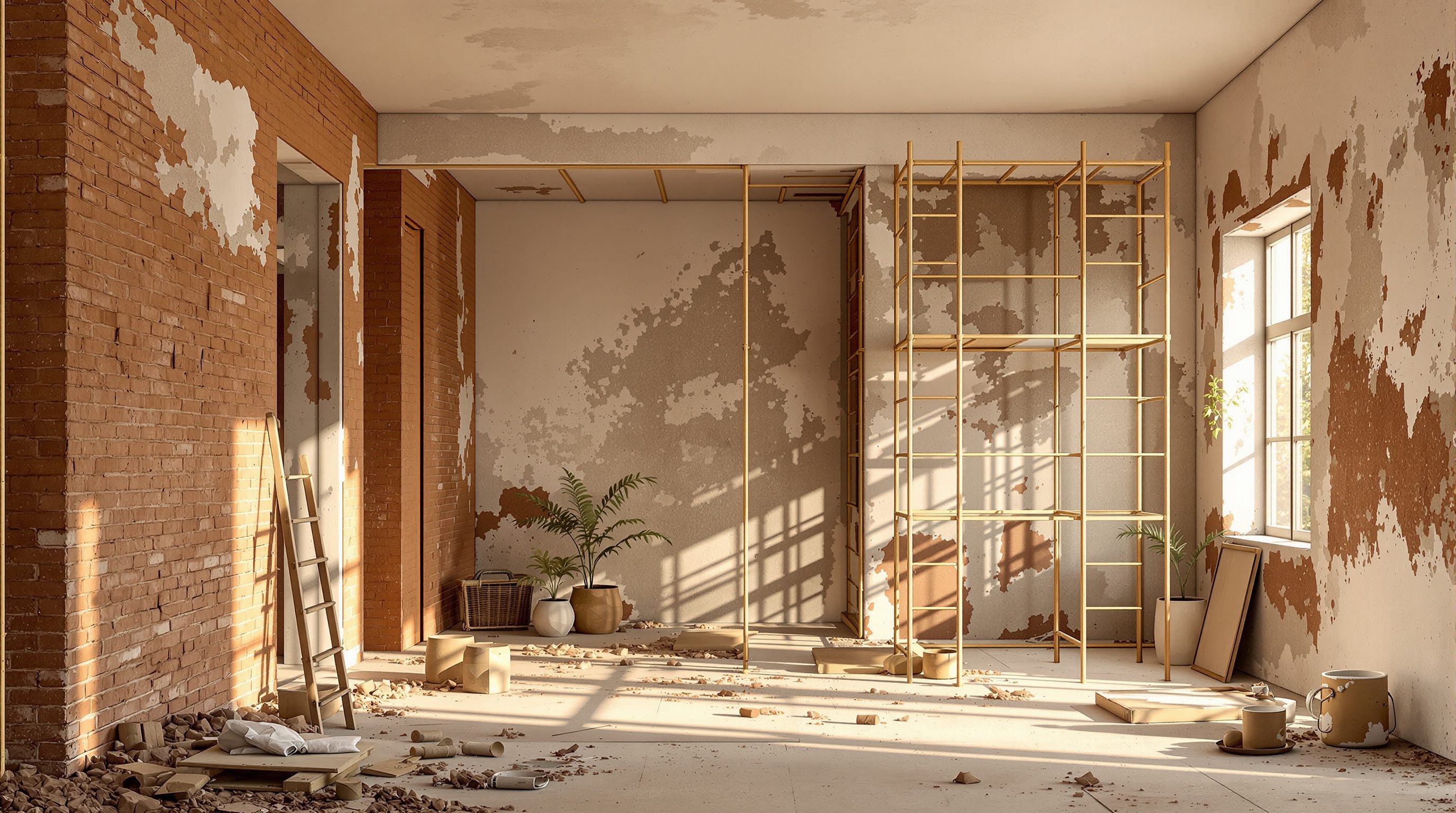
The glossy version of renovation ends with a reveal - a presenter throws open a door, the family gasps, everyone is delighted. What never makes the edit is the weeks or months in between, when your home is a building site and you are still trying to live, cook, sleep, work and raise children inside it. This is the part clients are least prepared for and find hardest, and it derails more renovations - emotionally if not financially - than any structural surprise. Dust gets into everything. The water or power goes off, often without much warning. There is drilling at eight in the morning and a stranger in your bathroom by nine.
Planning for this human reality is not a soft extra; it is a core part of managing the works, and the renovations people look back on fondly are almost always the ones where the living arrangements were thought through as carefully as the drawings. The two biggest decisions are whether to stay on site or move out, and how to stage your home so that some minimum of normal life - a place to cook, a working bathroom, a clean room to retreat to - survives the chaos. This lesson is about protecting the household while the building gets better: the dust and noise and services-off you must expect, the belongings you must shield, the temporary kitchen and bathroom you must engineer, and the stress you must actively manage. Get this right and a renovation is merely hard; get it wrong and it can strain a family to breaking point.
Nobody films the month you brush your teeth at the garden tap. Plan for it anyway.
Stay on site, or move out?
The first and biggest decision of living through a renovation is whether to remain in the house while it is worked on or decamp elsewhere, and it is a genuine trade-off with no universally right answer - only the answer that fits your job, your budget and your household. Staying put saves the considerable cost of renting or imposing on family, lets you watch the work closely, and spares you a double move. But it comes at a price paid in dust, noise, services repeatedly switched off, trades working around your life rather than freely, and a real, grinding strain on everyone under the roof - a strain that is hardest on infants, elderly relatives, anyone working from home, and anyone whose health is vulnerable to dust.
Moving out flips the ledger. It costs money - rent, a family stay, storage, two moves - and it puts you further from the daily work, which means you must stay on top of it deliberately rather than by simply being there. But it lets the trades work faster, more cleanly and more safely with full run of the house, protects the household completely from the dust and disruption, and often shortens the programme enough that the rent is partly offset by the time saved. For a whole-house renovation, or one doing the kitchen and all the bathrooms at once, moving out is frequently the sane choice.
The decision usually turns on scope and duration. Light, phased or single-room work - where you can seal off one zone and keep the rest of the house usable - leans towards staying. Heavy, whole-house work, work that takes out the only kitchen or the only bathroom, or work with weeks of no water or power leans towards moving out. Be honest about your household's tolerance: a retired couple doing one room can camp happily for months; a family with a newborn and a home office cannot. Cost the two options properly, including the hidden price of staying - lost work, frayed tempers, the meal-out budget that balloons when you have no kitchen - and decide deliberately rather than drifting into staying because it seems cheaper. Often it is not.
Staying is not free. Price the dust, the meals out, the frayed nerves - then compare.
Dust, noise and services off - what to expect
If you do stay, go in with clear eyes about the three realities that define life on a renovation site: dust, noise, and services that go off. Construction dust is not ordinary dust; it is fine, pervasive, and it travels everywhere the air does - under doors, through gaps, up stairs, into cupboards and wardrobes and the backs of electronics. Demolition and cutting of plaster, masonry, tile and timber generate astonishing quantities of it, and some of it - silica from cutting concrete or stone, old paint, possible asbestos in older buildings - is genuinely hazardous and a reason to keep the household, especially children, well away from active work and to insist the trades cut and manage dust properly.
The defence is containment at source, not cleaning at the end. Seal the work zone off from the living zone with taped plastic sheeting and, ideally, a zip door; cover what stays in the work zone; keep internal doors to living areas shut and their gaps taped; and run the messiest cutting outside or with extraction where possible. A renovation where dust is controlled at the boundary is liveable; one where it is merely swept up each evening means you are breathing and eating it for months.
Noise is the next reality - drilling, hammering, cutting, the compressor, the radio, voices. It starts early, because trades start early, and it is relentless on the heavy days. If anyone in the household works from home, sleeps in the day, studies for exams, or is a light-sleeping baby, plan around it: agree working hours with the builder, know which days will be loudest (demolition, chasing, tiling), and arrange to be elsewhere for those.
Services going off is the one that catches people out. Water, power, gas and drainage all get interrupted as they are worked on - sometimes planned, sometimes at an hour's notice when a trade finds something. Expect days with no kitchen water, evenings with the power off to a floor, a week when the only WC is out of action. Ask the builder for as much warning as they can give, keep a store of drinking water and a plan for washing and cooking when each service is down, and never assume that because something worked this morning it will work tonight. Living through a renovation is, in large part, living with intermittent services gracefully.
Staging a liveable home - kitchen, bathroom, belongings
If you stay, the craft of surviving is staging: engineering a minimum of normal life into a corner of the chaos, and protecting everything you are not using. The two non-negotiables are a way to eat and a way to wash, because a household with neither a functioning kitchen nor a usable bathroom is a household that will crack within days. A temporary kitchen need not be much - a table in a sealed clean room with a kettle, a microwave, a single induction hob, a small fridge and, if you can manage it, access to one cold-water tap and a sink or even a bathroom basin for washing up. A camp of this kind, set up deliberately before the real kitchen comes out, is the difference between months of expensive takeaways and a household that can feed itself.
The bathroom is the sharper problem, because a renovation often takes out the only one for a stretch. If the job allows, phase the work so one bathroom always functions, even a basic one; if it does not, arrange access to a neighbour's or family member's, a gym, or a portable solution, and know exactly which days you will have nowhere at home to wash. In an Indian flat this is also a society matter - water supply, tanker timing and drainage all interact with the works, and warning the neighbours helps.
Protecting belongings is the quiet half of staging. Anything you are not using should be boxed, sealed and moved out of the dust - ideally off-site into storage or a family home, or at least into the sealed living zone. Dust ruins electronics, soft furnishings, books and clothes; vibration and traffic damage fragile things; and a building site is, bluntly, less secure than a locked home, so valuables and documents should leave entirely. Photograph and inventory anything precious before it is packed. The rule of thumb is to strip the house down to what the household actually needs for the duration and protect that hard, rather than leaving a full home half-covered in sheets and hoping. The renovations that feel liveable are the ones where the staging was planned on paper - which clean room, which temporary kitchen, which working bathroom, what goes to storage - before the first wall came down.
Two non-negotiables: a way to eat, a way to wash. Engineer both before demolition starts.
Managing the stress and the household
The most underestimated cost of a renovation is its toll on the people living through it, and managing that toll deliberately is as much a part of the job as managing the trades. A renovation compresses a household into less space, strips away the small comforts and routines that keep everyone steady, fills the days with noise and strangers and decisions, and drags on longer than anyone hopes. It is genuinely stressful, and pretending otherwise - to yourself or your family - only makes it worse. Naming it honestly at the start, and agreeing as a household that this will be hard for a while and that is normal, takes a surprising amount of the sting out.
Several habits make the difference between strain and crisis. Protect one clean, quiet refuge - a single room, sealed from dust and off-limits to the works, where the household can retreat, eat, sleep and feel normal; this sanctuary is worth more to morale than any finish. Keep the routines you can - meals together, bedtimes, a weekend away from the site - because predictability is steadying when everything else is torn up. Decide in advance rather than under pressure, because decision fatigue is real and a renovation asks for a hundred choices; the more you freeze early (Lesson 9.1), the fewer you must make while exhausted and covered in dust.
Communication carries a lot of the load. Agree with the builder how and when you will talk - a short daily or weekly check-in beats a running stream of anxious messages - so you feel informed without micromanaging (Lesson 9.3). Within the household, share the burden and the decisions; a renovation run by one stressed person while everyone else just suffers it breeds resentment. And keep the end in view: it helps to remember, on the worst dusty evening, that this is temporary surgery on your home and that the discomfort buys a better place to live.
Finally, build in slack for your own sanity as you build it for the programme: expect the job to run longer and messier than planned, plan a genuine break or a night away for the hardest stretches, and do not schedule a renovation to finish the week before a wedding or a new baby. The households that come through a renovation still fond of each other - and of the house - are the ones that treated the human side as a real problem to plan for, not a weakness to push through.
Dust containment at the boundary
Sealing work zone from living zone
Taped sheeting and a zip door at the boundary, not just sweeping at day's end. Insist trades manage dust at source - cutting concrete, stone or old paint can release hazardous dust.
Hazardous dust and old materials
Silica, lead paint, possible asbestos
Pre-1990s buildings may contain asbestos or lead paint. Do not disturb suspect materials yourself - a licensed specialist must test and handle them. Keep the household clear of active cutting.
A working bathroom and kitchen
Minimum daily life if staying
Phase the works or arrange alternatives so the household always has a way to cook and wash. Know in advance which days each service is off.
Secure and store valuables
Documents, valuables, electronics
A building site is less secure and far dustier than a home. Move valuables and documents off-site; box, seal and store everything not in daily use.
Workshop - write a survival plan for living through the works
Surviving a renovation is a plan, not a hope. For a renovation you can picture - real or imagined - decide whether the household stays or moves out, then design how daily life will actually work while the building is torn up. This is planning practice; the builder confirms what the works allow.
Paper or a simple floor-plan sketch, and an honest conversation with everyone who will live through it. Nothing here replaces a specialist's handling of hazardous materials or the builder's confirmation of what the works allow.
Goal: a one-page living-through-it plan
Inputs: a renovation scenario + a household to plan for + this lesson
Time: ~45 minutes
- 1Size the disruption: list which rooms are out of action, for roughly how long, and which services (water, power, gas, drainage) will be interrupted and when. Decide from this whether the household should stay or move out, and cost both options honestly - including the hidden cost of staying.
- 2If staying, draw the house and mark the work zone, the sealed living zone, and the dust barrier between them. Identify the one clean refuge room the household will retreat to.
- 3Design the temporary kitchen and the bathroom arrangement: where will the household cook and wash on the days the real ones are out? List exactly what the temporary kitchen needs.
- 4Make a belongings plan: what goes to storage, what is boxed and sealed in the living zone, what valuables and documents leave entirely. Note anything precious to photograph first.
- 5Write a short household agreement: working hours with the builder, how you will communicate, how decisions get shared, and one planned break for the hardest stretch. Flag any suspect old materials (asbestos, lead paint) that a specialist must handle.
You’ll walk away with
A one-page survival plan: the stay-or-move decision with both options costed, a zoning sketch, a temporary kitchen and bathroom plan, a belongings-and-storage list, and a household agreement on hours, communication and a break. This plan protects the people while the building improves.
Three altitudes on the same idea
Read the band that fits you — or all three.
On larger and whole-house projects you are often the one advising whether the household can realistically stay, and your programme decisions shape how bearable the works are. Phasing the job so that a kitchen or bathroom is always available, sequencing the noisiest and most disruptive works into defined windows, and designing temporary arrangements into the construction plan are all within your remit. Be honest with clients early about the disruption - decant costs belong in the budget conversation, and a client who moves out for a heavy job usually gets faster, cleaner, safer work. Treat the living strategy as a deliverable, not an afterthought the client discovers on day one.
You are frequently the closest professional to the household's daily experience, and clients will turn to you when the living-through-it reality bites. Help them stage a temporary kitchen and plan which zone stays clean and usable, because your understanding of how the home actually functions makes you good at it. Set expectations about dust on finishes and furniture, advise on what to move to storage, and sequence your finishes (Lesson 9.1) so fragile work is not installed while the household is still churning dust through the space. A designer who helps a client survive the works, not just choose the tiles, earns deep trust.
This is the most human lesson in the module, and it teaches something design school rarely mentions: that a building is lived in while it is being changed, and that the occupants' experience is a design problem. Learn to ask, of any renovation, where the household will cook, wash and retreat to while the work runs. Notice how scope and duration drive the stay-or-move decision, and how containment, staging and communication turn an unbearable situation into a merely hard one. Designing with empathy for the people enduring the process - not just for the finished rooms - is a mark of a mature designer, and it starts with understanding what living through a renovation is actually like.
“We will just live in the house while it is renovated and save the cost of moving out - it is only a bit of dust and noise for a few weeks, and we will manage fine.”
Do it yourself
No tools needed - think it through honestly.
- 1List the main trade-offs between staying on site and moving out, and say what usually decides it.
- 2Name the three daily realities of living on a renovation site and one defence against each.
- 3Why is dust containment at the boundary better than cleaning up at the end of each day?
- 4What are the two non-negotiables of a staged home, and why does a household crack without them?
- 5Give three habits that keep a household's stress manageable through a long renovation.
The one line to carry out
Peer-reviewed journals & authoritative standards
- 01Renovation — Wikipedia - Renovation, 2026.
- 02Home improvement and living through works — Wikipedia - Home improvement, 2026.
- 03The kitchen and temporary arrangements — Wikipedia - Kitchen, 2026.
- 04Housing society context for flats — Wikipedia - Housing society, 2026.
With the household protected, you can turn back to the works themselves - and to your job as client of watching over their quality. Next: how to stay on top of quality without micromanaging, what to check before things are covered up, and the snagging list.
The author
Amogh N P
Architect, interior designer, and creative polymath. Studio Matrx began in his notebooks — his vision of design made honest, useful, and open to everyone. Its Academy is written and taught in his memory, and free, forever.
More about Amogh →