
Parametric & computational facades
When a facade has ten thousand panels and no two are alike, you do not draw them — you write the rule that draws them. Computation is how a curved, responsive skin becomes buildable.
Lesson byAmogh N P· Architect & interior designer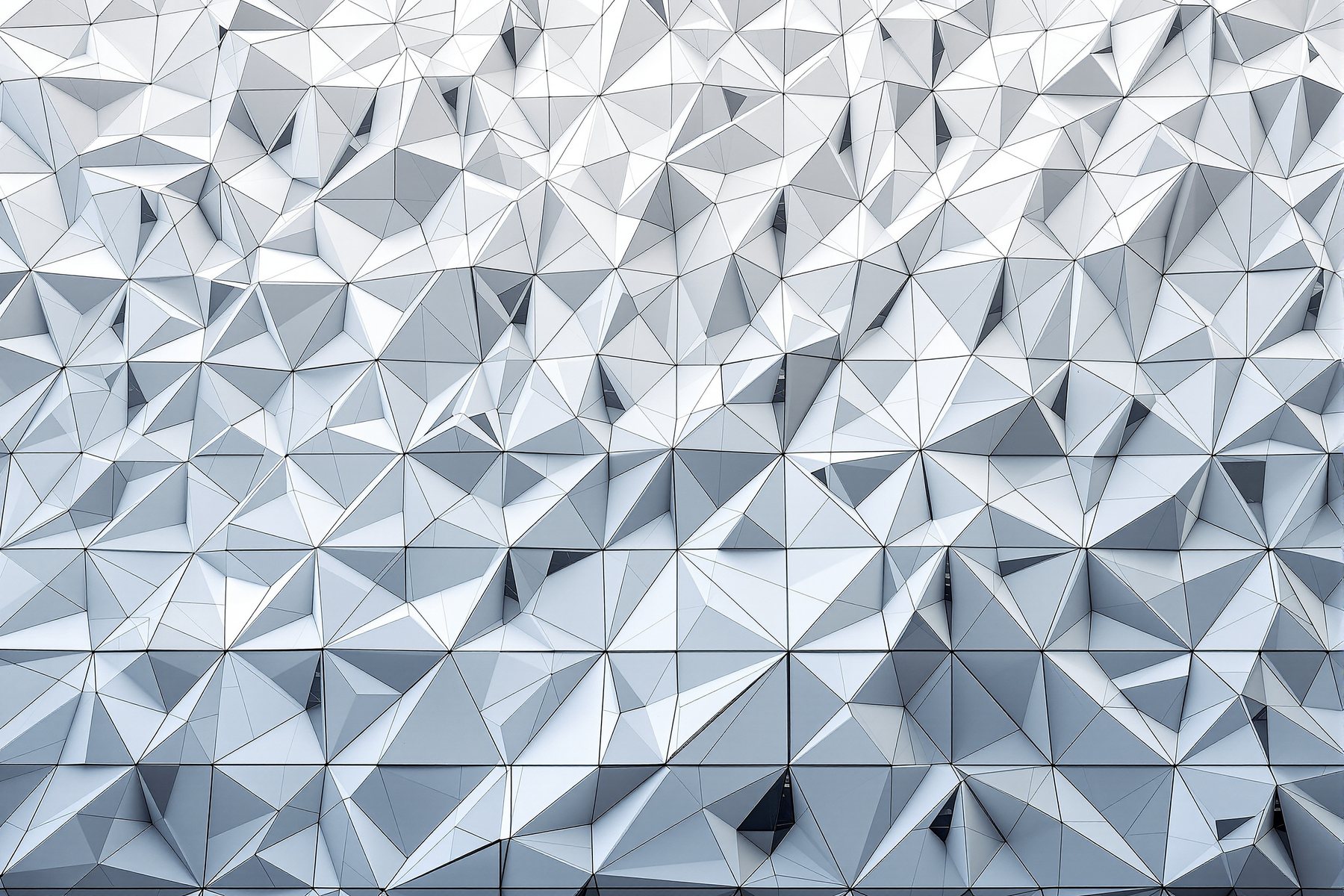
Drawing a free-form facade panel by panel is impossible. So you stop drawing panels and start writing the rule that makes them.
Look at any twisting tower or rippling auditorium skin and ask the unglamorous question: how was every panel actually drawn? The answer is that it wasn't, not one by one. A curved facade can carry thousands of panels, no two identical, each needing a size, an angle, a glass make-up and a bracket. Hand-drafting that is months of error-prone work. Instead the facade is described as a **rule** — a definition that takes the surface and the grid logic and generates every panel, schedule and fabrication coordinate automatically. Change the surface and the whole facade rebuilds. This is parametric, computational design, and on complex Indian projects — airports, cultural buildings, signature towers — it is the only way the skin gets built at all. But it is a tool with a cost, and knowing when it pays is half the skill.
From drawing panels to writing the rule that draws them
A parametric model is a rule, not a drawing — change one input and the whole facade rebuilds
In conventional CAD you draw the result: this panel, here, this size. In parametric design you describe the logic that produces the result, then feed it inputs. The two dominant tools are Grasshopper (a visual programming environment inside Rhino) and Dynamo (the equivalent inside Revit) — both let you wire together a definition: take this surface, divide it into a grid, generate a panel per cell, tilt each to track the sun, output the schedule.
The power is associativity. Because the facade is a rule, not a frozen drawing, changing an input — the grid spacing, the surface curvature, the shading angle — rebuilds the entire facade instantly, with every panel, every schedule and every fabrication file regenerated. A late client change that would mean weeks of re-drafting becomes a slider move.
This is the same system-not-surface spine again, now operationalised: the rule encodes the relationships between cladding, frame, structure and performance, so the model is a living description of the facade system, not a static picture of its surface.
In CAD you draw the answer. In Grasshopper you write the question. Change the question's inputs and a new answer draws itself.
Complex geometry must be tamed into makeable panels — flat beats curved, fewer types beats many
A smooth digital surface is not buildable as-is; glass and metal come flat or in limited curvatures, and every unique panel type costs tooling and money. The two disciplines that make computation pay are panelisation (dividing the surface into a grid of fabricable panels) and rationalisation (reducing the variety and curvature of those panels toward what a factory can actually make economically).
The key trade-off: a free-form surface tiled with flat panels ('planarisation') is far cheaper than one needing thousands of uniquely curved (hot-bent or cold-formed) panels. Computation excels here — it can analyse the surface, fit the largest flat or single-curved panels within a tolerance, count the panel types, and report exactly how much geometry costs. A good rationalisation might cut a facade from 4,000 unique panels to 300 panel types, with most repeating — turning an unbuildable form into a tendered one.
The honest caution: rationalisation changes the architecture slightly (a true curve becomes a faceted approximation). The facade engineer's job is to find the rationalisation the architect can accept and the factory can build.
Computation can optimise geometry, daylight and structure at once — but simple facades do not need it
Beyond generating geometry, computation can optimise — search a design space for the best balance of competing goals. Couple a Grasshopper definition to a daylight or energy engine (via plug-ins like Ladybug/Honeybee) and you can let an algorithm vary shading-fin depth and angle across a facade to maximise useful daylight while keeping solar gain — the same five-jobs trade-off, now searched automatically across thousands of options.
But computation is a cost, not a default. It needs skilled people, robust definitions and clean data, and a brittle Grasshopper definition that breaks when someone moves a point is a real project risk. The test is simple: does the facade's complexity, repetition or performance demand exceed what hand methods can handle? A free-form skin with thousands of unique panels: yes, computation is essential. A regular, orthogonal curtain-wall grid you could schedule by hand: usually no — a parametric definition there is over-engineering, adding fragility for little gain. The skill is reaching for computation when it genuinely pays, and resisting it when a spreadsheet would do.
Parametric design is what lets your ambitious geometry actually get built — but it comes with a bargain. The free-form surface you draw will be rationalised into makeable panels, and you should be in the room when that happens, because the difference between a true curve and a faceted approximation is a design decision, not just an engineering one. Use computation to explore, not just to document: a parametric facade lets you test a hundred shading patterns against daylight in an afternoon. Just remember that a regular rectilinear facade rarely needs it — do not pay for computation a spreadsheet could replace.
You are the bridge between the architect's surface and the factory's tolerances. Own the panelisation and rationalisation: plan the surface into the fewest panel TYPES, the largest flat panels within tolerance, and a definition that outputs the panel schedule and fabrication coordinates cleanly. Build definitions that are robust and documented — a clever but brittle Grasshopper file that only its author understands is a liability when they leave. Link the geometry definition to analysis (daylight, structure) so optimisation is real, not decorative, and always validate the algorithm's 'optimum' against engineering judgement.
On a computational facade, the data is the drawing. Each panel arrives with a unique mark number and fabrication coordinates that came straight out of the model — there is no generic 'typical panel' to fall back on, so setting-out and sequencing must follow the model exactly. Understand that the irregular geometry you are installing was rationalised to be buildable: the panels are flat or gently curved by design, repeating in types even when the form looks free. Your survey feedback (where panels actually landed) is what keeps the as-built model honest.
ISO 19650 + BIM Execution Plan
Where computation meets coordination
Parametric models (Rhino/Grasshopper) must hand clean geometry and data into the BIM/IFC workflow. The BEP should state how the computational model interoperates with the federated model — the common failure is a beautiful Grasshopper file that never coordinates cleanly with structure.
IS 875 (Part 3): 2015 (India)
Wind loads on the geometry
However computation generates the geometry, every panel still has to resist the design wind pressure from IS 875-3. The standard governs the loads; computation only generates the shapes — the structural check is non-negotiable and unchanged.
ECBC 2017 / Eco-Niwas Samhita 2018 (India)
Performance targets for optimisation
When you optimise a facade for daylight and solar gain, these codes set the SHGC, U-value and RETV targets the optimisation must satisfy. Computation finds the form; the energy code defines what 'good' means — optimise toward the code limit, not past buildability.
“Parametric design means the computer designs the facade for you — you just press a button and get the optimum.”
Computation generates and searches; it does not decide. A Grasshopper definition is a tool that does exactly what its author wired it to do, against the constraints and goals a human set — and its 'optimum' is only as good as the model, the data and the objectives behind it. The hard, human work is defining the rule, choosing the rationalisation the architect and factory can both accept, and validating that the algorithm's answer is buildable and sensible. Computation amplifies judgement; it does not replace it.
Worked example — does rationalisation make this facade buildable?
Computation pays when it tames panel count and cost. Let's quantify that on a curved feature facade, with a simple panel-count calculation any facade engineer can sanity-check by hand.
A calculator. The idea of panel TYPES versus panel COUNT. No software needed to follow the logic.
A curved facade feature, given:

  Facade area              A   = 1,800 m2
  Target panel size        p   = 1.5 m x 3.0 m = 4.5 m2
  Free-form (every panel unique curvature)
  Rationalised (flat panels, types repeat)

  Unique-panel tooling cost  Cu = approx INR 9,000 per unique TYPE
  Find: panel count, then cost of UNIQUE vs RATIONALISED.
- 1Panel count: number of panels = area / panel area = 1,800 / 4.5 = 400 panels. This number is the same either way — it is the variety, not the count, that computation attacks.
- 2Free-form case: if every panel is a unique curved type, that is 400 unique types. Tooling cost = 400 x INR 9,000 = INR 3,600,000 in setup alone, before a single panel is made.
- 3Rationalise to flat panels: computation planarises the surface and groups panels by geometry. Say it finds the 400 panels fall into just 40 repeating types (each used ~10 times) within an acceptable visual tolerance.
- 4Rationalised cost: tooling = 40 x INR 9,000 = INR 360,000 — a 10x reduction in setup cost, because you tool 40 types and repeat them, not 400 one-offs.
- 5The decision: the saving (INR 3.24 million) buys a lot of computational design time, so here computation clearly PAYS. Now flip it: for a flat, orthogonal facade with one repeating panel, there is nothing to rationalise — the same exercise would save nothing, so a spreadsheet beats a Grasshopper definition. The number tells you when to reach for computation.
You’ll walk away with
A panel-count-and-types calculation that quantifies when computation pays — the exact test that separates a facade that genuinely needs parametric design from one where it is over-engineering.
One quick exploration.
- 01Find an image of a free-form facade (a twisting tower, a wavy auditorium). Look closely: are the panels truly curved, or flat facets approximating a curve? Most are facets — that is rationalisation you can see, the buildable compromise behind the smooth render.
Parametric design replaces drawing panels with writing the rule that draws them, so a complex facade rebuilds from a slider rather than weeks of re-drafting. The value is realised through panelisation and rationalisation — taming a smooth surface into fewer, flatter, makeable panel types — and through optimisation against daylight, structure and cost. But computation is a cost, not a default: reach for it only when complexity, repetition or performance demands genuinely exceed hand methods.
Parametric tools (Grasshopper in Rhino, Dynamo in Revit) describe a facade as an associative RULE; change an input and the whole skin rebuilds. Panelisation divides the surface; rationalisation cuts panel TYPES and curvature toward what a factory can make (flat beats curved; fewer types beats many). Optimisation searches daylight/structure/cost trade-offs. Use it when complexity or repetition demands; a regular orthogonal grid usually does not.
What is parametric facade design?
Parametric facade design describes a facade as a rule or algorithm rather than a fixed drawing. Using tools like Grasshopper (in Rhino) or Dynamo (in Revit), you wire together a definition — divide a surface into a grid, generate a panel per cell, schedule them — and feed it inputs. Because the facade is associative, changing an input such as grid spacing or curvature rebuilds the entire facade instantly, with all panels and schedules regenerated.
What is the difference between panelisation and rationalisation?
Panelisation divides a facade surface into a grid of fabricable panels. Rationalisation then reduces the variety and curvature of those panels toward what a factory can economically make — favouring flat or single-curved panels over uniquely curved ones, and fewer panel types over many. Panelisation makes the surface into panels; rationalisation makes those panels affordable to fabricate, often cutting thousands of unique panels to a few hundred repeating types.
When does computational facade design actually pay off?
When the facade's complexity, repetition or performance demand exceeds what hand methods can handle — free-form surfaces with thousands of unique panels, or facades needing daylight and solar optimisation across many configurations. For a regular, orthogonal curtain-wall grid that you could schedule in a spreadsheet, a parametric definition usually adds fragility and cost for little gain. Reach for computation when it genuinely solves a problem, not by default.
Peer-reviewed journals & authoritative standards
- 01Su, Z. et al. Multi-Disciplinary Characteristics of Double-Skin Facades for Computational Modeling Perspective and Practical Design Considerations. Buildings, 12(10):1576. — Buildings (MDPI), 2022.
- 02Review on Glass Curtain Walls under Different Dynamic Mechanical Loads: Regulations, Experimental Methods and Numerical Tools. IntechOpen. — IntechOpen, 2023.
- 03Multi-objective optimization of glazing and shading configurations for visual, thermal, and energy performance of cooling-dominant climatic regions of India. — (peer-reviewed; via ResearchGate), 2024.
The author
Amogh N P
Architect, interior designer, and creative polymath. Studio Matrx began in his notebooks — his vision of design made honest, useful, and open to everyone. Its Academy is written and taught in his memory, and free, forever.
More about Amogh →Computation can generate and optimise the geometry, but every claim it makes about daylight, energy or structure rests on a simulation behind it. Next we open that black box: how facade performance is actually simulated, and how far those numbers can be trusted.