
Choosing the right plot
The one decision you can never renovate your way out of.
Lesson byAmogh N P· Architect & interior designer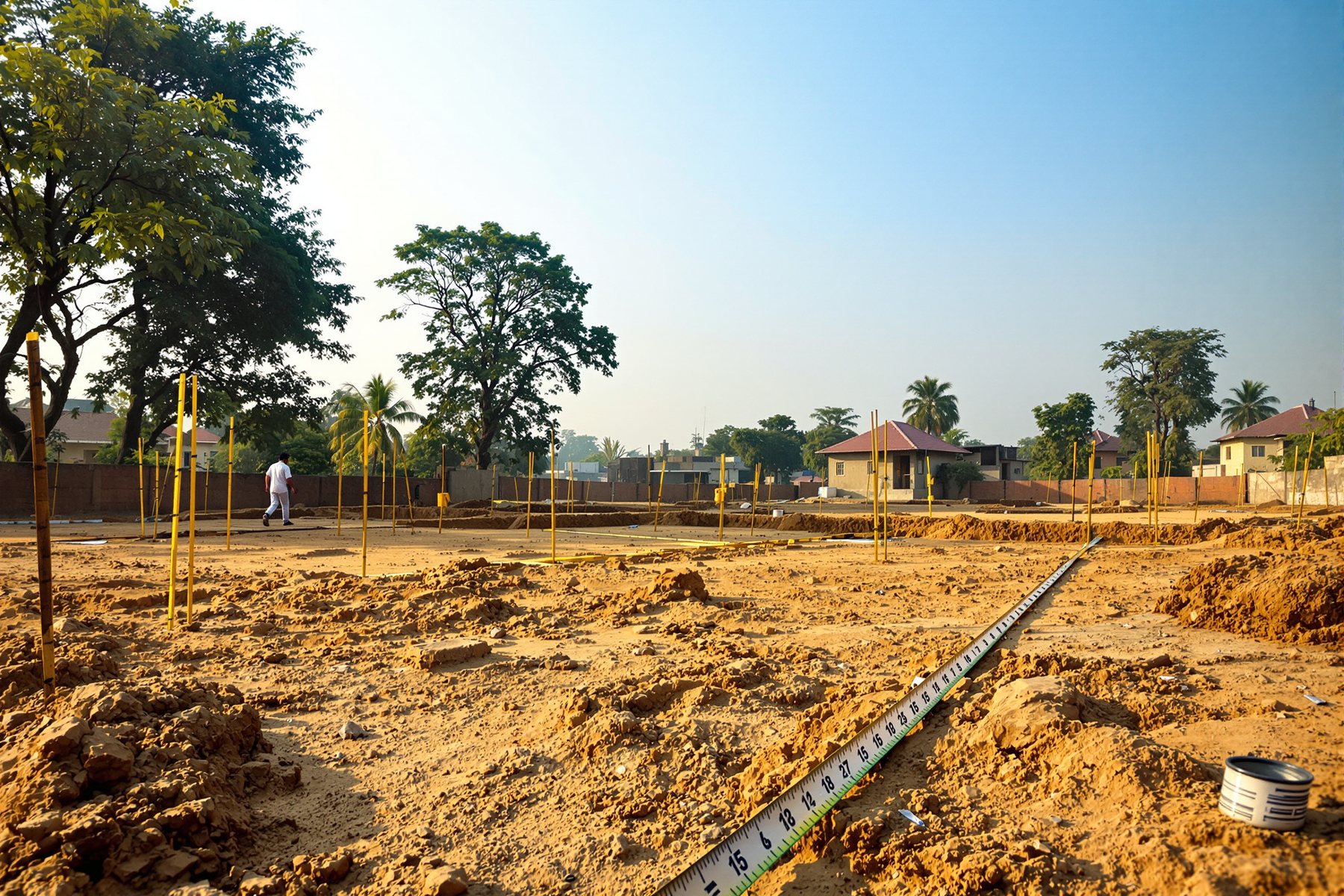
You can repaint a wall. You can't repaint a north road that should have been east.
Every other choice in this course is editable. You can change the kitchen layout, swap the flooring, even re-do the structure if you must. The plot is the one thing you're stuck with for the life of the house. A 30x40 that faces the right way, on a 30-foot road, with no encroachment and clean drainage, will forgive a hundred later mistakes. A cheaper one in the wrong spot will quietly tax you forever.
Five things to read in a plot: size, location, orientation, road and shape
A '1,200 sq ft plot' tells you almost nothing. The shape tells you everything.
Indian plots are sold by dimensions, not just area, and the dimensions decide what you can actually build once setbacks (the mandatory open margin you must leave on each side) are taken out.
The common sizes you'll see advertised:
- 30x40 (1,200 sq ft) — the classic city plot. After typical setbacks you build on roughly a 24x33 footprint. Comfortable for a 2–3BHK over G+1 or G+2. - 40x60 (2,400 sq ft) — a generous independent-house plot; room for parking, a small garden and a larger home. - 20x30 (600 sq ft) — tight; works for a compact row-style house but every foot of setback hurts.
A square-ish plot wastes less to setbacks than a long thin one. A regular rectangle is far easier (and cheaper) to design and build than an odd triangular or sloping corner. Ask for the dimensions in writing and walk all four edges yourself.
Area is the brochure number. Footprint after setbacks is the number you'll actually live in.
Which way it faces, what it touches, and where it sits on the street
Three location factors quietly shape daily life:
Orientation — the direction the main road and entrance face. North- and east-facing plots get gentler morning light and are easier to keep cool; west faces the harsh afternoon sun. None is unbuildable — good design beats a 'bad' direction — but orientation affects resale and Vastu demand, so it's priced in.
Road width — a wider abutting road usually means more permitted FSI (floor space you can build), easier construction access for trucks and concrete pumps, and better resale. A 30–40 ft road is a real plus; a 15 ft lane limits both building and access.
Corner vs interior — a corner plot gets two open sides, more light and air, and easier parking, but loses extra land to setbacks on two roads and costs a premium. An interior plot is cheaper and more private but depends entirely on its one frontage. Neither is 'better' — match it to what you value.
Visit the plot at three different times — morning, mid-afternoon and after dark. You're checking light, the noise, where water pools, whether the access road floods in the monsoon, and what the neighbours are like. Walk the actual boundary against the dimensions on paper; encroachment of even a foot or two is common and is far cheaper to spot now than to litigate later.
Brief the client to send dimensions, the abutting road width and orientation before any sketch — these set the buildable envelope through setbacks and FSI. Flag long, narrow or sloping plots early: the design and structural premium they carry is real money, and a client comparing two plots by area alone is comparing the wrong number.
The site is the first design constraint, fixed before a line is drawn. Setback rules, FSI tied to road width, orientation and plot proportion together define the buildable envelope — the invisible box every plan must fit. Learn to derive that envelope from the bye-laws for any plot; it's the discipline that separates a buildable design from a beautiful one that can't be sanctioned.
“Plot size is what matters — bigger area means a bigger house.”
Not directly. What you can build is the area minus mandatory setbacks, multiplied by the permitted FSI — and FSI is often tied to your road width, not your plot size. A 30x40 on a 40 ft road can yield more built-up space than a larger plot on a 15 ft lane. Read dimensions, road width and FSI together, never area alone.
Before you fall for a plot, pressure-test it:
- 01Get the exact dimensions in writing, then sketch the setbacks for your city and mark the real buildable footprint. That rectangle, not the plot area, is your house.
- 02Note the orientation and the abutting road width, and ask the local authority (or your architect) what FSI that road width permits.
- 03Visit at three times of day and walk all four boundaries against the paper dimensions, checking for encroachment, drainage and monsoon access.
Almost everything else in a build is editable; the plot is not. Read it as five things at once — dimensions and shape, location, orientation, road width, and corner versus interior — and weigh them against how you'll actually live, not just the asking price per square foot. The right plot quietly makes every later decision easier; the wrong one taxes them all.
Read a plot by its dimensions (e.g. 30x40 or 40x60), not just area — your real house is the footprint left after setbacks. Road width often drives FSI; orientation shapes light and resale; corner plots gain two open sides but lose more to setbacks. Match all five to how you'll live.
What is the best plot size to build a house in India?
For an independent house, a 30x40 (1,200 sq ft) suits a comfortable 2–3BHK over G+1 or G+2, while a 40x60 (2,400 sq ft) gives room for parking, a garden and a larger home. What matters more than area is the footprint left after setbacks and the FSI your road width permits.
Which plot facing is best — north, east, west or south?
North- and east-facing plots get gentler morning light, stay cooler and carry stronger resale and Vastu demand, so they're usually priced higher. West and south face harsher afternoon sun but are perfectly buildable — good design and shading matter more than direction alone.
Is a corner plot better than an interior plot?
A corner plot gains two open sides — more light, air and easier parking — but loses extra land to setbacks on two roads and costs a premium. An interior plot is cheaper and more private. Choose by what you value: openness and access, or budget and privacy.
The author
Amogh N P
Architect, interior designer, and creative polymath. Studio Matrx began in his notebooks — his vision of design made honest, useful, and open to everyone. Its Academy is written and taught in his memory, and free, forever.
More about Amogh →Once a plot feels right, the urgent question is whether it's truly, legally yours to buy — which is where due diligence, and a good lawyer, come in.