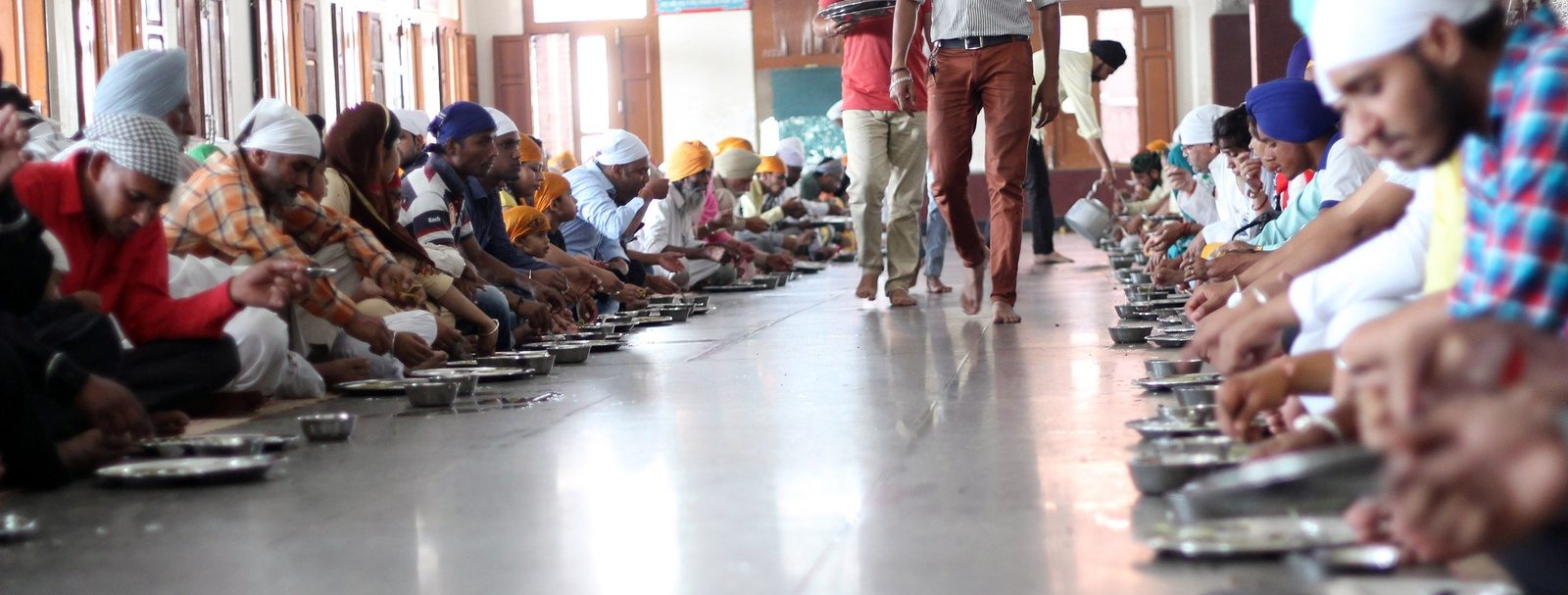
The Langar at the Golden Temple
The world's largest free kitchen, in Amritsar, runs twenty-four hours a day and feeds tens of thousands — a kitchen scaled up until it becomes the most public room a community builds.
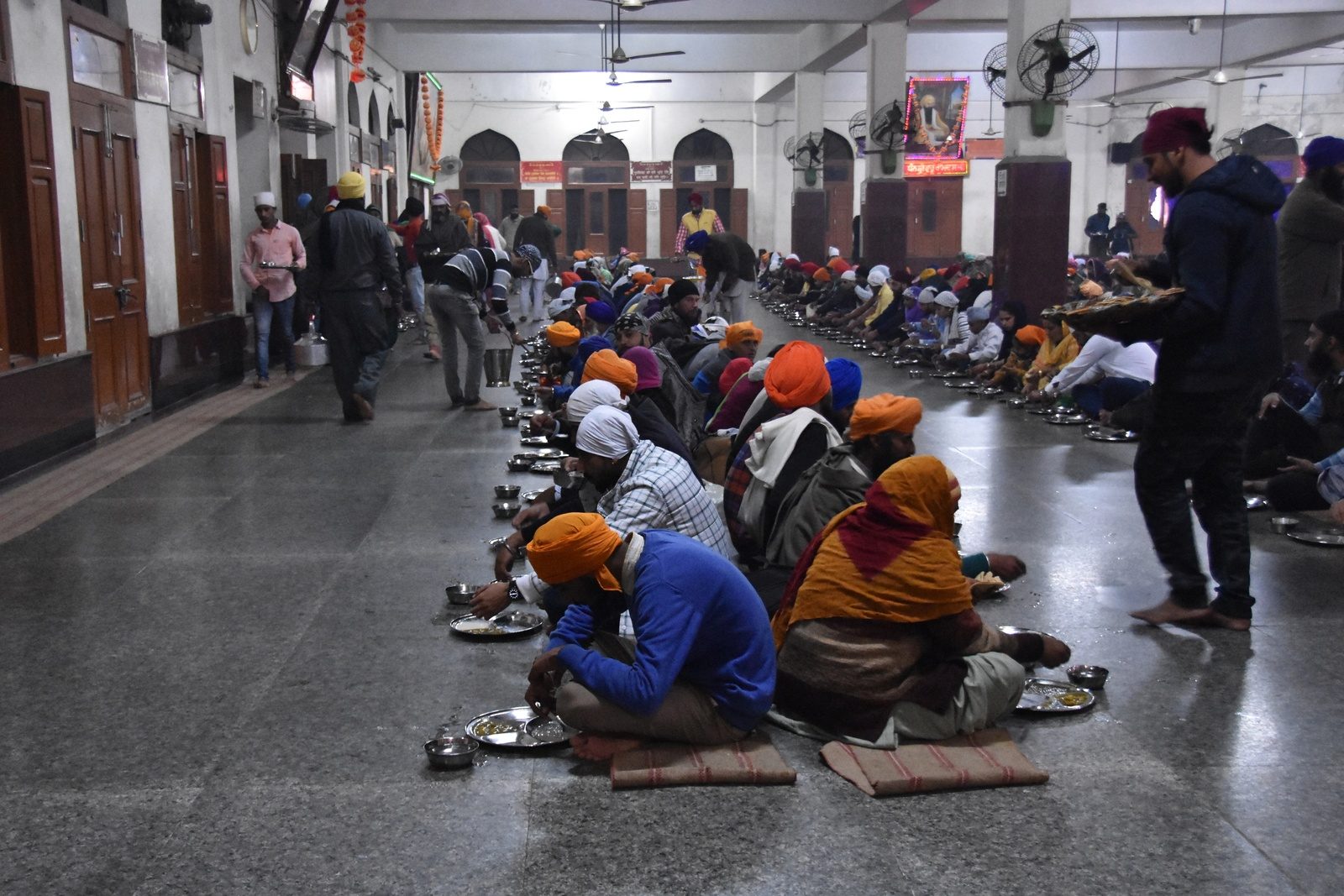
Long before Amritsar wakes, one kitchen is already lit. Cauldrons the size of small rooms come to the boil, dough is rolled by hundreds of hands at once, and the first rotis of the day begin to stack. This is the langar at the Golden Temple — Harmandir Sahib — and by most counts it is the largest free kitchen on earth.
A kitchen the size of a civic building
The Guru Ka Langar sits within the Golden Temple complex and runs, without pause, twenty-four hours a day, every day of the year. It serves a free vegetarian meal to anyone who comes — regardless of faith, caste, gender or means — and it does so at a scale that reads more like infrastructure than hospitality. On an ordinary day it feeds around fifty thousand people; on festival days that can climb towards a hundred thousand and more.
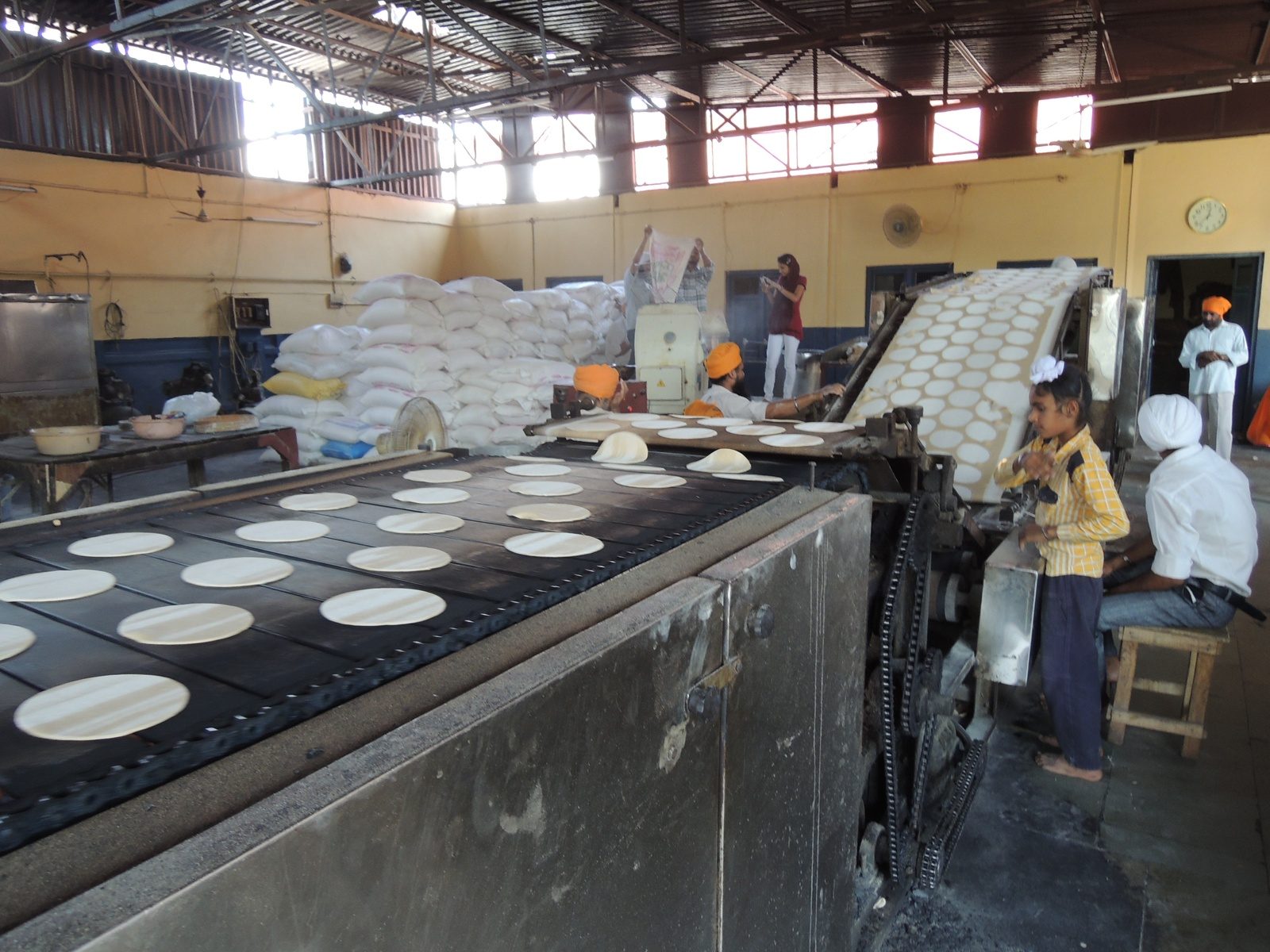
The numbers behind that are staggering in the most matter-of-fact way. A single day can turn roughly 12,000 kilograms of flour, 1,500 kilograms of dal and 1,500 kilograms of rice into meals, alongside vast quantities of vegetables, ghee and spice. Around five hundred volunteers — sevadaars — are at work at any time, and countless more pass through to take a turn at the pans, the rolling boards or the washing lines of steel plates.
How it works
The genius of the langar is not equipment; it is sequence and repetition, the same principles that make any kitchen work, scaled to the size of a hall. Grain and provisions are stored in bulk. Dough is mixed and portioned in one zone, rolled in another. Rotis are cooked both by hand on great tavas and by an automated chapati machine that turns out tens of thousands an hour. Dal and kheer simmer in enormous cauldrons. Diners sit in long rows — the pangat — and are served where they sit; plates then flow to a washing line that could belt-feed a factory, and back to the front to begin again.
Nothing about it is decorative. Every decision — where the flour is stored, how the rows are laid, which way the plates travel — exists to keep an unbroken line moving from raw grain to a hot meal to a washed plate. It is the workflow every kitchen runs, only here it never stops.
The lesson: a kitchen as a civic act
We spend this issue arguing that a kitchen is understood before it is designed, and that the most important part of a kitchen is often what happens at its edge — where cooking meets the people it feeds. The langar takes that idea to its civic conclusion. Here the kitchen is not a private room at all; it is the most public, most equal space a community builds, where a stranger and a pilgrim sit in the same row and eat the same food from the same steel plate.
It rhymes with Bologna, elsewhere in this issue — food spilling out of the private kitchen into the shared life of a place. The langar simply makes the point unmistakable. Strip a kitchen back to its true purpose — to feed people, together, without asking who they are — and you are left with something close to architecture's oldest job.
Reduced to its purpose, a kitchen can be the most democratic room a society builds. The langar has known that for four centuries.