
The false ceiling, honestly
It is the first thing we add and the last thing we question. A measured case for using far less of it.
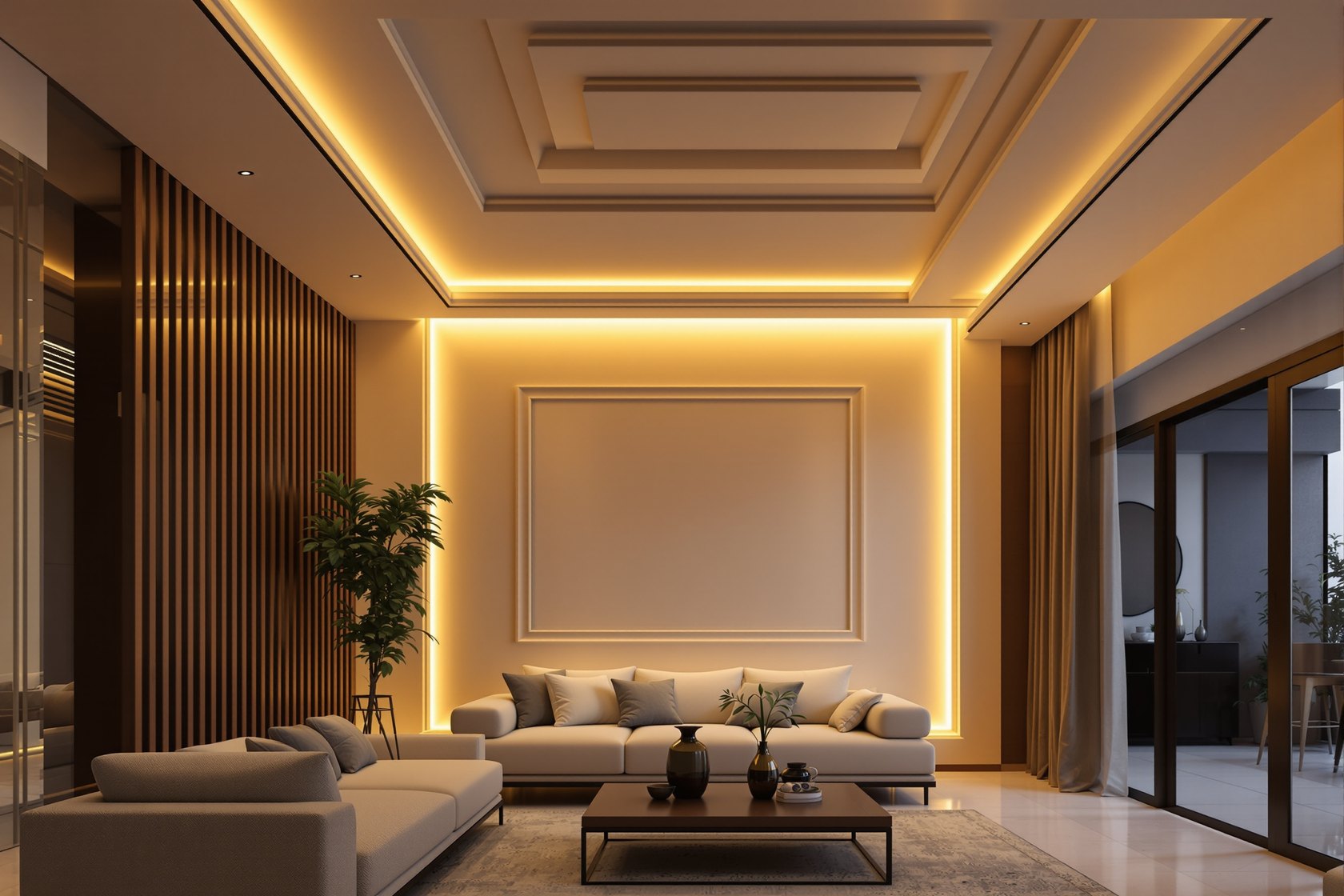
There is a moment in almost every Indian home renovation when the false ceiling is decided, and it is remarkable how little deciding actually happens. It is simply assumed — the way tiles are assumed, or a granite kitchen counter. The designer sketches a layered gypsum tray with a cove of hidden light, the client nogs approvingly, and a second ceiling is hung a foot below the first without anyone quite asking what it is for. It has become the default gesture of a 'done' interior. That is exactly the kind of unexamined habit this column exists to poke.
The argument, when it is had at all, splits into two camps that talk past each other. One treats the false ceiling as essential — the thing that makes a room look finished, modern, expensive. The other dismisses it as a decorator's tax, money spent to lower your own ceiling. Both are half right, which is usually the sign that the honest answer is a third position.
What it genuinely does well
Let us give the false ceiling its due, because it earns some of its popularity. A poured Indian slab is rarely a thing of beauty: it comes off the shuttering uneven, patched, criss-crossed with conduit and the scars of the electrician's chases. A false ceiling hides all of that behind a flat, calm plane. It swallows wiring, the guts of a cassette AC and its ducting, and it gives you cove lighting — that soft, indirect glow that genuinely does flatter a room in a way a bare bulb never will. In a living room or a main bedroom, a considered ceiling with one good layer of light can be the difference between a space that feels designed and one that feels merely painted. None of that is nothing.
What it quietly costs — especially here
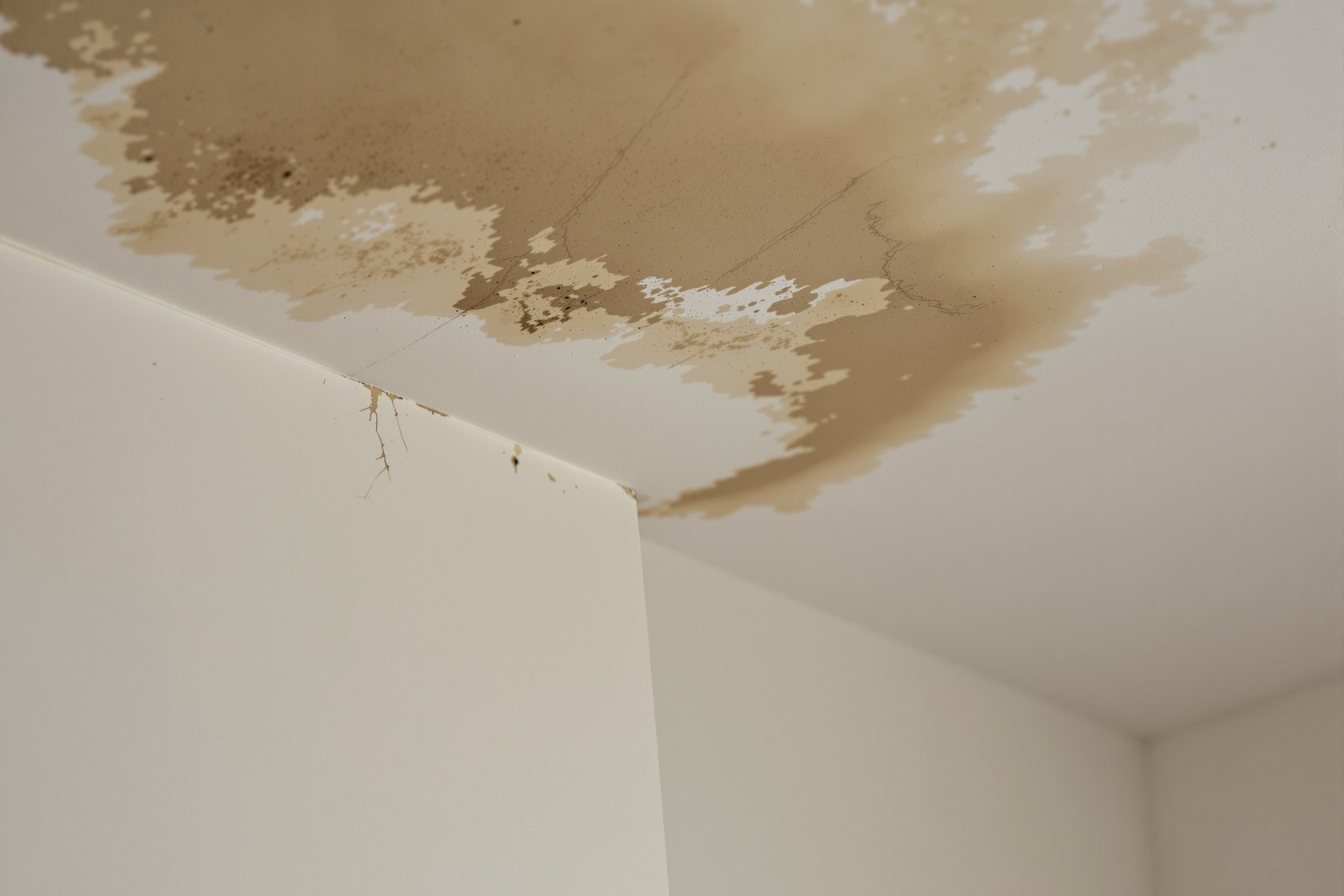
But the reflex to blanket the whole house in it ignores what it takes in return. The first cost is the most literal: height. Indian slabs are already low, often barely ten feet, and a tray ceiling steals eight inches or a foot of that from every room it touches, trading air and volume for a flat surface most people never look at. The second is money that could have bought something you actually feel. And the third is the one this issue cannot ignore: in a monsoon country, a false ceiling is often a damp problem waiting for a season. Ordinary gypsum board and plaster-of-Paris drink humidity; in a coastal or a poorly ventilated home they sag, bloom brown stains and grow mould in the dead cavity above, where no one can see it until it drips. Worse, that hidden void masks the early warning of a real leak — a slab seeping from the terrace above announces itself late, after it has spread across a ceiling you cannot inspect.
A false ceiling does not just hide the wiring. In the wrong room, it hides the leak until the leak has won.
The third position
So the honest answer is neither 'every room needs one' nor 'never do them'. It is: use it where it earns its keep, and nowhere else. Give the living room its layered ceiling and its cove of light, run a slim tray where a duct genuinely has to cross a room — and then stop. Leave the bedrooms simpler than your designer wants. Keep it out of the bathroom, the kitchen and any room the monsoon can reach, or if a service truly must be boxed there, insist on moisture-resistant board or a calcium-silicate system rather than ordinary gypsum, and leave the cavity ventilated and accessible. And treat the alternative as a real design choice, not a failure: a well-levelled, cleanly painted slab, honest surface conduits laid with a little care, a good pendant or a track of light, a plain cornice. Some of the most restful rooms in India have nothing overhead but a smooth ceiling and the height the architect fought to give them.
The finished look was never a lowered ceiling. It is a considered one — and often, the most considered decision is to leave the ceiling alone.