Lime: the buildings that breathe
Before waterproofing and sealants, walls managed moisture instead of resisting it. Why India is rediscovering lime.
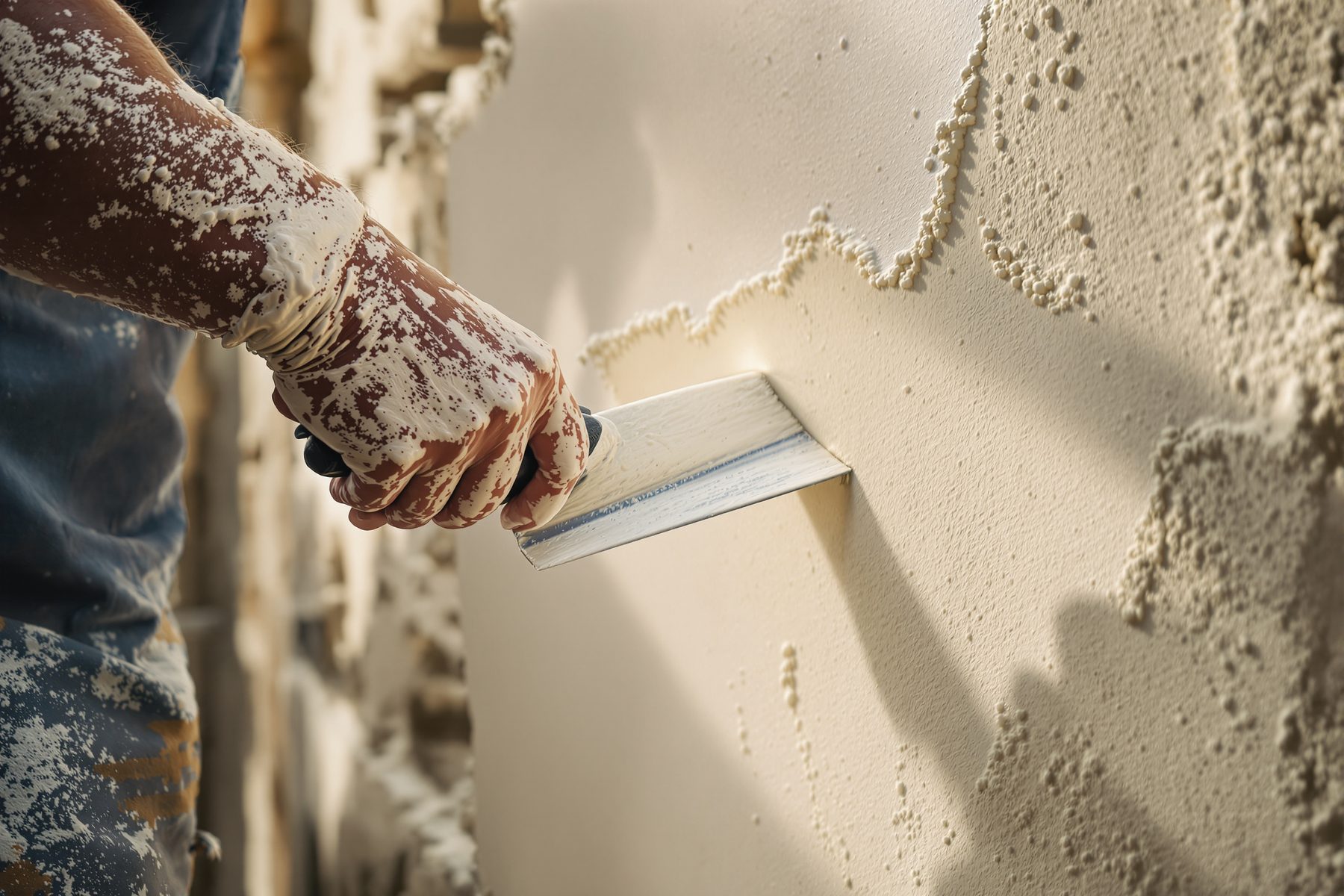
Before waterproof coatings and chemical sealants, builders used materials that worked with moisture rather than fought it. Now, as heavier rain and rising humidity push resilience up the agenda, lime is coming back into use.
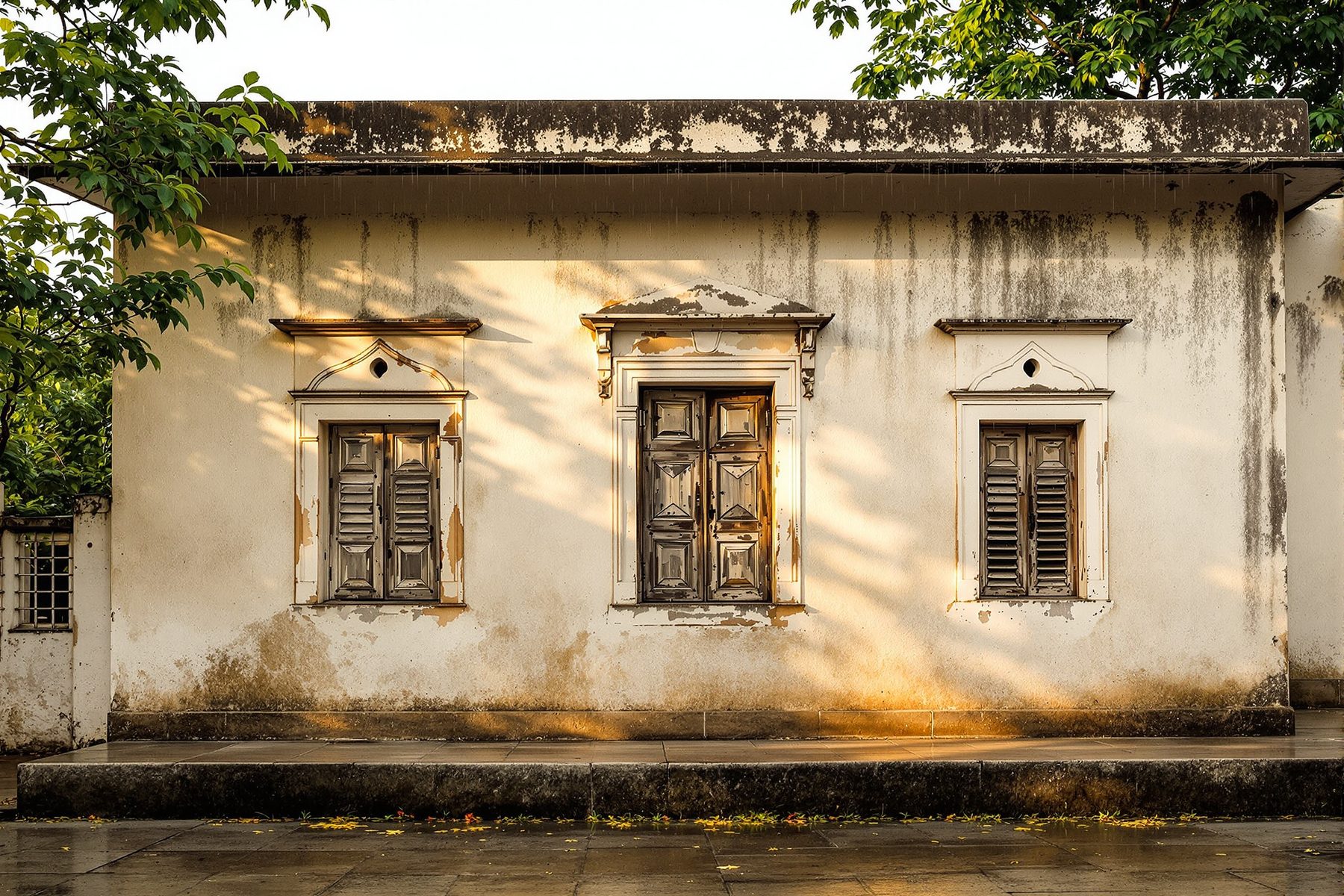
Walk through an old haveli in Rajasthan, a colonial bungalow in Kerala, or a centuries-old house in any historic Indian town, and something stands out. Decades of monsoon, humidity and shifting weather have passed through these walls, yet the buildings still stand sound.
The reason for that endurance is often hidden in the building materials themselves.
Before cement became the default, lime was one of the most widely used building materials in the world. It served essential functions in plasters, mortars and finishes, letting architecture adapt to environmental conditions. Today, as architects and homeowners confront persistent dampness, trapped moisture and climate-induced stress, lime is re-emerging as a relevant solution — not as a nostalgic revival, but as a material offering real insight for future construction.
The material that built generations
Lime has been used in construction for thousands of years. In India, it was a defining material in everything from forts and temples to traditional homes and public buildings. Before the arrival of modern cement, lime mortar and lime plaster formed the backbone of construction across many regions.
It was chosen deliberately, for how it performed. Builders understood that architecture had to adapt to local climate. In areas of heavy rainfall, seasonal humidity and fluctuating temperature, materials had to do more than provide strength — they had to manage moisture.
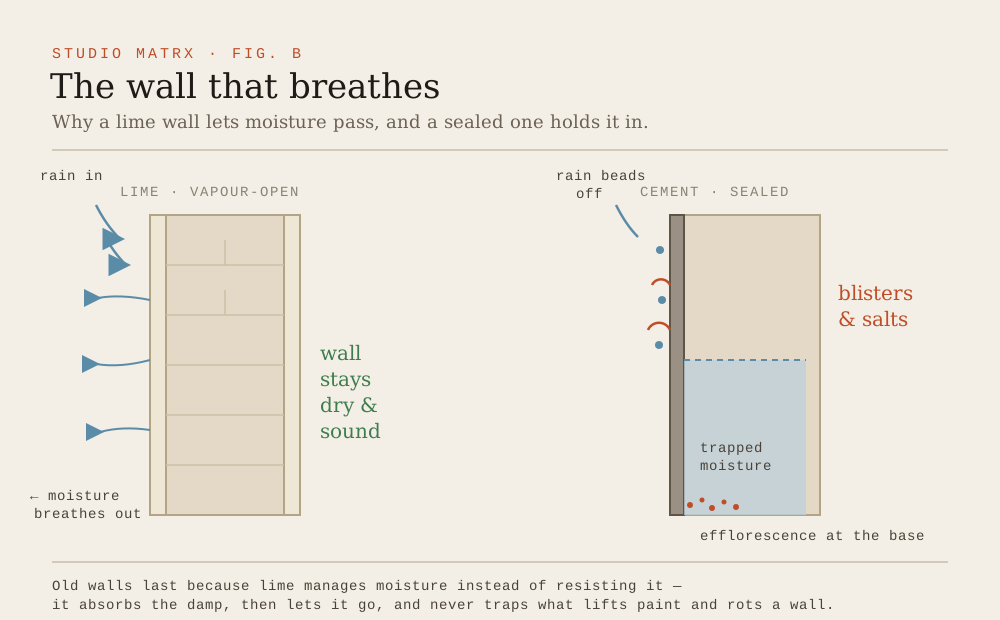
Lime did exactly that. Unlike many modern materials that attempt to create an impermeable barrier, lime lets a building interact with its environment in a more balanced way, absorbing moisture when the air is damp and releasing it when conditions dry out, so walls regulate humidity naturally.
This property is commonly described as the ability of lime to let buildings breathe.
Why breathability matters
Moisture is one of the most common causes of building deterioration. Peeling paint, damp patches, mould growth and cracked finishes are often symptoms of water trapped within walls. In humid climates the problem is worse when impermeable materials prevent that moisture from escaping.
Lime behaves differently. Because it remains vapour-permeable, moisture can move through the material and evaporate naturally. Rather than trapping water inside a wall, lime encourages a gradual exchange with the surrounding air. The outcome is not absolute dryness, but improved building health and stability.
This becomes especially valuable through a prolonged monsoon. Buildings will encounter moisture; the question is not whether water arrives, but how well the building deals with it once it does. In many cases resilience is achieved through moisture management rather than resistance alone.
Lime versus cement
Comparisons between lime and cement are frequently framed as a competition, though the distinction is more nuanced. Cement transformed construction by offering speed, strength and standardisation, and it remains essential for countless structural applications. Problems arise mainly when cement-based finishes are applied indiscriminately to buildings that needed to breathe.
Lime offers a distinct set of advantages. It is generally more flexible, accommodating minor movement without cracking as readily as rigid finishes. It regulates moisture more effectively and ages more softly. Small cracks can even heal over time through autogenous healing, where dissolved lime reacts with air to re-close the gap.
None of this makes lime a universal substitute for cement. It underlines a simpler point: different materials solve different problems, and good construction begins with choosing the one suited to the context.
Where lime makes sense today
The renewed interest in lime is being driven by both conservation and contemporary architecture. In heritage restoration it remains indispensable — cement-based repairs on historic structures often trap moisture and accelerate decay, while restoring the original lime lets a building perform as it was meant to.
But lime is no longer confined to restoration. Architects working in humid regions are increasingly exploring lime plasters and finishes in new homes. Buildings that prioritise natural ventilation, passive cooling and material longevity often benefit from lime's breathability.
Homeowners may consider it for interior and exterior plaster too, especially where dampness recurs. The choice should be informed by local conditions, construction technique and professional guidance — a consideration that only grows in importance as the climate becomes harder to predict.
Building for the long term
The most significant insight lime offers may be philosophical rather than purely technical. Modern construction often seeks total control over nature — we waterproof, seal, isolate and contain. Yet buildings interact with weather, temperature and moisture throughout their lives.
Lime embodies an alternative. Rather than opposing environmental forces, it accommodates them, accepting that a building will breathe, age and respond to its surroundings, and producing architecture that adapts rather than merely resists.
As resilience increasingly shapes design, some of the most effective solutions may come not from new inventions but from the rediscovery of time-tested materials. Lime is one of them — and in a season of heavy rain, few materials prove more relevant.