
Green Metropolis: why the densest city is the greenest
David Owen's case that the dense city — not the green suburb — is the truly sustainable one, and what it means for India.
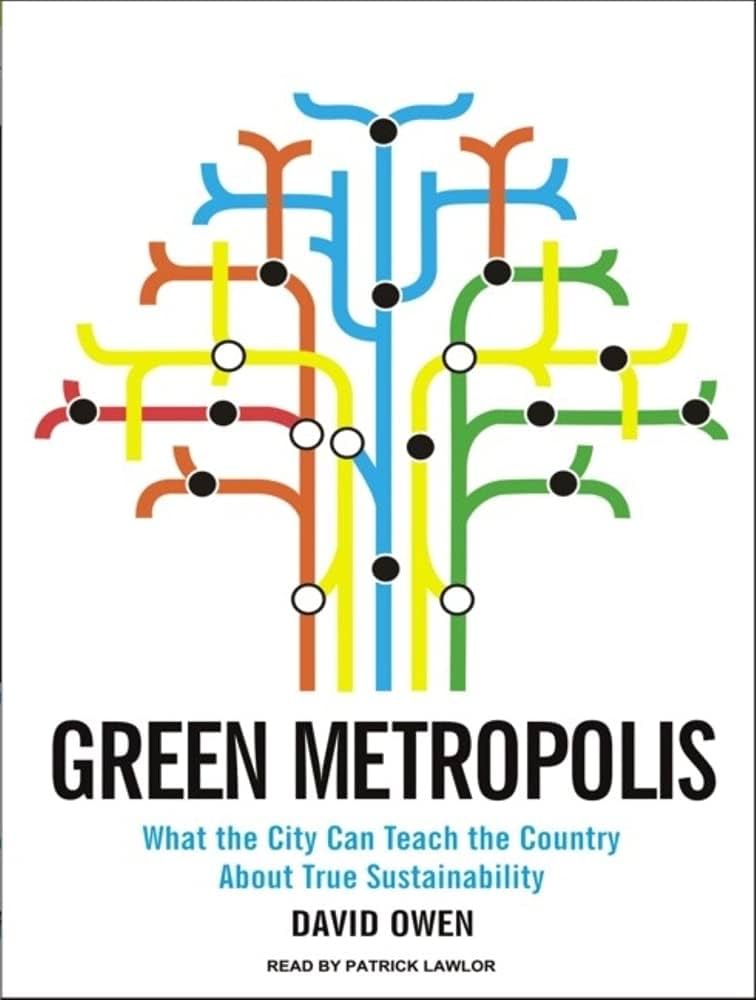
Among the most influential writings on urbanism today is David Owen's Green Metropolis: What the City Can Teach the Country About True Sustainability. Published in 2009, the book challenges one of the most fundamental beliefs in modern environmentalism: that closeness to nature makes people more environmentally aware than city-dwellers. Owen argues, instead, that the most sustainable way of life in the United States is not a rural eco-community or a spacious green suburb, but the country's densest urban setting — Manhattan.
Owen's basic assertion is simple: true sustainability is not about people's intentions, but their actions. Through empirical evidence he shows that urbanites consume less energy, use fewer resources, produce fewer greenhouse gases, live in smaller homes and drive less. The reason is not necessarily greater environmental awareness, but urban form itself — density makes sustainable behaviour close to unavoidable.
Perhaps his most convincing argument concerns the environmental drawbacks of so-called green suburbs. Families who live in sprawling green suburbs and fit solar panels, grow organic food and drive hybrid cars look environmentally friendly — yet they usually consume far more energy than Manhattanites who live in small apartments and ride public transport.
One of the book's great strengths is that Owen measures what people actually consume, not merely whether they intend to act responsibly. His main evidence is the relatively low per-capita carbon emissions of Manhattan compared with other American cities. More pedestrians, heavier use of public transport, and smaller living areas — which need less heating and cooling — are, he shows, the real ingredients of a low-impact environment. The findings sit comfortably with contemporary urban research; Edward Glaeser and others have likewise shown that high density can sharply lower a population's environmental footprint by cutting reliance on private cars.
In the Indian context, the lessons land hard. India is urbanizing at enormous speed, and megacities such as Mumbai, Bengaluru, Delhi and Chennai already struggle with traffic, pollution and housing shortages. Owen's study implies that rather than sprawling outward into endless suburbs, Indian cities should build density well — and that dense, transit-oriented development may prove far more sustainable in the long run.
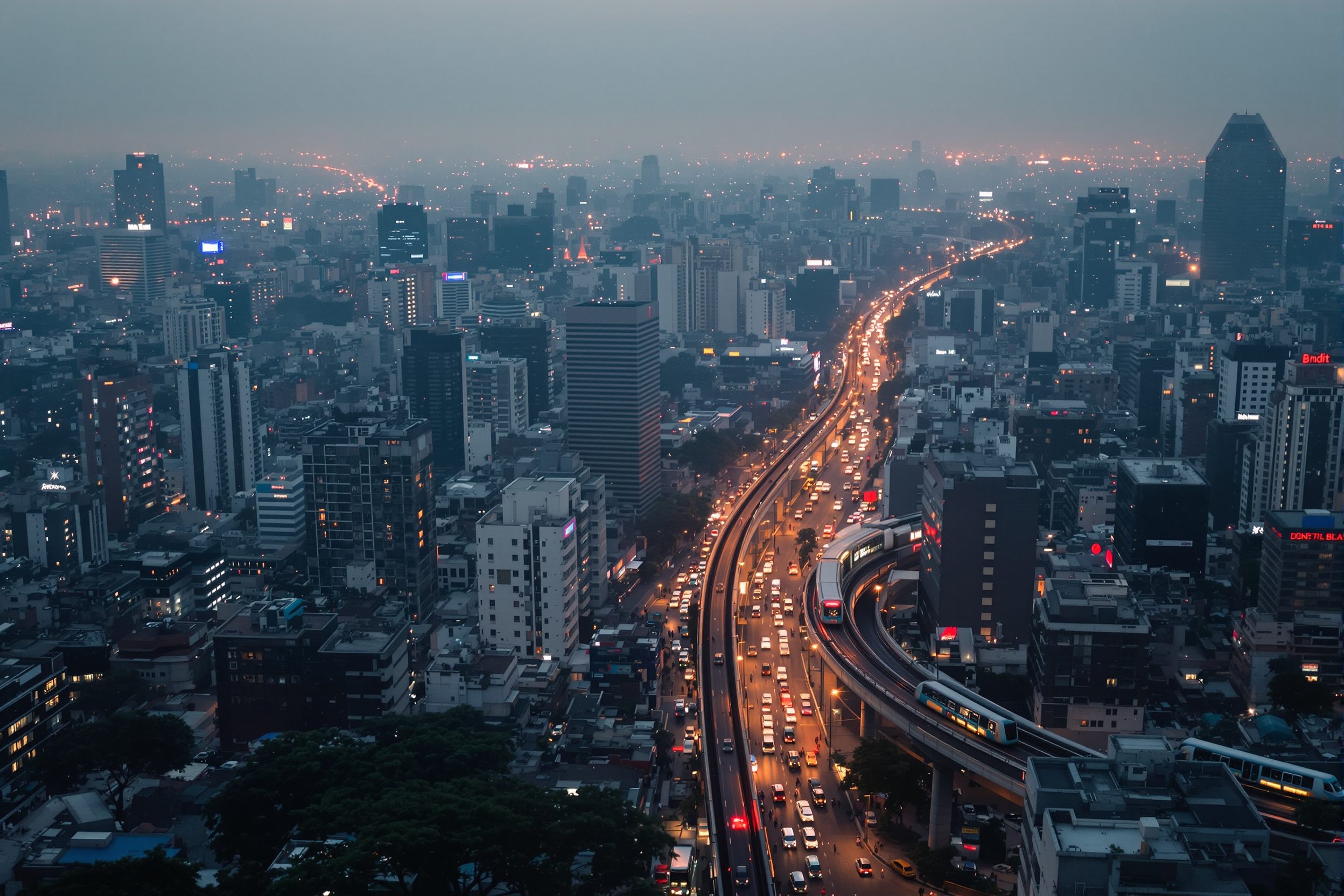
The argument speaks directly to India's own planning debates. The architect Charles Correa famously said that “cities are not problems; they are solutions.” Green Metropolis reinforces exactly that: the city should be read not as an environmental problem to be escaped, but as our most powerful instrument for shrinking the human footprint.
One of Owen's sharpest points runs as follows: “If all Americans lived the way New Yorkers do, the United States' per-capita carbon emissions would drop dramatically.” The specific figures have shifted since 2009, but the idea was hugely influential — that genuine sustainability emerges from efficient systems, not from the hope that people will always behave virtuously.
The book is not without faults. Some scholars argue that Owen underplays the social and psychological benefits of suburban life — private green space, larger rooms, a higher perceived quality of life. Manhattan also has peculiarities that other cities cannot easily copy: without efficient public transport, sound governance and real infrastructure, density alone will not deliver Manhattan's efficiencies.
A further limitation is the near-total absence of examples beyond the United States — India most of all. Fast-developing nations carry burdens Owen barely addresses: informal settlements, thin infrastructure, deep social inequality. Density yields its environmental dividend only when it is paired with genuinely good urban development.
On balance, the strengths far outweigh the flaws. The writing is engaging, fact-driven and often provocative; Owen interrogates comfortable assumptions and pushes the reader to judge environmental truth by facts rather than appearances. The result is a book with real value for architects, urban planners, environmentalists and policymakers — and for ordinary city residents too.
In the end, Green Metropolis is a landmark in the literature of urban planning, sustainability and environmental policy. Its central idea — using urban density to reduce humanity's environmental footprint — remains striking and timely. For a country urbanizing as fast as India, Owen's case is one worth arguing with seriously. The defining environmental question of our era is how to build sustainable settlements — whether or not we choose to call them cities.