
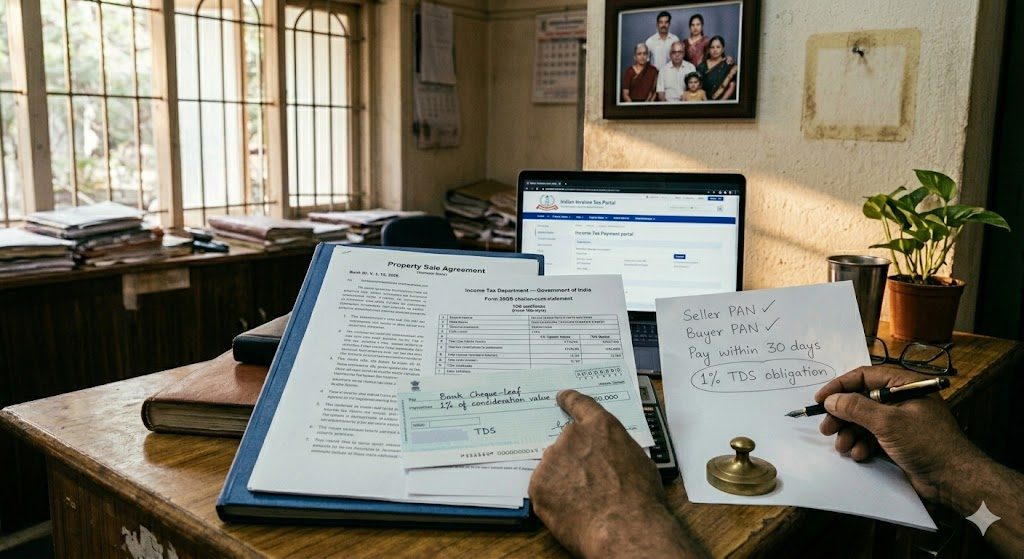
TDS on Property Purchase in India — 2026 Guide
Section 194-IA, the 1% TDS Every Buyer Must Deduct, Form 26QB & Form 16B
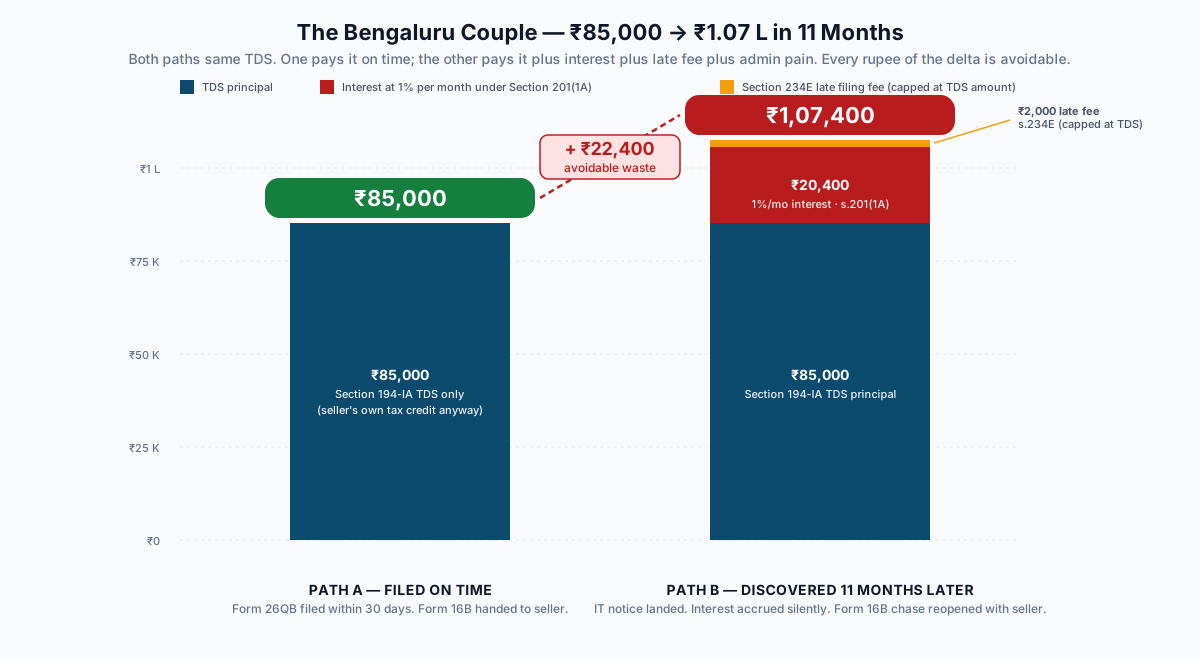
In 2023, a Bengaluru couple bought a ₹85 lakh apartment. They paid the seller in full, registered the sale deed, took possession, and started setting up the home. Eleven months later, an Income Tax notice landed — demanding ₹85,000 (the TDS they should have deducted under Section 194-IA), plus ₹20,400 in interest (1% per month for 11 months), plus a ₹2,000 late filing fee (capped by statute, but the smaller figure still stung), plus the administrative headache of downloading Form 16B to close the loop with the seller.
Total extra cost: ₹1.07 lakh, all entirely avoidable.
Their mistake was not fraud. It was not carelessness either — they had a CA, a lawyer, and a bank handling the transaction. The mistake was a silent assumption: that "stamp duty + registration + GST" was the full tax picture at purchase. Section 194-IA sits quietly outside that frame, rarely mentioned by brokers, and the buyer — not the seller — is on the hook.
This guide is the reference that prevents that letter. It covers exactly how TDS under Section 194-IA works for Indian property purchases, when it doesn't, what goes wrong, and how to file on time the first time.
>
Computes the TDS, per-buyer split, and net amount to the seller — with flags for no-PAN sellers (20%) and NRI sellers (Section 195 applies instead). Useful alongside this guide.
What the Law Actually Says
The relevant provision is Section 194-IA of the Income Tax Act, 1961 — inserted by the Finance Act 2013 and in force since 1 June 2013. The section has exactly four operational subsections, fitting on a single page. The statute reads, in substance (Government of India, 1961):
"Any person, being a transferee, responsible for paying... to a resident transferor any sum by way of consideration for transfer of any immovable property... shall, at the time of credit of such sum... or at the time of payment... in cash or by issue of a cheque or draft or by any other mode, whichever is earlier, deduct an amount equal to one per cent of such sum as income-tax thereon."
Translated into plain English:
1. Who deducts: the buyer ("transferee").
2. Whose tax is it: the seller's ("transferor's") — the TDS is credited against the seller's eventual capital gains liability.
3. What's taxed: the sale consideration (not the gain).
4. At what rate: 1% (if seller has PAN; otherwise 20% under s.206AA).
5. When to deduct: at payment or credit, whichever is earlier.
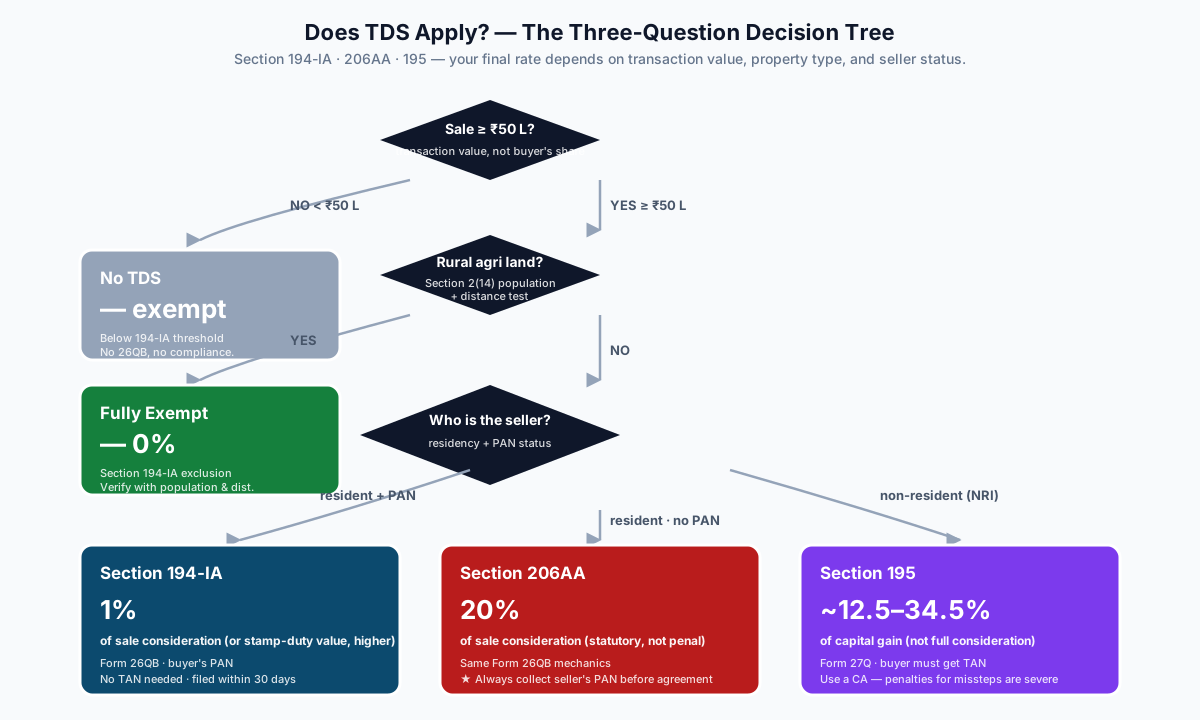
6. Applicable to: any immovable property other than rural agricultural land, where consideration is ₹50 lakh or more.
That's it. The mechanics that follow — Form 26QB, Form 16B, deadlines, penalties — are CBDT rules and practice built on this skeleton.
"TDS on property is perhaps the least-understood tax obligation in Indian real estate. Buyers assume the seller handles their own tax. Sellers assume the buyer will take care of whatever paperwork. Lawyers assume the CA will flag it. The CA often gets involved only after registration. The result is a compliance gap with real teeth — interest accrues from the day of payment, not from the day of the notice." — Mukesh Butani, Managing Partner, BMR Legal, in Business Standard (Butani, 2023).
The ₹50 Lakh Threshold — Transaction, Not Share
The single most misunderstood line in Section 194-IA is the threshold rule. It is not "each buyer must pay ≥ ₹50 lakh." It is "the consideration must be ≥ ₹50 lakh."
Worked Example
Two friends jointly buy a ₹60 lakh flat in Pune, paying ₹30 lakh each. Each buyer's share is below ₹50 lakh.
- Common mistake: "My share is ₹30 L, under the threshold, so no TDS."
- Correct reading: The transaction is ≥ ₹50 L. TDS applies.
Each co-buyer deducts 1% on their own share (₹30 L × 1% = ₹30,000 per buyer) and files their own Form 26QB. The total TDS deposited against the seller's PAN is ₹60,000 — exactly 1% of the full transaction.
This was clarified by CBDT Circular No. 695 dated 28 January 1994 (originally for a similar TDS section) and has been consistently applied to 194-IA. The Madras High Court in CIT vs Oxford Softech Pvt. Ltd. (2019) reaffirmed the "transaction-level threshold" interpretation (Income Tax Department, 2019).
Where This Trips Buyers Up
| Scenario | TDS applicable? | Why |
|---|---|---|
| Solo buyer, ₹45 L flat | No | Below threshold |
| Solo buyer, ₹50 L flat (exactly) | Yes | ≥ threshold |
| 2 buyers, ₹60 L flat, equal share | Yes, each deducts 1% of ₹30 L | Transaction is ≥ ₹50 L |
| 3 buyers, ₹45 L flat | No | Below threshold, regardless of splits |
| 2 sellers, 1 buyer, ₹80 L flat | Yes | Buyer deducts 1%, deposits once; details of both sellers entered in Form 26QB |
| 1 seller, 2 buyers, ₹80 L flat | Yes | Each buyer files separate 26QB on their share |
The 1% Rate — and When It Becomes 20%
The headline 1% applies when the seller has furnished a valid Permanent Account Number (PAN). If not, Section 206AA kicks in — the rate jumps to 20%, irrespective of 194-IA.
This is not a typo and not a penalty. It's a statutory rate, triggered by the seller's failure to provide a PAN. Section 206AA reads (Government of India, 1961, s. 206AA):
"...the deductee shall furnish his Permanent Account Number to the person responsible for deducting such tax... failing which tax shall be deducted at the higher of the following rates, namely — (i) at the rate specified in the relevant provision of this Act; (ii) at the rate or rates in force; or (iii) at the rate of twenty per cent."
For property purchase, 20% on ₹85 lakh is ₹17 lakh withheld from the seller's receivable. Sellers who hesitate about sharing their PAN are almost universally unaware of the consequence.
Practical Rule for Buyers
Before signing any agreement, insist on:
1. A photocopy of the seller's PAN card.
2. Cross-check the PAN against the IT Department's online PAN verification portal.
3. Include the PAN in the sale deed (in the recitals or the seller's details block).
This takes 10 minutes and drops your TDS rate by 19 percentage points.
NRI Sellers — Where Section 194-IA Doesn't Apply
Section 194-IA explicitly says "resident transferor." Non-resident sellers are outside this section entirely. Instead, Section 195 governs — and Section 195 is fundamentally different:
- TDS is on the capital gain, not the sale consideration.
- The rate depends on whether the gain is LTCG or STCG (12.5% post-Jul-2024 on LTCG; slab rates on STCG).
- Plus surcharge (capped at 15% on capital gains) and 4% cess.
- The buyer must apply for a TAN (not just PAN) — Section 194-IA buyers use their own PAN.
- Form 27Q is filed quarterly, not Form 26QB per transaction.
- The NRI seller can apply for a lower-deduction certificate under Section 197 if their actual tax liability is less than the default withholding rate.
Effective Rate Gap
| Seller status | TDS rate | Deducted on | Form | Deductor ID |
|---|---|---|---|---|
| Resident individual/HUF | 1% (or 20% no-PAN) | Sale consideration | Form 26QB | Buyer's PAN |
| NRI (LTCG default) | ~14.95% | Capital gain | Form 27Q | Buyer's TAN |
| NRI (STCG default) | Up to ~34.5% | Capital gain | Form 27Q | Buyer's TAN |
The buyer of property from an NRI typically needs a CA to engage with Section 195 correctly. Do not self-serve this case.
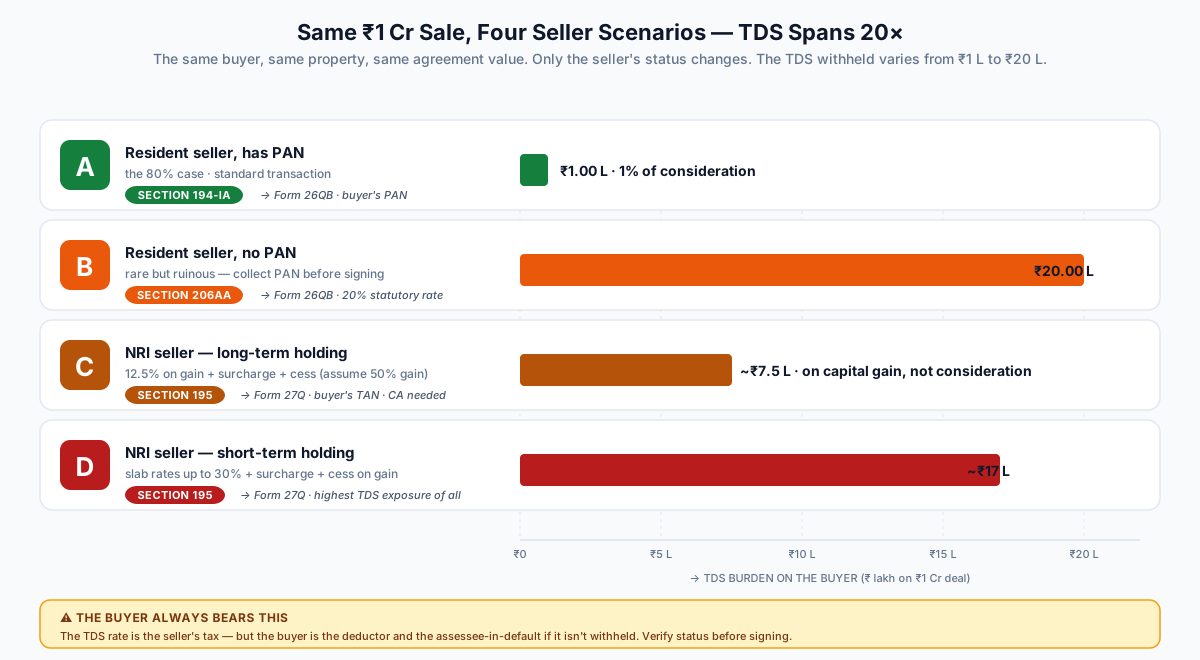
"Non-resident property transactions are where Indian buyers most often get destroyed. They think 'property is in India, seller's tax is India's problem.' But the TDS burden falls on the buyer, the rate is three to twenty times higher than resident sales, and penalties for non-deduction are not 1% interest but disallowance of the purchase cost for future capital gains computation — a potentially ruinous consequence on resale." — Sunil Gidwani, Partner, Dhruva Advisors, in The Economic Times (Gidwani, 2024).
When to Deduct — The "Payment or Credit, Whichever is Earlier" Rule
Property transactions are rarely one-shot. Typical Indian flows:
1. Booking amount at token / agreement-to-sell stage
2. Milestone payments linked to construction (under-construction flats)
3. Lump sum at possession / registration
4. Sometimes retention for defect-liability
Section 194-IA says deduct at payment or credit, whichever is earlier. In practice, you deduct 1% on each payment instalment — not a lump 1% at the end.
Worked Example — Under-Construction Flat
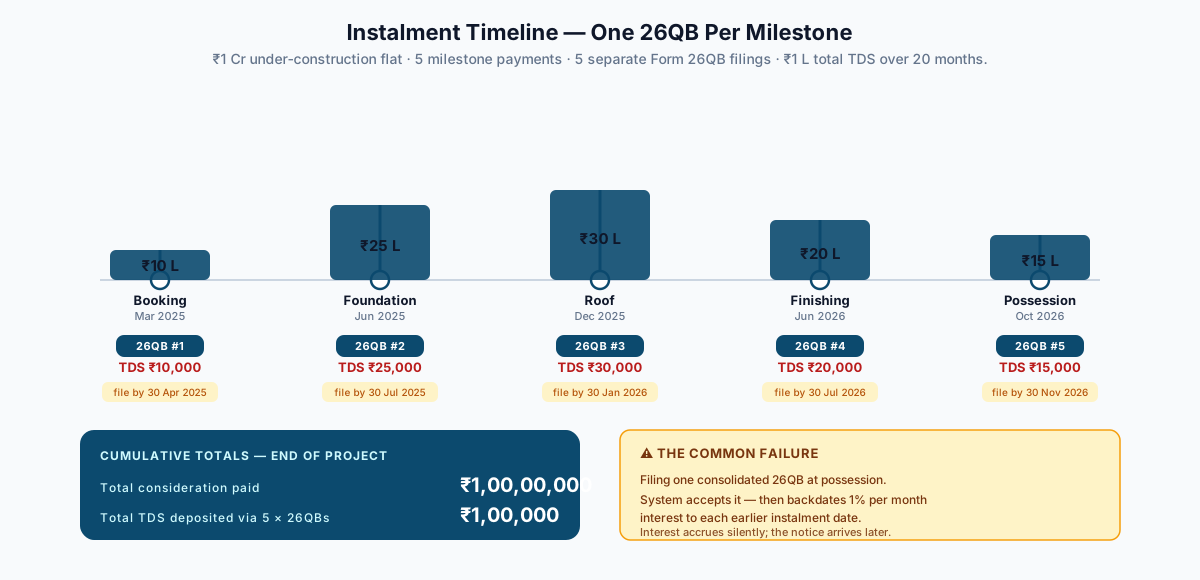
You're buying a ₹1 crore under-construction flat from a builder. Payment schedule:
| Milestone | Date | Amount | TDS |
|---|---|---|---|
| Booking | Mar 2025 | ₹10,00,000 | ₹10,000 |
| Foundation complete | Jun 2025 | ₹25,00,000 | ₹25,000 |
| Roof complete | Dec 2025 | ₹30,00,000 | ₹30,000 |
| Finishing | Jun 2026 | ₹20,00,000 | ₹20,000 |
| Possession | Oct 2026 | ₹15,00,000 | ₹15,000 |
| Total | ₹1,00,00,000 | ₹1,00,000 |
You file five separate Form 26QBs — one per instalment, within 30 days of the end of the month in which each instalment was paid. This is the single most common 194-IA compliance failure: buyers file once at the end and pay penalty on all earlier instalments.
Form 26QB — The Filing Mechanism
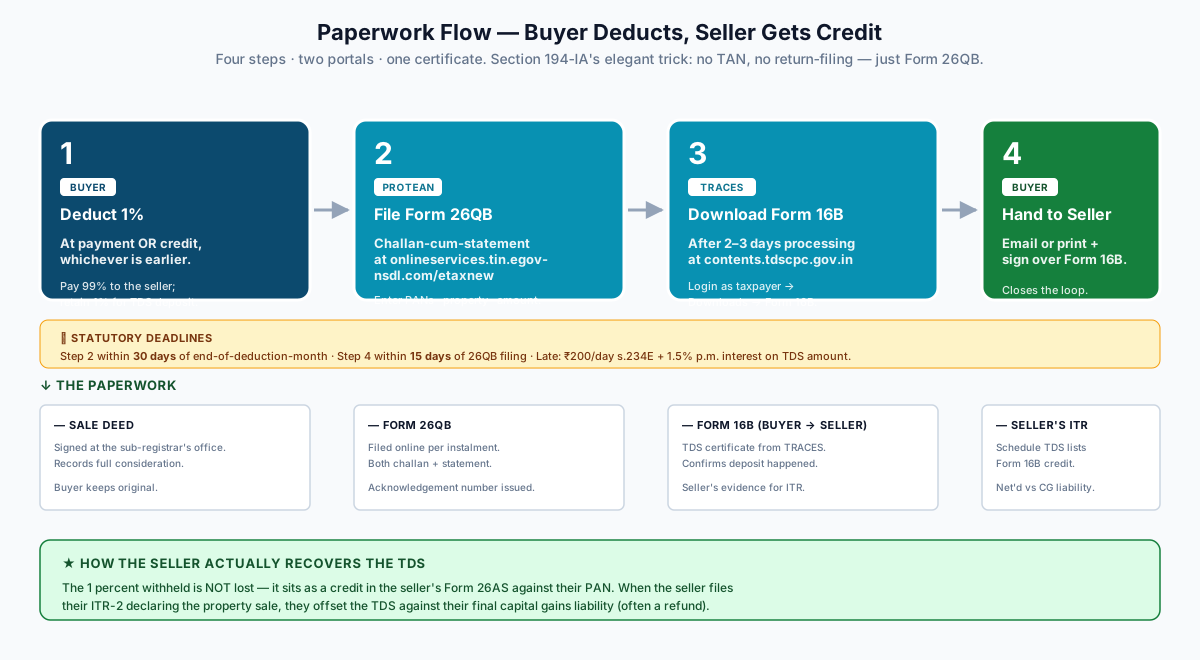
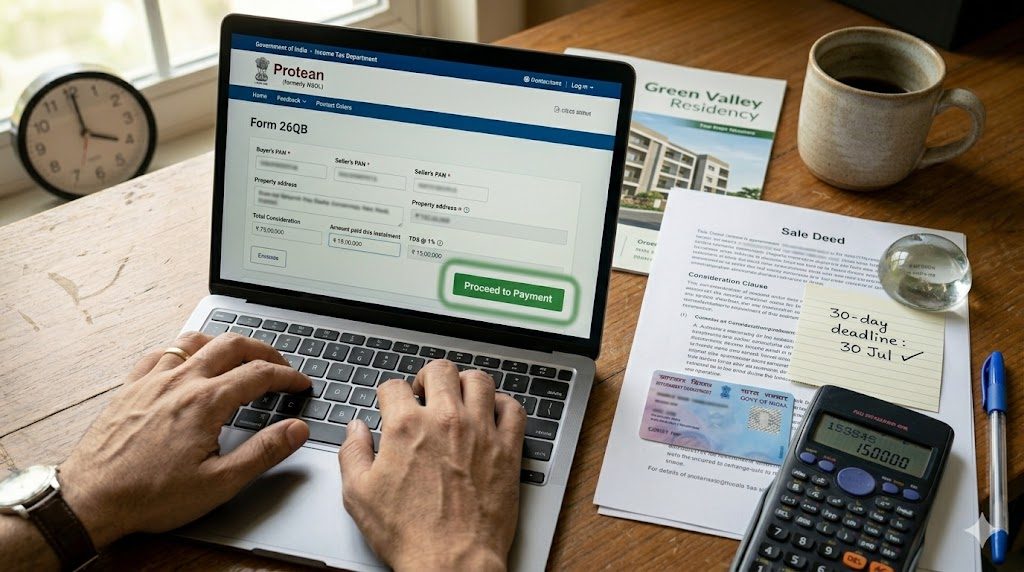
There is no TAN or TDS return-filing overhead for 194-IA buyers. Instead, Form 26QB is a challan-cum-statement — it both deposits the TDS and serves as the return — filed per instalment on the NSDL portal (now operated by Protean eGov Technologies).
Filing Steps
1. Visit https://onlineservices.tin.egov-nsdl.com/etaxnew/tdsnontds.jsp
2. Click "TDS on Property (Form 26QB)".
3. Enter:
- Buyer's PAN (yours)
- Seller's PAN (the resident transferor)
- Property details (address, total consideration, agreement date, payment date)
- Amount paid this instalment
- TDS amount (1% of this instalment)
4. Pay the TDS via net banking (most banks) or authorised bank branch.
5. Save the acknowledgement — you'll need it for Form 16B.
Deadline
Within 30 days from the end of the month in which the deduction is made. So a payment made on 15 June 2025 must have its Form 26QB filed by 30 July 2025.
Miss this by even one day and interest starts accruing at 1% per month (or part thereof). Late filing fees under Section 234E are ₹200/day until paid, capped at the TDS amount.
Form 16B — The Certificate to the Seller
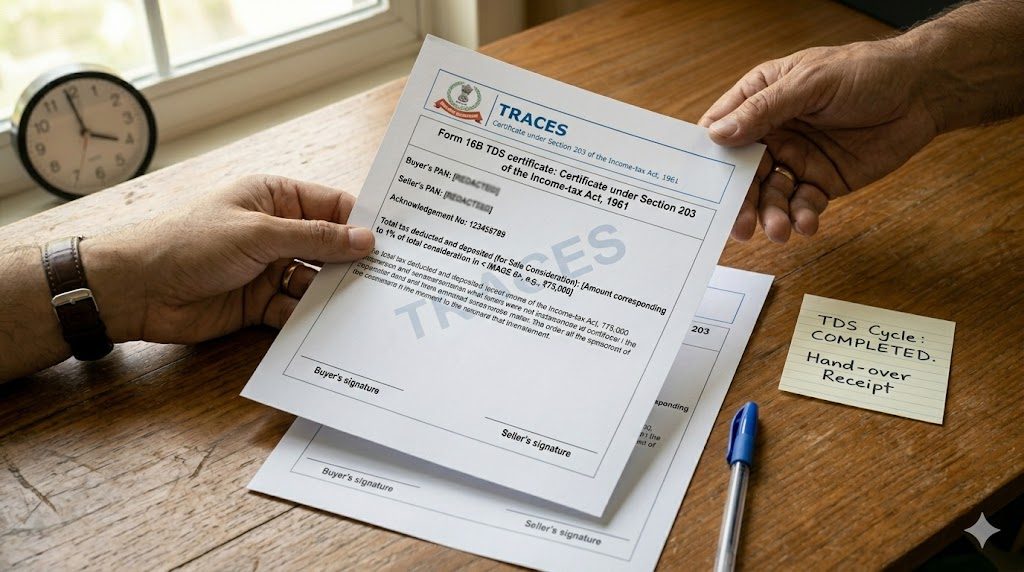
After Form 26QB is processed (typically 2-3 days), you download Form 16B from the TRACES portal and hand it to the seller within 15 days.
- Portal: https://contents.tdscpc.gov.in/
- Login with your PAN as a taxpayer.
- Go to "Downloads" → "Form 16B (For Buyer)".
- Enter the acknowledgement number from Form 26QB.
- Download the PDF and email/hand to the seller.
This certificate is the seller's evidence that TDS has been deducted and deposited — they use it to claim credit against their capital gains tax when filing their own ITR. Without Form 16B, the seller's CA will ask you for it; delaying it delays their filing.
Six Mistakes That Cost Indian Buyers Lakhs
1. Filing One 26QB for Multiple Instalments
Each payment = a separate Form 26QB. Buyers sometimes try to file one consolidated form at the end, hoping to save paperwork. The system accepts it but backdates interest to the date of the first instalment — so you pay 1% per month on every earlier instalment you delayed.
2. Using the Seller's PAN in Buyer's Field
A common slip. Form 26QB asks for both PANs; confusing them causes the TDS to appear against the wrong PAN, the seller doesn't get credit, and the IT department issues notices to both parties. Correcting this via the AO is a 3-6 month ordeal.
3. Forgetting TDS on the Stamp Duty Value Trigger
If you're paying consideration below the stamp duty / circle rate, Section 194-IA provides that TDS is computed on the higher of the two (per the 2019 amendment). So a ₹48 L sale with a ₹55 L circle rate still attracts TDS at 1% of ₹55 L (stamp-duty value is the floor).
4. Skipping the Women-Seller Scenario
When buying from a woman who claimed a prior women's stamp-duty concession, some buyers mistakenly assume the concession carries forward to TDS. It doesn't. Section 194-IA is gender-neutral — 1% on the transaction regardless of who the seller is.
5. Joint Buyers Using One 26QB
Buyer A and Buyer B jointly purchase a ₹1 Cr flat. Each should file a separate 26QB on their ₹50L share. Filing only one, from either buyer's PAN, means the other buyer's share is not credited to the seller. The other buyer also cannot claim Section 24(b) interest benefit proportionately because there's no 26QB in their name.
6. Not Asking the Seller to Email Their PAN in Writing
If the seller later claims their PAN was different from the one you filed against, the IT Department will ask you to prove. WhatsApp screenshots help but a signed declaration or email is cleaner. Always get it in writing before filing 26QB.
Penalties — What Happens If You Don't Deduct
Section 201(1A) and 271C set the penalty framework. For non-deduction or short deduction of TDS:
| Violation | Consequence |
|---|---|
| Failure to deduct | Buyer treated as assessee-in-default — the TDS amount becomes the buyer's liability, not the seller's |
| Late deposit after deduction | 1.5% per month interest under Section 201(1A)(ii) |
| Late deposit before deduction | 1% per month interest under Section 201(1A)(i) |
| Non-filing of 26QB | ₹200/day late fee under Section 234E, capped at TDS amount |
| Deliberate non-deduction | Up to 100% of the TDS as penalty under Section 271C (applied rarely, but legally available) |
| Repeat offence or fraud | Prosecution under Section 276B — imprisonment 3 months to 7 years |
Worse, under Section 40(a)(ia), if the buyer has deducted TDS but not deposited it on time, they cannot claim the purchase cost as indexed acquisition cost when they eventually sell the property — effectively a double hit later.
Agricultural Land — The One Full Exemption
Rural agricultural land is exempt from Section 194-IA regardless of value. Definition under Section 2(14):
Land is "rural agricultural land" if it is situated in any area outside the jurisdiction of a municipality or cantonment board that has a population of 10,000 or more as per the last census, AND is not within the specified distance from such municipality:
- 2 km if population 10,000–1,00,000
- 6 km if population 1,00,000–10,00,000
- 8 km if population above 10,00,000
In practice: if the land is within driving distance of any town, assume it's NOT rural agricultural and TDS applies. Commercial agricultural plots marketed for "weekend farms" or "agro-tourism" near metros almost never qualify for this exemption.
Instalment Purchase via Home Loan — How It Actually Flows
Most property purchases in India are bank-financed. The TDS flow is worth understanding precisely:
1. Bank sanctions loan — say ₹75 L against a ₹1 Cr purchase.
2. Buyer pays down payment of ₹25 L from own funds.
3. On registration day, the bank disburses the ₹75 L directly to the seller.
4. Buyer is still the TDS deductor for the entire ₹1 Cr, even though the bank moved the money.
Many banks now deduct TDS before disbursement and hand a Form 16B-ready acknowledgement to the buyer. If your bank does this, confirm in writing. If not, you file Form 26QB yourself and deposit from your own funds — the bank will not do it for you.
The Practical Check
Ask the bank's loan officer on sanction call:
"Who files Form 26QB and when — me or you? If me, when do I get the acknowledgement from you that the ₹75 L disbursement happened so I can file within 30 days?"
A good bank has a standard answer. A disorganised one doesn't — which is your cue to make it your own explicit process.
Looking Ahead — What Might Change
Three areas to watch:
1. Threshold revision. ₹50 lakh was set in 2013 and has not changed. Today it covers a 2BHK in most metros. A revision to ₹75 L or ₹1 Cr is periodically discussed in pre-budget memoranda but has not happened since a change would reduce revenue.
2. Section 195 digitisation. NRI-seller cases still require TAN and Form 27Q. A consumer-friendly online Form 26QB-style product for 195 is on CBDT's stated roadmap; timeline unclear.
3. Integration with sale-deed registration. Several states have begun piping stamp-duty payment portals to pre-populate Form 26QB data. Karnataka's Kaveri 2.0 is the most advanced; Maharashtra's IGR is testing. Expect nationwide by 2028.
Open the Calculator
>
Enter sale consideration, seller PAN status, seller residency, and number of buyers. See total TDS, per-buyer split, net to seller, and the Form 26QB / 16B timeline. Also flags the NRI case so you know when to call a CA.
Related tools:
- Stamp Duty Calculator — closing costs at purchase
- Capital Gains Tax Calculator — seller's tax at sale
- Home Loan Affordability — financing
- Property Tax Calculator — annual municipal tax
References
- Butani, M. (2023) 'The forgotten obligation — TDS on property purchase', Business Standard, 8 November.
- Central Board of Direct Taxes (2019) Circular clarifying treatment of stamp duty value for Section 194-IA TDS computation. New Delhi: Ministry of Finance.
- Gidwani, S. (2024) 'Why Indian buyers should fear Section 195 more than stamp duty', The Economic Times, 3 February.
- Government of India (1961) Income Tax Act, 1961 — Sections 194-IA, 195, 201(1A), 206AA, 234E, 271C. New Delhi: Ministry of Law and Justice.
- Income Tax Department (2024) Form 26QB — Filing Instructions. New Delhi: Central Board of Direct Taxes.
- Income Tax Department (2019) CIT vs Oxford Softech Pvt. Ltd. — Madras High Court decision on threshold interpretation. New Delhi: CBDT casebook.
- Protean eGov Technologies (2025) TDS on Property (Form 26QB) — User Guide. Mumbai: Protean (formerly NSDL e-Governance).
- TRACES (2024) Form 16B Download — Buyer Handbook. Mumbai: Tax Deduction and Collection Account Number System.
Author's Note: Section 194-IA was introduced in 2013 and the mechanics have been stable since. The main changes over the last decade are the CBDT's clarifications on stamp-duty-value treatment (2019) and joint-buyer filing (2019). Always verify the current portal flows — NSDL rebranded to Protean in 2023 and the URLs have shifted accordingly.
Disclaimer: This article is for informational and educational purposes only. It does not constitute tax, legal, or financial advice. TDS compliance varies by transaction specifics — consult a qualified Chartered Accountant before filing Form 26QB for large or complex transactions (instalment purchases, joint ownership, or any NRI-seller case). Penalties for non-compliance are steep and cumulative; the cost of professional advice is always less than the cost of a notice two years later.
Export this guide
Related Guides — Deep-dive reading
Stamp Duty in India 2026 — State-wise Guide
Rates, Registration Charges, Concessions & How to Calculate Your Liability
ConstructionRERA Buyer Rights: A Homeowner's Guide (2026)
What RERA actually gives you as a home buyer -- registered projects, sale on carpet area, an escrow rule that curbs fund diversion, defined possession dates with delay compensation, a defects-liability period, and a real complaint route -- plus how to check a project on your state RERA portal before you pay a rupee.
Building RegulationsHow to Buy a Plot in India: Step-by-Step Due Diligence, Documents and Registration (2026)
The complete, plain-language map of buying a residential plot in India end to end - define your requirement and budget, evaluate the site, run the due-diligence stage (title, documents, encumbrance, khata, land-use, approvals), discover the fair price, sign the agreement, register the sale deed, and get mutation and possession - with a step-by-step process table and a red-flags table.
Buying LandRelated Tools — Try Free
TDS on Property Calculator — Section 194-IA
The 1% TDS the buyer must deduct on property above ₹50 lakh — joint-buyer split, 20% rate for no-PAN sellers, and NRI-seller (Section 195) flag.
TDS 194-IAStamp Duty Calculator — All Indian States
Stamp duty + registration charges for all 28 states and 8 UTs — gender concessions, urban/rural variants, metro cess built in.
Stamp DutyCapital Gains Tax Calculator — Property
LTCG and STCG on property sale with Cost Inflation Index (CII) indexation, Section 54 and 54EC exemptions, and Budget 2024 dual-method comparison.
Capital Gains