
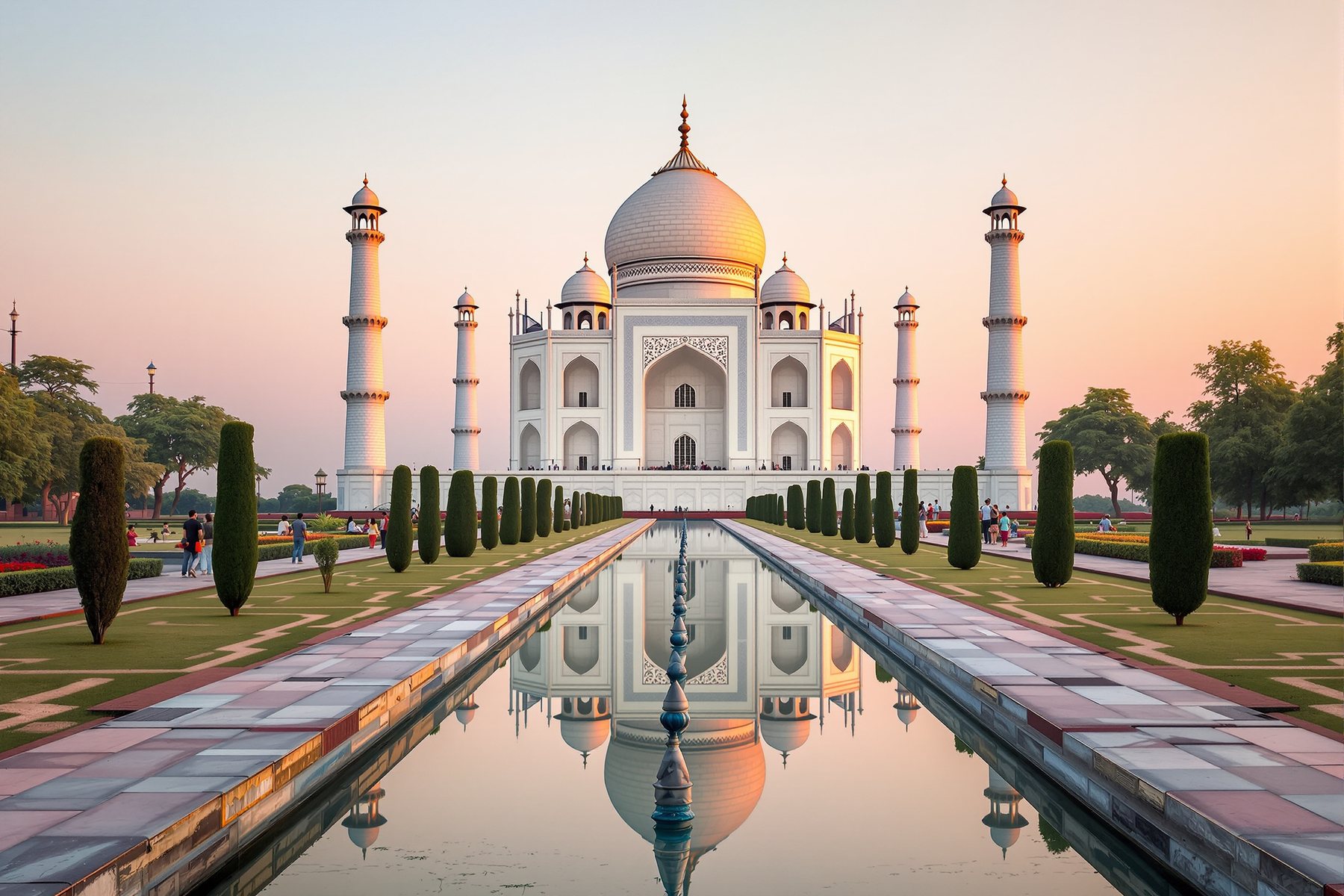
The Taj Mahal: A Building Made of Love and Loss
How a grieving emperor turned his sorrow into the most beautiful building on earth — a white marble tomb of flawless symmetry, set in a garden of paradise, broken by a single, deeply human flaw. The architecture of remembrance, and what it can teach anyone who builds.
We end this stretch of the journey with the building almost everyone, asked to picture a wonder, pictures first. The Taj Mahal needs no introduction as an image — but it is far less understood as a piece of _architecture_, and far less still as what it truly is: not a palace, not a temple, but a tomb. It is the most beautiful building humanity has made, and it was made out of grief.
In 1631 the Mughal Emperor Shah Jahan lost his wife, Mumtaz Mahal, who died giving birth to their child. And rather than let her go, he spent the next two decades, and the treasure of an empire, turning his sorrow into white marble. The Taj Mahal is what mourning looks like when a grieving man happens to command the finest builders on earth. For a project built — like Studio Matrx itself — as an act of love and remembrance, there is no truer place to pause.
This is the sixteenth article in our Architectural Wonders series.
1. A garden, a river, and a tomb
Most people picture the Taj as a single building floating above a pool. It is really a vast, carefully composed complex, laid out along one perfect axis running down to the Yamuna river in Agra.
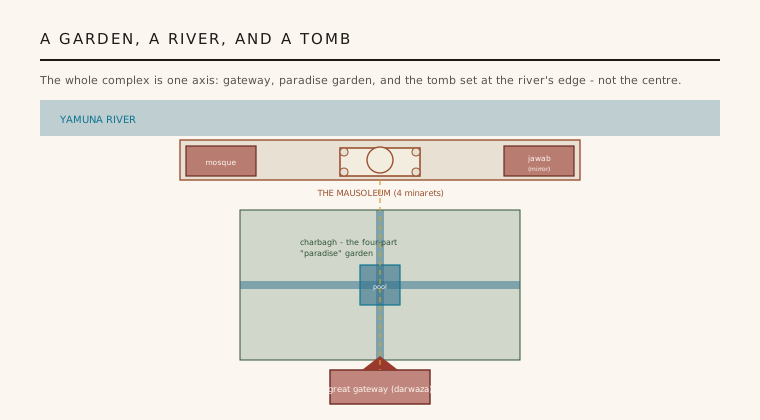
You enter through a monumental red-sandstone gateway, and the tomb is deliberately _hidden_ and then revealed. Beyond it lies the charbagh — the four-part Mughal "paradise garden," quartered by water channels, with a raised reflecting pool holding the tomb's image. And here is the first stroke of genius: the mausoleum does not sit in the centre of the garden, where you might expect. It is pushed to the far end, on a plinth at the river's edge, flanked by a red-sandstone mosque to the west and an identical building to the east — the jawab, or "answer," which is not a working mosque at all but exists purely to keep the symmetry. Placing the tomb at the river end instead of the middle gives the whole approach its depth and drama, and sets the white marble against nothing but sky and water.
2. Perfect symmetry — and one human flaw
The Taj is the supreme expression of an idea that runs through Mughal architecture: bilateral symmetry as an image of divine, cosmic order. Fold the whole complex along its central axis and the two halves match almost perfectly — mosque mirrored by jawab, minaret by minaret, arch by arch.
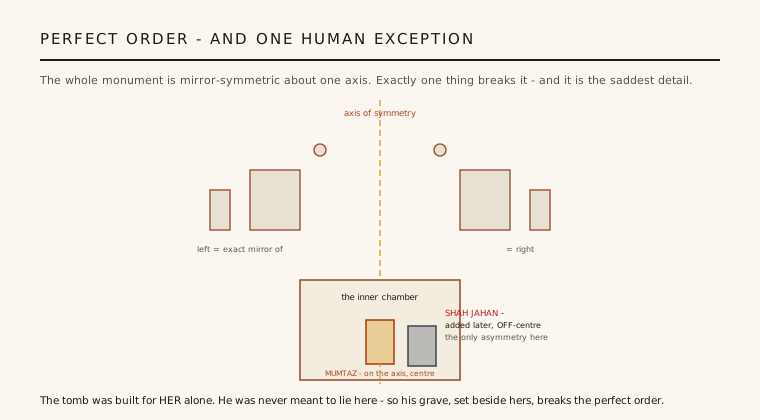
At the very centre of the inner chamber, dead on the axis, lies the cenotaph of Mumtaz Mahal — the still point around which the whole vast, symmetrical universe of the building is arranged. The monument was designed for her alone. And that makes its single imperfection the most moving detail in all of architecture. When Shah Jahan died — a prisoner, as we will see — his own cenotaph was placed in the chamber beside hers, slightly off-centre. It is the only asymmetry in the entire Taj Mahal: the one place where the perfect, ordered, eternal design is broken by a human being who simply wanted to lie next to the person he loved. The flaw is the most human thing in the building, and the most beautiful.
3. The mausoleum, down to the last detail
Now the famous silhouette itself — and what looks like effortless serenity is in fact obsessive, brilliant control.
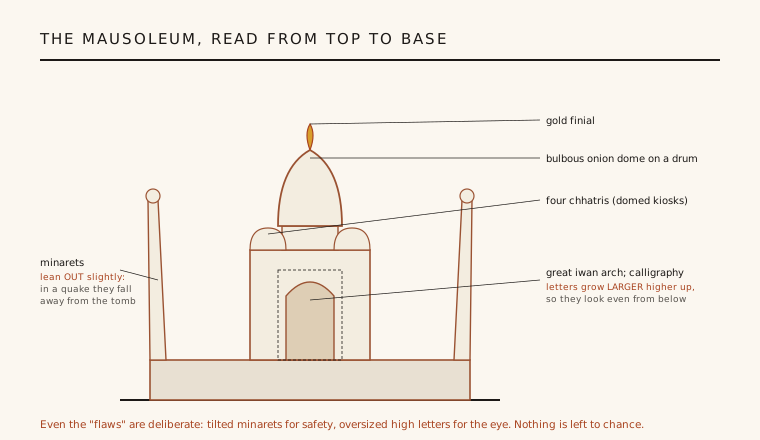
The white cube is wrapped by deep recessed arches (iwans) and crowned by the great bulbous onion dome on a drum, ringed by four small domed kiosks (chhatris) and topped by a gilded finial. At the four corners of the plinth stand four minarets — and they are not quite vertical. They lean very slightly outward, on purpose, so that in an earthquake they would fall _away_ from the precious tomb rather than onto it. Look closely at the Quranic calligraphy framing the great arch and you find the same hidden cleverness: the letters are cut larger as they rise, so that to a visitor looking up from the ground they appear perfectly even in size. Even the things that look like serene perfection are the result of corrections so subtle you are not meant to notice them. Nothing here is accidental.
4. A surface that gathers the world
Up close, the Taj stops being a silhouette and becomes a surface — and the surface is a miracle of craft.
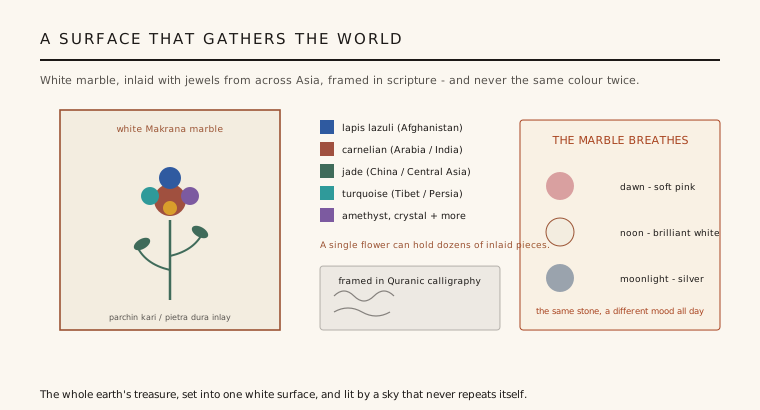
The building is faced in luminous white Makrana marble from Rajasthan, and into that marble are set thousands of pieces of semi-precious stone — a technique called pietra dura, or _parchin kari_ — forming flowers so fine that a single bloom may contain dozens of slivers of lapis lazuli from Afghanistan, carnelian, jade from China, turquoise, amethyst, crystal, and more, gathered from across the known world. Around it all runs exquisite Quranic calligraphy (its passages chosen by the master calligrapher honoured with the title Amanat Khan). And the marble itself is never the same twice: it glows soft pink at dawn, brilliant white at noon, and silver under the moon. The Taj is a building that breathes with the light, set with the treasure of half the earth.
5. Love, and what time did to it
Behind the beauty is a human story that the architecture only deepens.
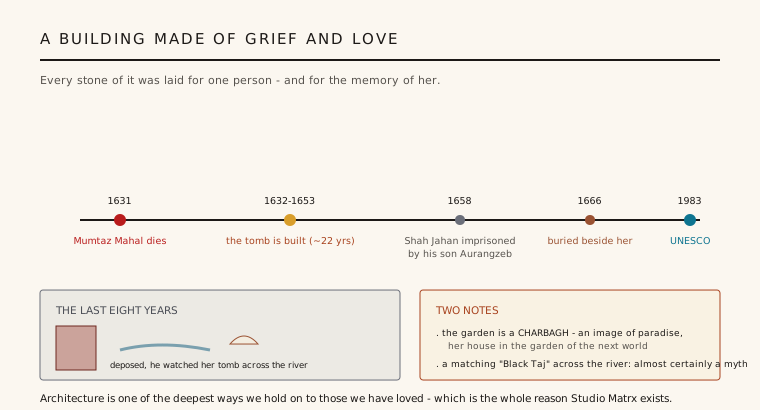
The tomb was built between about 1632 and 1653, by some twenty thousand workers under the chief architect Ustad Ahmad Lahauri, at staggering cost. And then the story turns dark. In old age Shah Jahan was deposed and imprisoned by his own son, Aurangzeb, and spent his final eight years a captive in the nearby Agra Fort — from which, it is said, he could see the Taj Mahal across the river, the tomb of his wife and the masterpiece of his reign, always in view and forever out of reach. When he died he was buried, at last, beside her — the off-centre grave that breaks the symmetry. (The romantic legend that he meant to build a matching "Black Taj" for himself across the river is almost certainly a myth; the truth, of a deposed old man gazing at what he had made, is sadder and needs no embroidery.) The garden, remember, is a charbagh — an image of paradise — so the whole composition is, in the end, Mumtaz's house in the garden of the next world, and Shah Jahan's long letter to her, written in marble.
6. What a modern architect can learn from the Taj Mahal
- The "why" can be everything. The Taj works as architecture because it is entirely, single-mindedly _about_ one thing: love and remembrance. The most powerful buildings are not assemblies of features but the expression of a deep reason for being. Find the true why, and the design follows.
- Perfect the unseen corrections. Tilted minarets, calligraphy that grows as it rises — the Taj is full of invisible adjustments that make the visible result feel effortless. Mastery is often the corrections the visitor will never consciously notice.
- Compose the whole arrival, not just the object. Gateway, hidden reveal, garden, reflecting pool, the tomb held back at the river's edge — the Taj choreographs your entire approach. Design the journey to a building, not only the building.
- Let one human imperfection live. A single off-centre grave breaks a flawless plan, and is the better for it. The most affecting design leaves room for the human, even at the cost of the ideal.
- Architecture is how we hold on to those we love. A tomb, a memorial, a building raised in someone's name — at its deepest, architecture is one of the ways human beings refuse to let the people they have lost simply vanish. It is, quite precisely, the reason this whole series, and Studio Matrx itself, exists.
References & further reading
1. UNESCO World Heritage Centre — Taj Mahal (inscribed 1983). https://whc.unesco.org/en/list/252/
2. Archaeological Survey of India — Taj Mahal, Agra. https://www.tajmahal.gov.in/
3. Encyclopaedia Britannica — Taj Mahal. https://www.britannica.com/topic/Taj-Mahal
4. Ministry of Culture, Government of India — Taj Mahal. https://www.indiaculture.gov.in/taj-mahal
Last verified 2026-06-30. Dates, attributions, dimensions and materials follow standard historical and ASI reference sources and are given as widely accepted approximations; the death of Mumtaz Mahal in 1631, the c.1632–1653 construction under Shah Jahan, the off-centre cenotaph of Shah Jahan as the single asymmetry, and his deposition and imprisonment by Aurangzeb follow the established historical record, while the "Black Taj" is noted as legend.
Export this guide
Related Guides — Deep-dive reading
Agra Fort: Where the Mughal Style Was Born, and the Taj Story Ended
How one red sandstone fortress on the Yamuna holds the whole arc of Mughal architecture — from Akbar's muscular red stone to Shah Jahan's delicate marble — and the marble tower where the Taj's builder died gazing at his masterpiece
Architectural WondersThe Red Fort, Delhi: Shah Jahan's Palace of Paradise on the River
How the emperor who built the Taj Mahal raised a whole walled palace-city in red sandstone and white marble — a fortress on the outside, a garden threaded with running water within, and the stage on which modern India was born
Architectural WondersHumayun's Tomb, Delhi: The Blueprint for the Taj Mahal
How a grieving widow and a Persian architect planted the first great Mughal garden-tomb in Indian soil — a red-and-white rehearsal, eighty years early, for the most famous building in the world
Architectural WondersRelated Tools — Try Free
Design Style Finder Quiz
Answer 10 visual questions to discover your Indian interior style profile with materials and colours.
Interactive QuizVisitor Access Planner
Size visitor handling at a gate or reception — lanes needed at peak and the temporary-pass pool.
Visitor FlowApartment Furniture Size Chart
Standard furniture dimensions for Indian apartments — sofas, beds, tables, dining, storage.
Reference Chart