
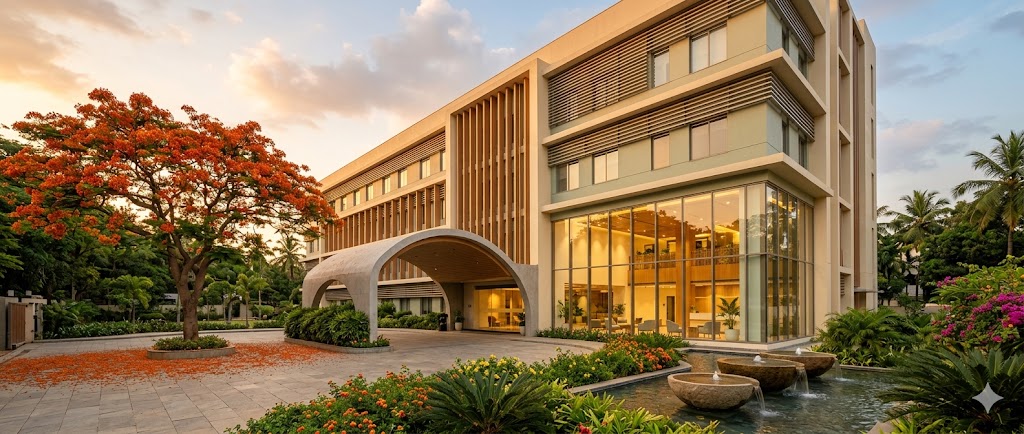
Cancer Hospital & Oncology Centre Design in India
An Architect's Working Reference — LINAC Bunkers, Brachytherapy Suites, AERB Type-1 Compliance, Chemotherapy Day-Care, BMT & Isolation, Tumour Board Rooms, Palliative & Hospice Integration, and the Indian Tertiary Cancer Centre Brief
Cancer is the typology in which Indian healthcare architecture confronts its most demanding regulatory, clinical, and patient-experience problem at once. The regulatory weight is heaviest in oncology of any healthcare typology — AERB Type-1 layout approval for the LINAC bunker, separate AERB licensing for the brachytherapy source, separate AERB licensing for the cyclotron and PET-CT, USP <800>-equivalent specification for cytotoxic IV mixing, NDPS Schedule X for palliative opioid storage, drugs-and-cosmetics for chemotherapy stocking, NABH cancer-specific standards for accreditation, and increasingly the National Cancer Grid (NCG) network membership for tertiary positioning. The clinical demand is structurally tri-modal — surgical, medical, and radiation oncology operate as three parallel clinical pillars whose patients move between them under tumour-board direction, and the building must support every adjacency this generates. The patient experience is among the most demanding in healthcare — long treatment courses (4–9 months for typical chemotherapy + radiation regimens), repeat visits over years (survivorship follow-up), high family involvement, financial strain, and an emotional burden that no other typology in healthcare matches except perhaps paediatric ICU.
This guide is a facility-type deep-dive in the Studio Matrx healthcare architecture series. It assumes the reader has read the pillar regulatory reference, is familiar with the existing AERB compliance for radiology and imaging guide, and understands the basic typology of Indian healthcare practice. Here we focus on what is specific to cancer hospitals — the AERB Type-1 weight that radiation oncology brings, the three-pillar adjacency model that defines oncology architecture, the LINAC bunker as the most regulatorily-dense single room in any Indian hospital project, the brachytherapy and nuclear-medicine architectures, the chemotherapy day-care with its USP-800 cytotoxic compounding requirement, the BMT and isolation provision, the palliative-and-hospice integration that completes the brief, the patient-journey logic that the building must support, and the failure modes that recur across Indian cancer projects.
The position this guide takes is specific: a cancer hospital is not a "general hospital with a LINAC". It is its own architectural programme, organised around the patient's treatment journey rather than around departmental efficiency, and the design must privilege journey-coherence over departmental adjacency where the two conflict. The architect who internalises this — who designs the journey first and the departments second — produces a building that the clinician uses well and the patient navigates with comfort. The architect who designs the departments first and connects them later produces a building in which the patient becomes the messenger between modalities, walking miles every visit to deliver their own clinical sequence.
"In the cancer hospital, the patient is not the visitor. The patient is the connector. We have to design buildings that make their connection easy, because nothing else about their care is." — Dr. Rajendra Badwe (b. 1956), former Director, Tata Memorial Centre Mumbai, paraphrased from a 2019 lecture on hospital design
"The bunker is the building. Everything else is around it." — Ar. Hafeez Contractor (b. 1950), architect, paraphrased remark on his Tata Memorial Centre commission
1. Why Cancer is its Own Typology
A general hospital admits a patient for a single clinical episode and discharges them. A cancer hospital admits a patient into a relationship that may span a decade. The treatment is multi-modal, the timeline is long, the visits are repeated, the family is integrally involved, and the architecture must support all of this. Six characteristics make cancer distinct from general inpatient typology:
- Three-pillar tri-modal treatment. Surgical oncology (the OT and the inpatient ward), medical oncology (the day-care and the BMT unit), and radiation oncology (the LINAC and the brachytherapy suite) are three parallel clinical pillars. Most cancer patients touch at least two; many touch all three. The building must support all three pillars as primary, not one pillar as primary with the others as secondary.
- AERB Type-1 weight. No other typology carries the regulatory weight of radiation oncology. The LINAC bunker requires pre-construction AERB layout approval; the brachytherapy source requires separate licensing; the cyclotron / PET-CT requires its own license; nuclear medicine has its own code. Approval lead times are 6–9 months. Mis-sequencing this is the most common cancer-project delay.
- Long treatment timelines. A typical curative cancer regimen is 4–9 months: surgery → chemotherapy (4–8 cycles, 3 weekly) → radiation (4–7 weeks daily). The patient visits the building 30–60 times over the regimen. The wayfinding, the parking, the family lodging, and the food service are repeat-visit infrastructure, not single-visit.
- Immunocompromised population. Chemotherapy and BMT patients are profoundly immunosuppressed. Infection-control architecture must go beyond standard hospital — HEPA-filtered patient rooms in BMT, isolation provisioning, neutropenic-friendly food service, dedicated waiting areas during nadir periods.
- Cytotoxic hazard. Chemotherapy drugs are cytotoxic to staff if mishandled. The USP <800> standard (cytotoxic compounding in negative-pressure buffer rooms with BSC Class II safety cabinets) has architectural implications throughout the chain — IV-mix room, transport corridor, infusion area, cytotoxic-waste handling.
- Palliative-care integration. Cancer is the typology where palliative care is integral, not optional. WHO 2018 and NCCN guidelines require early palliative integration alongside active treatment, not "end-of-life only". The architecture must accommodate palliative consultation at every stage of treatment, hospice provision for advanced disease, and dignified end-of-life space when needed. Few other typologies face this in the same depth.
The composite effect is that a cancer hospital is structurally complex: part day-care centre (chemotherapy infusion), part inpatient hospital (surgical wards, BMT), part radiation-physics facility (LINAC bunkers), part outpatient clinic (radiation planning, mammography, surveillance), part hospice (palliative + end-of-life), part hotel (family lodging for patients from outside the city). No single building-type analogue exists.
2. The Three-Pillar Departmental Adjacency Model
Cancer hospital planning resolves to the three-pillar adjacency: surgical oncology + medical oncology + radiation oncology, with diagnostics and palliative care as supporting layers. Every cancer hospital, from a 30-bed regional unit to a 1,000-bed tertiary centre, is some scaling of this model.
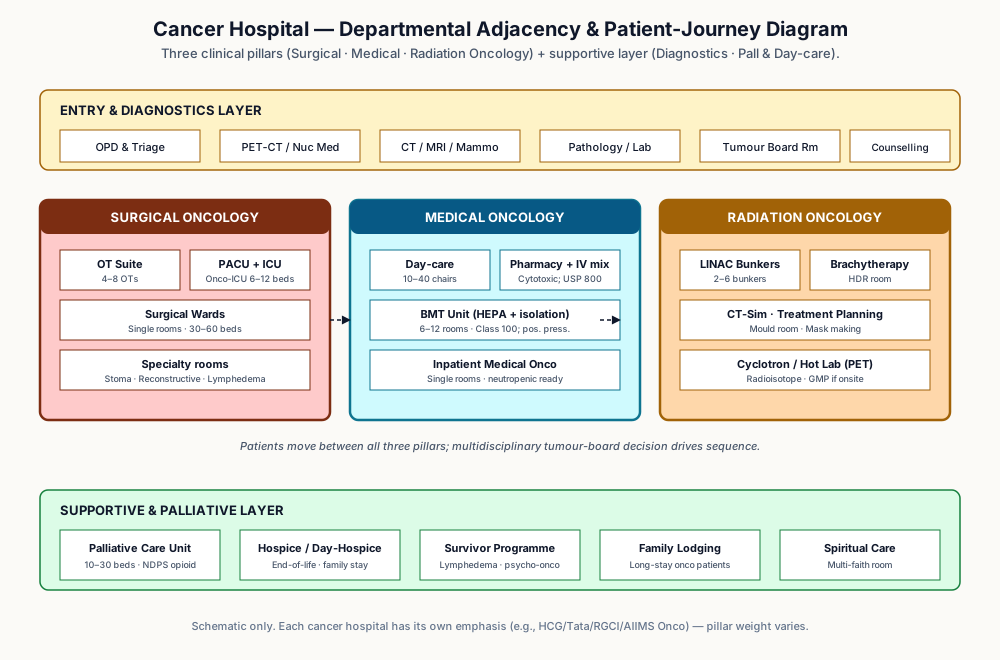
The three pillars and their internal organisation:
| Pillar | Core Spaces | Bed-Strength Indication | Adjacency Priority |
|---|---|---|---|
| Surgical Oncology | OT suite (4–8 OTs); Onco-ICU; Surgical wards; Specialty clinics | 30–60 beds (in a 200-bed tertiary unit) | Adjacent to general OT and ICU; CSSD shared; blood bank close |
| Medical Oncology | Chemotherapy day-care; Cytotoxic IV-mix pharmacy; BMT unit; Inpatient medical wards | 30–60 beds + 10–40 day-care chairs | Adjacent to lab, pharmacy, blood bank; HEPA-engineered for BMT |
| Radiation Oncology | LINAC bunkers (2–6); Brachytherapy suite; CT-Sim + treatment planning; Cyclotron / hot lab (if PET) | No inpatient beds typically | Below grade preferred for shielding cost; ground-floor access for daily patients |
The supportive layers:
- Diagnostics: PET-CT, CT, MRI, mammography, pathology, tumour board room — at the front of the patient journey; ground floor preferred
- Palliative + Hospice: Palliative inpatient ward (10–30 beds); Hospice / day hospice; Survivorship programme; Family lodging — set apart but connected; quiet zone; garden access
Adjacencies that must be guaranteed:
1. Tumour Board Room ↔ All three pillars — multidisciplinary planning meets weekly; oncologists, surgeons, radiologists, pathologists, radiation oncologists must all reach this room within 5 minutes from their primary workspace.
2. Cytotoxic IV-Mix Pharmacy ↔ Chemotherapy Day-Care — direct access; transport must not pass through public corridors.
3. PET-CT ↔ Radiation Oncology Treatment Planning — same building; ideally same floor; PET data drives radiation planning.
4. Onco-ICU ↔ Surgical OT — same floor; same block as general OT-ICU model.
5. BMT Unit ↔ Pathology / Blood Bank ↔ Pharmacy — short transit for blood components, neutrophil counts, cytotoxic drugs.
6. Palliative Care Unit ↔ Pharmacy (NDPS-licensed) ↔ Spiritual Care — opioids, dignified end-of-life support, family.
Permitted separations:
- Wellness / Survivorship clinic can be in a separate wing or building entirely; the patient population is largely well and the clinical brief is different.
- Family lodging can be off-site (often hotel partnerships in tier-1 cities) or in a separate building on the same campus.
- Day-Hospice can be physically separated from the inpatient unit if a residential garden setting is preferred.
The vertical organisation pattern that works for tertiary cancer hospitals:
| Floor | Function |
|---|---|
| Basement (deep) | LINAC bunkers (below-grade preferred for shielding cost); plant; CSSD soiled; mortuary |
| Basement (upper) | Cyclotron + hot lab (if onsite production); PET-CT; brachytherapy |
| Ground | Outpatient OPD, registration, pharmacy, day-care chemotherapy, mammography, survivorship clinic |
| First | Diagnostics: CT, MRI, ultrasound, pathology lab, tumour board room |
| Second | Surgical Onco — OT suite, Onco-ICU, recovery |
| Third | Surgical Onco — surgical wards, single rooms |
| Fourth | Medical Onco — BMT (HEPA-engineered); Inpatient medical wards |
| Fifth | Palliative care unit; Hospice (with garden access); Family lodging if integrated |
| Sixth | Administrative; Tumour board archive; Faculty offices |
The configuration above is illustrative; HCG, RGCI, Tata Memorial, AIIMS Onco, Manipal Comprehensive Cancer all have variations driven by site, programme, and equipment generation. The architect's task is to select the configuration that supports the journey first and constrains the equipment second.
3. The AERB Type-1 Regulatory Stack
The single defining regulatory difference between a cancer hospital and a general hospital is AERB Type-1 licensing for radiation oncology and nuclear medicine. The implications are spatial, sequential, and budget-affecting.
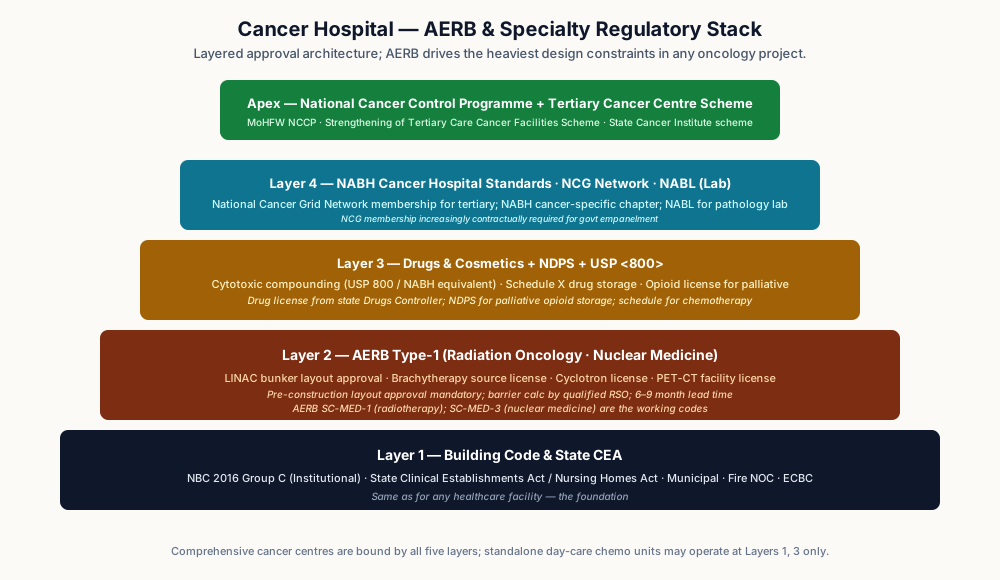
The five-layer stack:
Layer 1 — Building Code & State CEA. Same as for any healthcare facility: NBC 2016 Group C (Institutional), state Clinical Establishments Act, municipal bye-laws, fire NOC, ECBC.
Layer 2 — AERB Type-1. The defining layer for radiation oncology and nuclear medicine. Pre-construction layout approval is mandatory for:
| Facility | AERB Code | Approval Timeline | Architectural Implication |
|---|---|---|---|
| LINAC bunker | AERB SC-MED-1 (Radiotherapy) | 6–9 months pre-construction | Barrier calc by qualified RSO; bunker shielding fixed before excavation |
| Cobalt teletherapy unit (legacy) | AERB SC-MED-1 | 6–9 months | Heavier shielding than LINAC; mostly being phased out |
| Brachytherapy HDR room | AERB SC-MED-1 | 4–6 months | Source storage license separate from machine license |
| Brachytherapy LDR / pulsed-dose | AERB SC-MED-1 | 4–6 months | Used room separate; not always combinable with HDR |
| Manual brachytherapy | AERB SC-MED-1 | 4–6 months | Source-loaded outside patient room; specialised storage |
| Cyclotron + radiopharmacy (PET-CT in-house) | AERB SC-MED-3 | 8–12 months | GMP radiopharmacy; high cost; only at largest tertiary |
| PET-CT (delivered radioisotope) | AERB SC-MED-3 | 4–6 months | Hot lab + uptake rooms required; lower cost than in-house cyclotron |
| Nuclear medicine | AERB SC-MED-3 | 4–6 months | Hot lab; injection rooms; uptake rooms; toilet for radioactive waste |
| Intra-operative radiation therapy (IORT) | AERB special | 6–12 months | OT shielding upgrade; mobile LINAC license |
| Proton therapy | AERB special | 12–18 months | Heaviest shielding in healthcare; only at 2–3 Indian centres |
Layer 3 — Drugs & Cytotoxic + NDPS. Drug license from state Drugs Controller for the pharmacy; USP <800> (or NABH equivalent) for cytotoxic IV mixing; NDPS Schedule X license for palliative opioid storage.
Layer 4 — NABH Cancer Hospital + NCG + NABL. NABH provides a cancer-hospital-specific accreditation chapter (in 5th Edition, 2020+); the National Cancer Grid (NCG) network membership is increasingly contractually required for state-government empanelment; NABL accreditation for the pathology lab.
Layer 5 — National Cancer Control Programme + Tertiary Cancer Centre Scheme. MoHFW NCCP, Strengthening of Tertiary Care Cancer Facilities Scheme, and the State Cancer Institute scheme provide funding and operational frameworks for government cancer centres.
The architect's first deliverable: the AERB compliance map. A document that identifies (a) every AERB-licensable equipment in the brief, (b) the AERB code applicable to each, (c) the layout-approval lead time and dependencies, (d) the architect's deliverable for each (shielded room layout + barrier calc report submitted to AERB by qualified RSO), and (e) the integration with the project programme calendar. Without this map, the project will encounter approval-driven delay at preliminary design stage.
4. The LINAC Bunker — The Most Regulatorily-Dense Room
The LINAC (linear accelerator) bunker is the single most regulatorily-dense room in any cancer hospital, and arguably in any Indian healthcare project. The radiation hazard is real (10⁵–10⁶ R/hr at the isocenter for a 6 MV beam during treatment), the shielding requirement is heavy (2.0–2.4 m of dense concrete for the primary barrier), the AERB approval is sequential, and the architectural coordination with the equipment supplier is intricate.
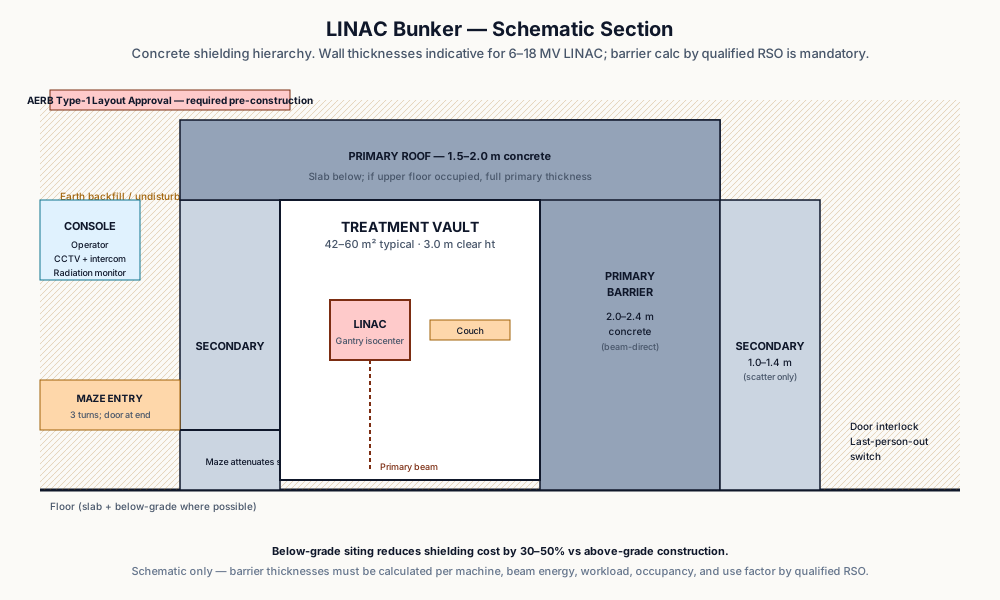
The shielding hierarchy:
- Primary barrier (rear wall, in line with the beam direction at the isocenter): 2.0–2.4 m dense concrete (or barite-loaded concrete, or concrete-with-lead composite). This wall takes the direct primary beam at one of its angular positions.
- Secondary barriers (lateral walls, ceiling, floor): 1.0–1.4 m dense concrete. These take only scattered radiation, not direct beam.
- Roof (if upper floor occupied): Full primary thickness, because the gantry can rotate to point the beam upward.
- Floor (if floor below occupied): Full primary thickness, because the gantry can rotate to point the beam downward.
- Maze entry: A 2–3 turn corridor that attenuates scattered radiation; the door at the end of the maze can therefore be lighter (lead-clad steel rather than full concrete).
Vault dimensions:
- Treatment vault interior: 5.0–7.0 m × 6.0–8.0 m, clear ceiling height 3.0 m. Total area 42–60 m².
- Maze: 1.5–2.0 m wide; 2–3 turns; total length 6–10 m.
- Console room: 12–16 m² adjacent to maze; window into vault (lead-glass) plus CCTV.
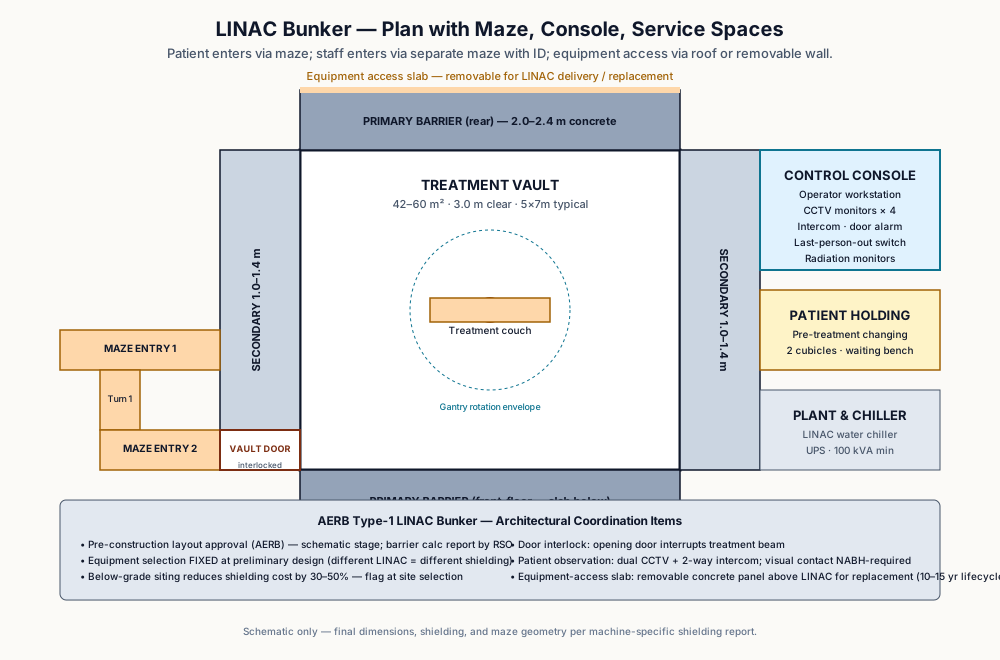
Critical architectural coordination items:
- Below-grade siting reduces shielding cost by 30–50%. This is the single biggest cost-saving move in radiation oncology. A bunker in basement-level surrounded by undisturbed earth on three sides + roof slab requires significantly less concrete than an above-grade bunker. Site selection should account for this.
- Equipment selection FIXED at preliminary design. Different LINAC manufacturers (Varian, Elekta, Siemens) and different beam energies (6 MV, 10 MV, 15 MV, 18 MV) require different shielding. The shielding report is machine-specific. Changing equipment during construction means re-shielding.
- Door interlock. Opening the vault door interrupts the treatment beam (industry-standard safety feature). The architect provides the interlock conduit and the door-position-sensor mounting.
- Last-person-out switch. Inside the vault, near the door — must be pressed to arm the beam-on circuit. Confirms no one is left in the vault before treatment.
- Equipment access slab. Above the LINAC, in the roof, a removable concrete panel (typically 2 × 3 m) for delivering and replacing the LINAC. LINAC lifecycle is 10–15 years; replacement requires this access. Don't pour the roof slab over the LINAC permanently.
- Patient observation. Dual CCTV (one wide-angle, one zoomed on the patient face) + 2-way intercom. NABH requires continuous visual contact.
- Plant room adjacency. LINAC requires a chiller (water-cooled magnetron and target), 100+ kVA UPS, and substantial conditioned air. Plant room should be on the same level, connected by short cable runs.
- Treatment planning system (TPS) workstation. Separate room near the bunker, networked to the LINAC, where the medical physicist plans daily treatment.
- CT-Sim adjacent. A dedicated CT scanner for radiation-treatment simulation; ideally one CT-Sim per 2 LINAC bunkers; located within the radiation oncology department.
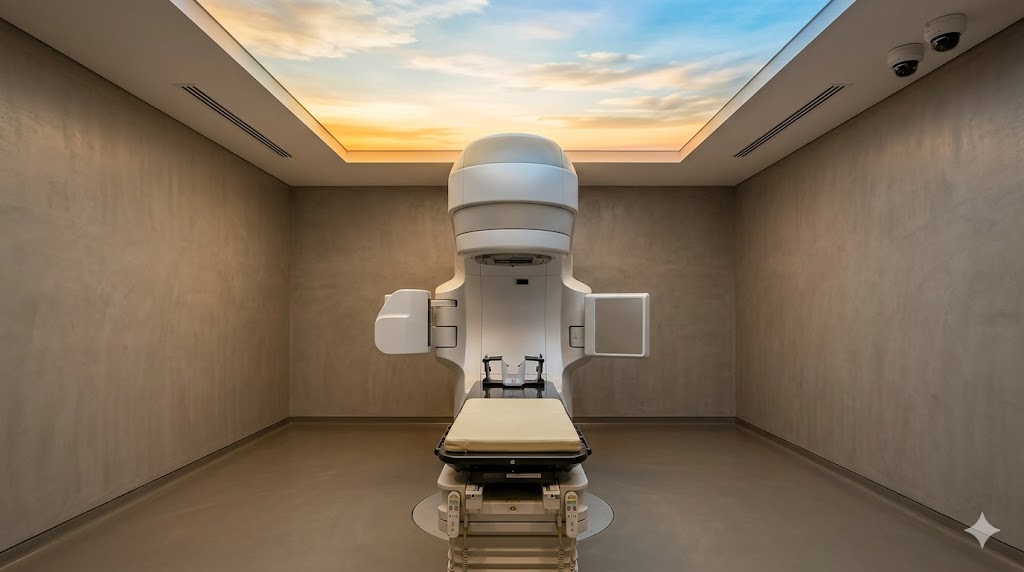
Number of bunkers — sizing guide:
| Cancer Hospital Tier | LINAC Bunkers |
|---|---|
| Single-modality day-care (no radiation) | 0 |
| Regional cancer centre (50–100 beds) | 1–2 |
| Tertiary cancer hospital (200–400 beds) | 2–4 |
| Comprehensive cancer centre (400+ beds) | 4–8 |
| National centre (TMC, AIIMS, RGCI scale) | 8–14 |
Throughput: A modern LINAC running 12-hour single-shift operation can treat 30–50 patients per day. Two-shift operation can reach 60–80. The bunker count is set by patient throughput, not by bed strength.
5. The Brachytherapy Suite
Brachytherapy — the placement of a radioactive source inside or adjacent to the tumour — is a different architectural problem from external-beam radiation. The source is high-dose-rate (HDR) Iridium-192 typically, the procedure is short (20–60 minutes), the room shielding is lighter (300–500 mm concrete), and the source storage is the dominant regulated element.
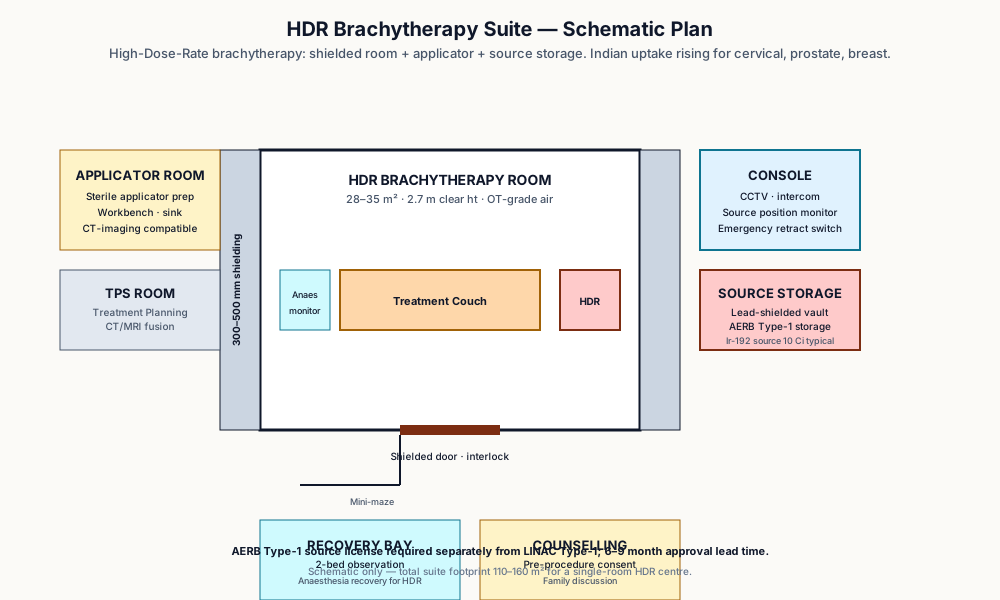
HDR brachytherapy suite — schedule of accommodation:
| Element | Specification |
|---|---|
| HDR brachytherapy room | 28–35 m²; 2.7 m clear height; OT-grade air |
| Shielded walls | 300–500 mm concrete (much lighter than LINAC) |
| Shielded door | Lead-clad; door interlock |
| Mini-maze | 2-turn, shorter than LINAC maze |
| Treatment couch | OT-grade; with applicator-fixing fixture |
| HDR afterloader (mobile) | Source storage and delivery unit; AERB-licensed |
| Anaesthesia bay | Adjacent (HDR procedures often under sedation/spinal) |
| Source storage vault | Lead-shielded; separate from afterloader; AERB Type-1 storage license |
| Applicator room | Sterile applicator preparation; CT-imaging compatible |
| Treatment planning room | TPS adjacent; CT/MRI fusion capability |
| Recovery bay | 2-bed; for anaesthesia recovery |
| Counselling room | Pre-procedure consent; family discussion |
Total suite footprint: 110–160 m² for a single-room HDR brachytherapy centre.
The Indian cervical cancer context. Cervical cancer is the second-leading cancer in Indian women, and HDR brachytherapy is the gold-standard adjuvant treatment after EBRT. A comprehensive cancer centre serving a state population with high cervical-cancer incidence will treat 200–400 brachytherapy patients per year. A dedicated HDR room with single-shift throughput can manage 4–6 patients per day; one HDR room therefore covers a cancer centre at the comprehensive-tier level. Two HDR rooms are common at national-tier centres (TMC has multiple).
Manual / LDR brachytherapy — for prostate seed-implant and other applications — has different architecture (the source is loaded outside the patient room and moved during the procedure). It is being increasingly replaced by HDR techniques.
6. PET-CT and Nuclear Medicine
Nuclear medicine and PET-CT add a different layer of architectural requirements — radioisotope handling, hot-lab storage, controlled patient uptake periods, and dedicated radioactive-waste plumbing.
PET-CT facility — schedule of accommodation:
| Element | Specification |
|---|---|
| PET-CT scanner room | 35–45 m²; 3.0 m clear; lead-shielded walls (lead equivalent 6–9 mm Pb depending on isotope mix); IGR (information graphics room) display |
| Hot lab | 10–15 m²; lead-shielded; fume hood with HEPA exhaust; isotope storage well; assay equipment; refrigeration; sink (radioactive plumbing) |
| Patient uptake rooms | 3–5 rooms × 6–8 m² each; lead-shielded between rooms; reclining chair; TV; toilet (radioactive plumbing) |
| Injection room | 8–10 m²; lead-shielded; isolated from waiting; for FDG injection prior to uptake |
| Console / control room | 12–15 m²; adjacent to scanner; CCTV |
| Patient waiting (pre and post) | Separate from general waiting; radiation-exposed patients should not mix with general public for 4–8 hours post-injection |
| Radioactive waste plumbing | Dedicated drainage to delay tank (10× half-life decay); separate from main drainage |
Cyclotron + radiopharmacy (in-house FDG production) — additional schedule:
| Element | Specification |
|---|---|
| Cyclotron vault | 30–40 m²; 4.0 m clear; very heavy shielding (3–4 m concrete typical); equivalent to LINAC bunker in shielding cost |
| GMP radiopharmacy | 20–30 m²; ISO Class 5 inside hot cell; ISO Class 7 background; pharmaceutical-grade air handling |
| Quality-control lab | 12 m²; for FDG release testing |
| Hot waste storage | Decay storage for 10× half-life of longest isotope used |
In-house cyclotron is justified at very high PET-CT volume (15+ scans/day) and at sites distant from existing radiopharmacy supply. Most Indian cancer centres rely on delivered FDG from a regional radiopharmacy, which simplifies the architecture significantly — only the PET-CT scanner room and ancillary spaces are required, not the cyclotron.
7. Chemotherapy Day-Care — The High-Volume Clinical Floor
Chemotherapy day-care is the highest-volume floor in most cancer hospitals. A 200-bed tertiary cancer hospital may have 200–400 chemotherapy infusions per week, and the day-care unit is therefore architecturally consequential — not a side-line, but a primary clinical floor.
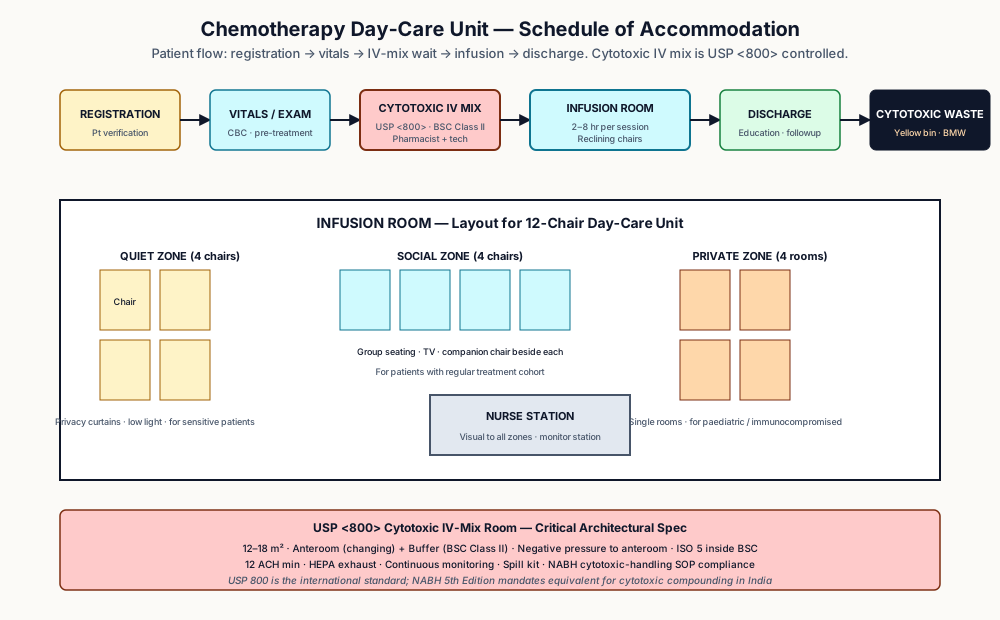
The patient flow:
1. Registration — patient verification, pre-treatment paperwork
2. Vitals + examination — pre-treatment CBC review; physician sign-off on infusion order
3. IV-mix pharmacy — pharmacist + technician compound the cytotoxic IV in BSC; transport to infusion in sealed cassette
4. Infusion — 2–8 hours per session; reclining chair; nurse monitoring
5. Discharge — education, follow-up scheduling
6. Cytotoxic waste — yellow bin; BMW handling
The infusion room — three-zone configuration:
| Zone | Chairs | Configuration | Patient Profile |
|---|---|---|---|
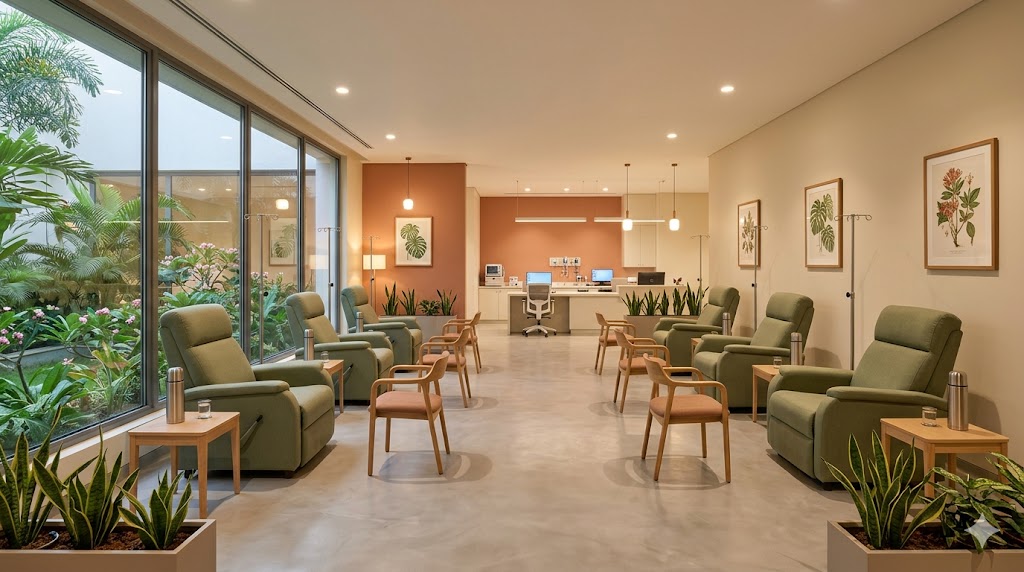
| Quiet zone | 4 | Privacy curtains; low light; limited socialisation | First-cycle patients; sensitive to nausea/light; geriatric |
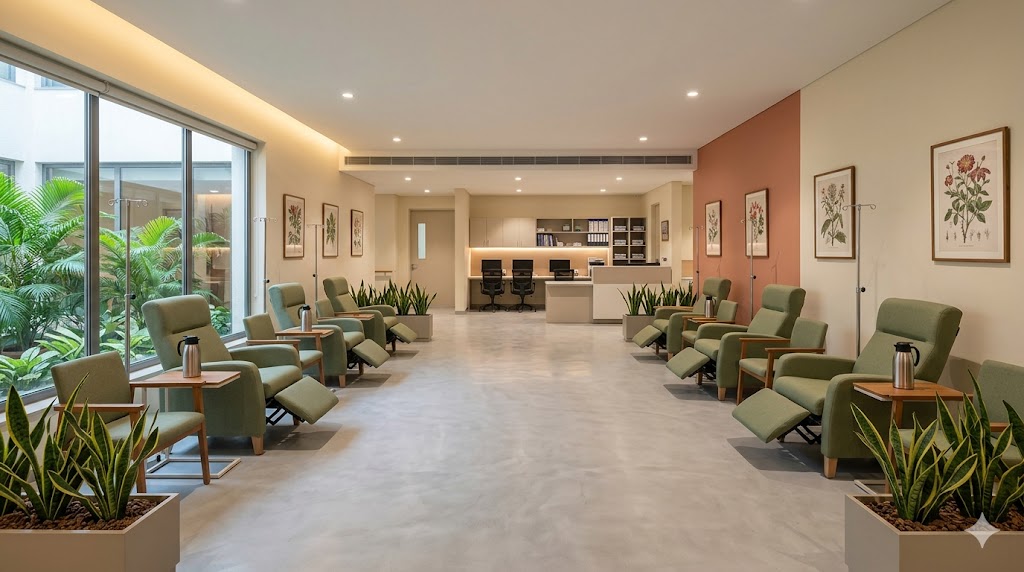
| Social zone | 4 | Open seating; TV; companion chair beside each | Repeat-treatment patients; supportive cohort culture |
| Private rooms | 4 | Single rooms (4 × 8 m² each) | Paediatric; immunocompromised; complex-protocol; dignity-driven choice |
Total: 12 chairs in a typical mid-volume unit. 24–40 chairs at tertiary scale.
Critical architectural coordination items for chemotherapy day-care:
- USP <800> cytotoxic IV-mix room — 12–18 m²; anteroom for changing + buffer room with BSC Class II; negative pressure to anteroom; ISO 5 inside BSC; 12 ACH; HEPA exhaust; spill kit; continuous monitoring. NABH 5th Edition mandates the equivalent in India.
- Direct transport from IV-mix to infusion — sealed cassette; not via public corridor; ideally pneumatic tube or dedicated lift.
- Cytotoxic spill containment — spill kit at every nurse station; designated cleanup protocol; floor finish that allows decontamination.
- Cytotoxic-waste yellow bin — mandatory at every chair; nurse station-level segregation; separate lift to BMW holding.
- Companion chair beside each infusion chair — Indian patients are accompanied; isolating the patient from the family is culturally inappropriate and clinically counterproductive.
- Toilet provisioning — patients on hydration drink heavily during infusion; 1 toilet per 4 chairs minimum.
- Pantry / hot-water station — patients stay 4–8 hours; small meals + tea/coffee/water are needed; family-prepared food is brought.
- Air change — 6 ACH min in infusion area; HEPA filtration recommended; positive pressure to corridor.
- Nurse station central — visual contact with all chairs; emergency-call from each chair; oxygen + suction at every chair.
The "infusion as social event" insight. Patients on long chemotherapy regimens (4–8 cycles, 3 weekly) develop cohort relationships with other patients on similar protocols. They look forward to seeing the same nurses, the same fellow patients, the same chairs. The social-zone seating supports this and is a clinically meaningful contributor to treatment adherence. Patients who feel isolated during infusion are more likely to drop out of treatment than patients who feel connected. The architecture is part of the adherence strategy.
8. The BMT Unit and Isolation Rooms
Bone marrow transplantation (BMT / haematopoietic stem cell transplantation) is the most architecturally demanding component of medical oncology. BMT patients are profoundly immunocompromised for 2–6 weeks after conditioning, and the air-handling specification is closer to an operation theatre than to a general inpatient ward.
BMT unit — schedule of accommodation:
| Element | Specification |
|---|---|
| Patient room | 14–18 m² clear; private; en-suite |
| Air filtration | HEPA-filtered supply at every patient room (ISO 7 / Class 10,000) |
| Pressure | Positive pressure to corridor (+12.5 Pa); ante-room if very high acuity |
| Air change | 12 ACH minimum |
| Anteroom | 4–6 m²; gowning + hand-wash; pressurised intermediate |
| HEPA-filtered patient bathroom | Separate exhaust; some protocols |
| Dietary preparation | Neutropenic-diet capable; on-unit kitchenette common |
| Family attendance | One designated family member; gowned; restricted entry |
| Visitor room | At unit boundary; family meeting through glass partition possible |
| Nurse station | Visual contact with all rooms; dedicated to BMT (not shared with general medical) |
| Treatment room | For procedures (Hickman line, marrow harvest, infusion); near the BMT unit |
| Lab access | Direct connection to lab for daily counts |
| Pharmacy access | Cytotoxic IV-mix; transplant-specific drugs; 24/7 access |
BMT unit size — 6–12 rooms typical at tertiary; 12–24 at comprehensive.
Isolation rooms (general medical oncology):
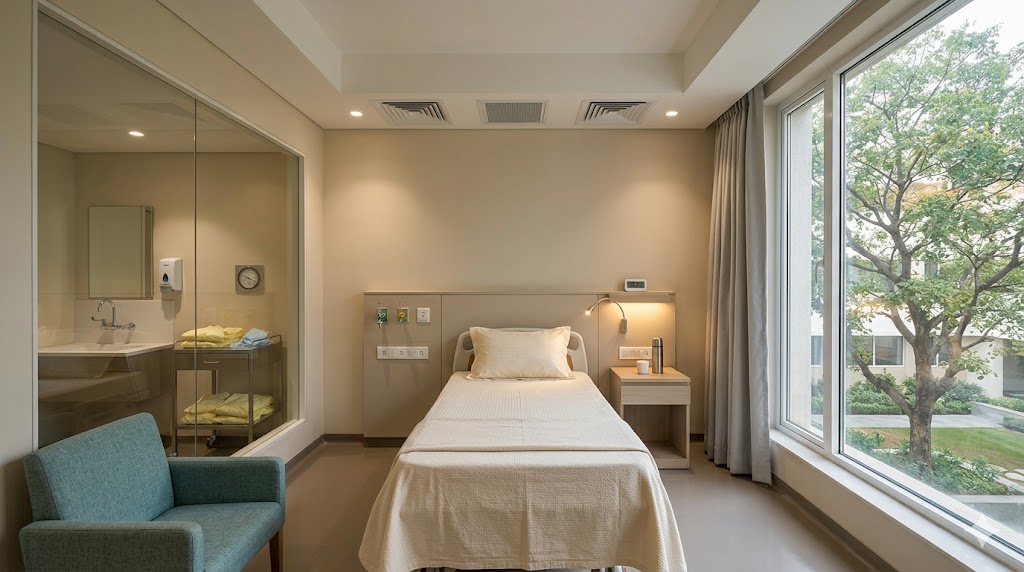
A typical 30-bed medical oncology ward should have 4–6 isolation rooms (15–20% of beds) for neutropenic patients not in formal BMT. These are HEPA-filtered single rooms with anteroom, and serve as flex-up capacity when BMT volume is high.
9. The Tumour Board Room — A Clinical Instrument
The tumour board (multidisciplinary team meeting) is where treatment decisions are made for complex cancer patients. It is not an "office space" — it is a clinical instrument, and its architecture has measurable clinical impact.
The tumour board room — schedule:
| Element | Specification |
|---|---|
| Room area | 30–50 m² for 12–20 attendees |
| Configuration | U-shape conference table with central display; not classroom layout |
| Display | Dual large-screen displays (PACS imaging on one, pathology + summary on the other); resolution: medical-grade; calibrated for diagnostic review |
| Audio | Conference-grade microphones; 15+ attendees |
| Lighting | Dimmable; "imaging mode" sets ambient at 50 lux for diagnostic image review |
| PACS workstation | At table head; controlled by the senior radiologist |
| Pathology microscopy | Digital pathology projection capable; or pathologist with portable workstation |
| Telemedicine | Video-conference capability for remote attendance (NCG network, second-opinion) |
| Recording | Audio recording + screen capture for documentation; patient consent required |
| Privacy | Acoustic STC ≥ 50 to surrounding spaces; outside earshot of public corridor |
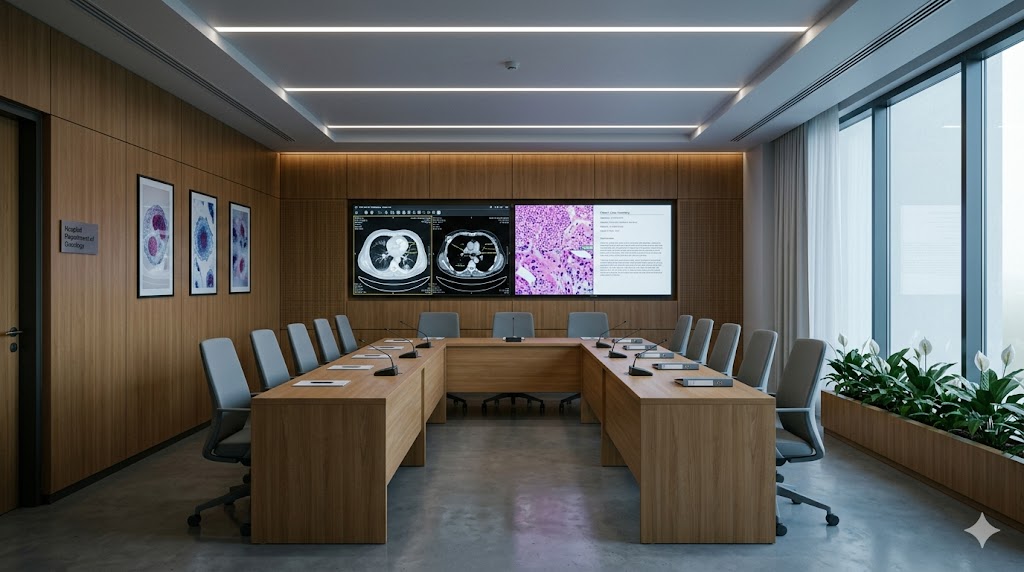
Adjacency: The tumour board room should be located such that the surgical oncologist, the medical oncologist, the radiation oncologist, the radiologist, the pathologist, and the radiation physicist can each reach it within 5 minutes from their primary workspace. This is harder than it sounds in a multi-modality cancer hospital; the tumour board location is a high-priority adjacency in the schematic plan.
Tumour board frequency at a typical tertiary cancer hospital: weekly per disease site (breast, GI, head-neck, gynae, paediatric, etc.). A comprehensive cancer centre may run 8–12 weekly tumour boards; the room is in heavy use and should not be doubled with other meeting functions.
10. Palliative Care and Hospice Integration
Cancer is the typology where palliative care is integral, not optional. WHO 2018 and the Lancet Commission on Palliative Care 2018 establish early palliative integration as standard of care, alongside active treatment, not as "end-of-life only".
Palliative care unit — schedule of accommodation:
| Element | Specification |
|---|---|
| Inpatient bed strength | 10–30 beds at tertiary; smaller at regional |
| Patient rooms | Single preferred (16–20 m²); domestic-scale finishes; family attendant accommodation |
| Family meeting room | Larger than standard hospital; counsellor + family + patient (if able) + 2–3 others |
| Multi-faith / spiritual care room | Quiet; non-denominational; bookable; near unit |
| Garden / courtyard access | Statutory in some state CEAs; clinically essential everywhere; min 0.5 m²/bed |
| NDPS Schedule X drug storage | Locked cupboard; double-key; for opioid pain management |
| Lymphedema therapy room | If onsite; 16–20 m²; manual lymphatic drainage; bandaging |
| Psycho-oncology counselling rooms | 2–3 × 12 m²; warm finishes; private |
| Bereavement room | 1 × 12 m²; for family in immediate bereavement; near a quiet exit |
| Children's playroom | If paediatric scope; for sibling visits; secure-side access |
Hospice (end-of-life specific):
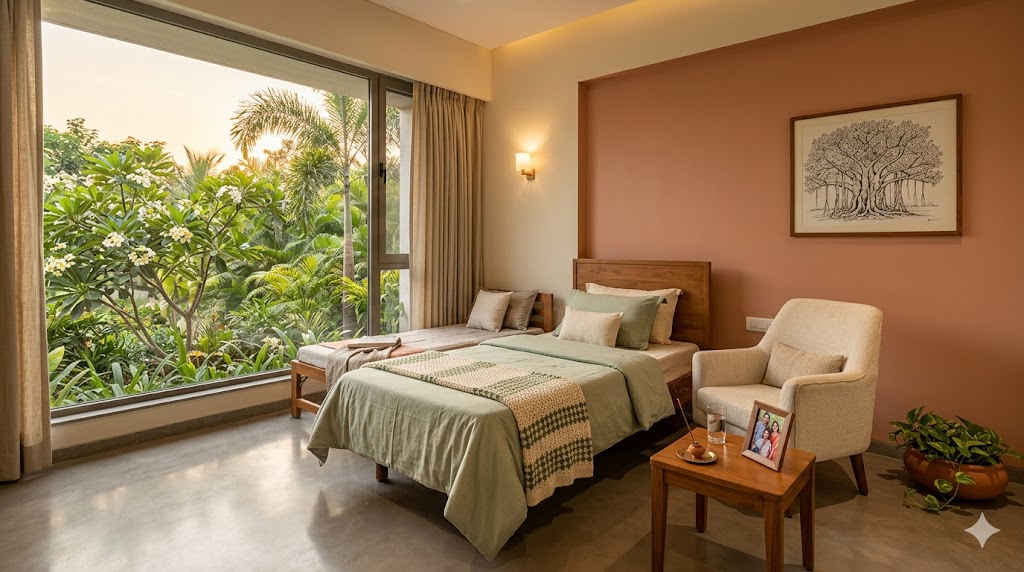
A hospice can be physically separate from the palliative inpatient unit, often in a residential garden setting. The architecture is intentionally non-institutional — bedrooms with garden views, family kitchen on-unit, dining room shared with patients and family, no corridors that look like hospital. Indian hospice examples worth studying: Karunashraya Bengaluru, Pallium India Trivandrum, Cipla Palliative Care Centre Pune.
Integration with active treatment. The palliative consult service should be available at every stage of cancer care, not only in the palliative inpatient ward. This means the palliative consultant has a presence in surgical wards, BMT, chemotherapy day-care, and radiation oncology — not just the dedicated palliative unit. Architecturally, a "palliative consult room" or "comfort care room" should exist on each clinical floor, not only in the dedicated unit.
"The most painful experience for the patient is to be told 'we have nothing more we can do', when the truth is that we have everything to do — for their pain, for their breathing, for their family, for their dignity. Palliative care is the part of cancer care that begins on day one." — Dr. M.R. Rajagopal (b. 1947), founder of Pallium India, paraphrased from a 2020 lecture
11. The Patient Journey as Architectural Generator
Cancer care is not linear; it is a coordinated traversal across all three pillars under tumour-board direction, repeated over months. The architectural implication is that adjacencies must support the journey, not just the department.
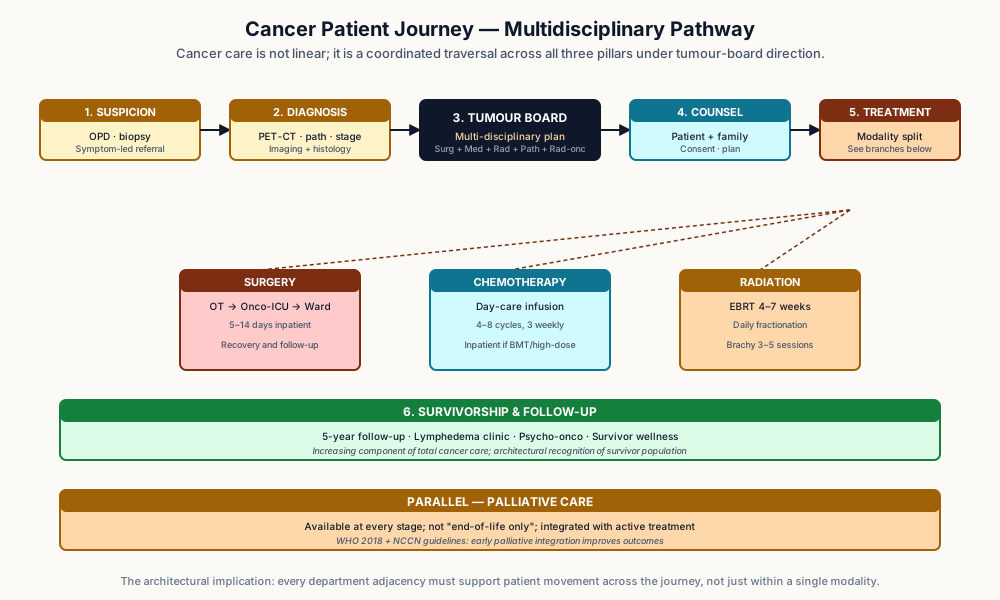
The seven-stage journey:
| Stage | Spaces Visited | Architectural Implication |
|---|---|---|
| 1. Suspicion | OPD; primary biopsy clinic | Front-of-building; easy access; ground floor preferred |
| 2. Diagnosis | PET-CT, CT, MRI, pathology | Diagnostic floor; close to OPD; results turnaround in 24–48 hr |
| 3. Tumour Board | Multidisciplinary planning room | Central; reachable by all consultants in < 5 min |
| 4. Counselling | Patient + family + counsellor | Private room near tumour board; warm finishes; no clinical aesthetic |
| 5. Treatment (modal split) | OT/ICU, chemotherapy day-care, LINAC | Three-pillar adjacency; shortest journey from one to another |
| 6. Survivorship | Survivorship clinic; lymphedema; psycho-onco | Front-of-building; survivors return for years; not in active-treatment zone |
| 7. Palliative (parallel at every stage) | Palliative inpatient + consult | Reachable from every active-treatment area; not isolated |
The architectural insight: the patient does not visit the cancer hospital once. They visit 30–60 times over 6–9 months, then 4–8 times per year for 5 years of survivorship follow-up. The wayfinding must support repeat visits — each visit, the patient knows where to go without re-orienting. The first-visit experience is important; the 30th-visit experience is determinative of whether the patient stays in the system or transfers.
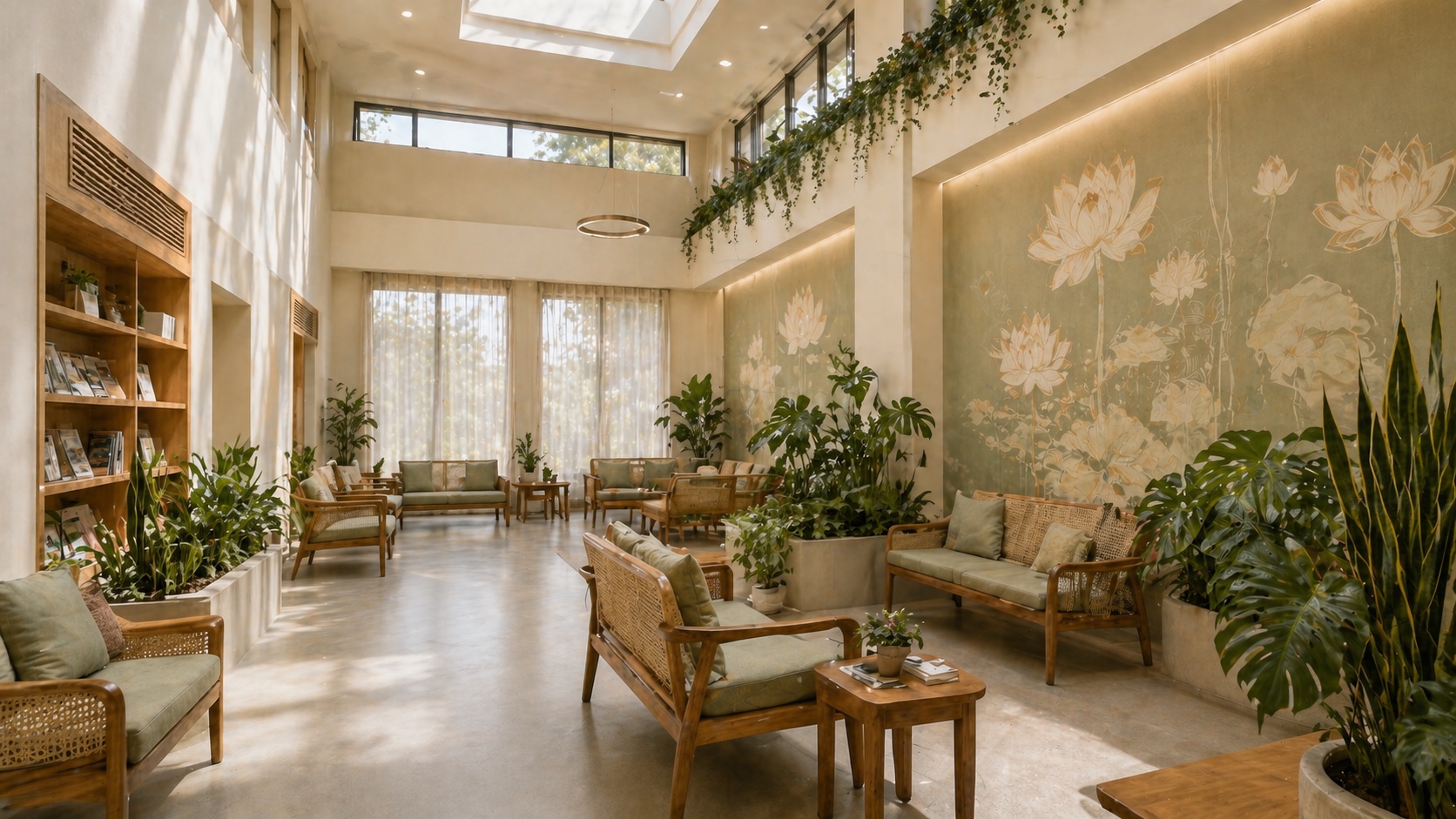
The "no-empty-walk" principle. The patient should never walk a long corridor with nothing happening on either side. Every corridor in a cancer hospital should lead somewhere meaningful, with views of garden, art on walls, daylight, and seating. Corridors are clinical-significance space in oncology, not transit space. The architectural budget should reflect this.
12. Surgical Oncology — OT and Onco-ICU Specifics
Surgical oncology has a heavier OT brief than general surgery — longer cases (3–14 hours common), more equipment, more imaging-during-surgery, larger surgical teams. The OT and Onco-ICU specifications are accordingly heavier than the general hospital baseline.
Onco-OT differences from general OT:
| Parameter | General OT | Onco-OT |
|---|---|---|
| Procedure duration | 1–4 hours typical | 3–14 hours typical (Whipple, hepatectomy, complex head-neck) |
| OT area | 25–30 m² | 35–45 m² (more equipment, more team) |
| Imaging integration | Standard C-arm | Possible IORT (intra-operative radiation), ultrasound, fluoroscopy, CT-O-Arm |
| Equipment in OT | 4–6 standard | 8–12 (specialist + imaging + cell-saver + rapid infuser) |
| Surgical team size | 4–6 | 8–14 (multi-specialty: surgical onco + reconstructive + anaesthesia + radiation onco for IORT) |
| Anaesthesia | Mostly general | Mostly general; long cases require advanced monitoring |
| Cell salvage | Optional | Routine for major resections |
| Frozen-section pathology | Available | Same-OT-floor preferred (margin assessment during surgery) |
| Robotic surgery (if scoped) | Standard OT can adapt | Often dedicated robotic OT; 50–55 m² with console and patient-side cart space |
Onco-ICU specifications:
- 8–16 beds at tertiary
- Single rooms preferred for post-major-surgery isolation
- HEPA-filterable for neutropenic post-op patients
- Negative-pressure capable for infectious cases
- Direct connection to OT (same floor, same block)
- Family-room adjacent
13. Common Failure Modes — Cancer Hospital Specific
A pattern audit of stalled or under-performing Indian cancer hospital projects reveals recurring failures:
| # | Failure Mode | Root Cause | Consequence | Prevention |
|---|---|---|---|---|
| 1 | LINAC bunker shielding inadequate | Generic-machine shielding; equipment changed late | Re-shielding; 4–8 month delay | Equipment fixed at preliminary; barrier calc by RSO |
| 2 | LINAC bunker above-grade | Site / massing decision | 30–50% higher shielding cost | Below-grade siting decision at site selection |
| 3 | LINAC equipment-access slab not provided | Architect missed lifecycle replacement | LINAC replacement requires re-roof (15-year lifecycle hit) | Equipment-access slab in roof at concept |
| 4 | AERB Type-1 application after construction | Sequencing error | Re-shielding + re-application; 6–12 month delay | AERB pre-application at concept; layout approval before construction |
| 5 | Brachytherapy source storage missing | Late add-on | AERB source license refused | Source storage planned with brachytherapy room |
| 6 | USP <800> IV-mix room undersized or ill-configured | Generic-pharmacy spec applied | Cytotoxic compounding non-compliance | USP 800 spec at preliminary design |
| 7 | Chemotherapy day-care lacks companion chair | Western single-patient model imported | Indian family separation; cultural failure | Companion chair beside every infusion chair |
| 8 | BMT unit not HEPA-engineered | Cost-driven; standard ward spec | Cannot accept BMT patients; unit unused | HEPA + positive pressure from concept |
| 9 | Tumour board room scheduled with general meetings | Cost-driven; multi-use room | Tumour board cannot meet at scheduled times; clinical disruption | Dedicated tumour board room |
| 10 | Palliative care isolated from active treatment | "End-of-life only" framing | Early palliative integration impossible | Palliative consult rooms on every clinical floor |
| 11 | PET-CT delivered without delay tank | Standard plumbing | Radioactive waste in main drainage; AERB violation | Dedicated radioactive plumbing; delay tank |
| 12 | NDPS Schedule X cupboard missing in palliative pharmacy | Late realization | Opioid prescribing impossible; clinical failure | NDPS storage at palliative concept |
| 13 | Long corridor with no programme | "Efficient" linear plan | Patient experience: empty hospital | Programme corridors with art, view, seating |
| 14 | Family lodging on opposite side of hospital from inpatient | Site-driven separation | Family separated from patients; cultural failure | Family lodging adjacent or on-campus |
| 15 | Survivorship clinic mixed with active-treatment OPD | Cost-driven shared OPD | Survivors discouraged from follow-up; compliance failure | Survivorship in separate front-of-building location |
| 16 | Mortuary access through public corridor | Site/level-driven | Body removal visible to active patients; psychological harm | Service-side mortuary access from concept |
14. Pre-Design Audit Framework for Cancer Hospital Briefs
A 14-question audit to run on every cancer hospital brief at concept stage. Three or more "no" answers indicate the brief is not ready for design.
| # | Audit Question | Why It Matters | Required Output |
|---|---|---|---|
| 1 | Is the cancer-centre tier fixed (regional / tertiary / comprehensive / national)? | Drives every scaling decision | Tier declaration in brief |
| 2 | Is the three-pillar emphasis declared (surgical-heavy / medical-heavy / radiation-heavy / balanced)? | Drives floor allocation | Pillar emphasis with bed-mix |
| 3 | Is the AERB equipment list final (LINAC count, brachytherapy, PET, cyclotron, IORT)? | Drives shielding cost and schedule | AERB compliance map |
| 4 | Is the LINAC siting fixed (basement preferred)? | Below-grade reduces cost 30–50% | Bunker location declaration |
| 5 | Is the equipment-access slab in the bunker roof? | LINAC replacement at 10–15 yr lifecycle | Replacement-access design |
| 6 | Is the BMT unit HEPA-engineered from concept? | BMT patients require ISO 7 air | BMT room specification |
| 7 | Is the USP <800> IV-mix room sized and located? | Cytotoxic compounding compliance | IV-mix design |
| 8 | Is the tumour board room dedicated and central? | Multidisciplinary planning is daily | Tumour board placement |
| 9 | Is palliative care integrated at every clinical floor? | WHO / NCCN early-integration | Palliative consult provisioning |
| 10 | Is the chemotherapy day-care zoned (quiet/social/private)? | Patient experience driver | Day-care zone declaration |
| 11 | Is family lodging in scope and located close? | Indian patient context | Family lodging plan |
| 12 | Is survivorship clinic separated from active treatment? | Long-term follow-up adherence | Survivorship clinic location |
| 13 | Is wayfinding designed for repeat visits (30–60 visits/patient)? | Patient navigation determines retention | Wayfinding strategy |
| 14 | Are the corridors programmed (art, view, seating)? | "No empty walk" principle | Corridor design strategy |
15. The Architect's Cancer-Hospital-Specific Compliance Deliverables
Beyond the general healthcare deliverables (see pillar reference), the cancer-hospital-specific deliverables are:
| # | Deliverable | Recipient | Stage |
|---|---|---|---|
| 1 | AERB compliance map (all radiation equipment; lead times) | Client / AERB | Concept |
| 2 | Three-pillar adjacency diagram | Client / clinical lead | Concept |
| 3 | LINAC bunker shielded layout + barrier calc by RSO | AERB | Preliminary |
| 4 | Brachytherapy suite + source storage layout | AERB | Preliminary |
| 5 | PET-CT + hot lab layout | AERB | Preliminary |
| 6 | Cyclotron + radiopharmacy layout (if onsite) | AERB | Preliminary |
| 7 | USP <800> cytotoxic IV-mix room layout | NABH / state drug controller | Detailed |
| 8 | BMT unit HEPA-engineered layout | Client / NABH | Detailed |
| 9 | Tumour board room layout | Client | Detailed |
| 10 | Chemotherapy day-care 3-zone layout | Client | Detailed |
| 11 | Onco-OT specifications (vs general OT) | Healthcare planner | Detailed |
| 12 | Palliative care unit + NDPS Schedule X cupboard | State drug controller | Detailed |
| 13 | Survivorship + lymphedema + psycho-onco rooms | Client | Detailed |
| 14 | Family lodging block | Client | Detailed |
| 15 | Equipment-access slabs (LINAC, brachy, PET) | Equipment supplier | Detailed |
| 16 | Wayfinding strategy for repeat visits | Client / signage consultant | Detailed |
| 17 | Corridor programming (art, seating, view) | Client / interior consultant | Detailed |
"A cancer hospital is judged by the sequence of small decisions: where the chair faces, how long the corridor is, whether the family can sit beside the patient. Get these right and the hospital is loved. Get them wrong and the hospital is endured. Both will work clinically, but only one will retain its patients." — Dr. C.S. Pramesh (b. 1968), Director, Tata Memorial Centre Mumbai, paraphrased from a 2022 design symposium
References
- AERB (2016) Safety Code for Medical Diagnostic X-Ray Equipment and Installations. AERB/RF-MED/SC-3 (Rev. 2). Mumbai: Atomic Energy Regulatory Board.
- AERB (2018) Safety Code for Radiation Therapy Sources, Equipment and Installations. AERB/RF-MED/SC-1 (Rev. 1). Mumbai: AERB.
- AERB (2018) Safety Code for Nuclear Medicine Facilities. AERB/RF-MED/SC-3. Mumbai: AERB.
- Badwe, R.A., Mittra, I., Singh, A., Pramesh, C.S., et al. (2017) 'Cancer care in India: 2017 update', South Asian Journal of Cancer, 6(2), pp. 79–83.
- Bureau of Indian Standards (2016) National Building Code of India 2016, Part 4 — Fire and Life Safety; Part 8 — Building Services. New Delhi: BIS.
- Cancer Atlas, India (2020) India State-Level Cancer Profile. New Delhi: Indian Council of Medical Research.
- Facility Guidelines Institute (2022) Guidelines for Design and Construction of Hospitals — Chapter on Oncology. St. Louis: FGI.
- Indian Council of Medical Research (2020) National Cancer Registry Programme. New Delhi: ICMR.
- International Atomic Energy Agency (2014) Radiation Protection in the Design of Radiotherapy Facilities. Safety Reports Series No. 47. Vienna: IAEA.
- International Commission on Radiological Protection (2007) The 2007 Recommendations of the ICRP. ICRP Publication 103. Oxford: Pergamon.
- Knaul, F.M., Farmer, P.E., Krakauer, E.L., De Lima, L., Bhadelia, A., Kwete, X.J. et al. (2018) 'Alleviating the access abyss in palliative care and pain relief — an imperative of universal health coverage: the Lancet Commission report', The Lancet, 391(10128), pp. 1391–1454.
- Kobus, R.L., Skaggs, R.L., Bobrow, M., Thomas, J. and Payette, T.M. (2008) Building Type Basics for Healthcare Facilities — Chapter on Cancer Centres. 2nd edn. Hoboken: Wiley.
- Mathew, A., Pramesh, C.S., Sullivan, R., et al. (2014) 'Cancer care in India: bridging the gap', The Lancet Oncology, 15(7), pp. e251–e253.
- Ministry of Health and Family Welfare (2014) National Cancer Control Programme — Operational Guidelines. New Delhi: MoHFW.
- Ministry of Health and Family Welfare (2014) Strengthening of Tertiary Care Cancer Facilities Scheme. New Delhi: MoHFW.
- NABH (2020) Standards for Hospitals, 5th Edition — Cancer Hospital Chapter. New Delhi: National Accreditation Board for Hospitals & Healthcare Providers, Quality Council of India.
- National Cancer Grid (2019) Resource-Stratified Guidelines for Cancer Care in India. Mumbai: NCG, Tata Memorial Centre.
- NCCN (2023) Distress Management Guidelines. Pennsylvania: National Comprehensive Cancer Network.
- Pramesh, C.S., Badwe, R.A., Borthakur, B.B., Chandra, M., Raj, E.H. et al. (2014) 'Delivery of affordable and equitable cancer care in India', The Lancet Oncology, 15(6), pp. e223–e233.
- Rajagopal, M.R. (2017) 'Pain and palliative care: India's quiet revolution', Indian Journal of Palliative Care, 23(4), pp. 357–360.
- Sankaranarayanan, R., Ramadas, K., Thara, S., Muwonge, R., Thomas, G., Anju, G. and Mathew, B. (2013) 'Long term effect of visual screening on oral cancer incidence and mortality in a randomized trial in Kerala, India', Oral Oncology, 49(4), pp. 314–321.
- USP (2020) USP General Chapter <800>: Hazardous Drugs — Handling in Healthcare Settings. Rockville: United States Pharmacopeia.
- World Health Organization (2018) WHO Guidelines for the Pharmacological and Radiotherapeutic Management of Cancer Pain in Adults and Adolescents. Geneva: WHO.
Author's Note: Cancer is the architectural problem in which India's healthcare ambition is being most visibly tested. The country is building tertiary cancer capacity at unprecedented scale — National Cancer Institute Jhajjar, Tata Memorial Centre new wings, Apollo cancer expansions, HCG comprehensive centres in tier-2 cities, AIIMS oncology blocks at every new AIIMS, state cancer institutes in every state. The architects of these buildings will determine whether the next generation of Indian cancer patients receives care that is internationally rigorous and culturally humane, or care that is adequately equipped but humanly cold. The hope of this guide is that the latter outcome becomes harder, and the former more achievable, by making the working brief explicit and the failure modes visible. The series will continue with deeper guides on radiation oncology specifically, BMT unit design, and palliative care architecture.
Disclaimer: This article is for informational and educational purposes only. It does not constitute legal, regulatory, clinical, or professional architectural advice. Cancer hospital design depends on site, state, facility scope, equipment selection (including specific LINAC manufacturer and beam energy, brachytherapy source type, PET isotope mix, and cyclotron specifications if applicable), and applicable amendments at the time of design — all of which must be confirmed with the relevant statutory authorities (AERB above all), qualified clinical consultants (medical, surgical, radiation, paediatric oncology; haematology; palliative care; medical physics), and qualified design consultants for the specific project. Statute references, AERB codes, shielding indications, and infrastructure norms cited are indicative and subject to change. AERB SC-MED-1 and SC-MED-3 are periodically revised; practitioners must verify current notifications against the project state and city before any binding design or construction commitment. Studio Matrx, its authors, and its contributors accept no liability for decisions made on the basis of the information contained in this guide, and recommend independent verification with the AERB, the state health department, the state drug controller, the radiation safety officer, and qualified oncology and design consultants before any binding project decision.
Interactive · Cancer centre department stack
Medical oncology · 20-100 beds + day-care chairs · 3 critical spaces
Chemotherapy infusion + medical management. Day-care + IPD.
Required spaces
Chemo day-care suite
criticalRecliner + IV pole; family seat; nurse station with line-of-sight
Chemo compounding pharmacy (USP 800)
criticalNegative-pressure BSC class II type B2; hazardous-drug ante-room
Oncology ward (private rooms)
criticalNeutropenic-aware finishes; reverse-isolation cubes
Consultation suites
Private; family-companion seating
Bio-marker lab + path collection
Adjacency to OPD reduces patient transit
Pitfall
Hazardous-drug spills are the #1 staff-safety incident in chemo suites. Spec spill-kit station + emergency shower in compounding pharmacy.
Modern Indian cancer centres are typically multi-modal — combining 3-5 of the above tracks. Master-plan for cross-modality patient flow + shared diagnostics + central pharmacy.
Export this guide
Related Guides — Deep-dive reading
Pandemic Preparedness & Isolation Hospital Design in India
An Architect's Working Reference — AIIR Negative-Pressure Rooms · Cohort Isolation Wards · Surge-Conversion Architecture · Triage & Screening Layers · COVID-19 Lessons · BSL-3 Sample Rooms · Mortuary Surge Capacity · The Pandemic-Ready Hospital Master Plan
Healthcare ArchitectureAERB Compliance for Radiology & Imaging Rooms: Architect's Working Reference
Atomic Energy Regulatory Board Codes for Diagnostic Radiology, Mammography, CT, Cathlab, MRI, Nuclear Medicine, and Radiotherapy — Barrier Calculation Principles, Lead-Equivalent Specification, Door & Viewing Window Design, RSO Appointment, Layout Approval Process, and Per-Room Architectural Detail
Healthcare ArchitectureHospital Back-of-House — Kitchen, Laundry & Mortuary Design in India
An Architect's Working Reference — Therapeutic Diet Kitchen · HACCP-Equivalent Flow · Hospital Laundry with Pass-Through Washer-Extractors · Mortuary with Dignified End-of-Life Architecture · Multi-Faith Provision · Service-Side Adjacency · NABH 5th Edition · The Service Heart of the Hospital
Healthcare ArchitectureRelated Tools — Try Free
Acoustic Privacy (STC) Visualizer
Indian healthcare acoustic visualizer — compare wall assemblies and noise sources, see received SPL after STC attenuation, and check FGI 2018 / IS 1950 / NABH speech-privacy compliance with live dual-canvas waveform.
Acoustic ToolCircadian Light Meter
Patient-centric circadian lighting visualizer for Indian healthcare design — time-of-day × intensity → CCT, melanopic lux (EML / mEDI), melatonin suppression, and an alertness curve. Calibrated against WELL v2 L03 Circadian Lighting Design, CIE S 026:2018, Brainard 2001, and Lucas et al. 2014.
Circadian ToolHealing View Impact Calculator
Evidence-Based Design dashboard quantifying the recovery impact of nature view + daylight factor on analgesic use, length of stay, and HCAHPS patient-experience uplift. Calibrated against Ulrich 1984 (Science), Park & Mattson 2008, and the CHD EBD evidence base.
EBD Calculator